Five Years In And Already Watching Thailand Change
I want to talk about Cambodia today. Not the Cambodia of 2026, although I will get to that at the end of the article. I want to talk about the Cambodia of 2010, when I went looking for what I felt I was already starting to lose in Thailand, and I very nearly stayed.
I had arrived in Thailand in 2005. By 2010, five years in, I had already noticed that Thailand was changing in ways that bothered me. This is one of the slightly unfashionable things I want to say, because most long-term foreigners in Thailand point to the period from 2015 onwards as the years when the country lost its edge. I would argue, from my own experience on the ground, that the biggest single shift was earlier, between 2005 and 2010, and most likely the decade prior to that as well although I have no experience of that, and that the changes after that were extensions of what had already started rather than the original cause. The Thailand I had arrived into in 2005 was still recognizably the Thailand of the 1990s expat boom. The Thailand I was living in by 2010 was a different country in many small but cumulative ways.
The exchange rate is the easiest thing to point to. In 2005, the pound was buying around 75 baht. By 2010, the pound was buying around 50 and a bit baht. That is not a marginal shift. That is the entire economic basis of the Western foreigner’s Thailand life being recalibrated in five years, had the exchange rate been in the 50’s when I arrived first, I most likely would not have found such appeal in Thailand, and would have moved in. Things that had been stupidly cheap, started to be just normally cheap. The beer Singha at the bar was suddenly closer to 2 pounds instead of 50p, and the cumulative effect across daily life was a country that, for the same Western pension or salary, cost noticeably more to live in than it had five years earlier.
There were other things too. The visa rules had begun their long progressive tightening, the first warning signs of what would later become the system I have talked about extensively. The locals’ attitude to Western foreigners had shifted at the margin, not catastrophically, but the curiosity and the warmth I had encountered in 2005 had been replaced, in many transactions, by a more calculated awareness that the foreign face came with a higher price tag. The traffic had got worse. The pollution had got worse. The streets I used to walk down had started to fill up with the kind of franchise chain that signalled the end of the old neighbourhood economy that attracted me so much to Thailand in the first place.
I was looking, by 2010, for what I had felt in 2005. The thrill of being somewhere genuinely different. The sense of being on the edge of a country that was still figuring itself out. The cheapness that meant a Western pension or savings or freelance income could buy a quality of life that Britain could not match. I went to Cambodia partly to see if I could find it there.
The Hotel On Sisowath Quay With No Windows
I flew into Phnom Penh from Bangkok on Air Asia, I can still remember it. The flight took just over and hour. I had no real plan, no hotel booked, and no idea where to go apart from a place I’d heard about called Sisowath Quay, which is the riverfront street that runs along the western bank of the Tonle Sap river where it meets the Mekong. I found a hotel easily enough, no windows, the single bare bulb in the ceiling worked when the power was on, but the power went off, by my count, at least three or four times a day.
I should have hated it. The room was tiny. The lack of windows was claustrophobic. The power outages were genuinely disruptive, but I wasn’t there for the room, I was there to go back in time and it really felt like I had. I loved it from the first morning.
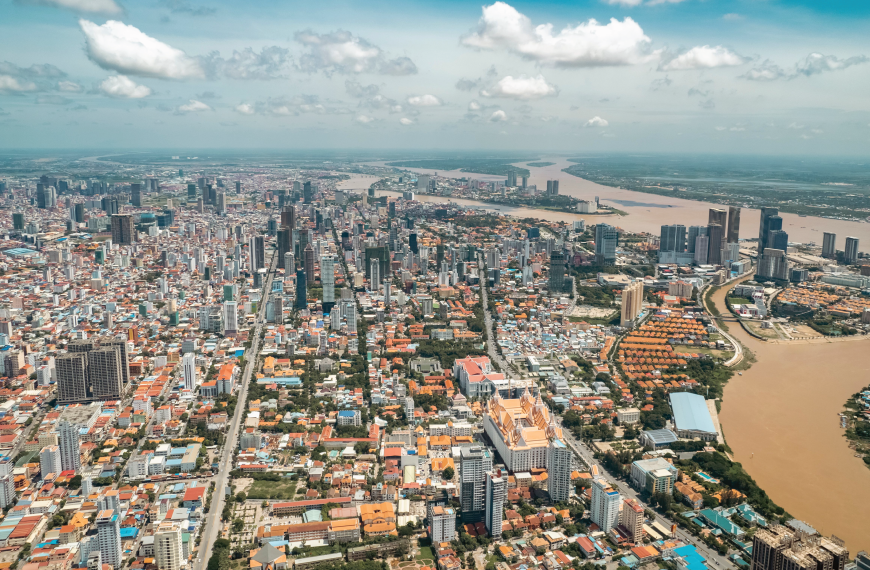
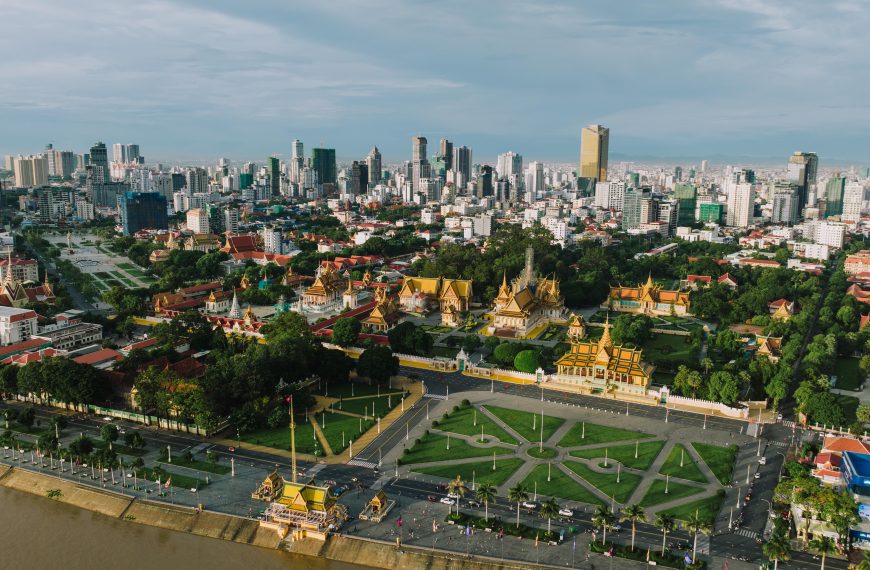
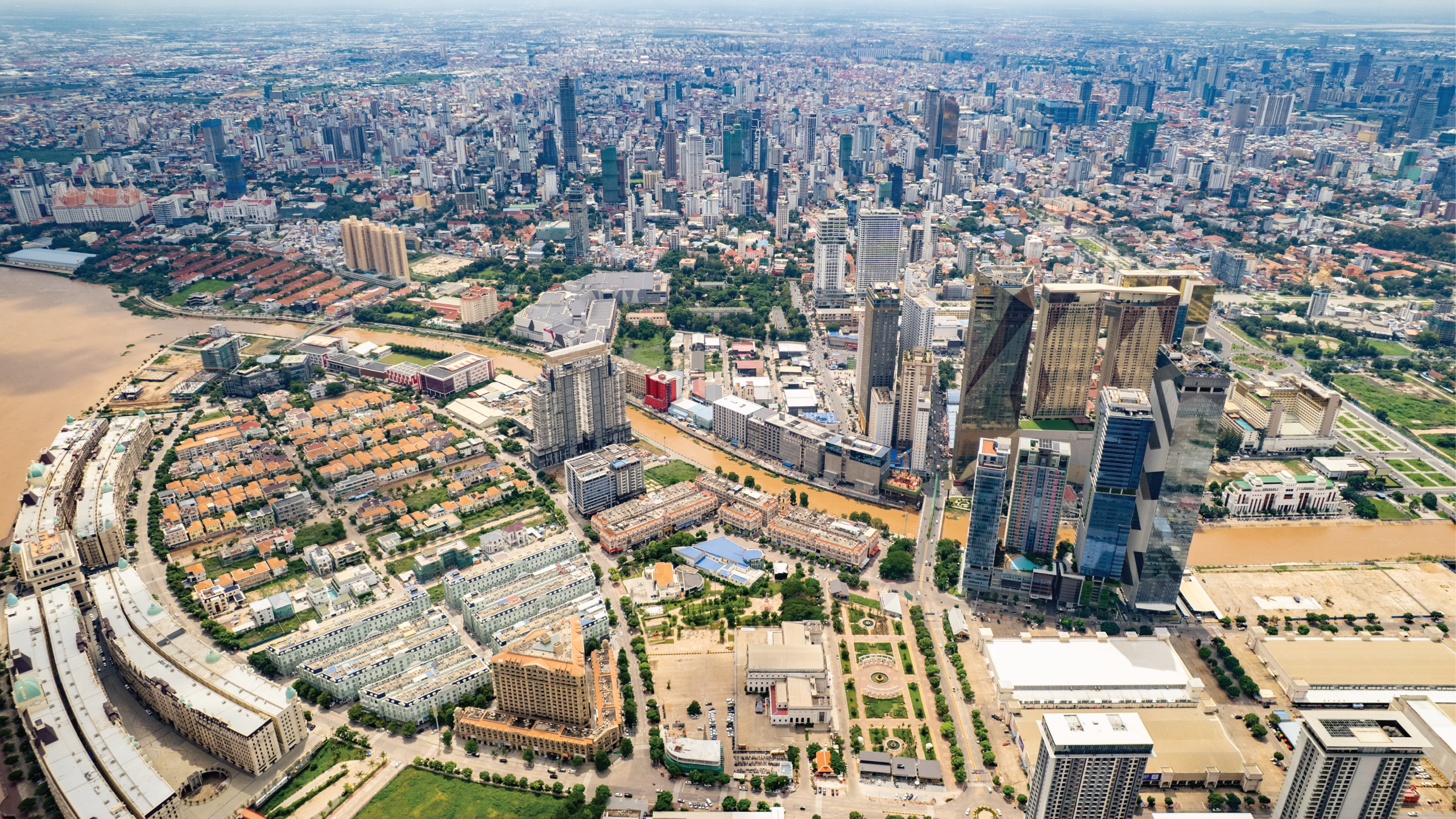
I cannot fully explain why. Part of it was the river. Sisowath Quay runs along the riverfront with the open water on one side and the old French colonial buildings on the other. The buildings were the faded yellow and white of the colonial-era stucco, with the louvred shutters and the iron balconies, half of them being restored and half of them still in the slow decay they had been in since 1975. The Royal Palace is a few hundred yards inland. The National Museum is two blocks back. The street felt, in 2010, like a real place where real things were happening and where the foreign visitor was incidental to the life of the city rather than central to it.
Part of it was the people. The Cambodians I encountered in those first few days, the hotel staff, the tuk-tuk drivers, the women in the markets, the men running the riverside cafes, had a particular openness that I had not encountered in Thailand even in 2005.
Part of it was the food. Phnom Penh in 2010 had a remarkable food scene for a city its size, partly because of the legacy of the French colonial period and partly because of the international NGO presence that had built up after the UN transitional period in the early 1990s. You could eat a genuinely excellent French meal, with proper steak and dessert, for ten to fifteen US dollars in any number of small restaurants along the riverfront or off the side streets. You could drink Angkor beer for fifty cents. The cost of living was, on every meaningful axis, dramatically lower than what Thailand had become.
I was, within the first week, more or less sold on Cambodia.
The Difficult Part Of Phnom Penh That I Have Never Forgotten
The thing that I struggled with in Phnom Penh was the street children. Phnom Penh in 2010 had a substantial population of children, some as young as five or six, who worked the tourist areas selling postcards, books, jewellery, anything they could carry, and who would also straightforwardly beg from foreign visitors. They were often clearly underfed. They wore the same set of clothes every day. They worked in groups, sometimes with adult minders nearby, sometimes apparently on their own. They would surround you when you sat down at an outdoor cafe and persist until you either bought something or someone moved them on.
I found this genuinely hard. Not because the children were aggressive (they were not, mostly), but because the situation they were in was visibly the situation of children who had no realistic alternatives, and because the response that every guidebook and every long-term resident I asked about it told me to give (do not buy from them, do not give money, support the NGO-run programmes that fed and educated them instead) felt, in the moment, completely inadequate. You sat at the cafe with your two-dollar amok and your one-dollar beer and a small child stood three feet from your table holding out a hand and you knew the small child had not eaten that day and you knew that giving her a dollar was both the wrong long-term thing and also the thing that any normal human response would tell you to do. The wealth gap between the Western visitor and the Cambodian street child in 2010 was, by my estimate at the time, something like a thousand to one on a daily-income basis. The country had been through the Khmer Rouge in the 1970s, the Vietnamese occupation in the 1980s, the UN transitional period in the early 1990s, and was still, in 2010, recovering from all of it. The street children were the most visible expression of that recovery being incomplete.
I talk about this now because it was part of the texture of Phnom Penh that I encountered, and because honest writing about places involves acknowledging the things that are difficult about them as well as the things that are easy to love. The Phnom Penh I fell for in 2010 had those children in it. They were not a marketing problem to be cleaned up. They were a feature of the city the country was, at that point, recovering from being.
The Sorya Mall Adventure That Made Me Two Thousand Dollars
I want to give you a concrete illustration of what Cambodia felt like to me in 2010. The country still had price differentials between Bangkok and Phnom Penh that, if you noticed them and were willing to act on them, would allow you to make money simply by physically moving consumer electronics across the border.
I went into Sorya Mall in central Phnom Penh on the second or third day of my trip. Sorya was, then, the main shopping centre in Phnom Penh, a few floors of consumer electronics shops, clothing stores, and small restaurants. I was wandering through the electronics section, more out of curiosity than anything else, and I saw the price stickers on the Sony PSPs.
The PSP, for younger people who do not remember it, was Sony’s portable gaming console of the mid-to-late 2000s. It was a popular product, particularly in Asia, and the Bangkok price at the MBK shopping centre near Siam, which was where most foreigners in Bangkok would have bought one, was considerably cheaper than the price they were being sold for at Sorya Mall. That gave me an idea. I could go back to Thailand when my time was up, buy some, and take them to Phnom Penh, no concern about import taxes, just lug them over the border at Aranyaprathet.
That is exactly what I did. Back in Bangkok, I went to MBK and bought a load of them, then packed them into my big suitcase and backpack. I took the bus to Aranyaprathet, walked across the border to Poipet, and made my way to Phnom Penh. I sold the units, individually, to small electronics resellers near Sorya and also the shops in the mall. I made approximately eighty US dollars per unit profit on each one I shifted. The total came to around two thousand US dollars.
I was not thinking about customs duties. I was not thinking about import tariffs. I was not thinking about the regulatory implications of moving consumer electronics across an international border for resale in a foreign currency. I was in my early twenties, I had stumbled into a price arbitrage, and I was treating the whole thing as an adventure. The two thousand dollars I made on that trip was, at the time, more than my monthly Bangkok rent and food budget combined.
I wanted to do it again. I made plans to do it again. I thought about going back the following week and buying another thirty or so units. But then, sitting in Phnom Penh I had a slightly more sober thought. The first run had gone smoothly because nobody on either side of the border was paying attention. The second run might still go smoothly. The third might not. The Cambodian customs side might not care about a foreigner bringing a load of PSPs across in his bag once. They might start caring the third or fourth time the same foreign face turned up with the same kind of bag. The price gap was there, but the second and third runs of the same arbitrage were where the risk would compound. I did not do it again. I kept the two thousand dollars and counted my luck.
I tell this story now because it captured something specific about Cambodia in 2010 that I have never encountered to the same degree in any other Southeast Asian country I have spent time in. The country was, then, full of these arbitrages. Price differentials that should not have existed but did. Markets that had not yet been integrated into the global distribution chains. Opportunities for the foreigner who turned up at the right moment, noticed the gap, and was willing to move on it. The PSP arbitrage was one example. There were others I noticed but did not pursue. The property market in Phnom Penh was another example although you would see some buildings for sale at millions of dollars and wonder who they were try to fool. The food and beverage market was a third. The country was, in 2010, in the early part of its arc, and the early part of an arc is where the gaps are largest and where the risk-reward calculation favours the foreigner who knows how to read it.
What Sold Me On Cambodia And What Did Not
After a few months of moving between Phnom Penh and Bangkok, with the PSP money in my pocket and the Sisowath Quay hotel still as my base, I was actively considering moving to Cambodia properly. Not just visiting. Settling. Renting an apartment. Setting up the same sort of life I had built in Bangkok over the previous five years, but in a country that still felt like the country Thailand had been five or ten years earlier. I got myself a business visa, extended for a year no questions asked for $280 and that was the start of it.
The case for Cambodia was strong. The cost of living was around half of what Thailand had become. The French food was excellent. The people were genuinely welcoming. The opportunity set for a Western foreigner who was prepared to engage with the country was meaningful in a way that Bangkok in 2010 no longer was. The expat community was small but functional and based around real activities (NGO work, small business operations, journalism, embassy and consular roles) rather than the lifestyle expat community that had developed in Bangkok and Pattaya.
What stopped me, in the end, was something that sounds trivial when I describe it but that turned out to matter more than I expected. The accommodation.
In Bangkok by 2010, I had access to a category of apartment that did not, in 2010, exist in Phnom Penh. The mid-range, modern, single-room apartment building, of the type that had proliferated across Bangkok in the 2000s, would rent you a clean, air-conditioned, properly maintained studio with a Western bathroom, a working internet connection, building security, and a small pool or gym, for around 5,000 baht a month (roughly 150 US dollars at the time). The buildings were everywhere. They catered to the young Thai professional class, to the long-term Western expat market, and to the digital nomad community that was just beginning to discover Chiang Mai and Bangkok. I had lived in three or four different buildings of this type by 2010, the first was along Sukhumvit Soi 71, and had become accustomed to a particular standard of basic accommodation that I could rely on at a known price point.
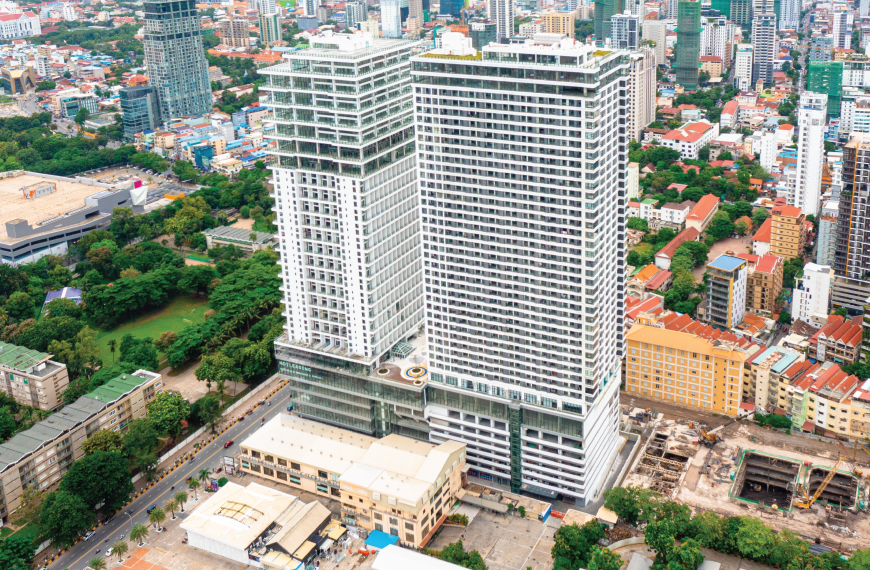
In Phnom Penh in 2010, that category of accommodation did not exist. For 150 US dollars a month, you could get something. But what you got was either a Cambodian-style room in an older building (often without a proper Western bathroom, often with intermittent power, often with the kind of basic plumbing that meant the water pressure varied hour by hour), or a slightly nicer room in a guesthouse that was not really designed for long-term residence. The properly Western-standard apartment buildings that existed in Phnom Penh in 2010 started at around 600 to 800 US dollars a month and were aimed at the embassy and senior NGO market. The middle category, the affordable but properly maintained modern apartment that I was used to in Bangkok, was simply not part of the Phnom Penh property market at that point.
I sat with this for a few days. I looked at apartments. I asked agents. I asked the longer-term Westerners I had met whether the situation was about to change. The answer was that it was changing, that new buildings were being put up, but that the timeline for the Bangkok-equivalent product to exist in Phnom Penh was probably three to five years away. The local property market had not yet developed the layer of mid-range professional accommodation that my Bangkok lifestyle had depended on.
I could have stayed and roughed it. I could have taken a Cambodian-style room and adjusted. I could have committed to the country at the early stage and grown into it as it grew. But the comfort thing, the small daily comfort of a clean apartment with reliable utilities and proper plumbing and a working internet connection, mattered more to me at that point than the adventure of being early into Cambodia. I went back to Bangkok. I did not move to Cambodia.
That was the practical reason. The accommodation gap. Looking back, I find it slightly absurd that the determining factor was something so domestic and prosaic. But that is what it was.
What I Regret And What I Do Not
I think about that decision sometimes. Not often. But occasionally, when I look at what Cambodia has become in the fifteen years since, I wonder whether I made the right call.
Part of me regrets not staying. The Cambodia I visited in 2010 was at the beginning of an arc that, for the foreigner who got in early and engaged with the country properly, offered serious opportunity. Phnom Penh property prices have multiplied. Small businesses started by Western foreigners in those years have become substantial operations. The long-term residency and citizenship pathways have, for those who started accumulating presence in 2010, become accessible in ways that are now much harder to achieve. The man who moved to Phnom Penh in 2010 and stayed, who learned Khmer, who set up the right structure, who built relationships, is in a position now that the man who arrived in 2020 cannot match. I could have been that man. I was not.
I also think about what I would have built personally. I think I would have progressed faster in Cambodia than I did in Thailand. The country was smaller. The Western community was smaller. The opportunities to be involved in something significant were greater. The cost of failure was lower, because the cost base was lower. I might, over fifteen years, have built something in Cambodia that I have not built in Thailand. I might, eventually, have qualified for citizenship through the various investment routes the country has used over the years. I might be, today, a Cambodian-passport-holder running a Phnom Penh business with twenty employees and a property portfolio across the city. That version of my life is a real counterfactual.
But then there is the other side of it.
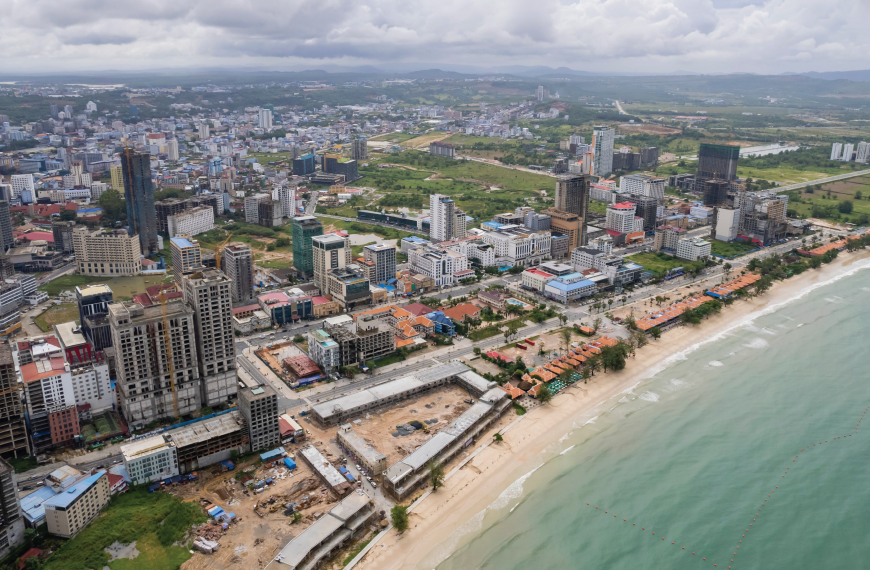
What happened to Cambodia in the decade after 2010 is not a simple story of growth and opportunity. The country went through a substantial Chinese capital influx, particularly in Sihanoukville on the southern coast, which was transformed in a few years from a sleepy fishing-and-tourism town into a Chinese-run casino and construction zone that bore almost no resemblance to the place it had been in 2010. The Chinese investment in Sihanoukville was, by every honest account, deeply destabilising for the local Cambodian population, for the small Western expat community that had built up there, and for the texture of the town itself. The same dynamic played out, in smaller and slower forms, in parts of Phnom Penh and in the coastal areas around Kep and Kampot. The country that I had fallen for in 2010 was, by the late 2010s, in the middle of a major external reshaping that I would not have chosen to live through if I had known what was coming.
So I do not entirely regret the decision. The Cambodia I would have stayed in was not, in the event, the Cambodia that existed five or ten years later. The country shifted in ways that I would have found difficult to accept as a long-term resident. I might have made it. I might not have. The cost of the Sihanoukville transformation, in particular, for the Western foreigners who had committed to the south coast in good faith in the early 2010s, was substantial.
The Bigger Truth About The Region
And then there is the larger point, which is the one that, when I am being honest with myself, takes the edge off the regret entirely.
The Chinese transformation of Sihanoukville is not unique to Cambodia. The same dynamic, in different forms and at different speeds, has played out across Southeast Asia in the years since 2010. Thailand has had its own version of it, in the Chinese tourist boom that peaked before COVID and has been only partially restored since, in the Chinese property purchases that have shifted the dynamics of multiple Bangkok condominium markets, in the Chinese investment in the Eastern Economic Corridor, in the Chinese cultural and commercial penetration of Chiang Mai. The Philippines has had its version. Laos has had its version, more comprehensively than anywhere else. Burma has had its version, before the 2021 coup closed the country off again. Even Malaysia and Indonesia, the larger and more confident economies of the region, have absorbed substantial Chinese economic presence over the same period.
The Southeast Asia I arrived into in 2005, the region that the Western expat community had grown up around since the 1970s and 1980s, no longer exists. It has been progressively replaced, country by country, by a region that is fundamentally more oriented toward Chinese capital, Chinese tourism, Chinese cultural influence, and Chinese political-economic priorities than it was. The Western foreigner who came to Bangkok or Phnom Penh or Vientiane in the 1990s and early 2000s arrived in a region where the Western foreign community was the most visible international presence outside the embassy quarter. The Western foreigner who arrives in 2026 arrives in a region where Chinese presence is, in most places, the larger and more economically consequential foreign presence.
So when I think about whether I would have done better in Cambodia, the honest answer is that I would have faced the same broader regional shift wherever I had settled. Thailand has been transformed by it. Cambodia has been transformed by it. The neighbouring countries have been transformed by it. The choice in 2010 was not really between staying in a stable Thailand and moving to a stable Cambodia. The choice was between two countries that were both, in the decade ahead, going to be reshaped by forces neither I nor they could control.
The decision I made was the conservative one. I stayed where I was. I built what I built in Thailand. I accepted that the country was changing. I lived through the changes rather than committing to a fresh start in another country that was also going to change.
I do not regret it, in the end. The Cambodia I fell in love with in 2010, the country with the riverfront cafes and the cheap French food and the unfinished energy of a place on the up, was not a country I could have preserved by moving there. The country was going to change. I would have changed with it, or I would have left. Either way, the Cambodia of 2010 was a moment, not a place. I had the moment. I just had it as a visitor rather than as a resident.
That is, I think, the right note to end on. Cambodia in 2010 was one of the genuinely formative experiences of my twenty years in this region. The country I encountered then has gone. The two thousand dollars from the PSP arbitrage is long since spent. The Sisowath Quay hotel with the windowless room and the unreliable bulb is probably still standing, or has probably been replaced by something bigger. But the feeling of being in a place that was on the way up, that had its own texture and its own energy and its own opportunity, is something I would not give up having experienced. I nearly moved. I did not. The not-moving was the right call by accident. The moving would have been an adventure either way.
Frequently Asked Questions
Why did Thailand change so much between 2005 and 2010?
The pound-baht exchange rate moved from around 75 baht to around 47 baht in those five years, fundamentally recalibrating the economic basis of a Western foreigner’s life in Thailand. Prices for accommodation, food, drink, and services rose meaningfully relative to Western incomes. The visa rules began their long progressive tightening that has continued through to 2026. The local attitude to Western foreigners shifted at the margin from curiosity toward more calculated commercial awareness. The traffic, pollution, and franchise-chain colonisation of older neighbourhoods accelerated visibly in those years. Many long-term Western foreigners date the start of Thailand’s loss of edge to the 2015-2020 period, but in my experience the foundational shifts were already happening between 2005 and 2010, with the post-2010 changes being extensions of what had started rather than new developments.
What was Phnom Penh like in 2010?
A city that was visibly on the way up but still in the recovery phase after decades of political and military disruption. The Sisowath Quay riverfront was the centre of the Western foreigner scene, with French colonial-era buildings being progressively restored alongside others still in slow decay. Power outages were frequent, occurring multiple times per day in most areas. The Royal Palace and the National Museum anchored the central tourist district. Phnom Penh in 2010 had an excellent food scene for a city its size, with French-influenced cuisine, traditional Khmer dishes like amok, and the legacy of the international NGO community. The cost of living was around half of what Bangkok had become by the same year, with substantial price differentials in many consumer categories.
Why is Sisowath Quay significant to Western foreigners in Cambodia?
Sisowath Quay is the riverfront street running along the western bank of the Tonle Sap river where it meets the Mekong in Phnom Penh. It became, from the early 1990s onwards, the central district for the Western foreign community in Cambodia, lined with French colonial-era buildings (many being restored after decades of neglect), riverside cafes and restaurants, small hotels, the Royal Palace a few hundred yards inland, and the National Museum two blocks back. For many Western foreigners visiting Cambodia in the 2000s and early 2010s, the Sisowath Quay riverfront was their first and most enduring impression of Phnom Penh.
What was the Cambodia accommodation problem for Western foreigners in 2010?
The mid-range, modern, single-room apartment category that had proliferated across Bangkok by 2010 (clean, air-conditioned studios with Western bathrooms, reliable internet, building security, and basic amenities for around $150 USD per month) simply did not exist in Phnom Penh in 2010. For $150 USD in Phnom Penh in that period, a Western foreigner could get a Cambodian-style room in an older building, or a guesthouse room not designed for long-term residence. The properly Western-standard apartment buildings in Phnom Penh started at $600-800 USD per month and were aimed at the embassy and senior NGO market. The middle category that supported the Bangkok long-term expat lifestyle was missing from the Phnom Penh property market at that point, and was projected to be 3-5 years away from existing in equivalent form.
Were street children a significant issue in Phnom Penh in 2010?
Yes. Phnom Penh in 2010 had a substantial population of children, some as young as five or six, who worked the tourist areas selling postcards, books, and small handicrafts, and who also straightforwardly begged from Western visitors. They were often visibly underfed and often worked in groups with adult minders. The standard advice from guidebooks and longer-term residents was not to give directly but to support the NGO-run programmes that fed and educated them, although in practical terms most Western visitors gave money or bought items occasionally despite the advice. The street children were a visible expression of the country’s incomplete recovery from the Khmer Rouge period, the Vietnamese occupation, and the UN transitional period of the early 1990s.
What happened to Sihanoukville in Cambodia after 2010?
The southern coastal town of Sihanoukville was transformed in a few years from a sleepy fishing and tourism community into a Chinese-run casino and construction zone, primarily through Chinese capital investment in casino operations and supporting infrastructure. The transformation was deeply destabilising for the local Cambodian population, for the small Western expat community that had built up there, and for the texture of the town itself. The Sihanoukville transformation has been one of the most visible examples of Chinese economic transformation of a Southeast Asian destination in the 2015-2025 period and has shifted the calculation significantly for Western foreigners considering long-term residence in coastal Cambodia.
Has the Chinese economic shift in Cambodia been unique to Cambodia?
No. The same dynamic, in different forms and at different speeds, has played out across Southeast Asia in the 2010-2025 period. Thailand has absorbed Chinese tourism, Chinese property investment, Chinese cultural influence, and Chinese capital in the Eastern Economic Corridor. The Philippines has experienced significant Chinese investment and political-economic tension. Laos has been transformed at the most comprehensive scale of any Southeast Asian country. Burma had its own version of Chinese economic penetration before the 2021 coup. Even Malaysia and Indonesia, the larger and more confident regional economies, have absorbed substantial Chinese economic presence. The Southeast Asia of 2005-2010 has been progressively replaced by a region fundamentally more oriented toward Chinese capital, tourism, and influence than it was when most long-term Western foreigners arrived.
Would a Western foreigner who moved to Cambodia in 2010 be better off today than one who stayed in Thailand?
It is genuinely hard to answer. The Western foreigner who moved to Phnom Penh in 2010 and stayed, who learned Khmer, who built business operations during the cheap-entry period, who established the right legal structures for property and residency, is in a position now that the foreigner who arrived in 2020 cannot match. Phnom Penh property prices have multiplied. Small businesses started in those years have become substantial operations. The long-term residency and citizenship pathways are now harder to access than they were in 2010. However, the foreigner who chose Sihanoukville or Kep, or who invested heavily in specific coastal property markets, would have faced significant disruption from the Chinese capital influx. The 2010-Cambodia decision was not uniformly favourable; it depended substantially on which part of the country the foreigner committed to and what kind of life he was building.
What is the broader lesson from the 2010 Cambodia decision?
The country I fell in love with in 2010 was a moment in time rather than a stable destination. The Sihanoukville transformation, the Chinese capital influx, the regional shift in foreign economic presence, and the broader changes that have reshaped Southeast Asia over the past fifteen years would have affected Cambodia regardless of whether I had moved there. The choice in 2010 was not really between a stable Thailand and a stable Cambodia. Both countries were going to change substantially in the decade ahead. The Western foreigner who chose either destination was, in retrospect, choosing the rate and direction of his exposure to forces neither he nor the host country could control. The Cambodia of 2010 is gone. The Thailand of 2010 is also gone. The honest assessment is that the moment, not the place, was what made the experience valuable.
Sources
- Bank of England Historical GBP-THB Exchange Rate Data — The official historical record of the pound sterling against the Thai baht confirming that the GBP-THB rate moved from approximately 75 baht to the pound in 2005 to approximately 47 baht to the pound by 2010, a decline of more than 35 per cent over five years. This single shift is the foundational economic basis of the change in the Western foreigner’s Thailand experience during the 2005-2010 period referenced throughout the article
https://www.bankofengland.co.uk/statistics - XE Historical Exchange Rates — The international foreign exchange rate database confirming the GBP-THB historical trajectory from the 2005-2010 period, with the pound peaking against the baht in mid-2007 at over 80 baht before declining steadily through the global financial crisis to around 47-50 baht by 2010. The exchange rate movement is the underlying mechanic that recalibrated the daily cost of living for Western foreigners in Thailand during this period
https://www.xe.com/currencycharts/?from=GBP&to=THB - Wikipedia — Sisowath Quay, the documentation of the central riverfront street in Phnom Penh running along the western bank of the Tonle Sap river where it meets the Mekong, the location of the Royal Palace and the National Museum a few blocks inland, the historic French colonial-era buildings progressively restored since the early 1990s, and the central district for the Western foreign community in Cambodia from the early 1990s onwards. The Quay was named after King Sisowath of Cambodia (reigned 1904-1927)
https://en.wikipedia.org/wiki/Sisowath_Quay - Wikipedia — Phnom Penh, the comprehensive historical and contemporary documentation of Cambodia’s capital city, including the Royal Palace area, the French colonial heritage from the protectorate period (1863-1953), the destruction during the Khmer Rouge period (1975-1979), the recovery during the Vietnamese-backed period (1979-1989), the UNTAC transitional period (1992-1993), and the subsequent economic recovery and reconstruction of the city through the 2000s and 2010s
https://en.wikipedia.org/wiki/Phnom_Penh - Wikipedia — Sorya Shopping Centre, the documentation of the multi-floor shopping centre in central Phnom Penh that operated from 2002 onwards as one of the main consumer electronics, clothing, and food retail centres in the city. Sorya was, in the 2000s and early 2010s, the primary indoor shopping centre for Phnom Penh’s emerging middle class and for Western foreigners looking for consumer electronics and Western goods at price points often significantly below Bangkok retail rates
https://en.wikipedia.org/wiki/Sorya_Shopping_Centre - Wikipedia — PlayStation Portable, the comprehensive technical and commercial history of Sony’s handheld gaming console launched in December 2004, with global sales of approximately 80 million units across its production run from 2004 to 2014. The PSP was widely distributed across Southeast Asia at varying retail prices, with substantial price differentials between major markets (Bangkok, Singapore, Hong Kong) and smaller markets (Phnom Penh, Vientiane, Yangon) creating the kind of arbitrage opportunity referenced in the article
https://en.wikipedia.org/wiki/PlayStation_Portable - Wikipedia — MBK Center, the documentation of the iconic Bangkok shopping centre adjacent to the BTS Skytrain National Stadium station that operated from 1985 onwards as the primary destination for Bangkok consumer electronics shopping, particularly for foreign visitors and the Bangkok expat community. MBK was, in the late 2000s and early 2010s, the standard reference point for Bangkok retail electronics pricing, with the Sony PSP retailing in the range of 8,500-9,000 baht per unit during the 2010 period
https://en.wikipedia.org/wiki/MBK_Center - Open Development Mekong — Cambodia’s Casino Boom Town Created by Chinese Money, published 2018, the comprehensive reporting on how Chinese money transformed Sihanoukville, the once-sleepy backpacker destination, into a gambling resort hub with 30 casinos and 70 more being built, touted as the “New Macau,” with the new wealth eluding many local Cambodian businesses being displaced by the Chinese capital influx
https://opendevelopmentmekong.net/news/cambodias-casino-boom-town-created-by-chinese-money/ - CNN — How Cambodia’s Backpacker Haven Became a Chinese Casino Mecca, published October 2019, the international reporting confirming that an estimated 90 per cent of businesses in Sihanoukville (including hotels, restaurants, and entertainment establishments) became Chinese-owned during the 2015-2019 period, that the province hosting the city now boasts 88 casinos compared to 15 in late 2015, that many building fronts are now covered in Chinese characters, and that Sichuan hotpots have replaced the 50-cent beer joints beloved by Western travellers on the beachfront
https://edition.cnn.com/2019/10/04/asia/cambodia-chinese-investment-intl-hnk/index.html - Global China Pulse — Sihanoukville Rise and Fall of a Frontier City, published February 2026, the academic-quality analysis confirming that the Chinese investment in Sihanoukville produced an annual revenue conservatively estimated between USD 3.5-5 billion at peak in 2019, with 90 per cent of that revenue coming from online gambling. The piece documents the speculative bubble and the broader transformation of Cambodia’s coastal infrastructure under Chinese capital pressure
https://globalchinapulse.net/sihanoukville-rise-and-fall-of-a-frontier-city/ - UrbanAsia Blog — A Lost City Unravelling the Gambles Behind Sihanoukville’s Great Urban Transformation, published January 2023, the documentation that Chinese capital brought USD 5.3 billion in investment in 2013-2017 producing annual revenues of USD 3.5-5 billion (90 per cent from gambling), signed 65 cooperation agreements in 2016-2019 financing infrastructure projects, and that the USD 1.9 billion Phnom Penh-Sihanoukville Expressway opened in October 2022 was funded by a Chinese state-owned company. The piece documents Sihanoukville’s transformation “from looking like Phuket to resembling Macau”
https://urbanasia.blog/2023/01/23/a-lost-city-unravelling-the-gambles-behind-sihanoukvilles-great-urban-transformation-from-beach-town-to-metropolis-of-casinos-and-skyscrapers/ - Al Jazeera — Chinese Investment Brings Casinos to Cambodia, published January 2019, the international reporting confirming that the seaside town of Sihanoukville, once popular with Western backpackers, was seeing residents forced out due to rising costs and construction. The piece documents Hun Sen’s four-day visit to China to meet President Xi Jinping at the height of the Chinese capital influx, with Beijing providing an economic safety net to Phnom Penh after souring relations with the West over Cambodia’s human rights record
https://www.aljazeera.com/news/2019/01/chinese-investment-brings-casinos-cambodia-190120070110110.html - China-Global South Project — Cambodia Must Check Chinese-Sponsored Casinos’ Operations in Sihanoukville, published September 2023, the analytical piece documenting that Sihanoukville is known to have the most beautiful beach in Cambodia which was historically a favourite place for Westerners, that the Ministry of Environment intervened to shut down casinos violating the law and build more sewage treatment facilities, but that wastewater continues to flow directly from casino and public toilets into the sea producing environmental degradation at major beaches including O’Chheu Teal Beach
https://chinaglobalsouth.com/analysis/cambodia-must-check-chinese-sponsored-casinos-operations-in-sihanoukville/ - Radio Free Asia — Chinese Courts Go After Notorious Cambodian Conglomerate, the comprehensive investigative reporting documenting the Prince Group’s role in the transformation of Sihanoukville from a quiet coastal resort town into a Chinese-dominated casino and money-laundering hub. The piece confirms that Sihanoukville saw more than 100 casinos open in the years leading up to 2019, with the Cambodian government’s “pro-business” stance issuing casino licences to virtually anyone willing to invest, and Chinese nationals making up most of the customers as well as the lion’s share of proprietors
https://www.rfa.org/english/news/cambodia/prince-group-investigation-02022024124011.html - Wikipedia — Sihanoukville Cambodia, the comprehensive historical and contemporary documentation of the city on the southern coast of Cambodia, originally a sleepy fishing and backpacker tourism destination through the 1990s and 2000s, transformed in the late 2010s into a Chinese capital-funded casino and construction zone, and now serving as a major Chinese-backed special economic zone with continuing infrastructure investment from Chinese state-owned enterprises
https://en.wikipedia.org/wiki/Sihanoukville_(city) - Wikipedia — Cambodian Riel and Cost of Living, the documentation of Cambodia’s dual-currency economy in which the US dollar functions as the de facto currency for most foreigner-facing transactions alongside the Cambodian riel for smaller daily transactions, and the historical cost-of-living differentials between Phnom Penh and Bangkok during the 2005-2015 period when Phnom Penh remained substantially cheaper than Bangkok across most consumer categories
https://en.wikipedia.org/wiki/Cambodian_riel - Wikipedia — UNTAC (United Nations Transitional Authority in Cambodia), the official documentation of the UN peacekeeping operation in Cambodia from 1992 to 1993 that organised national elections, set up Cambodia’s modern political institutions, and established the foundations of the international NGO and donor presence that anchored Phnom Penh’s recovery in the 1990s and 2000s. The UNTAC period created the foreign community and food culture that the article documents as the basis of Phnom Penh’s 2010 Western foreigner scene
https://en.wikipedia.org/wiki/United_Nations_Transitional_Authority_in_Cambodia - Wikipedia — Cambodian Cuisine and the Influence of French Colonial Heritage, the documentation of Cambodian cuisine including the traditional Khmer dishes such as amok (the fish curry with coconut and lemongrass referenced in the article) and the French colonial culinary heritage in Phnom Penh that includes substantial bakery, patisserie, and restaurant traditions inherited from the French protectorate period (1863-1953) and maintained through the post-1993 international community
https://en.wikipedia.org/wiki/Cambodian_cuisine - Lonely Planet Cambodia 2010 Edition — Travel guide documentation from the period covered in the article, confirming the dominant position of Sisowath Quay as the central Western foreigner district in Phnom Penh in 2010, the prevalence of street children in tourist areas as a documented social issue requiring foreigner-awareness, the cost-of-living differentials with Thailand, the basic accommodation infrastructure available to Western visitors, and the visa rules under which Western foreigners could enter and remain in Cambodia during the 2010 period
https://www.lonelyplanet.com/cambodia - UNICEF Cambodia — Street Children Phnom Penh Programmes, the official UN children’s agency documentation of the population of children working and begging in the tourist areas of Phnom Penh during the 2000s and 2010s, the NGO-operated programmes designed to provide alternative care and education for the children, and the official position that direct giving to street children was discouraged in favour of support for the institutional programmes addressing the underlying poverty
https://www.unicef.org/cambodia/ - Khmer Times — Phnom Penh Property Market Historical Analysis, the Cambodian English-language newspaper’s published analysis of the Phnom Penh property market’s evolution from 2010 through 2020, confirming that the mid-range modern apartment category aimed at the long-term professional foreign resident was largely absent from Phnom Penh in 2010 and emerged progressively through the 2013-2018 period as Chinese and Vietnamese developers built out the building stock. The expat-grade apartment market in 2010 sat between low-end Cambodian rooms and high-end embassy housing with the middle tier missing
https://www.khmertimeskh.com/ - Cambodia Investment Policy 2010-2015 — The Council for the Development of Cambodia’s documentation of foreign investment policy during the period that the article covers, including the relatively liberal visa regime for Western foreigners under which renewable business visas could be obtained at any of multiple licensed visa agents, the limited foreign property ownership restrictions on land (but not on strata title apartments above the ground floor), and the broad investment incentive framework that anchored the early-2010s foreign business presence in Phnom Penh
https://www.cambodiainvestment.gov.kh/ - Tonle Sap River Geography and Phnom Penh Riverfront Heritage, the documentation of the confluence of the Tonle Sap and Mekong rivers at central Phnom Penh, the geographic anchor of Sisowath Quay, and the historical importance of the riverfront for Phnom Penh’s identity as a French colonial-era commercial city and contemporary Cambodian capital. The annual reversal of the Tonle Sap’s flow during the monsoon season is one of the most distinctive hydrological features of mainland Southeast Asia
https://en.wikipedia.org/wiki/Tonl%C3%A9_Sap - Wikipedia — Bangkok Condominium Market Development 2000-2015, the documentation of the emergence and rapid expansion of the mid-range, modern, single-room and studio apartment category across Bangkok during the 2000-2010 period, with developments by Sansiri, Quality Houses, Pruksa Real Estate, Land and Houses, and other major Thai developers producing the 5,000-baht-per-month modern studio category that became the standard accommodation for Bangkok’s long-term Western foreign community and the standard against which Phnom Penh accommodation was measured in 2010
https://en.wikipedia.org/wiki/Real_estate_in_Thailand - Wikipedia — Chinese Investment in Cambodia and Southeast Asia 2010-2025, the comprehensive documentation of the broader Chinese economic transformation of Southeast Asia over the past fifteen years, including the Belt and Road Initiative’s impact on Cambodia, Laos, Burma, and Thailand, the patterns of Chinese capital deployment in casino, infrastructure, property, and tourism sectors across the region, and the cumulative shift in the regional economic balance from Western-oriented presence to Chinese-oriented presence that the article documents as a region-wide phenomenon rather than a Cambodia-specific one
https://en.wikipedia.org/wiki/Belt_and_Road_Initiative