Twenty Years On The Other Side Of The World
I want to talk about something different today. Not another critique of Thai government policy, not a comparison of expat costs, not a structural argument about demographic collapse or visa tightening or the property market overhang. Just an honest piece about what Southeast Asia, the region I have spent twenty years living in actually means to me as a man approaching middle age.
I am writing this because the country I arrived into in 2005 is not the country I am writing from in 2026. The region I arrived into in 2005 is not the region I am writing from in 2026. The texture, the feel, the pace, the price, the politics, the people, the ratio of foreigners to locals, the cultural confidence of the host nations, the British and European presence, the Chinese and Indian presence, every variable that defined the place when I came has shifted, in some cases substantially, in some cases beyond recognition. I have lived through twenty years of that shift. I have noticed every stage of it. And I want to write down what the region has meant to me through all of it, because if I do not write it down now I am not sure I will be able to articulate it later.
This is, in that sense, the most personal article I have written for this site. I am going to be honest about the things I love and the things I miss. I am going to be honest about the things I dislike about how the region has changed. Some of what I say is going to be unfashionable. Some of it is going to be more uncomfortable than the standard travel-writer rhapsody. But it is the truth as I see it after twenty years, and the article would not be worth writing if I dressed it up in something less direct.
The Southeast Asia I Arrived Into In 2005
When I landed in Thailand in 2005, the region was a different place. I want to start by trying to describe what it was, because the description is the only way to make the loss intelligible.
The pound was buying around seventy-five baht. The exchange rate alone meant that a Western pension or salary went substantially further than it does now. Fish and chips from an expat bar in Lower Sukhumvit cost the equivalent of 2 quid. A cold beer at a beachside bar was around fifty pence. A modern studio apartment in central Bangkok rented for one hundred and fifty pounds a month. The economic basis of being a Western foreigner in 2005 Thailand was that everything was cheap in a way that felt like the world had been designed just for you.
The visa system was tolerant. You could get a non-immigrant visa at one of any number of consulates around the region. The Thai consulate in Hull that I’ve talked about before, where I first applied, sold me a one-year multiple-entry non-immigrant visa for around a hundred pounds. The TM30 form had not yet been enforced. The Three No’s campaign and the Digital Arrival Card and the tightening apparatus I have talked about elsewhere were not even on the horizon. The state was not yet interested in tracking foreigners the way it has become interested in tracking them now. You arrived. You stayed. You did your thing. The country left you alone.
The Western presence was the dominant foreign presence. The hotels in Pattaya, Phuket, Patong, Koh Samui, Koh Phangan, were full of Britons, Australians, Germans, Scandinavians, Americans, Russians and French. Nightlife workers and bar staff often spoke the practical English they had picked up from years of dealing with Western customers. The expat communities in Bangkok, Chiang Mai, and the southern islands were Western at their core. The cultural mix was a Thai majority with a Western foreigner minority that was visible everywhere and that the Thai economy was largely built around. The Chinese tourist boom had not yet arrived. The Indian tourist wave was a decade away. The Russian presence was small. The region’s tourism economy, in 2005, was structured around the Western visitor in a way that made the foreign experience feel central rather than peripheral.
The British heritage was visible in a way that, even in 2005, was already fading but that you could still see if you looked. The Raffles Hotel in Singapore. The Eastern and Oriental in Penang. The Strand in what was then still called Rangoon and what I will forever call Rangoon, before the junta finished renaming it. The colonial-era civic buildings of Georgetown still functioning as courts and banks. Saint George’s Church in Penang, the oldest Anglican church in Southeast Asia, still holding services. The Phnom Penh riverfront still recognizable as the French colonial port that it was. The railway from Singapore to Bangkok still running on the British-laid track. The names of streets, of clubs, of hotels, of schools, all of them carrying the trace of a hundred and fifty years of British and European presence that had built the framework on which the modern countries were operating.
The Western foreigner, in 2005 Southeast Asia, was operating inside a region that the West had built, that the West still recognized as its own work, and that the local populations had not yet been encouraged by their own governments to view the West as a problem to be managed rather than a partner to be valued. The atmosphere of 2005 in this part of the world was, to put it bluntly, one of mutual goodwill across a relationship that nobody had yet decided was over.
That is the thing I keep coming back to. The mutual goodwill. It was real in 2005. It is not real in 2026. Whether by the choice of the host governments, or by the cumulative effect of the changes I am about to describe, or by some combination of the two, the texture of the relationship between the Western foreigner and the Southeast Asian country he lives in has shifted from goodwill to transaction, from partnership to extraction, from welcome to tolerance. I cannot prove this with statistics, but anyone who has been here as long as I have feels it in their bones.
What I Have Loved And Continue To Love
I want to be clear about what I have loved about this region and what I continue to love, because the love is the foundation under everything I have written about it.
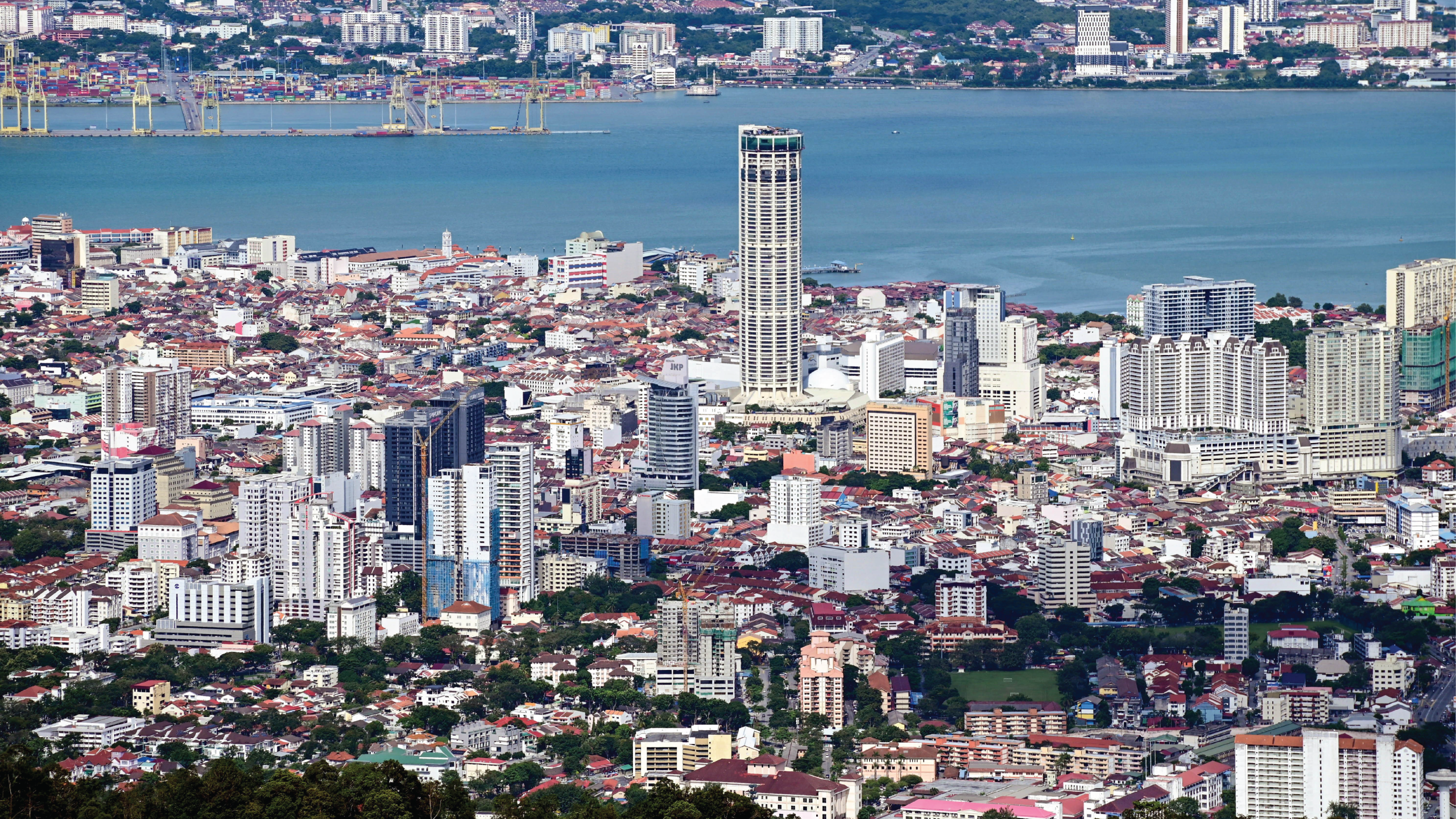
I have loved the heritage. This is, increasingly, the part that I love most. The fact that I can walk down Beach Street in Georgetown in 2026 and see the 1909 fire station and the Cheah Chen Eok clock tower and the Eastern and Oriental and stitch together, in my head, what the city looked like in 1920. The fact that I can stand on Sisowath Quay in Phnom Penh and see what the French colonial riverfront looked like a hundred years ago. The fact that the Raffles Hotel still operates in Singapore and the Strand still operates in Rangoon and the connection across the British colonial network is still physically visible if you know where to look. The heritage is the part of Southeast Asia that I have come to value most as I have got older, partly because the rest of it is changing so fast that the heritage is the only part that the future cannot take away.
I have loved the cheapness. This is the unfashionable thing to say but it is true. The fact that I could, on a modest budget, live a life in Thailand that would have been entirely impossible in Britain on the same money. The fact that for twenty years the maths of being a Western foreigner in this part of the world worked in a way that the maths of being a Briton in Britain has not worked since the 1970s. The cheapness is what allowed me to build the life I have. It is being progressively eroded, but it is what made the original move possible, and I will always be grateful for it.
I have loved the freedom. Not in the political-philosophical sense. In the practical sense of being able to live a life that is not bound up in the standard Western middle-class anxieties about mortgage, pension, career, postcode, school catchment, retirement planning. The freedom of having stepped sideways out of the British system and into a different way of organising a life. The freedom of not having to compete in the housing market that ate my generation. The freedom of having time to read, to write, to walk, to think. That freedom is part of why I came and part of why I have stayed.
The British Heritage That Should Have Been Preserved
I want to write about this part directly, because it is one of the things that has come to matter to me most.
The British built much of what makes Southeast Asia recognisable to a Western visitor in 2026. The railway from Bangkok to Singapore. The port of Penang. The port of Singapore. The port of Rangoon. The Hong Kong commercial framework. The Straits Settlements legal system that produced the modern judicial structures of Malaysia and Singapore. The civic architecture of Georgetown, Singapore and Rangoon. The hill stations the British built in Malaya and Burma to escape the heat. The schools, the churches, the courts, the hospitals, the clubs, the banks, the trade networks, the language of business and law that still operates across half the region in the form the British left it.
Most of this heritage is, today, either decaying, demolished, repurposed for tourism, or actively erased by the modern governments of the countries that have inherited it. Burma’s renaming of Rangoon to Yangon in 1989, of Moulmein to Mawlamyine, of Pegu to Bago, was an act of political will to disavow the British contribution. Thailand never had the British contribution to disavow but has its own related dynamic in which the pre-modern Thai state is presented as the foundation of everything and the foreign role in the modernisation of the country is minimised. Indonesia and the Philippines, with their Dutch and Spanish colonial inheritances, have made similar choices. Only Singapore, and to a lesser extent Malaysia, have continued to operate the British inheritance with the seriousness the British originally intended.
I have come to think that this is one of the great losses of the region. The British did not invent Southeast Asia. The pre-modern societies that the British encountered were sophisticated and old and had their own deep cultural achievements. But the British (and the French and the Dutch) brought to the region a framework of law, administration, commerce, and physical infrastructure that produced, between roughly 1820 and 1940, a level of prosperity, predictability, and openness that the post-independence governments have, in many cases, not equalled. Singapore is the clearest counterexample. Penang is a partial counterexample. The rest of the region has, on most honest measures, lost something important since the British left.
I am not arguing for the return of colonialism. I am arguing for the honest acknowledgement that the British contribution to the region was substantial, that the framework the British built is still the operating substrate of large parts of Southeast Asian commerce and law, and that the descendants of the people who built that framework should not have to apologise for noticing this when they visit the region in 2026. The clock tower in Georgetown was donated by a wealthy Chinese merchant in honour of Queen Victoria’s Diamond Jubilee. The donation was not made under duress. It was made because the Chinese commercial community of Penang understood, in 1897, what the British framework was doing for them. Some of that understanding has been lost. I think it is worth recovering.
The Things I Honestly Wish Had Not Happened
I want to be honest now about the things that have happened in this region during my twenty years here that I wish had not happened.
The Chinese economic transformation of the region, in the form it has taken, is one of them. I want to be careful about this, because the issue is sensitive and because I have no quarrel with Chinese people as people. Many of the Chinese I have met in Penang and Bangkok and Singapore over the years are friends and acquaintances I value. The Penang Chinese community in particular has been one of the great cultural achievements of Southeast Asia for two hundred years. The point I want to make is not about Chinese people. It is about the recent wave of Chinese state-backed and Chinese capital-led transformation of the region, which has produced outcomes that, on balance, I have not enjoyed living through.
Sihanoukville in Cambodia turning from a sleepy beach town into a Chinese casino zone in five years. The Belt and Road infrastructure across Laos that has produced debt-trap concerns and Chinese-built corridors that have reshaped the country. The Chinese property speculation that has helped drive Bangkok condominium prices beyond the reach of the middle-class Thai buyer the developers were notionally building for. The zero-dollar tourism that, by industry estimates, costs the Thai economy hundreds of billions of baht annually through cash leakage to Chinese operators. The scam centres along the Thai-Burma and Thai-Cambodian borders, run substantially by Chinese organised crime, that have generated tens of billions of dollars annually and that have implicated the region in a global cybercrime crisis that nobody in 2005 could have imagined. The Chinese tourist behaviour that has, fairly or unfairly, generated the documented complaints I have read in the local press about queue-jumping, public spitting, loud filming, and the colonisation of certain tourist sites by groups that, on the evidence of multiple local accounts, have not always behaved as guests in the country they were visiting. I wish, honestly, that this had not happened on the scale and at the speed it has happened. The region I came to in 2005 had a different balance. The balance has shifted in ways that, for me as a Western resident, have not been improvements.
The Indian tourist wave is a more recent and more complicated case. India is a country I have respect for, with a civilisation that has produced enormous cultural and intellectual achievement over thousands of years. The current Indian tourist wave to Southeast Asia is structurally explicable: a growing Indian middle class, cheap regional flights, Thailand’s deliberate marketing toward the Indian market as a hedge against Chinese decline. The numbers are real. India became Thailand’s third-largest source market in 2025, with over 2.5 million arrivals. The Thai government had extended 60-day visa-free entry to Indian nationals until they completely remove visa free access recently. I would not be honest if I did not say that the Indian wave has changed the texture of certain Thai tourist zones in ways that long-term Western foreigners have publicly remarked on, ranging from areas of Pattaya being called “Little India” in expat conversations to specific complaints about a particular kind of large-group tour behaviour that has produced friction with both Thai service workers and other foreign visitors. I do not think this is the fault of Indian people any more than the Chinese issue is the fault of Chinese people. I think it is a consequence of an extremely rapid scale-up of inbound tourism from a market that did not have the gradual cultural calibration that Western tourism to Thailand had in the 1980s and 1990s. The result is friction. The friction is real. I would not be honest if I pretended it was not.
I wish, more broadly, that the Western foreigner presence in Southeast Asia had not been progressively replaced by other waves over the past decade. Not because I have any view about the racial or national composition of the region (the region is for whoever lives there, and that is overwhelmingly the local populations of the countries themselves). But because the Western foreigner presence in 2005 was a particular thing. It was small, it was visible, it was culturally compatible in many respects with the local commercial and administrative classes (who often spoke English and were comfortable operating in a partially Western framework), and it was the foundation of the region’s tourism economy and its small-business expat economy. That foundation has been progressively diluted by the larger inflows from China, India, Russia, and the Gulf states, and by the more recent regional intra-Southeast Asian movements. The cumulative effect, for the long-term Western foreigner, is that the country he lives in is structurally less interested in him than it used to be, less culturally aligned with him than it used to be, and less willing to extend the welcome it used to extend.
I am not arguing that the region should refuse other visitors or other residents. I am arguing that the Western foreigner who has lived here for twenty years has, honestly, watched the region shift away from the framework that supported his original move. The shift was inevitable in retrospect. It was not chosen by me or by him. But the fact that it was not chosen does not mean it is not a loss.
The Thailand I Wish Still Existed
I want to talks specifically about Thailand, because Thailand is the country I have lived in for twenty years and the country my wife is from.
The Thailand I arrived into in 2005 had a particular quality that I have not been able to find anywhere else in the world. It was warm without being over the top. It was cheap without being shoddy. It was foreign without being inaccessible. It was culturally confident without being closed. It was tolerant of the Western foreigner without being subservient to him. It had problems, of course, with traffic and pollution and political instability and the things that I have talked about extensively elsewhere. But the problems were the kind that the country had been carrying for decades and that everyone who came knew about and accepted. The Thailand I arrived into in 2005 was, in retrospect, the late peak of the Western-Thai expat relationship. The country has been receding from that peak, by my reckoning, since around 2010, and the recession has accelerated since 2020.
The Thailand I wish still existed is not, importantly, the Thailand I imagine through some sort of nostalgic filter. It is the Thailand I actually lived in for the first five years of my time here. That Thailand is gone. I have watched it go, year by year, over twenty years. The reasons are partly economic (the exchange rate), partly political (the institutional tightening I have written about), partly demographic (the collapse of the Thai working-age population), partly cultural (the shift in Thai attitudes toward Western foreigners), and partly external (the Chinese and Indian inflows that have reshaped the country’s tourism economy). The reasons are real. The Thailand I lived in for the first five years is not coming back. I have made peace with this in some sense, but the peace is the peace of acceptance rather than the peace of indifference.
Why I Have Stayed Anyway
I have considered leaving Thailand at various points, and will be talking about the decision i have already made soon. I considered Cambodia in 2010, as I have written about. I have considered Penang. I have considered the Philippines. I have considered the Vietnam comparison, and I’ve considered Britain once again.
I have stayed for the same reasons most long-term foreigners stay anywhere. The family. My wife is Thai. The roots are here. The decision to settle was made twenty years ago, and the consequences of that decision are the life I have, which is, on balance, the life I would choose if I had to choose again.
What Southeast Asia Means To Me
So this is what Southeast Asia means to me, in the most honest version I can articulate it.
It means twenty years of a life that I would not have had in Britain. It means the heritage of a Western presence in this part of the world that built things worth honouring and that the modern political fashion would like to erase. It means food and warmth and friendships and a kind of daily texture that has been progressively more difficult to maintain but that, in its best moments, is still better than the equivalent back home. It means watching a region that I love change in ways that, for me as a Western resident, have not been improvements, and trying to write honestly about that without falling into either nostalgia or resentment.
It means the Thailand I lived in for the first five years, which is gone. It means the Penang that still survives in the UNESCO core. It means the Cambodia I nearly moved to in 2010, the Burma I never properly visited, the Singapore that operates the British framework better than Britain does, the Indonesia that I have not engaged with as deeply as I should have, the Malaysia I am increasingly considering as my next base. It means a region that, however much it has changed, is still the region I chose, and the choice was the right one even when the texture has not gone the way I would have wanted.
It means, in the end, a particular sort of double-consciousness. The Western foreigner in Southeast Asia in 2026 is operating in a region that no longer quite wants him in the way it did in 2005, while also operating in a Britain that no longer quite is the country it was when he left. He is in between. He is not coming back. He is also not, in many of these countries, being fully welcomed to stay. He is sitting in a kind of permanent transitional state in which the only stable thing is the family he has built, the daughter he is raising, the work he is doing, and the small daily texture of a life he chose.
That life, for me, is what Southeast Asia means. Not the brochure version. Not the influencer version. Not the lazy travel-writer version. The actual texture of twenty years of having put my life into a place that has changed beneath me and that I am still, despite everything, more attached to than the country I came from.
If the region had stayed the way it was in 2005, I would be writing a happier article. If Britain had stayed the way it was in 2005, I might have written a different article from a different country altogether. Neither did. The version of the region I am living in is the one that history produced, and the version of myself I am writing as is the one twenty years of living here has produced. The article is what it is. The region is what it is. The life I have built is what it is.
And I would not, in the end, exchange it for any of the alternatives. That is what Southeast Asia means to me. The thing I would not exchange. The thing that, for all its losses and all its shifts and all its imperfections, is still the thing I built my life around. The thing that, on the days when it is at its best, still gives me what I came here for in 2005. The thing that, on the days when it is at its worst, still has something the Britain I left has lost. The thing that I will, in the end, live out my middle age inside, because the choice I made twenty years ago was the right choice, even when the conditions that produced the choice have not survived to the present day.
That is what Southeast Asia means to me. After twenty years. The full version. With all the honest complications and the unfashionable observations and the love that is, in the end, the foundation under all of it.
Frequently Asked Questions
Why is the 2005 version of Southeast Asia so important to long-term Western foreigners?
Because it represented the late peak of a particular relationship between the West and the region that had developed over roughly a century. In 2005 the Western foreigner was the dominant foreign presence in most major Southeast Asian tourist and expat zones, the exchange rates favoured Western incomes substantially (the pound bought around 75 baht), the visa systems were tolerant, the local cultures were genuinely welcoming, and the British and European heritage of the colonial period was still substantially visible in the buildings, institutions, and daily texture of the major cities. The combination of factors produced a kind of structural welcome that has progressively eroded since, partly through economic shifts (exchange rates, inflation), partly through political tightening (visa rules, foreigner pricing, institutional hostility), and partly through demographic shifts (the rise of Chinese and Indian tourism reshaping the foreign presence). For Western foreigners who arrived in or before that period, 2005 represents the last clean version of the relationship that originally drew them to the region.
What does the British heritage mean to Western foreigners in Southeast Asia today?
A great deal, for those who have engaged with it seriously. The British built much of the framework on which modern Southeast Asia operates: the railway from Bangkok to Singapore, the ports of Penang and Singapore, the legal and administrative systems that produced modern Malaysia and Singapore, the civic architecture of Georgetown, Singapore, and Yangon, the educational institutions that produced the founding intellectual classes of several independent Southeast Asian states. For Western foreigners (particularly British) who travel through the region in 2026, the British heritage is visible in the surviving colonial buildings, the heritage hotels (Raffles in Singapore, Eastern and Oriental in Penang, Strand in Yangon), the railway infrastructure, the legal systems, and the language of commerce and education in several countries. The heritage is, increasingly, what makes the region distinctive and what some Western foreigners feel most strongly attached to as the contemporary texture of daily life has shifted.
Why have Chinese tourist and investment patterns become controversial among Western expats?
Several reasons compound. The transformation of Sihanoukville in Cambodia from a Western backpacker destination into a Chinese-dominated casino zone within five years has become the canonical example of disruptive Chinese capital deployment in the region. The zero-dollar tourism model that, by industry estimates, costs the Thai economy hundreds of billions of baht annually through cash leakage to Chinese operators is widely criticised in the Thai press. The Chinese property speculation that has helped drive Bangkok condominium prices beyond the reach of the middle-class Thai buyer is documented in market analyses. The scam centres along the Thai-Burma and Thai-Cambodian borders, substantially run by Chinese organised crime, have generated tens of billions of dollars annually and produced documented human trafficking. The cumulative effect, for Western expats, is the perception that the country they live in is being economically reshaped by forces neither they nor the local population control, with consequences that have not been favourable to either the local quality of life or the Western foreigner experience.
What is the impact of the Indian tourist wave on Southeast Asia?
India became Thailand’s third-largest tourist source market in 2025 with over 2.5 million arrivals, and the Thai government extended 60-day visa-free entry to Indian nationals in 2026 while simultaneously stripping that privilege from many other countries. The Indian tourist wave is structurally explicable as a consequence of India’s growing middle class, cheap regional flights, and Thailand’s deliberate marketing toward the Indian market as a hedge against Chinese tourist decline. The wave has produced changes in the texture of certain Thai tourist zones, with areas of Pattaya commonly being referred to as “Little India” in expat conversations, and documented friction with both Thai service workers and other foreign visitors over specific cultural and behavioural patterns associated with large-group Indian tour parties. The friction is part of the texture of the contemporary tourism economy in a way that did not exist a decade ago.
What is the Thailand most long-term Western expats wish still existed?
The Thailand of approximately 2005-2010, when the exchange rate favoured Western pensions substantially, the visa system was tolerant (no enforced TM30, no Three No’s, no Digital Arrival Card, no annual mandatory health insurance for retirees), the local Thai population was warmer to Western foreigners on a day-to-day basis, the country’s tourism economy was structured around Western visitors rather than Chinese or Indian groups, and the cost of living allowed a Western pension or modest income to support a life that would have been substantially more constrained in the West. The Thailand of that period was not perfect (the political instability, the road traffic deaths, the institutional corruption were all real) but the combination of factors produced a structural welcome that has progressively been replaced by a more transactional and more institutionally hostile relationship.
Has the British presence in Southeast Asia entirely disappeared?
No, but it has been progressively reduced in visibility and structural significance. The major British colonial-era institutions in the region (the Raffles Hotel in Singapore, the Eastern and Oriental in Penang, the Strand in Yangon, the various courthouses and churches and schools across the former British territories) survive, often as heritage buildings or luxury hotels rather than as functioning components of the institutional framework they originally served. The legal and administrative inheritance is most visible in Singapore and Malaysia, less so elsewhere. The British expat community in Southeast Asia in 2026 is smaller, older, and more concentrated in particular nodes (Penang, parts of Bangkok, certain districts of Chiang Mai, the Phuket retirement zones) than it was twenty years ago. The presence has not disappeared but has been substantially reduced relative to other foreign populations.
Why have many Western foreigners stayed in Southeast Asia despite the changes?
Because the alternative (returning to a Britain or other Western country that has, by their own assessment, also declined substantially over the same period) is on balance worse than continuing to live in the recessed but still functioning version of Southeast Asia they have built lives in. Because for those with Thai, Filipino, Malaysian, Indonesian, or other Southeast Asian spouses and children, the family roots are now in the region rather than in the country of origin. Because the cost of living, even after the substantial erosion of the favourable exchange rate of the early 2000s, remains lower than the West for most categories of daily expense. Because the climate, the food, the social texture, and the heritage continue to make the region attractive in ways that Britain or other Western countries do not match. And because the man who has lived twenty years in Southeast Asia is, in significant part, a man Southeast Asia has produced, and he cannot easily transplant himself back to a country that is no longer the country he originally left.
Is the Western foreigner experience in Southeast Asia getting better or worse in 2026?
Worse, on most measurable dimensions, and the trajectory is downward rather than upward. The visa systems are tightening (Thailand’s Three No’s, TM30 enforcement, the limit of two visa runs per year, the mandatory Digital Arrival Card, the demographics-driven tax base pressure). The cost of living has risen substantially relative to Western incomes since the favourable 2005 exchange rates. The institutional welcome has been replaced by a more transactional and more extractive relationship. The Western foreigner has been progressively crowded out by Chinese and Indian inflows. The legal protections for Western foreign residents are weaker than they were a decade ago. The structural trajectory of the region (demographic decline in Thailand, Chinese economic transformation across the region, geopolitical realignment) is not favourable to Western expat presence. The Western foreigner who arrived in 2005 has watched the region recede from him. The Western foreigner considering arrival in 2026 is making a significantly more demanding decision than the equivalent decision in 2005.
What do you mean by “the Britain I left no longer exists”?
A combination of factors that, in cumulative terms, have produced a country that long-term British expats returning after twenty years find substantially altered from the country they left. The British high street has been hollowed out by Amazon, online shopping, and changing consumer patterns. The cost of housing has risen to levels that exclude middle-income workers from home ownership in most major cities. Public services have decayed visibly: the NHS, the rail network, the police, the courts, the postal service, local councils, all operate at substantially reduced standards from a generation ago. Public order has frayed in major cities. The cultural composition of urban Britain has changed substantially through immigration and the cultural fragmentation that has accompanied it. The institutional confidence that was the underlying texture of British life in the post-war period has been progressively replaced by a more anxious, more polarised, and more institutionally exhausted national mood. The Britain of 2005 was a country I recognised. The Britain of 2026, when I see it in the news and from visitors and on the brief trips I have made back, is not.
What is the bottom line on what Southeast Asia means after twenty years?
The thing I would not exchange. The life I have built. The family I have raised. The food, the warmth, the heritage, the texture of a daily existence that, despite everything that has changed and despite all the losses I have written about in this article, remains on balance better than the life I would have had if I had stayed in Britain. The Southeast Asia I came to in 2005 is not the Southeast Asia I am writing from in 2026, but the choice I made twenty years ago was the right choice, the man I have become here is the man I am willing to be, and the region, in its recessed and changed and partially diminished form, is still my home. That is what Southeast Asia means to me. The thing I would not exchange.