A Phnom Penh Bar In 2010 And A Border On Fire
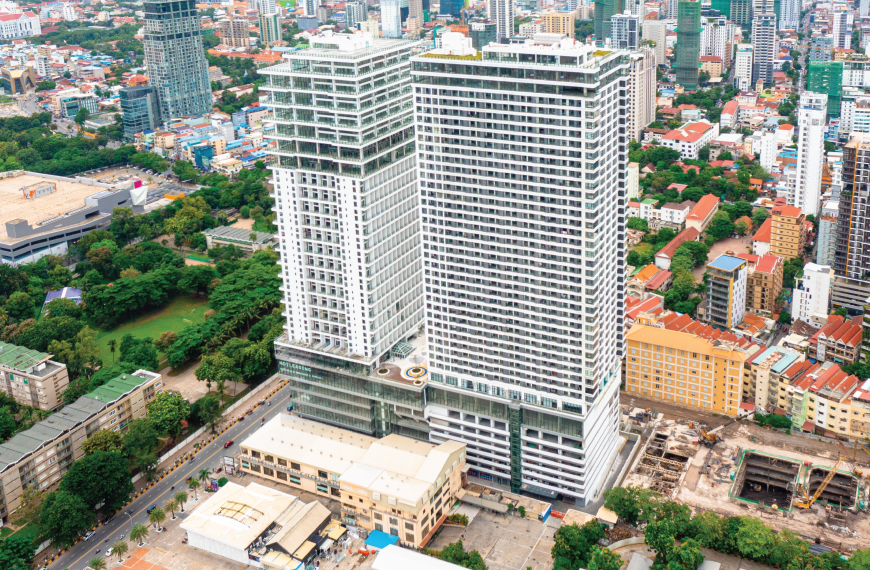
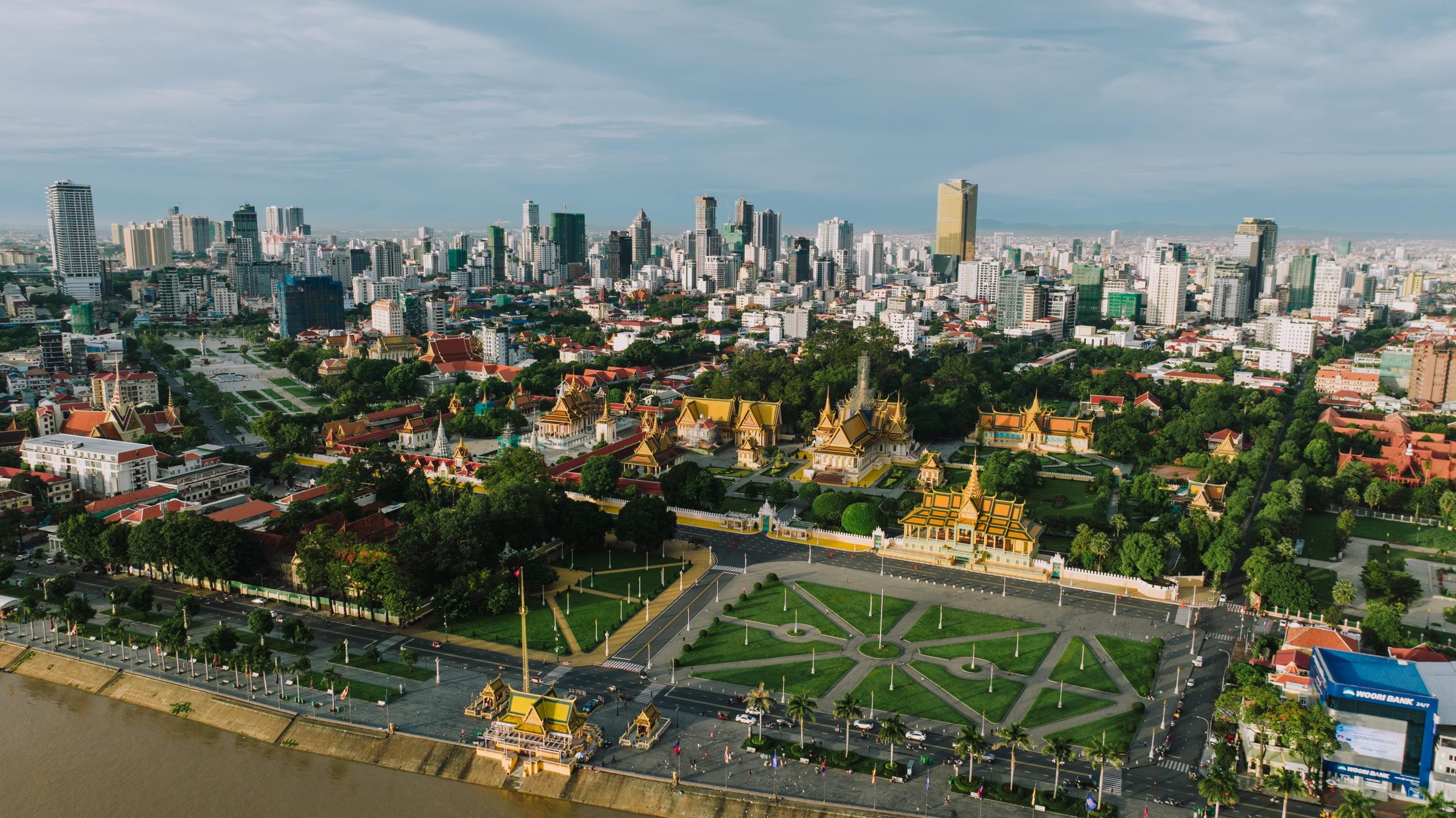
In early 2010 I was sitting in a little bar along Sisowath Quay in Phnom Penh, seriously thinking about whether Cambodia might be the country I would live in instead of Thailand. I’d just been in to the ANZ Royal Bank next door and opened an account, and I was thinking damn, this is even easier than Thailand. I had landed in Phnom Penh on what was supposed to be a short trip and had ended up staying for several months, seriously trying to work out whether this could be the place for me. The Cambodia I encountered in 2010 I personally found the people warmer. The bureaucracy was considerably simpler. And the country had not yet built the foreigner-extraction architecture that Thailand had been assembling for years.
But I also remember exactly what was happening on the news every evening I was there. From late January through April of 2010, the Thai-Cambodian border was on fire. Thai and Cambodian troops were exchanging RPG rockets around the Preah Vihear temple. Thai soldiers were being killed. Cambodian villages were being shelled. The Thai state was running a full nationalist campaign domestically about Cambodian aggression on Thai sovereign land, demanding international support for the Thai claim. And here is the part that struck me at the time, and still strikes me. The International Court of Justice had already ruled on Preah Vihear back in 1962. The ICJ had awarded the temple to Cambodia. Cambodia had won that case forty-eight years before I was sitting in Phnom Penh watching the news in 2010. Thailand had simply pretended the ruling did not exist, kept sending troops back to the area, kept claiming the surrounding land was unresolved, kept building the political case at home that Cambodia was the aggressor.
The Hypocrisy Of Thailand’s Selective Respect For International Law
That is the hypocrisy I want to name at the start of this article, because it goes to a deeper pattern in how Thailand operates. Thailand respects international institutions when the institutions agree with Thailand, and ignores them when they do not. The same country that joined the United Nations, signed the UN Convention Against Corruption, signed the Convention on the Law of the Sea, signed the WTO agreements, and lectures the world about respect for international order, is the country that has spent more than sixty years pretending the Preah Vihear ruling does not apply. And once you see that pattern, you start to see it everywhere in how the country treats not just its neighbours, but its own foreign residents, its own legal commitments, its own international obligations.
Why I Chose Thailand Over Cambodia In 2010
In the end I did not stay in Cambodia. The reason was based mainly on the fact that at the time there were almost no decent places to rent in Phnom Penh that were affordable in 2010 in the parts of the city I wanted to be in. Of course decent is relative. The supply of liveable Western-friendly housing was thin. The infrastructure was rougher than I was ready to commit to. The English-speaking expat community was smaller. And ultimately I went back to Thailand because Thailand had the housing supply, the existing expat scaffolding, and the practical convenience that Cambodia had not yet built. That choice is the choice I have lived with for the sixteen years since, and it is the choice that shapes the perspective this article comes from. I chose Thailand knowing it had its hypocrisies. I have watched those hypocrisies multiply ever since.
What The ICJ Actually Ruled On Preah Vihear In 1962
Let me get into the actual record now, because the hypocrisy I am pointing at is not a vague impression. It is a documented pattern that goes back decades, and I want to walk through it carefully, because by the end of this article the conclusion I have reached should be as obvious to you as it is to me. The land is Cambodian. It has always been Cambodian. Thailand is wrong on the legal merits, has been wrong on the legal merits since 1962, and continues to ignore the rulings because the country picks and chooses which international rules apply to it.
Let me start with what the ICJ actually ruled and when. The dispute over Preah Vihear goes back to the Franco-Siamese boundary treaties of 1904 and 1907, when French colonial cartographers mapped the border between Siam and what was then French Indochina. The maps placed Preah Vihear on the Cambodian side of the line. Siam accepted the maps at the time. Siam used the maps for decades afterwards in its own official documents without objecting. Then in 1954, after Cambodia gained independence from France, Thai forces moved into the temple and occupied it. Cambodia took the dispute to the International Court of Justice in 1959. In 1962, the ICJ ruled, by nine votes to three, that the Temple of Preah Vihear was located on Cambodian territory. The court further ruled that Thailand was obliged to withdraw any military or police forces, or other guards or keepers, stationed by her at the temple, or in its vicinity on Cambodian territory. Thailand withdrew under protest, but never accepted the ruling in spirit, and spent the next half century acting as if the ruling applied only to the temple itself and not to any surrounding land.
The 2008 UNESCO Listing And The Border Crisis That Followed
In 2008, when Cambodia successfully listed Preah Vihear as a UNESCO World Heritage Site, with full international legal standing, Thailand objected. Border clashes followed from 2008 through 2011, which is the period I was watching from Phnom Penh in 2010. Thai and Cambodian troops exchanged fire repeatedly. At least twenty people were killed across the period. Tens of thousands were displaced on both sides. And Cambodia, faced with continued Thai refusal to accept the 1962 ruling, went back to the ICJ in 2011 and asked the court to clarify and reaffirm what it had decided forty-nine years earlier.
The 2013 ICJ Reaffirmation Cambodia Won Again
In November 2013, the ICJ ruled again, unanimously this time, that the 1962 judgment had established Cambodian sovereignty over the entire territory of the Preah Vihear promontory, not just the temple itself. The court ordered Thailand to withdraw any military, police, or guard personnel from the promontory. Cambodia won. Again. For the second time in fifty-one years, with international legal certainty, against a country that had taken the case back to court specifically to dispute the original ruling. The ICJ said the same thing twice. Cambodia owns Preah Vihear and its immediate vicinity. Thailand must withdraw.
What The Thai Military Says About The ICJ Ruling Today
And here is what Thailand did. Thailand withdrew under protest, again, and the Thai Second Army Area to this day publicly argues that the ICJ ruling was, in their words, international political adjudication rather than a judgement based on facts on the ground. Read that again. The Thai military, sixty-four years after the original ruling and thirteen years after the reaffirmation, is publicly maintaining that the highest court in the international system was politically motivated rather than legally correct. That is the official position of the Thai military on a ruling that has been on the books, twice, against them. They do not accept it. They have never accepted it. And every time the political weather suits, they go back and stir the dispute up again.
The 2025 Thailand Cambodia Border Conflict
Which brings me to what happened in 2025.
On the twenty-eighth of May, 2025, a skirmish near Preah Vihear killed a Cambodian soldier. The Thai government and the Cambodian government blamed each other. Tensions escalated through June and into July. Cambodia banned Thai goods at the border. Thailand closed border crossings and restricted internet and power links to Cambodia. And in late July 2025, the Thai military escalated to a level not seen on the border in over a decade. American made F-16 fighter jets sortied from Ubon Ratchathani air force base to attack Cambodian military positions. The Royal Thai Army deployed across multiple flashpoints. Ta Moan Thom temple, Ta Moan Tauch, Ta Krabei, the Mom Bei area near the Lao tri-border junction. At least sixteen people were killed across the July conflict. More than one hundred and thirty thousand Thai civilians were displaced from their villages in Si Sa Ket, Surin, and Buriram. A ceasefire was negotiated. Then on the seventh of December 2025, the conflict reignited at the Phlan Thom area in Chom Krosan district, with both sides accusing the other of starting it. Thai soldiers were wounded. Cambodian forces returned fire. The cycle continued.
Who Actually Paid The Cost Of The 2025 Conflict
I want you to think about who paid the actual cost of all of this, because that is the part of the story the Thai nationalist messaging always leaves out. The cost was not paid by the political class in Bangkok that has spent sixty years refusing to accept the ICJ ruling. The cost was paid by the rural Thai farmers in Si Sa Ket whose villages got shelled. By the Thai soldiers in their twenties from poor provincial families who were sent up to defend a position that an international court ruled was not theirs to defend. By the one hundred and thirty thousand Thais who lost their homes for weeks or months because the Thai elite refused to accept a ruling that has been on the books since 1962. The Thai elite makes the nationalist noise. The rural Thai pays the price. The pattern is consistent with every other story this site has documented.
Thailand Wins When The Courts Suit It
And here is where the hypocrisy I mentioned at the start of this article comes back, because Thailand does not have a principled objection to international courts. Thailand has a self-interested objection to international courts that rule against it. Look at the record on the other side. Thailand took its first dispute to the World Trade Organisation in 2002, the cigarette case against the Philippines, and won. Thailand took its second WTO case, on Philippine import duties, and won. Thailand has filed multiple WTO disputes against trading partners and accepts WTO rulings as binding when those rulings go in Thailand’s favour. Thailand is a signatory to the Convention on the International Trade in Endangered Species, to the Convention on Biological Diversity, to the UN Convention Against Corruption, to the Convention on the Rights of the Child, and to the Convention against Torture. Thailand uses these conventions, when they are useful, as evidence of its standing as a responsible international actor. The country that lectures Western tourists about respect, that lectures Cambodia about sovereignty, that lectures everyone about following the rules, is the country that has spent six decades ignoring the single most binding ICJ ruling against it.
Selective Respect For International Law As The Thai Pattern
That is what I mean by selective respect for international law. Thailand will sign the convention, point to the convention when convenient, use the convention to extract advantage where it can, and ignore the convention the moment the convention costs the country something it does not want to pay. Preah Vihear is the clearest example, but it is not the only one. The UN Convention Against Corruption is signed and largely ignored at the elite level, as the Saksayam Chidchob case demonstrated when the anti-corruption commission refused to act on a binding Constitutional Court ruling. The international sanctions on the Burmese military regime are signed by the US, UK, EU, and Canada, and ignored by Thailand, which has chosen instead to be one of the largest single financial backers of that same regime through PTT and PTTEP. The international norms on refugee treatment are accepted in principle and ignored at the border, where Burmese refugees fleeing the violence Thai state-owned oil money is helping to fund are rounded up and processed as illegal foreigners. The pattern is everywhere once you look.
My Take The Land Is Cambodian
So here is my take on the Thailand-Cambodia border conflict, after sixteen years of watching it from inside Thailand and after sitting in Phnom Penh in 2010 watching it from the other side. Cambodia is right. The land is Cambodian. It has been Cambodian since 1962, and the ICJ confirmed it again in 2013, and the ruling is as binding as any ruling in international law gets. Thailand is wrong. Not on a political opinion, not on a nationalist preference, but on the legal merits as adjudicated by the highest court in the international system, twice. Every Thai soldier who has died in that conflict has died for a position that the international legal order, the same legal order Thailand swears it respects, has explicitly rejected. Every Thai farmer who has been displaced has been displaced for the same reason. The Thai political class is not protecting Thai sovereignty against Cambodian aggression. The Thai political class is refusing to comply with an international court ruling and using rural Thai lives as the cost of that refusal.
This Is Not A Defence Of Cambodia
That does not make Cambodia a saint. It does not mean Hun Sen and his political dynasty are the better neighbour or the more honest government. Cambodia has its own deep problems, its own elite extraction, its own political dynasty that nobody is going to defend in a serious analysis. But on this specific question, on this specific piece of land, on this specific legal argument, Cambodia is in the right. The ICJ said so in 1962. The ICJ said so again in 2013. And every Thai narrative that pretends otherwise is a narrative built on ignoring the rulings the Thai state itself agreed to be bound by when it signed up to the United Nations Charter in 1946.
Sixteen Years On Watching The Same Conflict
I sat in Phnom Penh in 2010 watching this same conflict play out. Sixteen years later it is still playing out, with new flashpoints, new deaths, new displacements, new ceasefires that nobody believes will hold. The ICJ ruling is still being ignored. The same political class that ignored the 1962 ruling is still running Thailand, in slightly different uniforms and slightly different cabinets, but with the same families and the same instincts. The same Cambodian villages are still being shelled. The same Thai farmers are still being displaced. And my view, sixteen years after I made the practical decision to live in Thailand anyway, is that I was wrong to think the country’s selective respect for international law was a minor flaw. It is the central flaw. It is what produces everything else. The foreigner-extraction architecture, the nominee crackdowns, the bank account closures, the visa tightening, the lectures about respect, the protection of the Burmese junta’s family, and the refusal to comply with the ICJ on Preah Vihear are all expressions of the same underlying principle. The rules apply when the rules suit. The rules do not apply when the rules do not suit. And the country that runs on that principle, at every level from international law to the visa stamp in your passport, is the country I have been living in for the last sixteen years and the country you are probably reading this article from.
That is my take. The land is Cambodian. Always was. The ICJ ruled twice. Thailand picks and chooses which international laws apply to it, and that is it.
Frequently Asked Questions
Who legally owns Preah Vihear temple?
Cambodia. The International Court of Justice ruled in 1962, by nine votes to three, that the Temple of Preah Vihear is located on Cambodian territory. The ICJ reaffirmed the ruling unanimously in 2013, confirming that Cambodian sovereignty extends to the entire Preah Vihear promontory, not just the temple itself. The ruling is binding under international law.
When did the ICJ rule on Preah Vihear?
The ICJ ruled twice. The original ruling was delivered on 15 June 1962, awarding the temple and the obligation to withdraw Thai personnel to Cambodia. The reaffirmation was delivered on 11 November 2013, clarifying that the 1962 judgment had established Cambodian sovereignty over the entire promontory.
Why does Thailand reject the ICJ ruling?
Thailand has never formally rejected the rulings in legal terms but has consistently acted as if they apply only to the temple itself and not to the surrounding territory. The Thai Second Army Area publicly characterises the 1962 ruling as international political adjudication rather than legally correct. The deeper reasons relate to Thai domestic politics and the institutional interests of the Thai military and the royalist establishment.
What happened in the 2025 Thailand Cambodia border conflict?
A skirmish on 28 May 2025 killed a Cambodian soldier near Preah Vihear. The conflict escalated through June and July 2025, with F-16 fighter jets from Ubon Ratchathani air force base attacking Cambodian military positions in late July. At least sixteen people were killed, and more than 130,000 Thai civilians were displaced from Si Sa Ket, Surin, and Buriram. A ceasefire was negotiated, then the conflict reignited at Phlan Thom on 7 December 2025.
Is Thailand actually wrong on the Preah Vihear question?
On the legal merits, yes. The International Court of Justice, the highest court in the international legal system, has ruled twice in favour of Cambodia, in 1962 and in 2013. Both rulings are binding. Thailand’s continued refusal to accept the rulings does not change the legal outcome. The land is Cambodian under international law.
What does this conflict tell us about how Thailand operates?
Thailand respects international institutions when their rulings agree with Thailand, and ignores them when the rulings go the other way. Thailand has won WTO cases and accepts WTO rulings as binding when they suit Thailand. Thailand is signatory to multiple international conventions and uses them as evidence of standing as a responsible international actor. The same Thailand has spent sixty-three years ignoring the ICJ on Preah Vihear. The selective respect for international rules is the pattern that runs through every aspect of how Thailand operates internally and externally.
Sources
- International Court of Justice — Case Concerning the Temple of Preah Vihear (Cambodia v. Thailand), Judgment of 15 June 1962, the original ruling by nine votes to three that the Temple of Preah Vihear is located on Cambodian territory and that Thailand must withdraw any military, police, or guard personnel
https://www.icj-cij.org/case/45 - International Court of Justice — Request for Interpretation of the Judgment of 15 June 1962 in the Case Concerning the Temple of Preah Vihear (Cambodia v. Thailand), Judgment of 11 November 2013, the unanimous reaffirmation that the 1962 judgment established Cambodian sovereignty over the entire Preah Vihear promontory and not just the temple itself
https://www.icj-cij.org/case/151 - Britannica — Thailand-Cambodia Border Conflict, comprehensive overview of the historical dispute including the 1904-1907 Franco-Siamese treaties, the 1954 Thai occupation of the temple, the 1962 ICJ ruling, the 2008-2011 border clashes, and the 2025 escalation
https://www.britannica.com/event/Thailand-Cambodia-Conflict - Nation Thailand — The Thai Second Army Area public position that the ICJ ruling on Preah Vihear was international political adjudication rather than a judgement based on facts on the ground, and the Thai military’s continued institutional rejection of the 1962 ruling
https://www.nationthailand.com/news/asean/40060540 - Reuters — Coverage of the 2025 Thailand-Cambodia border conflict including the 28 May 2025 skirmish that killed a Cambodian soldier, the July 2025 escalation with F-16 sorties from Ubon Ratchathani air force base, the at least sixteen deaths across the July conflict, and the 130,000+ Thai civilians displaced from Si Sa Ket, Surin, and Buriram provinces
https://www.reuters.com/world/asia-pacific/ - Security Council Report — Cambodia-Thailand Border Clashes Urgent Private Meeting, UN Security Council coverage of the July 2025 escalation and the multiple flashpoints including Ta Moan Thom, Ta Moan Tauch, Ta Krabei, and the Mom Bei area near the Lao tri-border junction
https://www.securitycouncilreport.org/whatsinblue/2025/07/cambodia-thailand-border-clashes-urgent-private-meeting.php - The Diplomat — Why Peace Keeps Failing on the Cambodia-Thailand Border, December 2025 analysis of the structural reasons for the recurring conflict including the territorial ambiguity left by the original ICJ ruling and the multiple non-Preah Vihear flashpoints along the 817-kilometre border
https://thediplomat.com/2025/12/why-peace-keeps-failing-on-the-cambodia-thailand-border/ - United Nations Office on Drugs and Crime — UN Convention Against Corruption, signed by Thailand and used by the country as evidence of standing as a responsible international actor while being largely ignored at the elite level domestically, the documented example of Thailand’s selective compliance with international conventions
https://www.unodc.org/unodc/en/corruption/uncac.html - World Trade Organisation — Thailand has filed and won multiple WTO dispute cases including the cigarette case against the Philippines, demonstrating that Thailand accepts international trade rulings as binding when those rulings go in Thailand’s favour
https://www.wto.org/english/tratop_e/dispu_e/cases_e/ds371_e.htm - Bangkok Post — Constitutional Court finds former Transport Minister Saksayam Chidchob violated the charter by concealing ownership of a construction company receiving more than 1 billion baht in contracts from his own ministry, the documented Thai elite legal capture and the anti-corruption commission’s subsequent refusal to act on the binding ruling, the parallel case to the Preah Vihear pattern of selective respect for legal rulings
https://www.bangkokpost.com/thailand/politics/2944571/court-finds-saksayam-violated-charter