Why I Wanted to Write This
I want to start by being clear about where I am coming from, because the honest answer on whether to buy a condo in Cambodia as an investment is not the answer most of the property content wants you to hear. I have been thinking about this question since my first serious visit to Phnom Penh in 2009, and I have watched the market up close for seventeen years. Honestly, I still do not fully understand it. So the article you are about to read is not a pitch for Cambodian property, and it is not a hit piece either. It is my honest thinking, from my own experience, about whether buying a condo in Cambodia in 2026 is a good investment or not.
I want to say something else up front. My honest view is that I love Cambodia. And I have written elsewhere on this site about why I would seriously consider Cambodia as a long-term destination, and specifically why the visa framework is genuinely the simplest in Southeast Asia. So the piece you are reading is not anti-Cambodia in any broad sense. Ultimately, my position is that Cambodia works very well for a lot of things, but buying a condo at current prices is not one of them, and I want to explain why I have arrived at that view.
The Confusion That Has Followed Me Since 2009
Let me take you back to 2009, because the confusion I felt then has stayed with me and it is the confusion that shapes how I think about this now. Specifically, I first visited Phnom Penh in 2009 as a young man who had been in Bangkok for a few years and was interested in the broader region. So I flew across, spent about ten days walking around the city, and I was genuinely staggered by two things at once.
The first thing was how poor the country was. Poorer than Thailand by a substantial margin. Poorer than anywhere I had spent significant time. I saw the poverty on the streets. Everywhere I looked, the state of the public infrastructure was rough. Most people around me were earning almost nothing. And in every visible metric, this was a country at a very early stage of economic development.
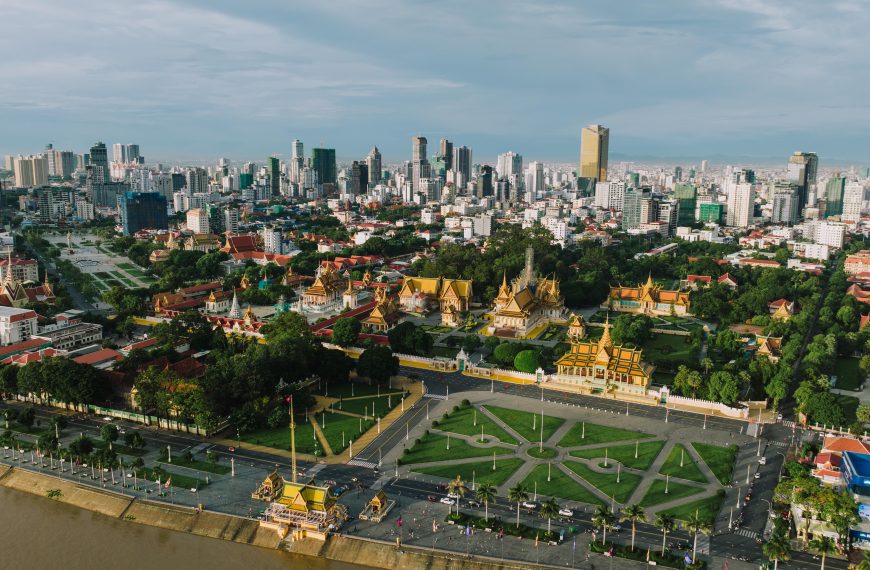
The second thing was how expensive the property was. Specifically, I walked around the leafier parts of Phnom Penh, the areas around Boeung Keng Kang, the corridors near the Independence Monument, the residential streets that the more established Cambodian and expat community lived in, and I saw houses for sale at prices in the millions of dollars. Not one or two outliers. Whole streets of them. I could not work it out. Bangkok in 2009 had property at high prices too, but Bangkok had a working middle class that could justify those prices through domestic demand alone. Phnom Penh in 2009 did not have anything close to the domestic demand base that would justify a million-dollar residential valuation, and yet the market was clearing at those prices.
The Question I Have Never Been Able to Answer
I remember standing outside a house near the Russian Embassy area in 2009, looking at a for-sale sign, and asking a Cambodian friend I had met that week who was actually buying these places. He was a young Cambodian professional with international experience, and his answer was vague. Some wealthy Cambodian families, he said. Then some overseas Cambodian money coming back. Also some Chinese money. A bit of Vietnamese money. And some money from parts of the region that were not asking too many questions about where money came from. So that was the first time it occurred to me that the property market I was looking at was not really a property market in the way I understood the concept from a Western frame. Rather, it was a repository. It was a place that money went to sit, not a place that reflected local income levels and local rental yields.
Now this confusion has followed me for seventeen years. Every time I have gone back to Cambodia, I have looked at the property market again, and every time I have come away with the same feeling. The prices do not make sense on the fundamentals. And yet the prices persist. Specifically, they persist through political changes. They persist through regional economic shocks. They persist through moments when the domestic economy is visibly struggling. Somehow the property valuations in Phnom Penh keep clearing at levels that no honest yield-based analysis can justify.
What Has Actually Happened to Cambodian Condo Prices Since 2009
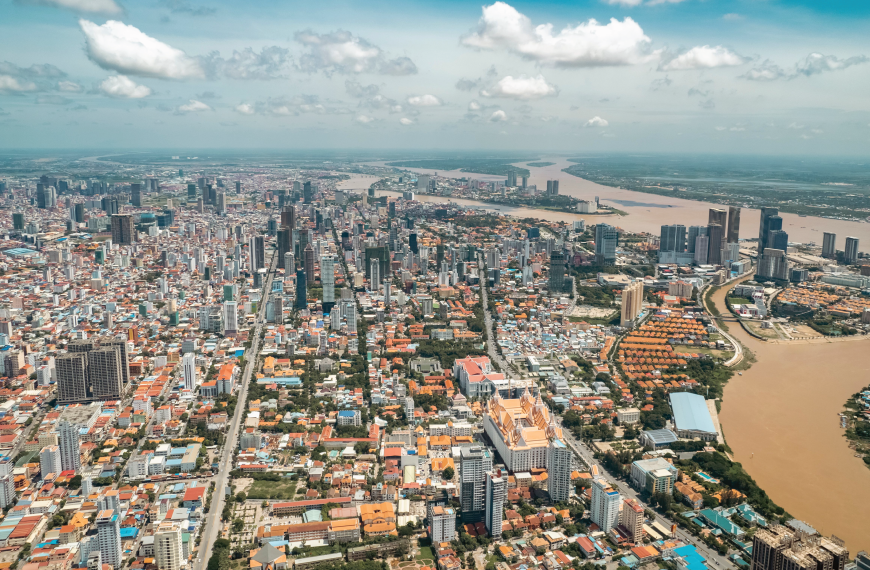
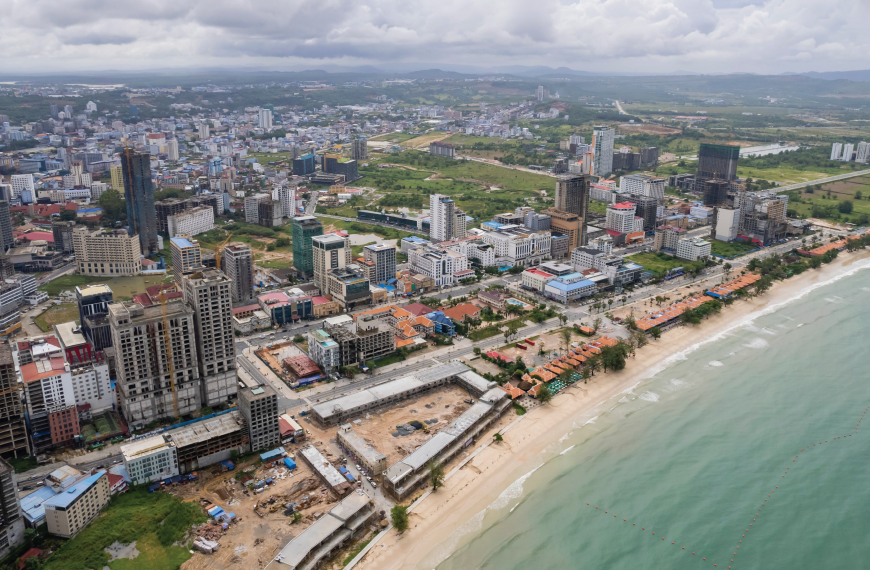
Let me walk through what has actually happened to the Cambodian condo market since 2009, because the trajectory is telling. Specifically, in the years after my first visit, Cambodia became a serious construction destination. Phnom Penh in particular saw a boom in condominium development, driven substantially by Chinese capital. The Chinese-Cambodian diplomatic and commercial relationship deepened. Sihanoukville was transformed by a wave of Chinese investment that turned it into a casino and construction town for a period. Then the 2019 ban on online gambling, followed by the 2020 pandemic, hit that trajectory hard.
The condominium market in Phnom Penh took a serious knock in 2020. Prices dropped. Rental yields collapsed as the expat population thinned out. Multiple developments were left unfinished. So the boom-and-bust cycle that defines emerging property markets played out visibly in Cambodia, and anyone who had bought into the market at the 2018 or 2019 peak was looking at real losses by 2021.
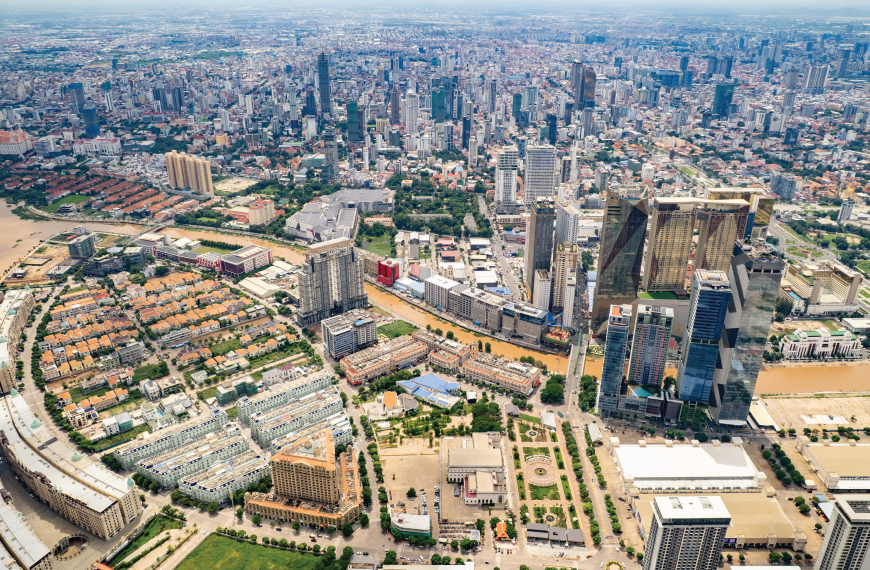
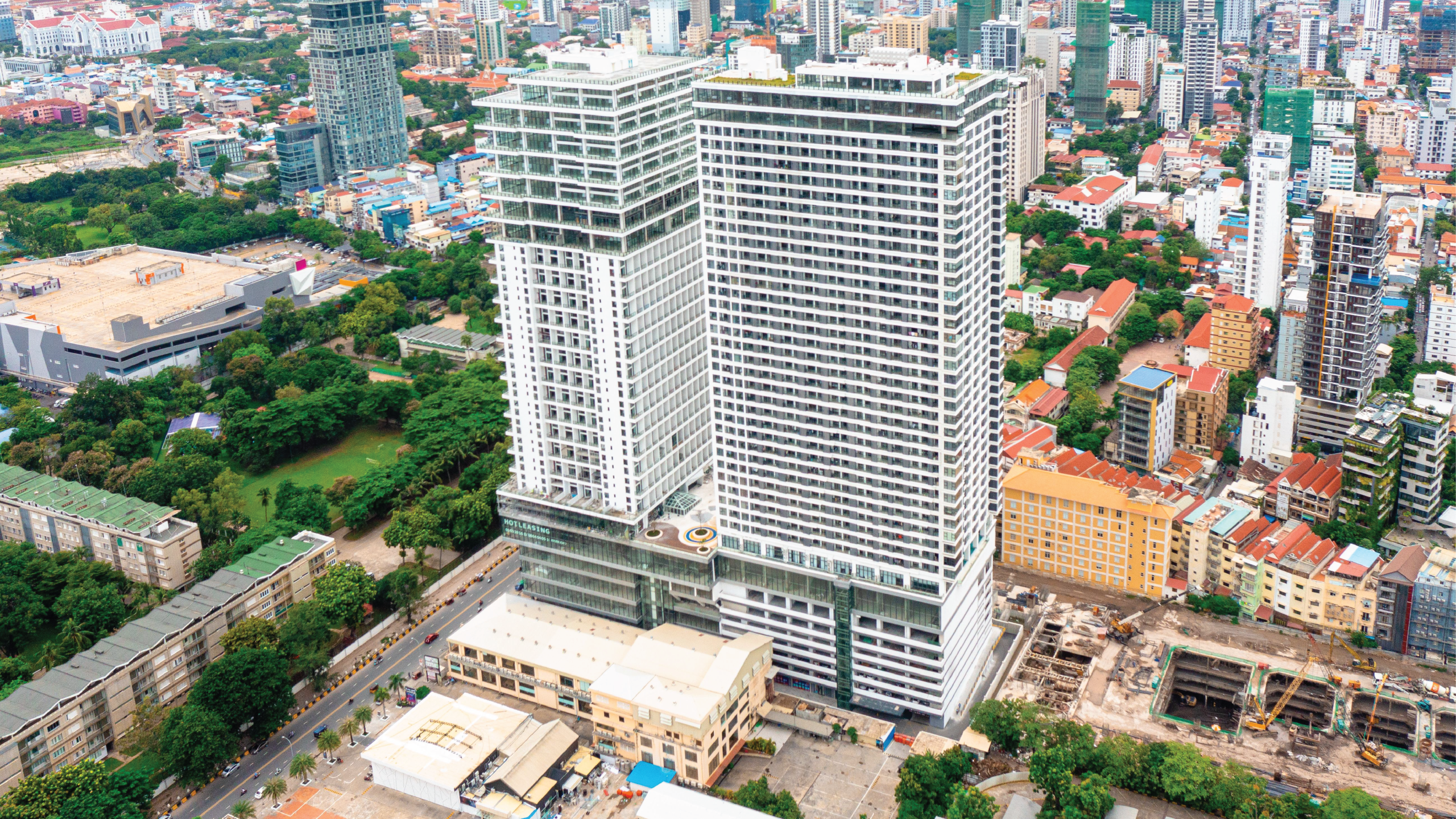
By 2026, the market has partially recovered. Not fully. Specifically, Phnom Penh condo prices in the central corridors are running roughly at 2,500 to 3,500 dollars per square metre for the mid-range international developments, with the premium riverside and BKK1 developments pushing higher. So a standard 60 to 80 square metre one-bedroom condo in a mid-range Phnom Penh development is going to cost the foreign buyer somewhere between 150,000 and 280,000 dollars, plus the various fees, taxes, and management costs that come with a Cambodian condo purchase.
The Yield Question That Matters
Now let me talk about yields, because this is where the case for or against Cambodian condos actually gets decided. Specifically, when you buy a property as an investment, the question is not just whether the price is going to appreciate. The question is what the rental income is going to be, what the running costs are going to be, and what the net yield is going to look like after all of the frictions.
Honestly, the Phnom Penh rental market for the kind of condo the foreigner buys is thin. Really thin. Specifically, the expat population that would rent these units is small. The Cambodian professional middle class that would rent at foreigner-level prices is also small. So the target rental population is a narrow slice of foreign professionals, embassy staff, NGO workers, and the occasional wealthy Cambodian family, and there are not enough of them to support the number of condos that have been built.
What the Rental Numbers Actually Look Like on the Ground
Specifically, a 150,000 dollar condo in central Phnom Penh will typically rent for 700 to 1,000 dollars a month in 2026, if you can find a tenant, and that’s a huge if. Notably, the vacancy rates are high. So the gross yield, before any expenses, sits somewhere between 5 and 8 per cent on paper. Which sounds reasonable until you start subtracting the actual costs. Ultimately, condominium management fees in Phnom Penh run at roughly 1 to 2 dollars per square metre per month, so a 70 square metre unit is looking at 70 to 140 dollars a month in management fees alone. Then property tax, roughly 0.1 per cent of assessed value annually, though the assessed value is typically much lower than the market value. Add repairs and maintenance, which in a Cambodian construction context are meaningful, because the build quality varies enormously and the newer developments often have issues that emerge in year two or three. Rental agent commissions cost you roughly one month’s rent per new tenant if you are using an agent. Meanwhile, income tax on the rental income sits at rates that have hardened in recent years. And the void periods between tenants absorb another chunk.
What the Net Yield Actually Looks Like
Realistically, when you put all of the expenses through, the net yield on a Phnom Penh condo purchase in 2026 is coming out at somewhere between 2 and 4 per cent. So on the higher-quality developments where the management fees are more predictable and the tenant profile is better, you might get toward the top of that range. On the lower-quality developments where the void periods are longer and the maintenance costs are less predictable, you are down at the bottom of it, or below.
Honestly, that is not a compelling yield. In 2026, you can put money into a US Treasury bond and get roughly 4 to 4.5 per cent risk-free. You can put money into a UK gilt or a German Bund and get similar. So the Phnom Penh condo yield, once you have accounted for all the expenses, is roughly the same as a risk-free sovereign bond in a developed Western economy. Except that the Phnom Penh condo carries all of the risks that the Treasury bond does not carry. Currency risk. Tenancy risk. Political risk. Property market risk. Construction quality risk. Foreign ownership legal framework risk. So you are getting sovereign-bond level yield with emerging-market property risk, which is a bad trade by any honest measure.
The Capital Appreciation Question
Now, the counterargument is that the yield is not the whole picture. Specifically, the case for Cambodian condos is often made on the capital appreciation side. If the country continues to develop, if the Chinese money continues to flow, if Phnom Penh continues to grow, the argument goes, then the capital value of the property is going to appreciate meaningfully over the next decade, and the capital gain is where the actual return comes from.
Honestly, I do not buy this argument for three reasons. First, the price starting point is already high. So the room for appreciation from current levels is limited unless a substantial new wave of foreign capital arrives, and there is no visible trigger for that. Second, the supply side is enormous. Phnom Penh has been building condominiums for a decade at a pace that has already produced an oversupply, and the pipeline of unfinished and planned developments means the supply will keep growing whether the demand justifies it or not. Third, the trajectory of Chinese capital into Cambodia has plateaued, and in some categories reversed, as Chinese domestic capital controls tighten and Chinese buyers pivot toward Malaysia, Thailand, and other regional markets.
So the capital appreciation case rests on assumptions I do not think stand up to scrutiny. Prices might tick up gradually. They might not. They might drop sharply if the next regional shock hits. Honestly, in my view, the capital appreciation case for Cambodian condos in 2026 is speculation, not investment.
What the Same Money Buys You Elsewhere
Let me put this in comparative terms, because the honest test of any investment is what your money would do somewhere else. Specifically, 150,000 to 250,000 dollars is the range we are talking about for a Phnom Penh condo. What does that money buy you in other markets that also appeal to the Western foreigner?
In Penang, Malaysia, 200,000 dollars buys you a proper Georgetown-adjacent apartment with genuine long-term value, in a country whose legal framework is more foreign-friendly than Cambodia’s, whose infrastructure is substantially better, and whose currency has held up better against the dollar over the past decade. Notably, the rental market is deeper and the yields are actually similar, but the underlying asset is safer.
In central Chiang Mai, 200,000 dollars buys you a proper condo in a good building, in a city with a much larger foreign resident base, a deeper rental market, and a more established property system. The Thai property market has its own problems, which I have covered elsewhere, but the basic infrastructure of buying, renting, and eventually selling a condo is more developed.
What Bali and European Markets Offer for the Same Money
In Bali, similar money at the entry level buys you a leasehold villa arrangement that gives you a lifestyle asset with rental income potential in a market with actual tourist demand. So the leasehold nature is a limitation, but the rental market is real, and the appreciation trajectory has been more consistent than Cambodia’s.
In Portugal, southern Spain, or parts of Italy, 200,000 dollars buys you a small apartment in a EU country with a functioning legal framework, freehold ownership, and the ability to actually enforce contracts through a European court. Honestly, the rental yield in these markets is broadly similar to Phnom Penh, and the underlying asset is denominated in euros against a currency framework that has held up.
So the question is not whether Phnom Penh condos can generate a return. The question is whether they generate a better return, adjusted for the risks involved, than the alternatives available for the same money. My honest answer is that they do not.
What Would Have to Change for Cambodian Condos to Be a Good Investment
I want to be specific about this, because the honest analytical question is what would need to be true for Cambodian condos to actually represent good value. Ultimately, my view is that the prices would have to come down substantially. Specifically, if Cambodian condos were trading at roughly 20 per cent of the equivalent Western price for genuinely comparable specifications, then the numbers would start to make sense. So a Phnom Penh condo comparable to a 400,000 dollar apartment in Portugal or southern Spain would need to be trading at roughly 80,000 dollars to justify the additional risk premium. It is not. It is trading at 150,000 to 250,000 dollars, which is 40 to 60 per cent of the Western price, and that is not enough of a discount to compensate for the risk gap.
Honestly, the same maths applies to every category of Cambodian condo. The premium riverside developments would need to be at 20 per cent of the equivalent London or Paris equivalent to make sense. Mid-range BKK1 developments would need to be at 20 per cent of the equivalent Barcelona or Lisbon equivalent. And entry-level Phnom Penh condos would need to be at 20 per cent of the equivalent smaller-European-city entry point. None of them are. All of them are trading at prices that assume Cambodia is closer to a functioning developed-market property jurisdiction than it actually is.
The Structural Reason the Prices Do Not Come Down
Now, the question I have been sitting with for seventeen years is why the prices do not come down to reflect these fundamentals. Specifically, in a Western market, the pricing mismatch I have described would generate obvious market corrections. Sellers would face reality. Prices would drop. Buyers would eventually acquire the properties at levels that reflected the yield mathematics. So the market would clear at a rational level.
Honestly, this does not happen in Cambodia, and I do not think it is going to. My best current understanding of why is that the market is not really a property market in the way a Western market is. It is a repository for capital that does not have many other homes. Specifically, some of that capital is legitimate Chinese money looking for a home outside the mainland regulatory framework. Some of it is Cambodian domestic wealth that has few other productive investment options in the country. Some of it is regional wealth from Vietnam, Thailand, and beyond that is looking for property exposure in a jurisdiction where the questions asked are limited. And some of it is money whose origin I would rather not speculate about in print.
Ultimately, the point is that the buyers holding up the current prices are not buying on yield fundamentals. They are buying for reasons that have nothing to do with rental returns or long-term capital appreciation prospects. So when yield-based Western investors look at the numbers and walk away, the prices do not fall, because the non-yield-based capital keeps clearing the market.
What This Means for the Prospective Western Foreign Buyer
Let me put this in practical terms for the Western foreigner who is looking at a Cambodian condo right now. Specifically, if you are buying for lifestyle reasons, if you want to live in Phnom Penh and you want your own place and you have money you can afford to have tied up in Cambodian real estate, then a condo purchase can make sense at current prices. The lifestyle value is real. The location value is real. Notably, the yearly business visa framework I have written about elsewhere makes Cambodia genuinely workable as a long-term destination, and owning your own place there simplifies aspects of the residence pattern.
By contrast, if you are buying as an investment, if the primary question is whether the return justifies the risk, then my honest view is no. Specifically, the yield mathematics do not work at current prices. The capital appreciation case is speculative. The alternatives available for the same money elsewhere offer better risk-adjusted returns. So the investment case does not hold up.
Honestly, the trick is being honest with yourself about which category of buyer you are. If you are a lifestyle buyer with money you can afford to see stay flat or slightly decline for a decade, Cambodian condos can work as part of a broader life-in-Cambodia commitment. If you are an investment buyer looking for a return, they do not.
The Honest Verdict
So my honest verdict, after seventeen years of watching this market from the outside and thinking about it from the inside, is this. Cambodian condos at current prices are not a good investment. The yields are inadequate for the risk. Capital appreciation rests on assumptions I do not think stand up. And comparable money in other markets does more work with less risk. Ultimately, the prices are supported by a category of buyer who is not buying on fundamentals, and the fundamentals are not going to catch up with the prices in any realistic timeframe.
For Cambodian condos to become a good investment on the fundamentals, the prices would need to fall to roughly 20 per cent of Western equivalents. They are currently trading at 40 to 60 per cent of Western equivalents, which is not a big enough discount to compensate for the risks. So until that changes, my honest recommendation to anybody asking me is that if you love Cambodia and want to live there, buying a condo can be a reasonable lifestyle decision at current prices. If you are asking me whether it is a good investment, the answer is no.
That is what I think, based on what I have watched happen since 2009 and what I understand about the market as it stands in 2026. Take from it what you will.
Frequently Asked Questions
Is buying a condo in Cambodia a good investment in 2026?
Honestly, no. Specifically, the yields on Phnom Penh condos, after all of the expenses, sit at roughly 2 to 4 per cent net, which is broadly the same as a risk-free US Treasury bond in 2026. So the Cambodian condo carries all of the additional risks (currency, tenancy, political, property market, construction quality, foreign ownership legal framework) without providing meaningful yield compensation for those risks. Ultimately, the investment case for Cambodian condos at current prices does not stand up.
Why has the author been confused by Cambodian property prices since 2009?
Specifically, on his first visit to Phnom Penh in 2009, the author was staggered by the contrast between the visible poverty of the country and the multi-million-dollar residential valuations in the leafier parts of the city. Honestly, the domestic income base did not come close to justifying those prices on any yield-based analysis, and yet the market was clearing at those valuations. So the answer he arrived at, then and now, is that the Phnom Penh property market is not really a property market in the Western sense. It is a repository for capital from various regional sources that is buying for reasons that have nothing to do with rental yields or long-term appreciation.
What are Phnom Penh condo prices in 2026?
Specifically, mid-range Phnom Penh condos in the central corridors run roughly 2,500 to 3,500 dollars per square metre in 2026. So a standard 60 to 80 square metre one-bedroom condo in a mid-range international-standard development costs the foreign buyer somewhere between 150,000 and 280,000 dollars. The premium riverside and BKK1 developments push higher. By contrast, the market has partially recovered from the 2020 crash but not fully.
What is the rental yield on Phnom Penh condos?
Specifically, gross rental yields on a 150,000 dollar Phnom Penh condo run at 5 to 8 per cent on paper, based on a 700 to 1,000 dollar per month rent if you can find a tenant. However, once you account for the actual costs (management fees of 1-2 dollars per square metre per month, property tax, repairs and maintenance, rental agent commissions, income tax on rental income, and void periods), the net yield comes out at roughly 2 to 4 per cent. So this is broadly the same as a risk-free US Treasury bond in 2026, without the risk-adjusted return the additional Cambodian-specific risks would need to justify.
What would the same money buy you elsewhere?
Specifically, 150,000 to 250,000 dollars buys you a proper Georgetown-adjacent apartment in Penang, Malaysia, with a stronger legal framework and better infrastructure than Cambodia. Central Chiang Mai gets you a proper condo in a good building with a deeper rental market. Bali opens the leasehold villa market with actual tourist demand behind the rental proposition. And in Portugal, southern Spain, or parts of Italy, the same money buys you a small apartment in an EU country with a functioning legal framework, freehold ownership, and euro-denominated exposure. Honestly, the risk-adjusted return in these markets is better than what Cambodia offers at current prices.
What would need to change for Cambodian condos to become a good investment?
Specifically, the prices would need to fall to roughly 20 per cent of the equivalent Western price for genuinely comparable specifications. Currently, Cambodian condos are trading at 40 to 60 per cent of Western equivalents. Honestly, this is not a big enough discount to compensate for the additional risks. So a Phnom Penh condo comparable to a 400,000 dollar Portugal or Spain apartment would need to be trading at roughly 80,000 dollars, not the 150,000 to 250,000 dollars the market is currently clearing at.
Why do Cambodian condo prices not fall to reflect these fundamentals?
Specifically, the market is not really a property market in the Western sense. Rather, it is a repository for capital that does not have many other homes. Some of it is legitimate Chinese money looking for a home outside the mainland regulatory framework. Then Cambodian domestic wealth with few other productive investment options in the country makes up another share. And regional wealth from Vietnam, Thailand, and beyond looks for property exposure in a jurisdiction where the questions asked are limited. Honestly, the buyers holding up the current prices are not buying on yield fundamentals, so when yield-based investors walk away, the prices do not fall because the non-yield-based capital keeps clearing the market.
Is the capital appreciation case for Cambodian condos strong?
Honestly, no. Specifically, the starting price is already high, the supply pipeline is enormous, and the Chinese capital that drove much of the historical appreciation has plateaued or reversed as Chinese domestic capital controls tighten. So the capital appreciation case rests on assumptions the author does not think stand up to scrutiny. Prices might tick up gradually, they might not, and they might drop sharply if the next regional shock hits. Ultimately, the capital appreciation case for Cambodian condos in 2026 is speculation rather than investment.
Can a Cambodian condo work as a lifestyle purchase?
Yes. Specifically, if you want to live in Phnom Penh and you have money you can afford to have tied up in Cambodian real estate for the long term, a condo purchase can make sense at current prices. The lifestyle value is real, the location value is real, and the yearly business visa framework the author has covered elsewhere makes Cambodia genuinely workable as a long-term destination. Honestly, the distinction matters. Lifestyle-buyer maths and investment-buyer maths are different questions, and the article addresses the investment question.
What is the practical takeaway for the prospective Western foreign buyer?
Ultimately, the practical takeaway is that you need to be honest with yourself about which category of buyer you are. Specifically, if you are a lifestyle buyer with money you can afford to see stay flat or slightly decline for a decade, Cambodian condos can work as part of a broader life-in-Cambodia commitment. If you are an investment buyer looking for a return, the numbers do not work at current prices. Honestly, until Cambodian condo prices fall to roughly 20 per cent of Western equivalents, the investment case does not hold up.
Sources
- National Bank of Cambodia Real Estate and Construction Sector Reports — the official Cambodian central bank documentation of the Phnom Penh property market including the Sihanoukville construction cycle, the 2019 online gambling ban impact, and the 2020 pandemic market correction referenced throughout the article
https://www.nbc.gov.kh/english/index.php - Cambodia Ministry of Land Management Urban Planning and Construction — the official documentation of the Cambodian property registration framework, the foreign ownership restrictions on landed property, and the strata-title condominium framework that governs foreign condo purchases referenced in the article
https://www.mlmupc.gov.kh/ - Knight Frank Cambodia Phnom Penh Residential Market Report 2026 — the international property consultancy documentation of Phnom Penh condominium pricing at 2,500 to 3,500 dollars per square metre for mid-range central developments referenced in the article’s pricing analysis
https://www.knightfrank.com.kh/research - CBRE Cambodia Phnom Penh Property Market Overview — the international real estate services documentation of the Phnom Penh residential market including the rental yield ranges of 5 to 8 per cent gross on mid-range condos and the vacancy rate context referenced in the article
https://www.cbre.com.kh/en/research - Numbeo Phnom Penh Cost of Living and Property Database — the international cost-of-living database documenting Phnom Penh rental prices of 700 to 1,000 dollars per month for mid-range central condos and the broader cost framework referenced in the article’s yield calculation
https://www.numbeo.com/cost-of-living/in/Phnom-Penh - Realestate.com.kh Phnom Penh Condominium Listings Database — the primary Cambodian property listings platform documenting current asking prices for condominium units across Phnom Penh developments including BKK1, riverside, and mid-range international developments referenced in the article
https://www.realestate.com.kh/ - IPS Cambodia Real Estate Investment Analysis — the Cambodian property consultancy documentation of the rental yield mathematics, the management fee structure, and the operational cost framework for the foreign condo buyer in Phnom Penh referenced in the article
https://www.ipscambodia.com/ - World Bank Cambodia Country Overview — the international institution’s documentation of the Cambodian economy including the GDP per capita trajectory, the poverty framework, and the broader development context that the article references from the 2009 baseline through 2026
https://www.worldbank.org/en/country/cambodia/overview - Cambodia Investment Board Foreign Ownership Documentation — the official documentation of the Cambodian foreign ownership framework for strata-title condominium units and the broader legal context governing foreign property purchases referenced in the article
https://www.cambodiainvestment.gov.kh/ - Wikipedia Real Estate in Cambodia — the comprehensive documentation of the Cambodian property market including the Chinese capital flow trajectory, the Sihanoukville transformation, and the historical price development referenced in the article’s post-2009 market analysis
https://en.wikipedia.org/wiki/Real_estate_in_Cambodia - Wikipedia Economy of Cambodia — the documentation of the Cambodian economy including the GDP per capita trajectory since 2009, the sectoral composition, and the broader macroeconomic context referenced in the article’s 2009-2026 pricing puzzle analysis
https://en.wikipedia.org/wiki/Economy_of_Cambodia - United States Treasury Yield Curve Data 2026 — the official US Treasury documentation of the 4 to 4.5 per cent risk-free yield on US government bonds in 2026 that the article uses as the comparative benchmark for evaluating Cambodian condo yields
https://home.treasury.gov/policy-issues/financing-the-government/interest-rate-statistics - Numbeo Penang George Town Cost of Living and Property Database — the international database documenting Georgetown-adjacent apartment pricing referenced in the article’s comparative analysis of what similar money buys in the region
https://www.numbeo.com/cost-of-living/in/George-Town - Numbeo Chiang Mai Cost of Living and Property Database — the international database documenting central Chiang Mai condominium pricing referenced in the article’s comparative analysis of alternative property markets
https://www.numbeo.com/cost-of-living/in/Chiang-Mai - Numbeo Lisbon Cost of Living and Property Database — the international database documenting Lisbon apartment pricing referenced in the article’s comparative analysis of European property markets available for the same 150 to 250 thousand dollar entry point
https://www.numbeo.com/cost-of-living/in/Lisbon - Global Property Guide Cambodia Investment Analysis — the international property research platform documentation of Cambodian residential rental yields, market trends, and the broader emerging-market property context that the article draws on for the yield analysis
https://www.globalpropertyguide.com/Asia/Cambodia - Sihanoukville Development and Chinese Investment Documentation — the coverage of the Chinese capital flow into Sihanoukville from roughly 2015 through 2019 that transformed the town before the online gambling ban and pandemic reversed the trajectory referenced in the article’s market history analysis
https://en.wikipedia.org/wiki/Sihanoukville_(city)