Why I Wanted to Write This Article
I wanted to write this article because Cambodia, for all its genuine problems that I have written about in detail in other articles, still offers something that almost no other country in Southeast Asia offers the long-term Western foreigner. Specifically, it offers a yearly business visa that is genuinely straightforward, genuinely affordable, and genuinely renewable indefinitely.
So I want to walk you through how it works in 2026, what it costs, what paperwork you actually need, what has tightened recently, and how to do it in practice. The article is going to cover the technical procedure, but it is also going to cover the practical reality of what Cambodia long-term residence actually feels like in 2026, because the paperwork is only half the story.
The Basic Framework You Need to Understand
Here is how the system works at the simplest level. You arrive in Cambodia on what is technically called an Ordinary Visa, or E-class visa, which costs 35 dollars and gives you 30 days on entry. The Ordinary Visa is the foundation. By contrast with the Tourist Visa, which cannot be converted into a long-term extension, the Ordinary Visa can be extended inside Cambodia into one of four sub-categories: EB for business or employment, EG for general or job-seeking, ER for retirement, and ES for student. So the practical sequence is straightforward. Arrive on the E-class Ordinary Visa, then apply for the EB extension within the first 30 days, and you are on the yearly business visa pathway.
The crucial distinction the prospective long-term resident needs to understand: the Tourist Visa does not convert into the long-term pathway. If you arrive on the Tourist Visa, you have to leave Cambodia, re-enter on an Ordinary Visa, and start the extension process from there. Specifically, since November 2025, the automatic Tourist Visa extensions of the pandemic era have ended definitively. Repeat border runs on Tourist Visas are increasingly scrutinised, so the right move from day one is to arrive on the Ordinary Visa rather than try to convert from a Tourist Visa later.
How the EB Extension Actually Works
The EB extension is the version of the long-term visa that most Western foreigners end up on. It applies to employees, business owners, freelancers, investors, volunteers, and remote workers. Critically, the extension covers one month, three months, six months, or twelve months, and the six-month and twelve-month versions come with multiple-entry privileges. So the twelve-month EB extension is the standard package for the long-term resident. You get a full year in the country, you can leave and re-enter as many times as you want during that year, and at the end of the year you renew the EB extension again for another year.
Renewal repeats indefinitely. Honestly, this is the part that the Western expat space sometimes underplays. There is no maximum number of renewals. No escalating fee structure prices you out over time. And no points-based system or rolling residency clock eventually forces you to leave. The Western foreigner on the EB extension can renew it every year for as long as he wants to live in Cambodia. Indeed, there are Western foreigners who have been living in Cambodia for over a decade on continuously renewed EB extensions, and the system has accommodated them throughout.
The Cost of the Yearly Business Visa in 2026
Specifically, the twelve-month EB extension costs roughly 285 to 300 dollars through a local visa agent in Phnom Penh. The six-month version costs around 160 to 170 dollars, the three-month version around 85 dollars, and the one-month version around 50 dollars. Notably, the twelve-month version is the obvious choice for the long-term resident on a per-month basis, because the annual fee works out to roughly 24 to 25 dollars per month for legal residence in the country.
By contrast with the Thailand visa framework, where the long-term Western foreigner faces annual renewal fees, repeated reporting requirements, and the constant background risk of refusal at extension, the Cambodia EB extension at 285 dollars per year is structurally cheaper, structurally simpler, and structurally more predictable. By contrast with the Philippines long-stay framework, where the long-term resident is juggling tourist visa extensions, the SRRV deposit requirements, or the conversion to a quota immigrant visa, the Cambodia EB extension is a single annual transaction that does not require capital lock-up or proof of pension income.
What Paperwork You Actually Need
Now let me walk through what you actually need to provide to get the twelve-month EB extension processed. Specifically, you need a valid passport with at least six months remaining, at least one blank visa page, and two or three passport-sized photos on a white background. You need a stamped employment letter from a Cambodian employer if you are employed locally, or a self-written letter with a business stamp if you are self-employed. Notably, the business stamp itself costs under 15 dollars from any stamp shop in Phnom Penh, which gives you a sense of how light-touch the documentation requirement actually is in practice. Or you can have an agent arrnage it for you for a fee, this is what most people do.
The documentation burden compared to almost any other Southeast Asian long-stay visa is modest. You are not required to provide proof of bank balance. Proof of pension or salary is not required either. Medical certificates and police clearance certificates do not need to be supplied. The minimum income requirement does not exist. A bank deposit requirement does not exist either. Fundamentally, the philosophy of the EB extension is that if you can show you are doing something productive in Cambodia, even if the something is a self-written letter with a stamp, the country is happy to have you stay for the year.
The Work Permit Question That Has Tightened Since 2024
A technicality that needs touching on, but that a good agent may still be able to a help you avoid is that now the system has technically tightened. Specifically, since 2024, valid work permits have become a requirement for the six-month and twelve-month EB renewals. The Foreign Workforce Centralised Management System, or FWCMS, now shares data with immigration in real time. So immigration now denies EB visa renewals for the longer periods without valid work permits in place.
How the Visa Agent Process Actually Works
Specifically, the way the EB extension actually gets done in practice is through a visa agent. You walk into a visa agent’s office, typically in the BKK1 neighbourhood of Phnom Penh, although agents operate across Phnom Penh and Siem Reap. Hand over your passport, your photos and the agent takes care of the entire process. Three to five business days later, the agent calls you to come and collect your passport with the twelve-month EB extension stamped inside.
The agent service costs roughly 10 to 20 dollars extra on top of the underlying immigration fee, so you are paying around 285 to 300 dollars total for the twelve-month extension. By contrast with doing it yourself at the General Department of Immigration headquarters in Phnom Penh, the agent route is substantially smoother. The immigration office itself is workable but requires multiple visits, can have unpredictable processing times, and operates in Khmer with limited English support. Most Western foreigners use the agent route precisely because the cost differential is small and the time saved is substantial.
How Cambodia Compares to Malaysia and Vietnam
By contrast, Malaysia requires the MM2H deposit in a Malaysian bank account, currently at much higher thresholds than the original programme, plus various income and asset requirements that have hardened considerably since the 2021 relaunch. So Malaysia long-term residence works for the substantially-resourced foreigner but is no longer accessible to the mid-range Western retiree.
By contrast, Vietnam, as I have covered in detail in my article on the freehold question, does not even have a formal retirement visa pathway for the Western foreigner, and the long-stay options for the typical Western resident are structurally limited.
So when I look at Cambodia in the comparative context, what I see is the only Southeast Asian country where the long-term Western foreigner can secure twelve months of legal residence, with multiple-entry privileges, for roughly 285 to 300 dollars per year, with no capital lock-up requirement, no minimum income requirement, no pension requirement, no medical certificate requirement, no police clearance requirement, and indefinite renewal. That is what makes me call it a breeze. Honestly, no other country in the region offers anything comparable in 2026.
What Cambodia Long-Term Residence Actually Feels Like
Now let me talk about what the daily reality of Cambodia long-term residence actually feels like, because the paperwork is only half the story and the prospective resident deserves the honest picture rather than the booster pitch.
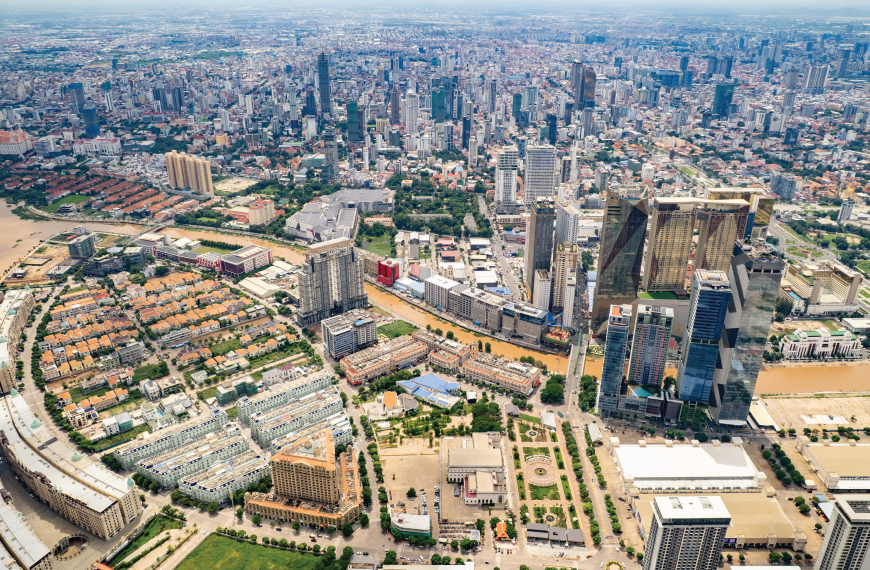
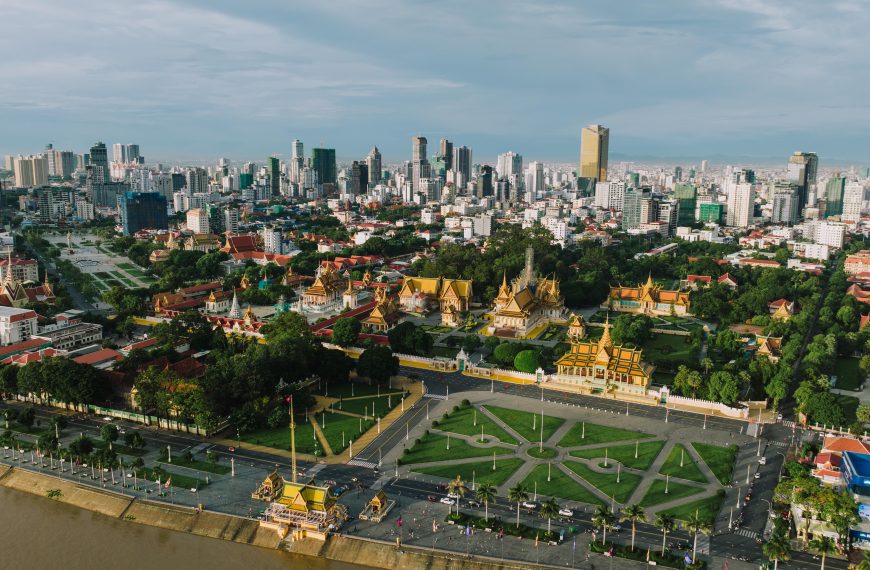
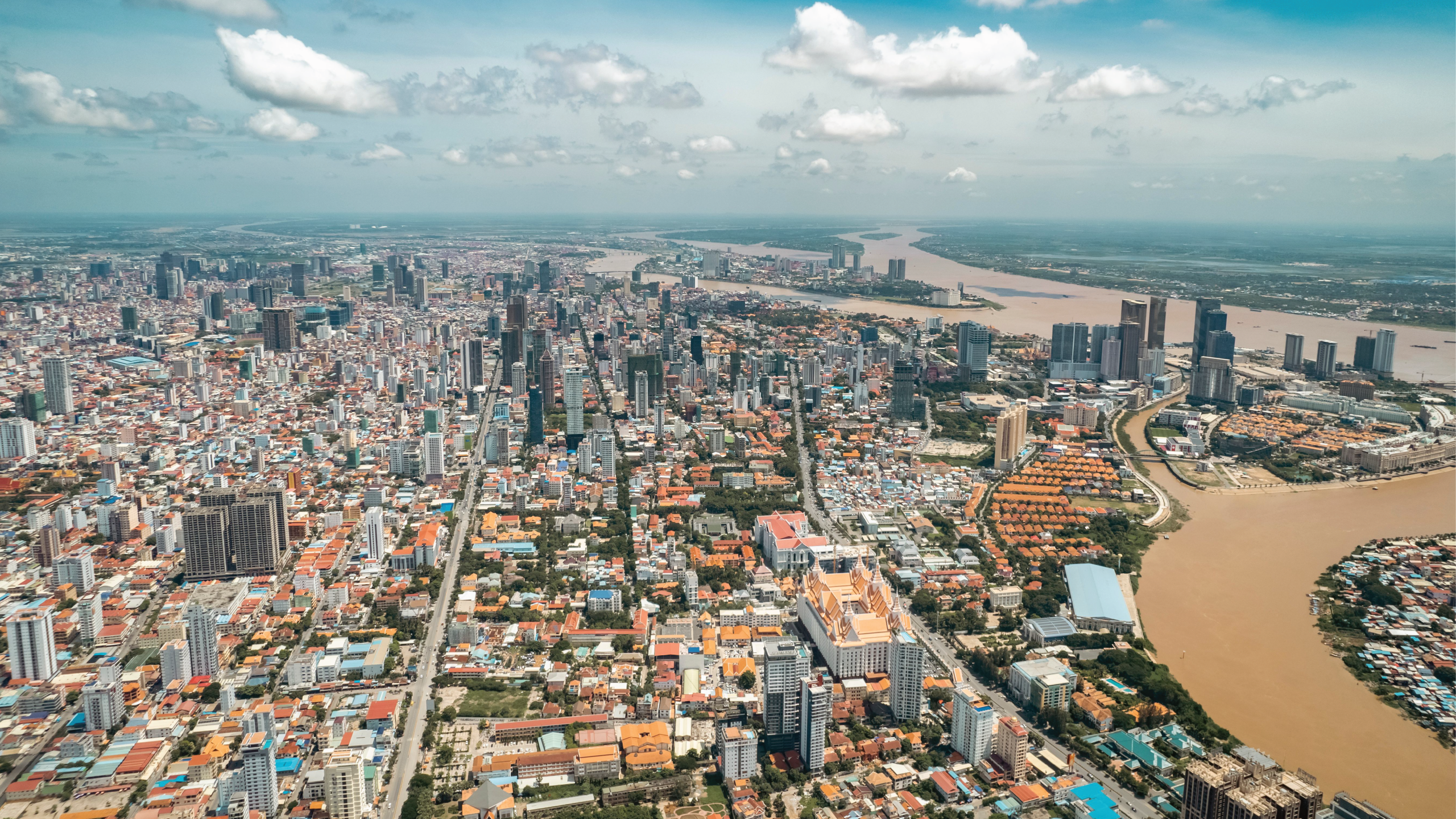
Specifically, Phnom Penh in 2026 is a working city with genuine infrastructure improvements over the past five years. Specifically, the Techo International Airport opened in 2025 and has substantially improved regional connectivity. A new Siem Reap Airport opened in 2023 and the broader tourism infrastructure has continued to develop. Cost of living for the long-term Western foreigner runs roughly 30 to 40 per cent lower than equivalent neighbourhoods in Bangkok or Kuala Lumpur, and the dollar economy of Cambodia means that the Western foreigner does not face the peso depreciation risk that the Philippines resident is currently navigating.
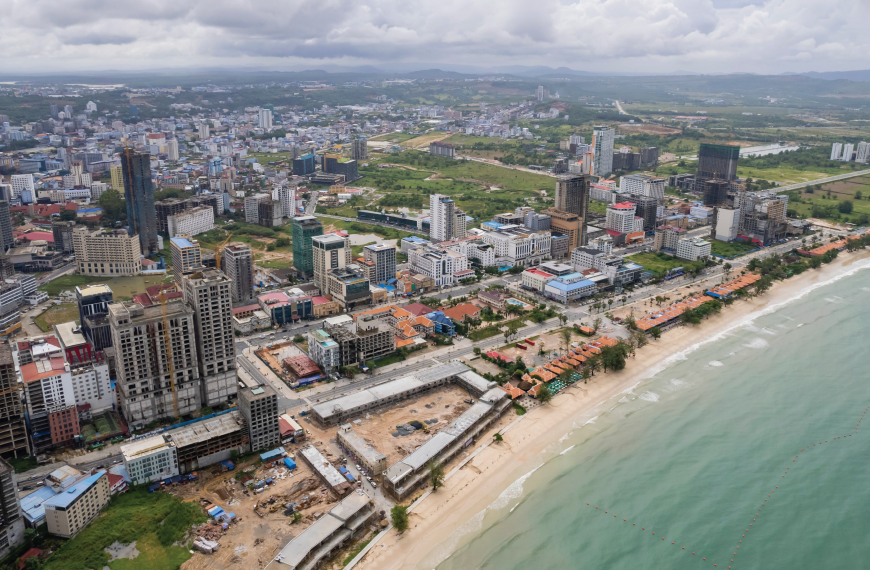
By contrast, the genuine problems I have covered elsewhere remain real. Sihanoukville is what it is. Chinese capital influence on parts of the country is what it is. Political situation is what it is. So the long-term Western foreigner who chooses Cambodia is not choosing a perfect country. He is choosing a country with a workable visa framework, a workable cost of living, a dollar economy, and a level of administrative friction that is substantially lower than the alternatives in the region.
What This Means for the Prospective Long-Term Resident
Honestly, the practical takeaway for the prospective long-term Western resident is straightforward. If you want to live in Cambodia for a year or more, the EB extension is the route. Arrive on the E-class Ordinary Visa at 35 dollars on arrival. Find a visa agent in BKK1 in Phnom Penh, or in Siem Reap if you prefer, and use them rather than trying to navigate the immigration office yourself. Pay roughly 285 to 300 dollars for the twelve-month EB extension. Make sure your landlord has completed the FPCS registration. Get the work permit at roughly 100 dollars per year if you are operating in a category that requires it.
By contrast with the Thailand and Philippines pathways that I have covered in other articles, the Cambodia pathway is genuinely straightforward, genuinely affordable, and genuinely renewable for as long as you want to stay. Specifically, this is what makes Cambodia continue to offer the long-stay option that the cost-conscious Western foreigner who wants to settle into the region without the financial and administrative complexity of the alternatives needs to take seriously.
Frequently Asked Questions
What is the Cambodia yearly business visa actually called?
Specifically, the yearly business visa is technically called the EB extension of stay, sometimes written as the EB EOS. EB stands for the Business or Employment category of the Ordinary E-class Visa extension. The Ordinary Visa itself is the foundation that you arrive on, costing 35 dollars and granting 30 days on entry. Honestly, within those first 30 days you apply for the EB extension, which can be granted for one month, three months, six months, or twelve months. The twelve-month version with multiple-entry privileges is the standard package for the long-term Western resident.
How much does the twelve-month EB extension cost in 2026?
Specifically, the twelve-month EB extension costs roughly 285 to 300 dollars through a local visa agent in Phnom Penh in 2026. The six-month version costs around 160 to 170 dollars. By contrast, the three-month version costs around 85 dollars. And the one-month version costs around 50 dollars. Notably, the twelve-month version is the obvious choice for the long-term resident, working out to roughly 24 to 25 dollars per month for legal residence, with multiple-entry privileges included so you can leave and re-enter Cambodia freely throughout the year.
Can I renew the EB extension indefinitely?
Yes. Honestly, there is no maximum number of renewals, no escalating fee structure, and no rolling residency clock that eventually forces you to leave. The Western foreigner on the EB extension can renew it every year for as long as he wants to live in Cambodia. Indeed, there are Western foreigners who have been living in Cambodia for over a decade on continuously renewed EB extensions, and the system has accommodated them throughout. So the indefinite renewability is one of the structural features that makes Cambodia long-term residence genuinely workable in a way that few other Southeast Asian countries match.
What paperwork do I need to provide?
Specifically, you need a valid passport with at least six months remaining, at least one blank visa page, and two or three passport-sized photos on a white background. You need a stamped employment letter from a Cambodian employer if you are employed locally, or a self-written letter with a business stamp if you are self-employed. Honestly, the business stamp itself costs under 15 dollars from any stamp shop in Phnom Penh. You also need FPCS registration proof, which your landlord is legally required to provide. By contrast with almost any other Southeast Asian long-stay visa, you do not need proof of bank balance, proof of pension or salary, medical certificates, or police clearance.
Can I arrive on a Tourist Visa and convert to the EB extension inside Cambodia?
No. Specifically, the Tourist Visa cannot be extended into the long-term EB pathway. If you arrive on a Tourist Visa, you have to leave Cambodia, re-enter on an Ordinary E-class Visa, and start the extension process from there. Notably, since November 2025, the automatic Tourist Visa extensions that were granted during the pandemic era have ended definitively. Repeat border runs on Tourist Visas increasingly attract scrutiny. So the right move from day one is to arrive on the Ordinary E-class Visa rather than try to convert from a Tourist Visa later.
How does the Cambodia framework compare to Thailand, Philippines, Malaysia, and Vietnam?
Specifically, Thailand requires the long-term Western foreigner to navigate the Non-Immigrant O-A retirement visa with its 800,000 baht bank deposit or 65,000 baht monthly income, plus health insurance, plus annual reporting, plus 90-day reporting. By contrast, the Philippines requires the SRRV deposit of 10,000 to 50,000 dollars locked into a Philippines bank account. Malaysia requires the MM2H deposit at much higher thresholds than the original programme. Vietnam does not even have a formal retirement visa pathway. So Cambodia, at 285 to 300 dollars per year with no capital lock-up requirement, no minimum income requirement, and indefinite renewal, is the simplest and cheapest of the regional pathways for the long-term Western foreigner in 2026.
What is the practical step-by-step for the prospective long-term resident?
Specifically, first, arrive on the E-class Ordinary Visa at 35 dollars on arrival rather than the Tourist Visa. Second, find accommodation and make sure your landlord completes the FPCS registration. Third, find a visa agent in BKK1 in Phnom Penh, or in Siem Reap if you prefer. Fourth, take your passport, photos, employment letter or self-written business letter, and FPCS registration to the agent within the first 30 days. Fifth, pay roughly 285 to 300 dollars for the twelve-month EB extension. Sixth, if you fall into a category that requires it, apply for the work permit at roughly 100 dollars per year. Then renew annually for as long as you want to stay. Honestly, that is the entire process.
Sources
- Cambodia Ministry of Foreign Affairs and International Cooperation Official E-Visa Portal — the foundational government documentation for the Ordinary E-class visa application and the broader visa framework referenced throughout the article
https://www.evisa.gov.kh/ - Cambodia E-Arrival Card Official Portal — the mandatory e-Arrival Card system that all air travellers must complete within 7 days before arrival as referenced in the article’s entry framework section
https://arrival.gov.kh/ - Cambodia General Department of Immigration Official Documentation — the official immigration body that processes the EB extension of stay applications referenced in the article’s procedural sections
https://www.immigration.gov.kh/ - Royal Embassy of Cambodia London Business Visa Documentation — the official UK embassy documentation of the Business Visa E-Class framework including the 3-month visa validity and 30 days allowable stay referenced in the article
https://www.cambodiaembassyuk.org/visa-cosular-services/business-visa-e-class/ - Royal Embassy of Cambodia Washington DC Business Type-E Visa Documentation — the official US embassy documentation of the Business Type-E Visa framework including supporting documents and fee structures referenced in the article
https://www.embassyofcambodiadc.org/business_visa_type-e.html - Cambodia Data Exchange CamDX Registration Services — the official Cambodian government platform for the invitation validation certificate mechanism referenced in the article’s business visa supporting documentation requirements
https://www.registrationservices.gov.kh/ - Khmer Times How to Get a Visa for Cambodia 2026 Guide — the comprehensive 2026 Cambodian newspaper coverage of all visa types including the EB, ER, EG, ES extension framework, the 1, 3, 6, and 12 month extension periods, and the multiple entry privileges for 6 and 12 month versions referenced throughout the article
https://www.khmertimeskh.com/501809324/how-to-get-a-visa-for-cambodia-2026-guide/ - Cambodia Expats Online Complete Guide to Visas Extensions and Work Permits 2026 — the comprehensive 2026 documentation of the EB extension costs (285-300 dollars for 12-month, 170 dollars for 6-month, 85 dollars for 3-month, 50 dollars for 1-month), the FWCMS data sharing tightening since 2024, and the November 2025 end of automatic Tourist Visa extensions referenced throughout the article
https://cambodiaexpatsonline.com/visa-guide - Expat Cambodia Business Visa EB Documentation — the documentation of the EB Visa indefinite renewability, the requirement to exit and re-enter on an Ordinary Visa rather than convert from Tourist Visa, and the 10 dollar per day overstay fine referenced in the article
https://expatcambodia.com/visas/business-visa - Wonders of Cambodia Visa 2026 What Travelers Expats and Long-Stay Visitors Need to Know — the April 2026 comprehensive analysis of the tightening of EB extension documentation requirements, the FPCS registration requirement, and the work permit verification framework referenced in the article
https://wondersofcambodia.com/cambodia-visa-2026-what-travelers-expats-and-long-stay-visitors-need-to-know/ - Expat Life Cambodia E-Class Visa Guide — the February 2026 documentation of the visa agent processing time of 3-7 working days, the agent service fees of 10-20 dollars on top of the underlying fee, and the post-30-day extension framework referenced in the article
https://www.expatlifecambodia.com/cambodian-business-visa/ - Expat Life Cambodia Visa Guide 2026 Costs and Requirements — the comprehensive 2026 cost documentation of the 12-month EB extension at 290-300 dollars through a local visa agent in BKK1 Phnom Penh, the no-employment-proof and no-income-requirement framework, and the 3-5 business day processing referenced throughout the article
https://expatlife.ai/cambodia/visa - Stamped Nomad Cambodia Digital Nomad Visa Guide 2026 — the February 2026 documentation of the 12-month extension at 285 dollars, the work permit at 100 dollars per year, and the comprehensive 2026 visa pathway documentation referenced in the article
https://www.stampednomad.com/guides/cambodia - Cambodia Visa Extension 2026 Comprehensive Guide — the documentation of the EB, ER, EG, ES extension categories, the multi-entry privileges on 6 and 12 month extensions, and the FPCS registration requirement referenced in the article
https://cambodiavisa.co/blog/cambodia-visa-extension-ways - Harvey Law Group Cambodia Business Visa EB Visa 2026 — the legal practitioner documentation of the EB Visa framework including the requirement for the work permit application, the family extension framework for spouse and children, and the absence of medical or language requirements referenced in the article
https://harveylawcorporation.com/cambodia-business-visa/ - Techo International Airport Phnom Penh Official Documentation — the 2025 airport opening that has substantially improved regional connectivity for Cambodia long-term residents referenced in the article’s daily-reality section
https://en.wikipedia.org/wiki/Techo_International_Airport - Siem Reap Angkor International Airport Documentation — the 2023 new airport opening that improved tourism infrastructure in northern Cambodia referenced in the article’s infrastructure improvements section
https://en.wikipedia.org/wiki/Siem_Reap%E2%80%93Angkor_International_Airport - Wikipedia Visa Policy of Cambodia — the comprehensive documentation of the Cambodia visa categories including the E-class Ordinary Visa, the EB, ER, EG, ES extensions, and the broader visa framework referenced throughout the article
https://en.wikipedia.org/wiki/Visa_policy_of_Cambodia - Cambodia Foreign Workforce Centralised Management System FWCMS Documentation — the official documentation of the work permit framework that now shares data with immigration in real time and has tightened the 6 and 12 month EB extension renewal requirements referenced in the article
https://www.fwcms.mlvt.gov.kh/ - Cambodia Ministry of Labor and Vocational Training MLVT Official Documentation — the official Cambodian government body that issues the work permits referenced in the article as required for the 6 and 12 month EB renewals since 2024
https://www.mlvt.gov.kh/ - Numbeo Phnom Penh Cost of Living Database — the international cost-of-living database documenting the 30-40 per cent lower cost of living for the Western foreigner in Phnom Penh compared to equivalent neighbourhoods in Bangkok or Kuala Lumpur referenced in the article’s daily-reality section
https://www.numbeo.com/cost-of-living/in/Phnom-Penh