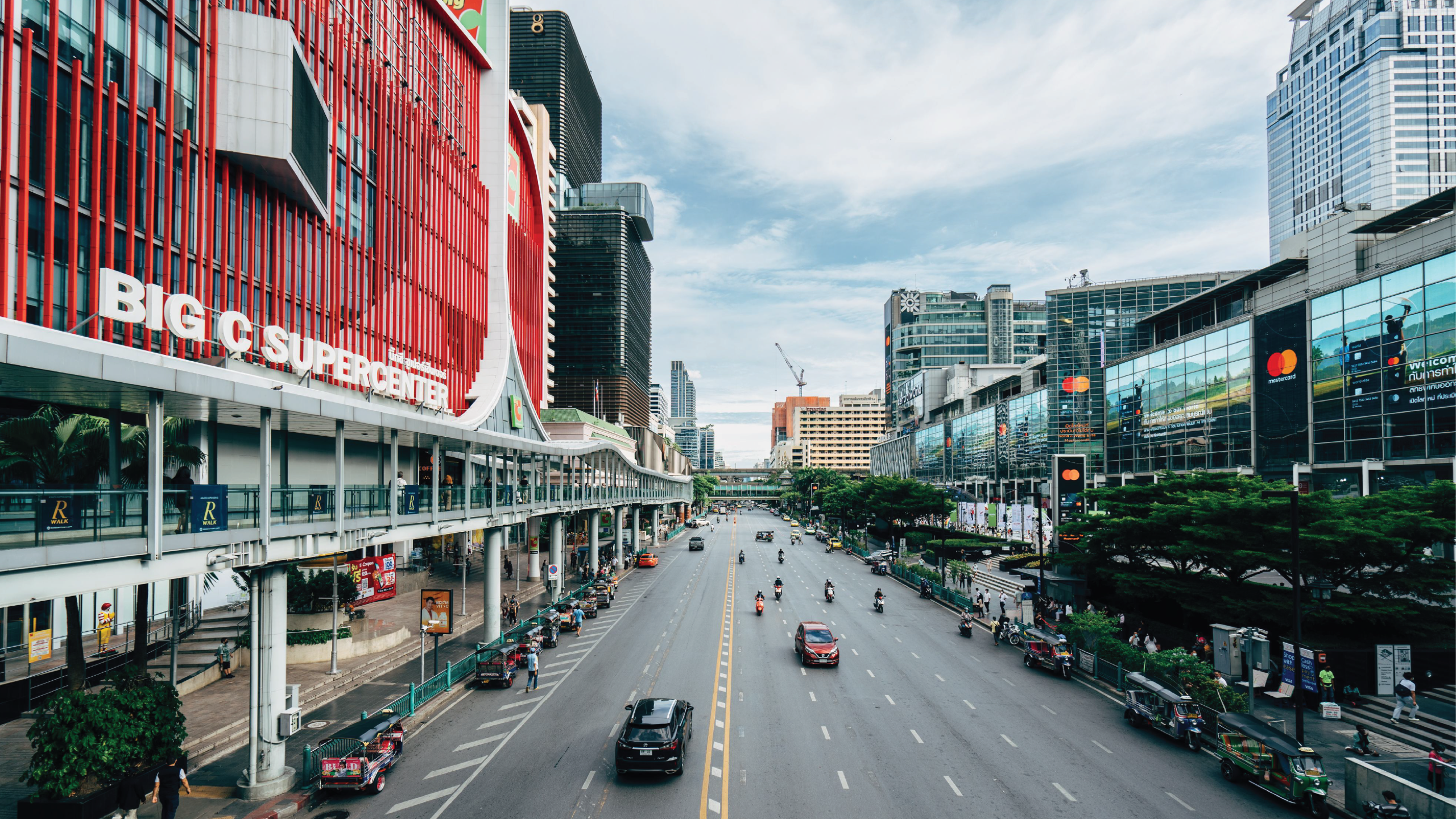
The Idea That Bangkok Has Become An International City
Can Bangkok be called an International City? I think the idea that it can is being repeated by people who do not understand what they are looking at, people who believe that Bangkok has joined the ranks of the global capitals, and that it deserves to be discussed in the same conversation as Singapore, Hong Kong, Tokyo, and Seoul.
I vehemently disagree. Bangkok is not an international city. It is a Southeast Asian capital with a small strip of imported pricing imposed on top of a Southeast Asian wage base, marketed to a foreign customer base through a combination of capital, image-management, and Western disillusionment with what is happening at home. The international-city framing has captured the minds of a generation of arrivals who are willing to take the lie hook, line, and sinker, and the framing exists primarily to disguise the structural inequality that the central-district transformation has produced.
A city I arrived into in 2005 is not the city that is being presented in 2026. The version that is being presented is one I think long-term Westerners need to push back against rather than passively absorb. This article is going to lay out why the international-city framing is a lie, what the framing is hiding, who benefits from the extraction, and what the honest 2026 picture of Bangkok actually looks like for anyone willing to see it.
What Is Actually Happening On The Ground In Bangkok
Let me start with what is actually happening on the ground.
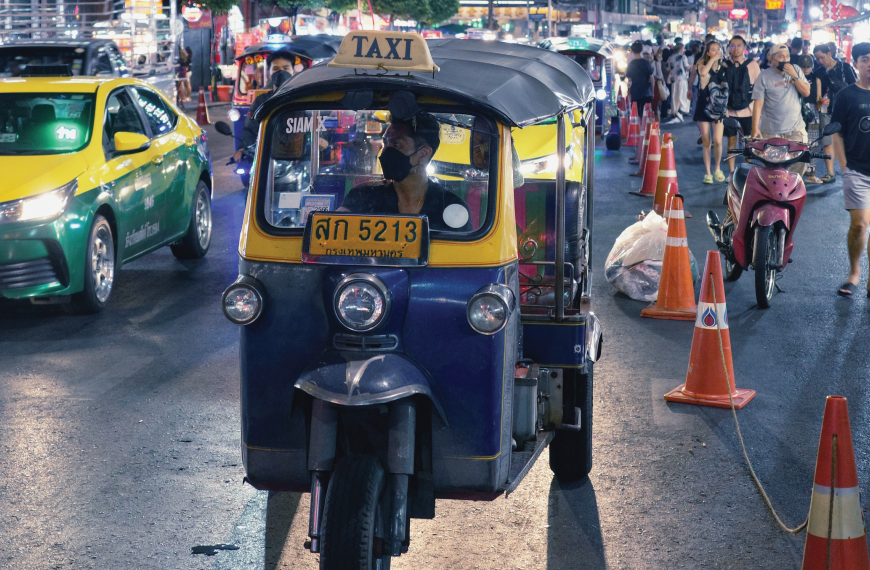
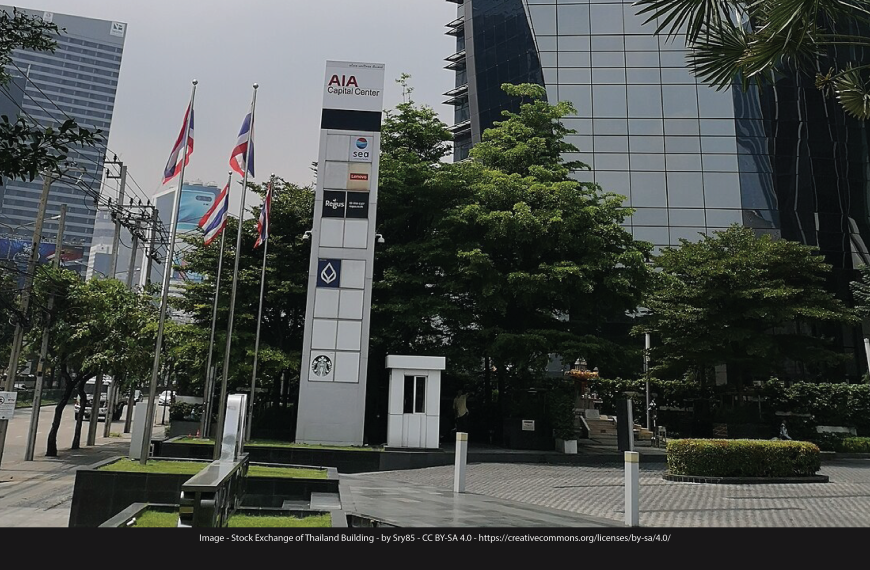
Areas of Bangkok that are being transformed into the so-called international city are a tiny percentage of the actual urban footprint. Sukhumvit from Asok to Thong Lor. Bits of Sathorn. The newer condominium corridors along the BTS lines. The rebranded Riverside. Maybe parts of Ekkamai and Prakanong depending on how generously you draw the boundaries. That is it. That is the international city. The rest of Bangkok, the actual city of around eleven million people, is still recognisably Thai, still operates on Thai terms, and still functions as a Southeast Asian capital with all the texture and complications and rough edges that this implies.
How A Small Strip Has Been Engineered To Serve A Particular Customer
What has happened is that this small strip of central Bangkok has been progressively transformed to serve a particular kind of foreigner who has arrived in the last decade. Boutique bars charging 400 baht for an imported beer. Brunch cafes charging 600 baht for eggs Benedict. Wine bars selling French and Italian by the glass at more than European prices. Members-only rooftop venues. Pet-friendly coffee shops with imported espresso machines. An artisanal-bakery scene that has somehow taken root in a country where the local population eats almost no bread.
None of this has any business being in Thailand at the prices it operates at. The venues do not serve the Thai population the city is supposedly for. Staff are not paid a wage that lets them participate in the economy they are serving. A guy behind the bar selling you the 400-baht beer is on 500 baht a day plus tips if he is lucky. One or two drinks from a foreigner who does not stop to think about it, and that staff member’s entire daily wage has been spent. The whole scene is the most concentrated and visible symbol of what has gone wrong with the central districts in 2026.
The Growing Inequality That The International-City Framing Hides
This is the part of the argument that the cheerful international-city content does not want to engage with. The international-city framing is not just an inaccurate description of what Bangkok is. It is an active piece of marketing that exists to disguise one of the most aggressive expansions of structural inequality anywhere in the Southeast Asian capital cities over the past fifteen years.
Thailand’s Gini coefficient sits in the range of 0.43 to 0.45 depending on the year and the measurement methodology, which places it among the more unequal countries in Asia. Structural distribution is worse than the headline number suggests because the wealth concentration at the top is not fully captured by the standard household income surveys. Credit Suisse Global Wealth Reports have repeatedly identified Thailand as one of the most wealth-concentrated countries in the world, with the top 1 per cent of the population holding a share of national wealth that puts the country alongside Brazil and the United States rather than alongside the more egalitarian Asian economies of South Korea, Japan, or Taiwan.
What The Wage Gap Actually Looks Like In Numbers
Thailand’s minimum wage in 2026 sits at around 400 baht per day depending on the province. Bar staff in the Phrom Phong and Thong Lor venues that are being marketed as international are often on the minimum wage or a small premium above it. A customer in those venues is spending the bar staff’s daily wage on a single round.
Put this in real numbers. A foreign professional on a Bangkok package earning 250,000 baht a month is on 12,500 baht per working day, which is roughly twenty-five times the wage of the staff member serving him in the bar. The same foreign professional in his home country, even at the higher salary, would be on perhaps four to six times the wage of the equivalent service worker. Bangkok has produced a wage gap between the customer and the worker that is structurally more extreme than the gap in the home countries of the foreigners who are filling the bars. The international-city framing makes this gap invisible. The honest framing names it for what it is.
The 2019 Phrom Phong Story That Crystallised The Argument For Me
I want to tell you a specific story about this, because it is what crystallised the argument for me.
The BOI Colleagues Who Had No Context For The Country
In 2019 I was working in Bangkok with a company that operated under the Board of Investment framework. I had been in Thailand by that point for thirteen or fourteen years. The colleagues I was working with were nearly all new arrivals. They had come to Thailand for the job. None of them had any history with the country. They were typical of the kind of professional Western foreigner Bangkok was starting to attract in volume around then: educated, mobile, well-paid, and almost entirely without context for what the country was supposed to be or had once been.
The Phrom Phong Bar That Felt Engineered To Be Singapore
One evening we went out to a bar in Phrom Phong. The kind of bar I am describing in this article. Imported beers at 280 baht each, before VAT, before the ten per cent service charge. By the time the bill arrived, each drink was somewhere around 340 baht. Western foreigners packed the bar alongside a smaller number of well-off Thais. Lighting was carefully designed. Music was carefully chosen. A whole environment had been engineered to feel like a bar in Singapore or Tokyo, with the price point and the international clientele to match.
I was not paying. The company was covering the night. So the financial cost was not the issue for me. The issue was that I felt physically sick sitting in the place. The colleagues I was with had no idea this kind of bar was a disgrace. None of them had any context for what 280-baht-plus-charges per drink meant in the country they were in. None had any awareness that the wage of the man pouring the drinks was the cost of two drinks. To them it was a normal Bangkok evening. This, in their view, was what the city was. Nothing in their experience of Thailand gave them anything to compare it to.
The Realisation That Crystallised The Structural Argument
That evening was the moment I understood that the new arrivals were not going to push back on what Bangkok was becoming. They were going to absorb it. The label international was going to be theirs. Defending it against anyone who pointed out what it actually was was going to be their default response. And the city itself was going to keep building more places like that one, because the demand from the new arrivals was strong and the older Westerner who would have noticed and complained was being progressively priced and pushed out.
Why The Broke-Loser Dismissal Is The Laziest Possible Response
I want to make a particular point about the financial argument here, because the standard response to anyone who criticises these places is to say that the critic is just a broke loser who cannot afford them anymore.
The financial argument is not the argument. It is the laziest possible response to the structural argument. I could afford the 340-baht drinks in 2019 and I can afford them now. Affordability is not the question. The real question is whether they belong in a country where the man behind the bar is on 500 baht a day, and I have to point out when I say 500 baht a day I am being generous with that figure, it could be less. A second question is whether a city can call itself international while operating an economic geography in which the customers of the central districts are spending the daily wage of the staff on each drink. The deepest question is what kind of city Bangkok is choosing to be, who it is choosing to serve, and at whose cost.
What An International City Actually Looks Like For Its Service Workers
Singapore is the closest regional comparison to what the international-city marketing claims Bangkok has become. Singapore is genuinely international. It has the rule of law, the demographic engine, the institutional architecture, the permanent residence pathway, and the wage structure that places it in a different category from the rest of Southeast Asia.
A bar staff member in central Singapore in 2026 is on roughly S$2,500 to S$3,500 per month for a junior position, which is the equivalent of around 65,000 to 90,000 baht. A bar customer in central Singapore paying S$15 for an imported beer (which is about 380 baht) is paying roughly one-sixth of the staff member’s daily wage on each round. That is a ratio the staff member can absorb within a functioning local economy where his wage allows him to participate in the city he is serving.
A bar staff member in central Bangkok in 2026 is on roughly 12,000 to 18,000 baht per month, or 400 to 600 baht per day. A bar customer paying 340 baht for an imported beer is paying roughly the staff member’s full daily wage on each round. That is the wage geography of an extraction economy, not the wage geography of an international city. Singapore’s pricing reflects a real wage base. Bangkok’s pricing has been imposed on a wage base that cannot support it, and the imposition is the structural problem that the international-city framing exists to disguise.
A City That Has Decided To Be A Façade
A city that has decided to be a Singapore-style international playground for the global professional class while paying its actual workers Southeast Asian wages is not an international city. It is a façade of a city. A small strip of imported more than European pricing built on top of a Southeast Asian wage base, marketed to foreigners who do not look at the wage base because the marketing has been designed to keep them from looking at it. The whole construction is structurally extractive. The international-city framing is the marketing that lets the extraction proceed without anyone asking the questions that would make it harder to do.
Who The Façade Has Been Designed To Attract
I want to talk about who this kind of city is being designed to attract, because I think it is the same demographic problem I have noticed across the wider Western foreigner inflow in Thailand.
A new arrival who is comfortable in the 400-baht-beer Phrom Phong bar is, in many cases, the same kind of person who would scream about workers’ rights and immigrant rights and wealth inequality at home. He has a strong political position on the cost of living in London or San Francisco. He has views on tipped wages, on housing affordability, on the gap between the wealthy and the service workers in his home city. Then he arrives in Bangkok, sits down in a bar where the wage gap is far worse than anything in his home country, where the imported beer he is drinking costs more in real and actual terms than it would at home, and registers none of it. To him the city is international. Critics get defended against. That 400-baht beer becomes a sign that Bangkok has joined the modern world.
The Standards That Get Switched Off At The Border
This is the same psychological pattern I have talked about elsewhere. A Western foreigner in Thailand applies a completely different set of political and ethical standards to the country he has chosen to live in than he would apply to his home country. He arrives in Thailand and switches off the part of his brain that would have made these criticisms back home. The country gets a free pass that his home country never would.
Inequality is the part of this that the international-city framing most aggressively hides. A Western progressive who arrives in Bangkok and accepts the wage gap, the dual pricing, the extractive geography of the central districts, the visible presence of Thai service workers operating on wages that would prompt his outrage at home, is the customer the international-city marketing has been designed to capture. He has been persuaded that the inequality is a sign of progress rather than a sign of structural failure. He has been persuaded that the foreign-priced bars and brunch venues are evidence that Bangkok has become modern rather than evidence that the central districts have become an extraction zone.
What Bangkok Used To Be And What I Hoped It Would Continue To Be
What did Bangkok used to be? I want to spend a moment on this, because the comparison matters.
When I arrived in 2005 I fell in love with Bangkok to the point that nothing else mattered. There was a small market right next to the On Nut BTS station that sold cheap beer and grilled prawns among other things. Bars in the surrounding side streets sold fifty-pence beers. There were almost no high-rise condominiums in Prakanong and beyond. The city east of Phrom Phong was still Thai, still functioning, still organised for the Thai population that lived there. You could walk through the central districts and meet Thai people on Thai terms, eating Thai food at Thai prices, drinking in Thai bars that operated on Thai economic logic.
The 2005 City That Knew What It Was
Bangkok in 2005 knew what it was. As the capital of a Southeast Asian country, it was lively and chaotic and full of texture. There were problems with traffic, with pollution, with corruption, with the things every developing-country capital has problems with. But Bangkok was honest about what it was. It did not pretend to be Singapore. There was no Tokyo pretence either. European bar pricing was not imported onto a Thai wage structure and then ask its foreign customers to pretend they did not notice the gap.
When I arrived I looked at photographs and accounts of Bangkok in the 1980s and 1990s. The city I saw in those records was the city I hoped the present and future would continue to look like. A working Southeast Asian capital. Honest about its character. Confident in what it was. Not chasing the global-city designation. Not building itself out as a foreign-investor playground.
What The City Has Become Versus What It Should Have Been
What Bangkok has become in 2026 is upsetting. Central districts have been progressively turned into a low-quality imitation of an international city, with imported pricing on top of local wages, marketed to a foreign customer base that does not have the context to push back, and defended by a Thai commercial elite that benefits from the extraction. Areas the old expats fell in love with are the areas that have been most aggressively transformed. Areas that still operate on Thai terms, that still feel like the 2005 city, are the areas the international-city marketing pretends do not exist.
This is the part that I think long-term Westerners need to push back against. Not because anyone is going to listen. The transformation is well underway and the money behind it is substantial. But because the alternative is to let the marketing stand unchallenged, and the marketing is doing real damage to the actual city that exists underneath the international-city pretense.
The Honest Answer To The Question Of Whether Bangkok Is International
So should Bangkok be called an international city?
No. Bangkok is a Southeast Asian capital with a small zone of international pricing imposed on top of a Southeast Asian wage base. The zone is a foreign-investor playground, not a sign of the city’s progress. Beyond the zone, the rest of Bangkok is still the city it was. International-city framing is a disguise that lets the central districts continue to extract from the foreign customer base and from the Thai service workers without anyone naming what is happening.
Why The Thai Commercial Elite Benefits From The Marketing
The international-city framing is not an accidental piece of misperception. It is being actively maintained by the people who benefit from it. A Thai commercial elite that owns the buildings, the franchises, the import licences, and the development permits in the central districts is benefiting directly from the foreign customer base being persuaded to pay European prices for a Thai product. Foreign property developers that have built the towers around the BTS corridor benefit from the apartment pricing that the international-city framing supports. The foreign-investor advisory ecosystem profits from the inflows by promoting the narrative that Bangkok has become a place to deploy international capital.
Behind these visible beneficiaries sits the broader pattern that Thailand watchers have identified for years. Wealth in Thailand is concentrated in a small number of family-controlled commercial groups. These groups own the dominant retail chains, the dominant property developers, the dominant food and beverage importers, the dominant licensing arrangements with the international brands. The international-city framing supports the asset values of these groups. They have every commercial incentive to maintain the narrative, and the foreign customer base that absorbs the narrative is the source of the cash flow that supports it.
The Foreigners Who Have Been Captured By The Marketing
A new Western arrival who lands in Bangkok in 2026 and is shown the Phrom Phong scene, the rooftop bars, the brunch cafes, the wine venues, the boutique condominium developments, has been delivered into a marketing package that the Thai commercial elite has spent at least a decade building. He absorbs the package without context. He compares the Bangkok he sees to the home he left, where he was paying London or San Francisco prices for similar amenities, and concludes that Bangkok is good value because the headline price is lower than he would have paid at home. The comparison he is not making is the comparison to the local Thai economy, where his evening of drinks costs more than the bar staff earns in a week.
This is the marketing capture that the international-city framing depends on. A foreigner is comparing horizontally to the West, not vertically to the country he is in. Vertical comparison would expose the extraction. A horizontal comparison sustains it.
Why The Long-Term Western Foreigner Needs To Make The Argument
This is, in my view, why the long-term Western foreigner needs to make the argument that the cheerful expat content will not make. A new arrival is not going to see the structure on his own. The Thai commercial elite has no incentive to name it. Neither does the foreign-investor advisory ecosystem. Cheerful expat commentary will not name it either, because it has commercial relationships with the developers and the brands that benefit from the framing.
If the structure gets named at all, it has to be named by long-term Western foreigners who arrived before the transformation, who watched it happen in stages, who have the comparison points that the new arrival does not have, and who are willing to take the comment-section heat that comes with naming what the cheerful content will not name. That is the version of the conversation that I am trying to push on this channel and on the website. It is uncomfortable to make. It is uncomfortable to receive. But the alternative is to let the international-city marketing stand unchallenged, and the marketing is doing real damage to the actual city that exists underneath the marketing.
The Honest 2026 Picture Of What Bangkok Is
That is my honest 2026 view of what Bangkok has become. The city is not international. It is pretending to be international while serving a foreign customer base on the backs of Thai workers who cannot afford the products they are selling. The international-city marketing is a lie. And the Westerners who have absorbed the marketing have stopped doing the work of looking at what the city actually is.
I will not be drinking in the 400-baht bars. Nor will I be celebrating Bangkok’s so-called arrival as an international city. My evenings will continue to be spent in the parts of Bangkok that still know what they are, in the markets and the side streets and the local bars that have somehow survived the transformation, for as long as those parts still exist.
That is what an honest Bangkok article looks like in 2026. It is not the version that wins friends in the expat content space, but it is the version that needs to be said.
Frequently Asked Questions
Should Bangkok be called an international city in 2026?
No. Bangkok is a Southeast Asian capital with a small zone of international pricing imposed on top of a Southeast Asian wage base. The international-city framing is marketing, not description. The strip of central districts that has been transformed to serve foreign customers (Sukhumvit Asok to Thong Lor, Sathorn, parts of Riverside, Ekkamai, Prakanong) is a small fraction of the eleven-million-person city, and the rest of Bangkok still operates on Thai terms, with Thai prices, for Thai customers. Calling the city international is to mistake a small façade for the structure underneath it.
What is the structural problem with the international-city framing?
The framing disguises the wage gap between the customers of the central districts and the workers serving them. A foreigner in a Phrom Phong bar paying 340 baht for an imported beer is paying roughly the full daily wage of the bar staff member pouring the drink. That ratio is not the ratio of an international city. It is the ratio of an extraction economy where imported pricing has been imposed on a wage base that cannot support it. The international-city framing makes this structural inequality invisible to the foreign customer base, which is why the framing is so commercially valuable to the Thai commercial elite that benefits from the extraction.
How does inequality in Thailand compare to other countries?
Thailand has one of the highest wealth concentrations in the world. The Credit Suisse Global Wealth Reports have repeatedly identified Thailand as one of the most unequal economies on the wealth dimension, with the top 1 per cent holding a share of national wealth that places the country alongside Brazil and the United States rather than alongside the more egalitarian Asian economies. The Gini coefficient sits in the 0.43-0.45 range on the income measure, which understates the actual inequality because the top-end concentration is not fully captured. Bangkok’s central districts in 2026 are the most visible economic expression of this concentration.
What is the wage gap between Western customers and Thai bar staff in central Bangkok?
Substantial. A bar staff member in central Bangkok in 2026 is typically on 12,000 to 18,000 baht per month, or roughly 400 to 600 baht per day. The customer paying 340 baht for an imported beer is paying roughly the full daily wage of the staff member on each round. A foreign professional on a Bangkok corporate package earning 250,000 baht per month is on roughly twenty-five times the wage of the staff member serving him. The same foreign professional in his home country, even at the higher salary, would be on perhaps four to six times the wage of the equivalent service worker. Bangkok has produced a wage gap that is structurally more extreme than the gap in the home countries of the foreigners who are filling the bars.
How does Bangkok compare to Singapore as an international city?
Singapore is genuinely international. It has the rule of law, the demographic engine, the institutional architecture, the permanent residence pathway, and the wage structure that places it in a different category from the rest of Southeast Asia. A bar staff member in central Singapore is on roughly S$2,500 to S$3,500 per month (65,000 to 90,000 baht), which allows him to participate in the city he is serving. A bar customer paying S$15 for an imported beer is paying roughly one-sixth of the staff member’s daily wage on each round, a ratio that the local economy can absorb. Bangkok has imposed Singapore-level pricing on a Thai wage base. The two are not comparable, and pretending they are is the central deception of the international-city framing.
Who benefits from the international-city framing being maintained?
A Thai commercial elite that owns the buildings, the franchises, the import licences, and the development permits in the central districts benefits directly from the foreign customer base being persuaded to pay European prices for a Thai product. Foreign property developers that have built the towers around the BTS corridor benefit from the apartment pricing the framing supports. A foreign-investor advisory ecosystem benefits from the narrative that Bangkok has become a place to deploy international capital. Wealth in Thailand is concentrated in a small number of family-controlled commercial groups, and these groups have every commercial incentive to maintain the international-city narrative because the narrative supports the asset values that underwrite their wealth concentration.
Why do new Western arrivals not push back on the central-district transformation?
Because they do not have the context. A new arrival has been delivered into a marketing package that the Thai commercial elite has spent at least a decade building. He compares the Bangkok he sees to the home he left, where he was paying London or San Francisco prices for similar amenities, and concludes that Bangkok is good value because the headline price is lower than he would have paid at home. A comparison he is not making is the one to the local Thai economy, where his evening of drinks costs more than the bar staff earns in a week. Horizontal comparison to the West sustains the marketing. A vertical comparison to the local wage base would expose the extraction. The new arrival is only making the horizontal comparison.
What about Western expats who would defend immigrant rights at home but accept Bangkok’s wage gap?
This is one of the strangest patterns in the 2026 Thailand expat conversation. A Western progressive who arrives in Bangkok and accepts the wage gap, the dual pricing, the extractive geography of the central districts, the visible presence of Thai service workers operating on wages that would prompt his outrage at home, is the customer the international-city marketing has been designed to capture. He applies a completely different set of political and ethical standards to the country he has chosen to live in than he would apply to his home country. A contradiction between his stated principles at home and his behaviour in Bangkok is one of the most revealing patterns of the entire transformation.
Are there still parts of Bangkok that operate on Thai terms?
Yes. An international-city strip is a small fraction of the eleven-million-person city. Beyond it, the rest of Bangkok is still recognisably Thai. Markets, side streets, local bars, working-class districts east of Phrom Phong and west of Sathorn, older residential neighbourhoods that have not been redeveloped, parts of the city that the cheerful international-city content does not feature, all of these still operate on Thai economic logic, with Thai pricing, for Thai customers. A long-term Western foreigner who knows where to go can still find the 2005 city in pockets. International-city marketing pretends these pockets do not exist because they would expose the small footprint of the actual international zone.
What is the practical takeaway for the long-term Western foreigner in Bangkok?
The practical takeaway is to look at the central districts honestly. Compare the prices you are paying to the wages of the staff serving you. Make the vertical comparison to the local economy rather than only the horizontal comparison to your home country. Refuse to participate in the venues that have been engineered to extract from the foreign customer base. Spend your money in the parts of the city that still operate on Thai terms and that still serve a Thai customer base alongside the foreigner. Push back on the international-city framing in conversation with the new arrivals who have absorbed it. Recognise that the framing is marketing, not description, and that the marketing exists to disguise an extractive geography that the long-term Westerner has the context to see clearly and that the new arrival has been deliberately kept from seeing.
Sources
- Credit Suisse Global Wealth Report (UBS Global Wealth Report) — the international banking documentation of Thailand’s position among the world’s most wealth-concentrated countries alongside Brazil and the United States
https://www.ubs.com/global/en/family-office-uhnw/reports/global-wealth-report.html - World Bank Thailand Gini Coefficient Data — the official multilateral documentation of Thailand’s income inequality measurements in the 0.43-0.45 range
https://data.worldbank.org/indicator/SI.POV.GINI?locations=TH - Thailand National Statistical Office Household Income Survey — the official Thai government documentation of household income distribution and the wealth concentration patterns
https://www.nso.go.th/sites/2014en/ - Thailand Ministry of Labour Minimum Wage Documentation — the official Thai government minimum wage rates at around 400 baht per day across the provinces in 2026
https://www.mol.go.th/en/ - Bank of Thailand Wealth Distribution Statistics — the official central bank documentation of household wealth distribution and the broader macroeconomic concentration context
https://www.bot.or.th/en/statistics.html - Asian Development Bank Thailand Country Economic Outlook — the multilateral documentation of Thailand’s economic structure including the wealth concentration and middle class trajectory
https://www.adb.org/countries/thailand/economy - Singapore Ministry of Manpower Wage Statistics — the official Singapore government documentation of central district service wages used as the regional comparison benchmark
https://stats.mom.gov.sg/ - Numbeo Bangkok Cost of Living Database — the international cost-of-living database confirming the central district pricing of imported beer, brunch, and the broader foreign-priced consumer segment
https://www.numbeo.com/cost-of-living/in/Bangkok - Numbeo Singapore Cost of Living Database — the comparative international cost-of-living data for Singapore used as the international-city benchmark in the article
https://www.numbeo.com/cost-of-living/in/Singapore - Bangkok Metropolitan Administration Demographic and Urban Documentation — the official documentation of the eleven-million-person Bangkok metropolitan population and the central district transformation
https://www.bangkok.go.th/main/ - Thailand Board of Investment (BOI) — the official documentation of the BOI framework under which the foreign professional segment referenced in the 2019 Phrom Phong story operates in Thailand
https://www.boi.go.th/ - Forbes Thailand Rich List — the annual documentation of Thai wealth concentration including the family-controlled commercial groups that own the dominant retail, property, food and beverage, and licensing structures referenced in the article
https://forbesthailand.com/ - Bangkok Post — Central District Commercial Property and Pricing Coverage 2025-2026, the Thai English-language newspaper reporting on the Sukhumvit, Sathorn, Thong Lor, and Ekkamai property and commercial pricing trajectory
https://www.bangkokpost.com/ - The Nation Thailand — Bangkok Inequality and Cost of Living Coverage, the Thai English-language newspaper coverage of the Bangkok wage gap, the central district transformation, and the broader inequality trajectory
https://www.nationthailand.com/ - Thailand Restaurant Association and Hospitality Sector Wage Documentation — the industry-level documentation of bar and restaurant staff wages in the central Bangkok districts including the Phrom Phong and Thong Lor venues
https://www.thairestaurant.or.th/ - Knight Frank Thailand Central District Property Market Reports — the international property consultancy documentation of the Sukhumvit, Sathorn, and Riverside corridor pricing and the foreign-buyer trajectory
https://www.knightfrank.co.th/research/ - JLL Thailand Bangkok Property Outlook 2025-2026 — the international property consultancy coverage of the central district apartment pricing and the foreign-investor cultivation dynamic
https://www.jll.co.th/ - Wikipedia — Demographics of Bangkok, the comprehensive documentation of the Bangkok metropolitan population, the district structure, and the broader urban context for the article’s small-international-strip argument
https://en.wikipedia.org/wiki/Demographics_of_Bangkok - Wikipedia — Economy of Bangkok, the documentation of the Bangkok economic structure including the central district commercial concentration and the broader wealth distribution patterns
https://en.wikipedia.org/wiki/Economy_of_Bangkok - Wikipedia — Income Inequality in Thailand, the documentation of the Thai income inequality framework including the Gini coefficient trajectory and the wealth concentration patterns
https://en.wikipedia.org/wiki/Economy_of_Thailand - Wikipedia — Sukhumvit Road, the documentation of the Sukhumvit corridor including the Asok, Phrom Phong, Thong Lor, and Ekkamai district structure that forms the international-city strip discussed in the article
https://en.wikipedia.org/wiki/Sukhumvit_Road - Stickman Bangkok Archives — long-running expat commentary archive documenting the Sukhumvit and Phrom Phong central district transformation across multiple decades from a long-term Western foreigner perspective
https://www.stickmanbangkok.com/ - ASEAN NOW (formerly Thaivisa Forum) — the largest long-running expat community archive documenting the central Bangkok pricing trajectory, the bar scene transformation, and the lived experience of the long-term Western foreigner
https://aseannow.com/ - Oxfam Inequality Reports Thailand Coverage — the international development organisation documentation of Thailand’s position among the most unequal economies including the comparative analysis against South Korea, Japan, and Taiwan
https://www.oxfam.org/en/research - International Labour Organization Thailand Country Office — the official multilateral labour organisation documentation of Thai wage structures, minimum wage compliance, and the broader labour market patterns
https://www.ilo.org/asia/countries/thailand/lang–en/index.htm