Why I Am Writing This Piece
Let me say at the outset that this is going to be a personal piece. I have not lived in Burma. I have visited briefly, years ago, before the most recent coup. Most of what I am writing comes from reading the reliable reporting that still emerges from the country, talking to the small handful of Western foreigners who have spent serious time there, and watching the trajectory from the broader Southeast Asian perspective that I do write from. So when I make the assessment, take it as one informed observer’s view rather than as the view of someone who has put down a decade of life in Yangon.
Honestly, the question of whether Burma will ever be a realistic choice for Western expats is one I keep coming back to. There is something about the country that, even from a distance, has held my attention for years. Indeed, I have spent more time reading about Burma than I have about any other country in Southeast Asia that I have not lived in. The thoughts of what the country was, the tragedy of what has happened to it since 1948, the persistence of the cultural and historical depth that has somehow survived seventy-five years of decline, all of these have kept Burma on the list of countries I would want to see become something other than what it currently is.
In 2026, however, the practical answer to the question is straightforward. Burma is not a realistic choice for Western expats and is not going to be one in the immediate future. This article is going to lay out why, what specifically is wrong, and what would have to change before the assessment could shift.
The 2026 Status Of Burma In One Honest Paragraph
First, let me give you the honest 2026 picture in a single paragraph, because I think the cheerful content that occasionally drifts through the Burma conversation deserves a direct counterweight.
Burma in 2026 is in the middle of an active civil war that has been ongoing since the February 2021 military coup. The military, known as the Tatmadaw and led by Senior General Min Aung Hlaing, controls the major cities and the central administrative apparatus, but substantial parts of the country are under the control of the various ethnic armed organisations, the People’s Defence Forces affiliated with the National Unity Government, or fall into the contested zones between them. Meanwhile, the currency has collapsed. Subsequently, the economy has contracted year on year since the coup. Healthcare has effectively disintegrated outside the major cities. Education has been disrupted to the point that an entire cohort of Burmese students has lost most of their formal schooling. The international community has, with limited exceptions, withdrawn engagement. Sanctions remain in place. The country has fallen back into the position of regional isolation that it occupied during the worst years of military rule.
That is the honest one-paragraph picture. Subsequently, the rest of this article unpacks what each of those problems means for the question of whether Burma could be a destination for the long-term Western foreigner.
The Visa Framework Is Not Set Up For Long-Stay Foreigners
Now let me start with the visa framework, because this is the first practical question any Western foreigner has to answer before considering any country as a long-term option.
Importantly, Burma does not, in 2026, operate a formal retirement visa. There is no equivalent of the Thai retirement extension, the Malaysian MM2H, the Philippine SRRV, or the Cambodian ER and EB framework. Currently, the Burmese visa system is structured around short-stay tourist visas (28 days, extendable in limited circumstances), business visas (typically 70 days), and the various employment and dependent visas tied to specific companies or institutions. For example, the long-stay Western foreigner who wants to spend a year or more in the country is, in practice, doing so on rolling business visas, on employment visas attached to teaching positions or NGO roles that have largely closed since 2021, or on dependent visas tied to a Burmese spouse.
Furthermore, the practical experience of operating on these visa categories has worsened substantially since the coup. Notably, reports from the small number of foreigners who have remained in the country describe extended renewal processes, additional scrutiny of foreigners moving around the country, restrictions on travel outside the major cities, and the broader sense that the foreign presence is being monitored more closely than it was during the 2010s opening period. Importantly, none of this makes the country impossible to live in for the determined long-stay foreigner, but it does mean that the basic visa framework that would make Burma a viable destination for the typical Western expat retiree simply does not exist.
The Currency And Economic Picture That Affects Daily Life
Let me cover the economic picture, because this is the part that I think the cheerful content most aggressively soft-pedals.
Sadly, the Burmese kyat has lost a substantial proportion of its value since the 2021 coup. The official exchange rate and the parallel market rate have diverged in the way that always happens in countries with collapsing currencies, with the parallel market rate moving sharply against the kyat over the past several years. Honestly, the day-to-day picture for the foreign currency holder in Burma in 2026 is, on the surface, favourable, in the sense that dollars and other hard currencies go a long way against a depreciating kyat. But the underlying picture is one of an economy in severe contraction, with the things you would actually want to buy as a long-term resident (reliable electricity, functioning healthcare, working internet, imported food and household goods, replacement parts for vehicles and appliances) becoming progressively harder to obtain at any price.
The Multilateral Documentation Of The Economic Contraction
Specifically, the World Bank, the IMF, and the Asian Development Bank have all documented the economic contraction across the years since the coup. The country’s GDP has contracted in real terms. Foreign direct investment has fallen sharply. Tourism, which was beginning to recover in the late 2010s, has effectively collapsed. Manufacturing has contracted. Agriculture has been disrupted by the civil war in the rural areas where most of the population lives. The underlying picture is of an economy that is going backward at a meaningful pace each year, with no clear catalyst for reversal in sight.
For the long-term Western foreigner, this matters in two ways. First, the daily-life infrastructure (electricity, water, internet, healthcare, education, transport) is degrading in absolute terms, regardless of how favourable the exchange rate looks on the surface. Second, the longer-term trajectory of the economy means that the Western foreigner who commits to Burma today is committing to a country that is, on the current trajectory, going to be in worse shape five years from now than it is today.
The Healthcare Picture That Should Stop Most Foreigners In Their Tracks
Now I want to flag the healthcare picture specifically, because this is the issue that, in my view, should stop most Western foreigners from even considering Burma as a long-term destination in 2026.
Honestly, Burmese healthcare has been among the worst in Asia for decades. Indeed, before the 2021 coup, the Western foreigner needing serious medical care typically flew to Bangkok, Singapore, or Kuala Lumpur for anything beyond basic treatment. Since the coup, the situation has degraded substantially further. Many of the foreign-trained doctors and senior medical staff who held the system together have left the country or have stopped working in protest at the military regime. International medical aid has been restricted. The public hospitals operate at minimal capacity. The private hospitals serve a small wealthy clientele in Yangon and Mandalay, and even these operate at a standard that the typical Western foreigner would not accept for anything serious.
How Burma Compares To Other Southeast Asian Destinations On Healthcare
For comparison, the long-term Western foreigner in Thailand has access to Bumrungrad, Bangkok Hospital, and the broader network of international-standard private hospitals that can handle most medical situations at a competent level. In Malaysia, the equivalent foreigner has access to the Penang and Kuala Lumpur private hospital networks. Over in the Philippines, the access point is St Luke’s and Makati Medical at a similar level. By contrast, in Burma the same long-term Western foreigner has access to a small handful of private clinics in Yangon and, beyond that, has to fly to Bangkok or Singapore for anything serious.
Honestly, this is, for me, the single dealbreaking factor for the Western retiree specifically. Fundamentally, retirement is the life stage at which healthcare access matters most. A country where the realistic expectation is that any serious medical event will require an evacuation flight is not a country in which the Western retiree can prudently commit to spending his later years. Personally, I would not commit, and I would not advise anyone else to commit either.
The Civil War And Safety Picture Across The Country
Let me cover the civil war and the broader safety picture, because this is the issue that, in my view, should stop most Western foreigners from even considering Burma in 2026.
A civil war that began with the 2021 coup is now in its fifth year. The military controls the major cities, the central administrative corridor between Yangon and Mandalay, and the Naypyidaw capital region. Across the border regions, the various ethnic armed organisations (the Kachin Independence Army, the Arakan Army, the Karen National Union, the Shan State Army, and the rest of the long-running ethnic resistance movements) control substantial portions and have, in some areas, expanded their territory since the coup. People’s Defence Forces, affiliated with the National Unity Government that represents the deposed civilian leadership, operate across much of the country in coordination with the ethnic armed organisations.
For the Western foreigner, the practical implications are real. Travel outside Yangon, Mandalay, Bagan, and Inle Lake (the standard tourism corridor) is, in many cases, either prohibited or genuinely dangerous. The hill stations that I have written about elsewhere, including Maymyo (Pyin Oo Lwin), Kalaw, and Taunggyi, are in or near zones of active conflict. The border regions are effectively off-limits. Even the major cities have experienced periodic violence, including the targeted bombings and the urban resistance actions that have continued since the coup.
The Daily Security Questions That The Western Foreigner Has To Track
Furthermore, the broader security picture means that the Western foreigner in Burma has to think about questions that the Western foreigner in Thailand or Malaysia simply does not have to think about. Where the front lines are. Knowing where the military checkpoints sit. Tracking where the resistance forces are operating. Watching for which airports might be closed unexpectedly. Anticipating when the internet might be cut. Following which mobile networks might be disrupted. None of this is normal long-term-resident territory. All of this is real for anyone living in Burma in 2026.
The International Isolation And The Sanctions Regime
In addition to the internal picture, I want to flag the international isolation question, because this affects the practical experience of the Western foreigner in ways that the cheerful content rarely engages with.
Western governments have imposed sanctions on the Burmese military regime since the 2021 coup. Specifically, the US, the UK, the European Union, Canada, and Australia have all introduced targeted sanctions on military leaders, military-controlled companies, and the broader regime infrastructure. International banking systems have restricted dealings with Burmese institutions. Major Western multinationals that operated in Burma during the 2010s opening (Telenor, Total, Chevron, Coca-Cola, and many others) have, in many cases, withdrawn or substantially reduced their presence. Furthermore, international tourism flows that were beginning to develop in the late 2010s have effectively collapsed.
For the Western foreigner living in Burma in 2026, this means that the basic infrastructure of long-term residence (banking, insurance, telecommunications, embassy services, healthcare evacuation arrangements) operates at a substantially degraded level relative to other Southeast Asian destinations. International wire transfers are difficult. Standard insurance products are harder to obtain. The embassy presence in Yangon is reduced. The healthcare evacuation arrangements that the Western foreigner in Thailand or Malaysia takes for granted are not equivalently available in Burma.
In short, the international isolation picture compounds every other problem on the list. It is not just that the country is in civil war. It is that the international infrastructure that would normally support a Western foreigner in a difficult country has been substantially withdrawn, leaving the long-stay foreigner with fewer fallback options than would be the case in other regional destinations facing similar internal challenges.
What Would Have To Change For Burma To Become Realistic
So what would have to change for Burma to become a realistic option for the Western expat? Honestly, in my view, the list is long, and each item on the list is itself a multi-year project.
First, the civil war would have to end. Subsequently, the country would need a political settlement that delivered some form of functioning national governance, whether that involved the military, the National Unity Government, the ethnic armed organisations, or some combination of all three. Honestly, without that settlement, none of the other improvements on the list become possible.
Second, the international sanctions regime would have to be lifted. That requires the political settlement to be credible enough that Western governments are willing to re-engage with the country. Without sanctions relief, the international infrastructure (banking, insurance, telecommunications, multinational corporate presence, tourism flows) cannot meaningfully recover.
The Healthcare And Visa Reforms That Would Be Required
Third, the healthcare system would have to be rebuilt. That requires the foreign-trained doctors and senior medical staff to be persuaded to return, the international medical aid to be restored, and the public and private hospital networks to be substantially upgraded. Realistically, this is a decade-long project even under favourable political conditions.
Fourth, the visa framework would have to be reformed. The country would need a formal retirement visa equivalent or some form of long-stay framework that gives the Western expat the legal basis for a multi-year commitment. Without this, even a stabilised Burma would not be a viable long-term destination on the legal infrastructure available.
Fifth, the basic urban and rural infrastructure would have to be rebuilt. Electricity, water, internet, transport, roads, schools, all of the standard daily-life infrastructure that has been degraded by the civil war and the broader economic contraction would need substantial investment to come back to a level the Western foreigner could rely on.
Importantly, none of this is impossible in principle. Other countries have recovered from similar starting points. But all of it requires political conditions that, in 2026, are not in sight, and the recovery time even under favourable conditions would be measured in decades rather than years.
Why I Personally Would Still Like To See A Different Burma
I want to close with a personal note, because this article is, fundamentally, a personal one.
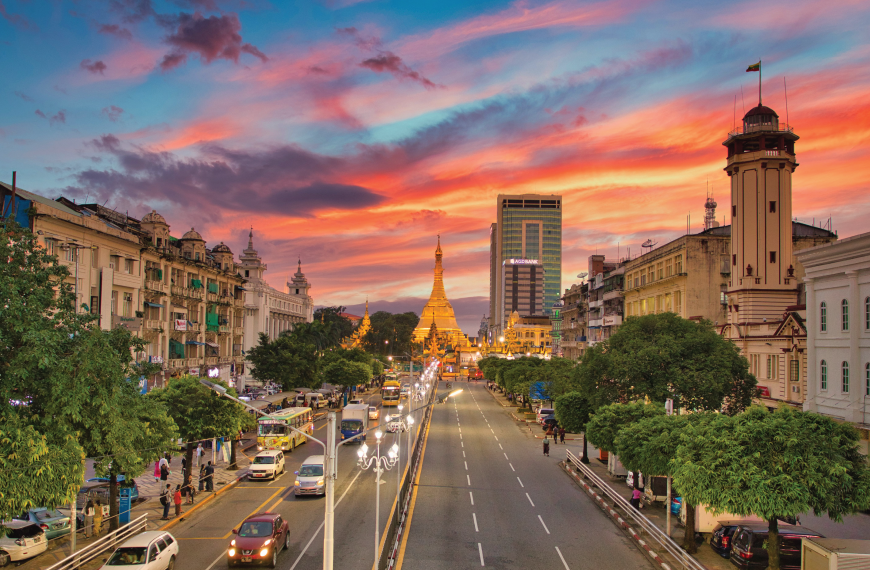
I would like to see a Burma that worked. The country has, in its history, its culture, its food, its religious tradition, its geography, and the texture of its cities, the foundations of a country that could, on a different trajectory, have become one of the most interesting destinations in Southeast Asia. Consider the hill stations I have written about elsewhere. Or the colonial-era architecture of Yangon. Notably, the Buddhist tradition runs through the country with a depth that few other regional cultures match. Burmese food deserves a place alongside Thai and Vietnamese in any honest discussion of Southeast Asian cuisine. Above all, the cultural confidence of the Burmese people has survived seventy-five years of decline.
The Version Of Burma I Would Actually Want To Visit
Indeed, the version of Burma I would like to see is one in which the civil war has ended, the institutional architecture has been rebuilt, the visa framework supports long-stay foreigners, the healthcare system functions, the cities are walkable and safe, and the texture of the country that I have read about in older accounts becomes available to the Western foreigner who wants to spend serious time there. Personally, I would visit. Under the right conditions, I would consider spending substantial time there. Specifically, I would want to see Maymyo as a working hill station rather than as a decaying former colonial summer capital. Ideally, I would take the train from Yangon to Mandalay on a reliable schedule rather than on a route that may or may not be running on any given day.
Ultimately, that is the Burma I would like to see, and the version that, in 2026, is not on offer. The honest answer to the question of whether Burma will ever be a realistic choice for Western expats is that, on the current trajectory, the answer is not yet, and the timeline for change is measured in decades. For the Western foreigner reading this in 2026 and considering Burma as a destination, the practical advice is the same as it would have been three years ago. Look at Thailand. Consider Malaysia. The Philippines is worth a serious look. So is Cambodia. Even Vietnam, with the caveats I have written about the land-tenure question, deserves consideration. Burma is not the country for the long-term commitment, and it is not going to be for some time yet. Sadly, I wish that were not the case.
Frequently Asked Questions
Is Burma a realistic destination for Western expats in 2026?
No. As of 2026, the country is in the middle of an active civil war that began with the February 2021 military coup. Currency values have collapsed. Economic activity has contracted year on year. Healthcare has effectively disintegrated outside the major cities. A visa framework that does not include a retirement category compounds the problem. Furthermore, the international sanctions regime has restricted banking, insurance, telecommunications, and multinational corporate presence. Combined, these factors make Burma unsuitable for the typical Western expat in 2026, and there is no clear catalyst on the horizon that would change the assessment in the immediate future.
Does Burma have a retirement visa?
No. Burma does not operate a formal retirement visa equivalent to the Thai retirement extension, the Malaysian MM2H, the Philippine SRRV, or the Cambodian ER and EB framework. Available visa categories for foreign nationals include short-stay tourist visas (typically 28 days), business visas (typically 70 days), employment visas tied to specific companies or institutions, and dependent visas tied to a Burmese spouse. In practice, the long-stay Western foreigner is operating on rolling business visas or employment arrangements that have, since the 2021 coup, become substantially more difficult to maintain.
How safe is Burma for Western foreigners in 2026?
The major cities (Yangon, Mandalay, Naypyidaw) are, in most periods, broadly safe for the Western foreigner, although they have experienced periodic violence including targeted bombings and urban resistance actions since the coup. Travel outside the standard tourism corridor (Yangon, Mandalay, Bagan, Inle Lake) is in many cases either prohibited or genuinely dangerous due to the active civil war. Border regions are effectively off-limits. Hill stations are in or near zones of active conflict. As a result, the Western foreigner in Burma has to think about questions about front lines, military checkpoints, and resistance forces that the Western foreigner in Thailand or Malaysia simply does not have to consider.
What is the healthcare picture in Burma?
Historically, the healthcare system has been among the worst in Asia for decades and has degraded substantially since the 2021 coup. Many of the foreign-trained doctors and senior medical staff have left the country or stopped working in protest at the military regime. International medical aid has been restricted. The public hospitals operate at minimal capacity. The private hospitals serve a small wealthy clientele in Yangon and Mandalay at a standard the typical Western foreigner would not accept for anything serious. For the Western retiree specifically, this is the single dealbreaking factor, because retirement is the life stage at which healthcare access matters most and Burma offers, in functional terms, no realistic healthcare infrastructure for the long-term Western resident.
How does Burma compare to Thailand or Malaysia for Western expats?
Honestly, Burma does not compare favourably on any of the standard measures. Thailand has the retirement visa framework, the international-standard private hospital network, the broader expat infrastructure, the cost-of-living advantage, and the political stability (with its own caveats) that make it a viable destination. Malaysia has the MM2H framework, the Penang healthcare infrastructure, the English-language environment, and the broader expat support structure. Burma has none of these. The honest comparison is that Burma in 2026 is not in the same category as Thailand or Malaysia as a destination for the Western expat, and is unlikely to be in the same category for at least a decade and probably substantially longer.
What about the cost of living in Burma for foreign currency holders?
On the surface, the cost of living in Burma looks favourable for the holder of dollars, pounds, or euros, because the kyat has depreciated substantially since the coup. Practical day-to-day costs for the foreign currency holder are low by regional standards. But the underlying picture is one of an economy in severe contraction, with the things the Western foreigner would actually want to buy as a long-term resident becoming progressively harder to obtain at any price. Reliable electricity, functioning healthcare, working internet, imported food and household goods, replacement parts for vehicles and appliances, all of these are increasingly difficult to access regardless of the favourable exchange rate. Honestly, the headline cost-of-living figure does not capture the practical reality of long-term residence in a country with collapsing infrastructure.
What is the current sanctions picture for Burma?
The US, the UK, the European Union, Canada, and Australia have all introduced targeted sanctions on the Burmese military regime since the 2021 coup. Sanctions cover military leaders, military-controlled companies, and the broader regime infrastructure. International banking systems have restricted dealings with Burmese institutions. Major Western multinationals have largely withdrawn or substantially reduced their presence. Furthermore, the sanctions regime affects the practical experience of long-term residence by restricting the basic infrastructure (banking, insurance, telecommunications, embassy services, healthcare evacuation) that the Western foreigner in other Southeast Asian destinations takes for granted.
Could the situation in Burma improve in the next several years?
In principle, yes. Indeed, civil wars do end. Sanctions can be lifted. Healthcare systems can be rebuilt. Visa frameworks can be reformed. Infrastructure can be restored. But each of these is itself a multi-year project, and the political conditions required to even begin most of them are not, in 2026, in sight. Realistically, a recovery scenario for Burma would require a political settlement to the civil war, sanctions relief from the Western governments, substantial international investment, and decades of stable governance. Importantly, none of this is impossible. All of it is going to take time. The Western foreigner considering Burma as a destination should plan on the basis that the country is not going to be realistic in the immediate term, and should reassess in five to ten years rather than committing to a move on the basis of any rapid improvement.
Are there any Western foreigners living in Burma in 2026?
Yes, but the number is small and has declined substantially since the 2021 coup. Those Western foreigners who remain are typically the ones with deep historical ties to the country, those married to Burmese spouses, those operating small businesses with established arrangements, and a small handful of journalists, NGO workers, and academics who have specific professional reasons to remain. By contrast, the casual long-stay expat segment that was beginning to develop in the late 2010s opening period has largely left. Furthermore, the expat infrastructure that supports the Western foreigner in Thailand or Malaysia (the bars, the restaurants, the international schools, the expat community organisations) does not equivalently exist in Burma in 2026.
What is the honest practical advice for someone considering Burma?
Honestly, do not move to Burma in 2026. However, if you have specific professional, family, or historical reasons to be in the country, you will know how to navigate the practical questions and you do not need this article to tell you what to do. By contrast, if you are the typical Western retiree, professional expat, or long-stay foreigner considering Burma as a destination on the basis of the cost of living, the cultural texture, or the curiosity factor, the honest advice is to look elsewhere. Thailand, Malaysia, the Philippines, and Cambodia all offer working long-stay frameworks, functional healthcare systems, and the basic infrastructure that Burma simply cannot provide in 2026. Finally, reassess in five to ten years if the political situation changes. For now, Burma is not the country to commit to, regardless of how much you might wish, as I do, that it were.
Sources
- World Bank Myanmar Economic Monitor — the official multilateral documentation of the Burmese economic contraction year-on-year since the February 2021 coup
https://www.worldbank.org/en/country/myanmar/publication/myanmar-economic-monitor - International Monetary Fund Myanmar Country Information — the official IMF surveillance documentation of Burma’s macroeconomic indicators, currency collapse, and broader economic trajectory since the coup
https://www.imf.org/en/Countries/MMR - Asian Development Bank Myanmar Country Outlook — the multilateral development bank documentation of the Burmese economic structure and the post-coup deterioration
https://www.adb.org/countries/myanmar/main - United Nations Office for the Coordination of Humanitarian Affairs (OCHA) Myanmar — the official multilateral documentation of the humanitarian situation, the displacement, and the broader impact of the civil war on the Burmese population
https://www.unocha.org/myanmar - United Nations Special Rapporteur on the Situation of Human Rights in Myanmar — the official UN human rights documentation of the post-coup civil war, the military regime conduct, and the broader rights situation in Burma
https://www.ohchr.org/en/special-procedures/sr-myanmar - Reuters Myanmar Coverage — the international newswire reporting on the 2021 coup, the ongoing civil war, the ethnic armed organisation territorial control, and the broader situation in Burma since 2021
https://www.reuters.com/world/asia-pacific/myanmar/ - Irrawaddy News — the long-standing independent Burmese news platform covering the post-coup civil war, the ethnic armed organisation operations, the military regime conduct, and the broader Burmese political and economic situation
https://www.irrawaddy.com/ - Frontier Myanmar — the independent Burmese news platform covering the political and economic situation including the visa framework changes, the foreign business withdrawal, and the broader 2021-2026 trajectory
https://www.frontiermyanmar.net/ - Myanmar Now — the independent investigative platform covering the civil war, the military regime, the ethnic armed organisation territorial dynamics, and the practical conditions on the ground in Burma
https://myanmar-now.org/en/ - US Department of State Burma Sanctions Documentation — the official US government documentation of the sanctions regime imposed on the Burmese military leadership and military-controlled companies since the 2021 coup
https://www.state.gov/burma/ - UK Foreign Commonwealth and Development Office Burma Sanctions — the official UK government documentation of the sanctions regime and the broader Burma policy framework
https://www.gov.uk/government/world/burma - European Union Sanctions Map Myanmar — the official EU documentation of the sanctions imposed on the Burmese military regime, military-controlled entities, and the broader regime infrastructure
https://www.sanctionsmap.eu/ - Australia Department of Foreign Affairs and Trade Myanmar Sanctions — the official Australian government documentation of the autonomous sanctions imposed on the Burmese military regime
https://www.dfat.gov.au/international-relations/security/sanctions/sanctions-regimes/myanmar-sanctions-regime - UK Foreign Travel Advice Burma — the official UK government travel advisory documentation of the security situation, the restricted zones, the conflict areas, and the broader practical advice for foreign nationals in Burma
https://www.gov.uk/foreign-travel-advice/myanmar-burma - US Department of State Burma Travel Advisory — the official US government travel advisory documentation of the security situation, the civil war zones, and the practical conditions for foreign nationals in Burma
https://travel.state.gov/content/travel/en/traveladvisories/traveladvisories/burma-travel-advisory.html - Myanmar Embassy Visa Documentation — the official Burmese government visa framework documentation including the tourist visa, business visa, employment visa, and dependent visa categories referenced in the article
https://www.mip.gov.mm/ - World Health Organization Myanmar Country Office — the official multilateral health organisation documentation of the Burmese healthcare system, the post-coup deterioration, and the broader regional health context
https://www.who.int/myanmar - Medecins Sans Frontieres Myanmar — the international medical aid organisation documentation of the healthcare situation in Burma including the post-coup deterioration and the limited international medical aid presence
https://www.msf.org/myanmar - Armed Conflict Location and Event Data Project (ACLED) Myanmar — the academic conflict tracking project documentation of the post-coup civil war, the ethnic armed organisation operations, and the broader violence patterns across Burma since 2021
https://acleddata.com/region/asia-pacific/myanmar/ - International Crisis Group Myanmar Reports — the independent international policy research organisation reporting on the Burmese civil war, the political situation, and the broader trajectory of the country since the 2021 coup
https://www.crisisgroup.org/asia/south-east-asia/myanmar - Wikipedia — 2021 Myanmar Coup, the comprehensive documentation of the February 2021 military coup, the deposition of the civilian government, and the immediate aftermath that initiated the ongoing civil war
https://en.wikipedia.org/wiki/2021_Myanmar_coup_d%27%C3%A9tat - Wikipedia — Myanmar Civil War (2021-Present), the documentation of the ongoing civil war including the military, the National Unity Government, the People’s Defence Forces, and the ethnic armed organisation operations
https://en.wikipedia.org/wiki/Myanmar_civil_war_(2021%E2%80%93present) - Wikipedia — Economy of Myanmar, the documentation of the Burmese economic structure including the post-coup contraction, the currency collapse, and the broader economic deterioration
https://en.wikipedia.org/wiki/Economy_of_Myanmar - Wikipedia — Visa Policy of Myanmar, the documentation of the Burmese visa framework confirming the absence of a formal retirement visa category and the standard visa categories available to foreign nationals
https://en.wikipedia.org/wiki/Visa_policy_of_Myanmar - Wikipedia — Sanctions Against Myanmar, the comprehensive documentation of the international sanctions regime including the US, UK, EU, Canada, and Australia measures imposed on the Burmese military regime
https://en.wikipedia.org/wiki/International_sanctions_against_Myanmar - Wikipedia — Healthcare in Myanmar, the documentation of the Burmese healthcare system, the historical underfunding, the post-coup deterioration, and the comparative position against other Southeast Asian healthcare systems
https://en.wikipedia.org/wiki/Healthcare_in_Myanmar