Why I Want To Make This Argument
I want to write something a bit different about Vietnam in this piece. Not the standard cheap-and-cheerful Vietnam booster piece that the digital nomads rave on about. Not the standard “Vietnam is the new Thailand” comparison that has been recycled for as long as I can remember. Something more specific. My reason for not personally moving to Vietnam, despite the fact that I think the country has many things to recommend it and that, on a lot of measures, it has handled the post-2010 Southeast Asian moment better than Thailand has.
That reason is not the visa system, although Vietnam has no formal retirement visa and the long-stay options for the Western foreigner are limited. Nor is it the language, although Vietnamese is genuinely hard and the English-speaking infrastructure outside the major cities is thinner than people pretend. Nor is it the political system, although the one-party state is a real consideration that the cheerful Vietnam content tends to gloss over. The reason is something more structural and, in my view, more fundamental. It is the question of how land works in Vietnam.
Let me explain what I mean, because the standard property-ownership discussion in the Western expat space focuses on what foreigners can or cannot buy, and that is not actually the argument I am making here. My argument is deeper. The argument is about what land ownership means in Vietnam at all, for anyone, including the Vietnamese themselves.
What I Have Loved About Vietnam
Before I get into the argument, let me say what I actually think about Vietnam, because the criticism only makes sense if I am clear about the respect that sits underneath it.
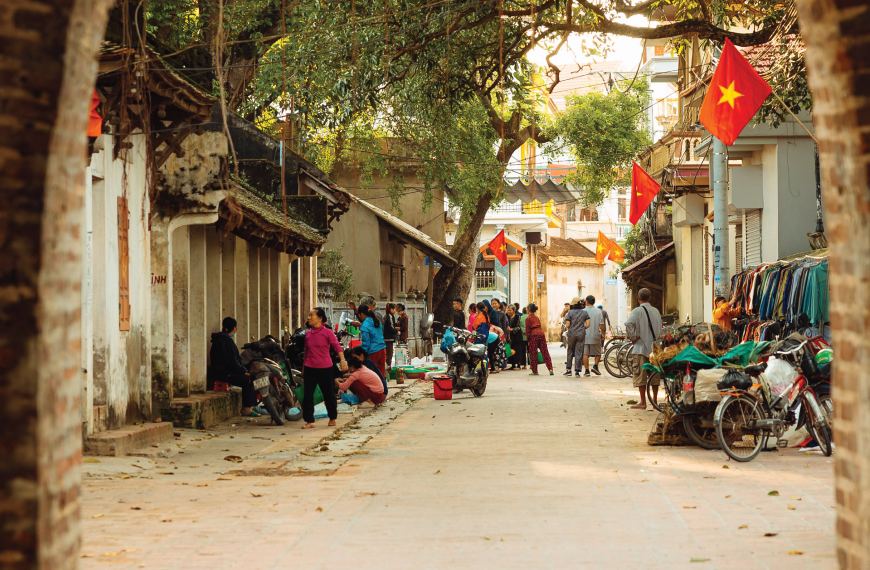
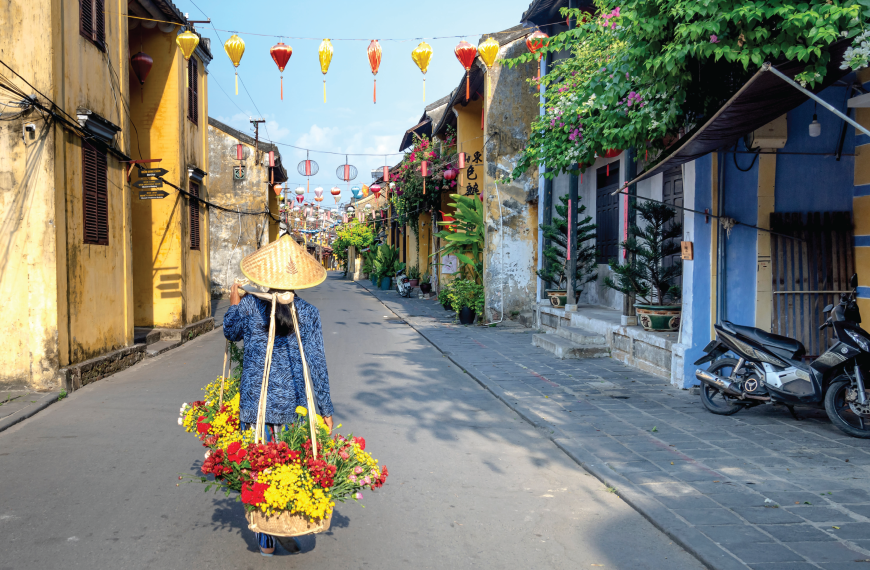
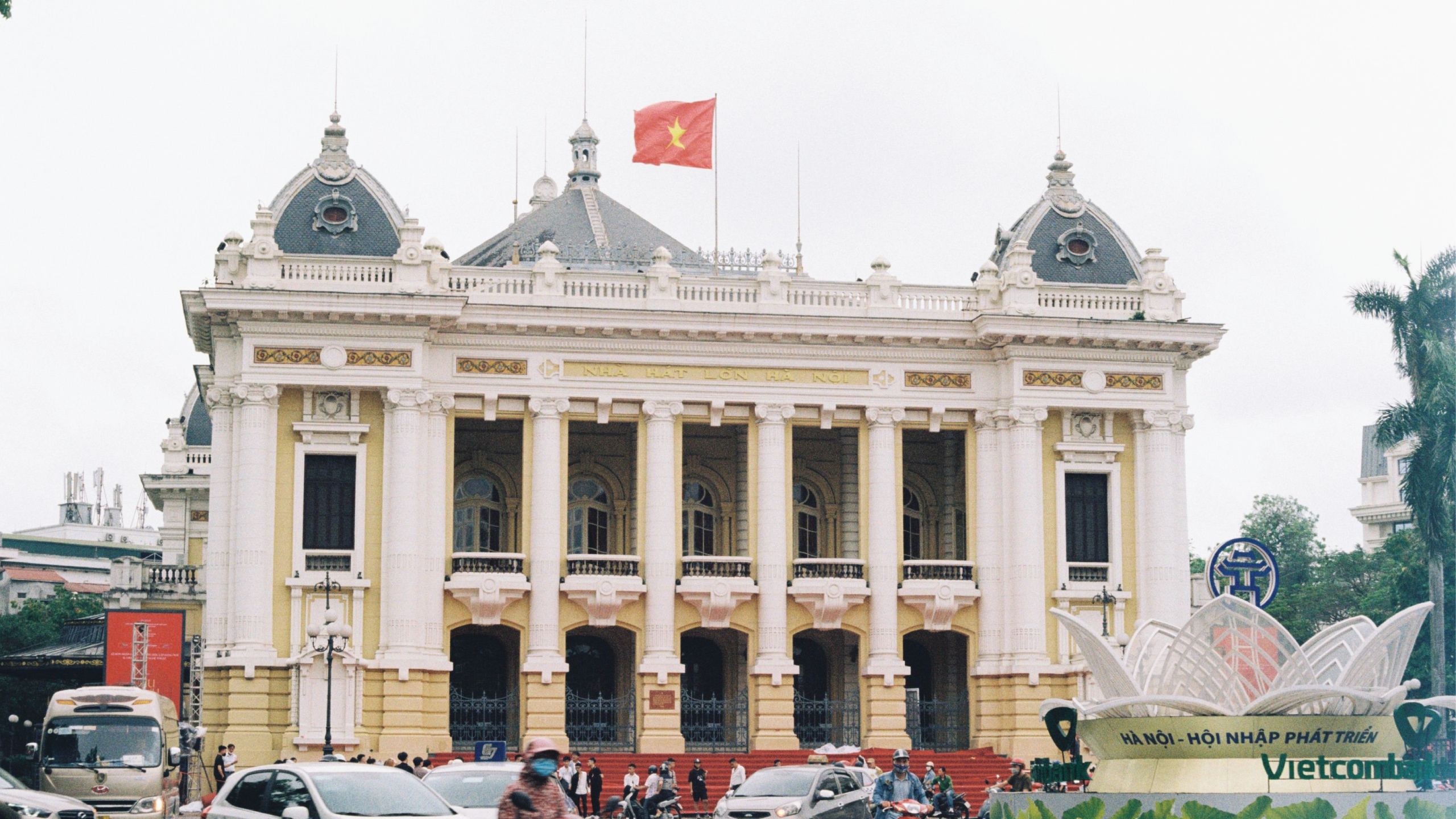
Vietnam is, in many ways, the Southeast Asian country that has impressed me most over the past decade. The country knows its place. It has not sold itself to foreign capital the way Thailand has. Food is honest, pace is real, cities are alive in the way that the more polished destinations have stopped being. Hanoi has retained a texture that Bangkok lost years ago. Saigon, even with the building boom, still operates at street level in a way that the Western foreigner can engage with.
Why The Country Has My Respect
Vietnamese people have a confidence in their own country that the Thai relationship with the Western foreigner does not quite have anymore. No fawning happens. No overpriced international-city pretence operates here. Real prices for real products, served by real local businesses, in a country that has decided what it is and is not particularly interested in performing for the foreign customer. I respect this. The respect is genuine. It is the thing that, in 2026, makes Vietnam feel like the country Thailand was in 2005 and is no longer.
On most of the measures that matter to me, Vietnam should be a country I would consider moving to. Cost of living works. Texture is real. Food is among the best in Asia. Political stability is, ironically, more reliable than Thailand’s. Historical depth is serious. This country has come through a brutally difficult twentieth century and has built something genuine on the other side of it.
So why, then, would I not move there? The answer is the single structural feature of the country that, for me, is a dealbreaker, and that almost nobody in the Western expat space discusses honestly.
What Land Ownership Actually Means In Vietnam
Land ownership in Vietnam, nobody owns freehold. Not the foreigner. Not the local. Nobody.
Under the Vietnamese constitution and the 2013 Land Law, all land in Vietnam is owned by the state on behalf of the people. The state grants Land Use Rights, called LURs, to individuals and entities for defined periods. A standard residential LUR is granted for an indefinite period to Vietnamese citizens, but the underlying land remains the property of the state, and the state retains the right to recall, reclassify, or compulsorily acquire the land for what it determines to be public purposes. A Vietnamese citizen does not own the land beneath his house. He holds a state-granted right to use that land, which is functionally similar to ownership in most daily contexts but is not, in any legal sense, ownership in the freehold sense the Western buyer would understand.
The Foreigner Position Is Even More Constrained
For the foreigner, the position is even more constrained. Under the 2014 Housing Law, foreigners can own residential property in Vietnam, but only condominium units rather than landed property, and only on 50-year terms (renewable, in principle, though the renewal terms are not codified in the way the Western buyer would expect). A foreigner does not even hold the LUR. He holds the right to use a specific built unit for fifty years, after which the underlying right reverts.
Standard Western expat commentary on Vietnam property focuses on the foreigner-restriction side of this. Cheerful Vietnam content explains that foreigners can buy condos, that the system is workable, that there are ways to operate within the framework. None of that is wrong as a description of what foreigners can do. But it misses the deeper point. A deeper point is that the Vietnamese themselves do not own freehold either. The whole country operates on a land-tenure system in which the state is the ultimate owner of all land, and every other holder is operating under a state-granted right that, in legal theory, the state can recall.
Why This Is The Single Structural Feature That Stops Me
I want to be honest about why this matters to me, because it might not matter to everyone.
For me, a country that does not allow freehold ownership of land, even by its own citizens, is a country I would not live in long-term. I do not think this is an unreasonable position. It is one of the most basic structural questions about a country that the long-term resident, foreign or local, should ask himself before committing.
The Magna Carta Tradition That Sits Underneath The Argument
Freehold ownership is, in functional terms, the foundation of the modern Western relationship between the citizen and the state. A citizen holds his property absolutely. Yes, the state can take it, but only through defined legal processes and in exchange for compensation. Property is the citizen’s, not the state’s. While the state has powers over the citizen, the property line is one of the things the state is bound to respect except in defined emergency circumstances. The whole architecture of the Western political tradition, from Magna Carta forward, sits on the assumption that the subject’s property is his own, not the sovereign’s.
Why The Vietnamese Framework Is Structurally Different
A country that does not operate on this assumption is a country with a different relationship between the citizen and the state. Vietnam’s system, where all land is ultimately the state’s, is the legal expression of a political philosophy in which the citizen’s relationship to physical property is fundamentally derivative. In this system, the state is the holder. By contrast, the citizen is the user. The use can continue indefinitely in most cases, but the underlying ownership is never transferred, and the state retains the structural authority to alter the arrangement at any time.
How The Vietnamese Themselves Operate Within The System
For the Vietnamese citizen, this works in practice because the system has been built around it and the social and political context makes the arrangement workable. A Vietnamese family does not, in most cases, experience the LUR system as a constraint, because the LUR is functionally similar to ownership in the daily life of the family. The compulsory acquisitions that have happened, when they have happened, have generated real friction, but the broader population has operated within the system without major disruption.
Why The System Is Incompatible With My Long-Term Commitment
For me, as a Western foreigner with a Western relationship to property and to the state, the Vietnamese system is structurally incompatible with the kind of long-term commitment I would be making by moving there. I do not want to live in a country where the state is the ultimate owner of every square metre of land. I do not want my children, if I were starting a family in Vietnam, to grow up in a system where their relationship to physical property is defined by the state’s grant rather than by their own ownership. Investing in a house knowing that the underlying ground beneath it is, in legal theory, the property of the government rather than mine is not the kind of commitment I am willing to make.
Why The Foreigner-Restriction Argument Misses The Point
I want to be specific about why the standard Western property-restriction argument is not what I am making here.
Most of Southeast Asia restricts foreign land ownership in some form. Thailand prohibits foreign land ownership entirely, with the foreigner restricted to leaseholds, condominium units within the 49 per cent foreign quota, and the workaround of company structures that are themselves under increasing scrutiny. The Philippines has a similar prohibition with similar workarounds. Indonesia operates the Hak Pakai right-of-use framework rather than freehold for foreigners. Malaysia is more permissive in some respects but still restricts foreign acquisition through state-level approval requirements and price floors. Cambodia restricts foreign land ownership through the same broad prohibition with workarounds through Cambodian-spouse structures and the strata-title regime for condominium units.
The Restrictions In Other Countries Sit On Top Of Functioning Freehold
I have written about these restrictions in the context of Thailand and elsewhere. They are real, they are restrictive, and they are one of the structural reasons that buying property as a Western foreigner in Southeast Asia is almost always a mistake.
But the Vietnam question is different. Other countries restrict the foreigner. Vietnam restricts everyone. A Thai citizen can own land freehold in his own country. A Filipino citizen can own land freehold. Indonesian, Cambodian, and Malaysian citizens can too. A foreigner is excluded from those national freehold systems, but the systems themselves are based on the principle of freehold ownership for the citizen. The Vietnamese citizen cannot own land freehold in his own country, because the Vietnamese system does not recognise freehold for anyone.
The Distinction That Matters
This is the distinction that matters to me. A country that restricts the foreigner from freehold but operates a freehold system for its own citizens is a country I can live in as a foreigner who has accepted the restriction. A country that does not operate freehold at all is a country with a different political philosophy about the relationship between the citizen and the state, and that political philosophy is, for me, the dealbreaker. Restriction is not the issue. Absence of the underlying system is the issue.
The Cambodia Comparison That Makes The Argument Clearer
Let me make this point with the Cambodia comparison, because I have written about Cambodia recently and the contrast is useful.
In Cambodia, the foreigner cannot own land directly. A standard workaround is the Cambodian-spouse structure, the strata-title for condominium units, or the long-term lease arrangement. Restrictions are real and the workarounds are imperfect. I would not recommend that a Western foreigner buy land in Cambodia under his own name, because the structural framework does not allow it.
But Cambodia, despite the foreign restriction, operates a freehold system for its own citizens. A Cambodian citizen can own land freehold. The Cambodian family can pass land down through inheritance generation by generation, and the title is the family’s, not the state’s. An underlying political philosophy of the Cambodian state, even with all its political and economic problems, includes a recognition that land can be privately owned by the citizen. The foreign restriction sits on top of a functioning freehold system that exists for the citizen.
Vietnam does not have this. There is no functioning freehold system underneath the foreign restriction. The state is the freeholder. Everyone else, citizen or foreigner, is a holder of state-granted rights. A Cambodian foreign restriction is a layer on top of a freehold system. The Vietnamese system has no freehold layer at all. That distinction, for me, is structural and decisive.
Why The 50-Year Foreigner Lease Is Not The Argument
I want to head off one objection that I expect from readers who are familiar with the Vietnam property literature. The objection is that the 50-year foreign lease is in practice indefinitely renewable, that there have been no reported cases of mass forfeitures, that the Vietnamese state has not used its underlying ownership powers to disrupt foreign property holders, and that the system is, in practice, similar enough to ownership that the legal distinction is academic.
Why I Do Not Buy The Practical-Experience Argument
I have heard this argument. I do not buy it. The legal distinction is not academic for the long-term resident who is committing his life savings, his family, and his future to a country. In my view, the legal distinction is exactly the point.
A system where the practical experience is currently similar to ownership but the underlying legal framework is fundamentally different is a system that operates on the continued goodwill and continuity of the state. A change in the political situation, a change in the regulatory environment, a change in the priorities of the Vietnamese leadership, would expose the holders of the LUR and the foreign 50-year leases to risks that the holders of freehold title in a standard Western framework would not face. Current practical experience is not a guarantee of the future legal position. An underlying framework is the guarantee, and the underlying framework, in Vietnam, is one that I do not think provides adequate protection for the kind of long-term commitment a permanent move would represent.
What I Think Vietnam Has Got Right That Thailand Has Got Wrong
I want to come back to the respect I have for Vietnam, because the criticism I am making is not a wholesale rejection of the country.
Vietnam has done many things better than Thailand has done them. This country has not sold itself to the Chinese investor at the pace and depth that Cambodia and parts of Thailand have. A Vietnamese state has retained genuine control over the strategic sectors of the economy in a way that Thailand’s institutional structure has not. Cultural confidence of the Vietnamese is real and is not for sale. The country has a much more honest relationship with what it is, what it has been, and what it wants to become than the Thailand of 2026 currently has. On the political and economic dimensions, Vietnam has, in many respects, a better story than Thailand does.
Why The Land-Tenure Question Is Constitutional Rather Than Operational
But the land-tenure question is structural in a way that the other dimensions are not. Political stability, economic independence, and cultural confidence are all things that a country can rebuild and that, in principle, the Vietnamese trajectory could continue to support. A land-tenure question is constitutional. The whole legal framework of the country is built on the principle that all land is the state’s. Changing that principle would require a fundamental reconstruction of the Vietnamese constitutional order, and there is no political signal that such a reconstruction is on any government’s agenda.
So the country I admire is the country I would not move to. My respect is real and the criticism is real, and the two can sit alongside each other without either contradicting the other.
What This Means For Western Foreigners Looking At Vietnam
For the Western foreigner who is considering Vietnam as a long-term destination, my honest argument is that the land-tenure question deserves to be looked at carefully before the move is made. Cheerful expat content that focuses on the cost of living, the cultural texture, the food, and the visa workarounds is not wrong about those things, but it does not engage with the deeper structural question about what kind of country Vietnam is at the constitutional level.
If the long-term Western foreigner is comfortable with the state-as-ultimate-freeholder model, the move can work. The country has many things to recommend it. Practical experience of property holding can be similar to ownership for long stretches at a time. Visa workarounds are sufficient for many lifestyles.
But if the long-term Western foreigner is, like me, the kind of person who thinks freehold ownership of land by the citizen is one of the foundations of the kind of country he wants to live in, Vietnam is not that country. Not at the constitutional level. The legal framework does not support it. Nor does the political philosophy. The country can operate within its own framework very effectively, but the framework is not the one I would choose to commit my life to.
The Argument I Want To Land
So here is the argument I want to land in this piece.
I respect Vietnam. This country has done many things well. The texture is real, the cultural confidence is genuine, the political and economic story has more to commend it than the Thailand story does in 2026. I am not arguing against Vietnam. I am explaining why, despite the respect, I would not move there.
The Constitutional Position That Closes The Argument
A reason is the constitutional position of land in Vietnam. The state is the ultimate owner. The citizen is a state-granted user. A foreigner is a more constrained state-granted user with a 50-year lease on a built unit. The whole framework rests on a political philosophy that is fundamentally different from the freehold tradition that underpins the Western relationship between the citizen and the state.
This is not a foreigner-restriction argument. The foreigner restriction is a layer on top of the underlying question. An underlying question is whether the country recognises freehold ownership by the citizen at all. Vietnam does not. That, for me, is the dealbreaker. That, for me, is the structural feature that means the country I admire is the country I would not move to.
If you are considering Vietnam and you have not thought about the land-tenure question seriously, I would encourage you to think about it now. Cost of living, food, texture, and visa workarounds are real considerations, but they are not the deepest consideration. The deepest consideration is what the country is at the constitutional level, and at the constitutional level, Vietnam has chosen a different path than the one I want to walk down.
That is the honest case against moving to Vietnam, made by someone who respects the country and who has watched it operate at a level that Thailand has stopped operating at. Respect is real. The argument is also real. And the conclusion, for me at least, is that admiration is not the same as the decision to move, and the structural land-tenure question is the line that separates the two.
Frequently Asked Questions
Why would the author not move to Vietnam despite respecting the country?
Because Vietnam does not recognise freehold ownership of land at the constitutional level, even for its own citizens. Under the Vietnamese constitution and the 2013 Land Law, all land in Vietnam is owned by the state on behalf of the people. The state grants Land Use Rights (LURs) to individuals and entities, but the underlying land remains the state’s property. For the author, a country that does not allow freehold ownership of land by its own citizens is a country with a fundamentally different political philosophy about the relationship between the citizen and the state, and that political philosophy is the dealbreaker for the long-term commitment a permanent move would represent.
How does land ownership work in Vietnam?
All land in Vietnam is owned by the state. The state grants Land Use Rights, which function similarly to ownership in most practical contexts but are not legal freehold ownership. A standard residential LUR for Vietnamese citizens is indefinite in duration but the underlying land remains state property. For foreigners, the framework is more restricted: under the 2014 Housing Law, foreigners can own condominium units rather than landed property, and only on 50-year terms with renewal not codified in the way Western buyers would expect. The Vietnamese citizen and the foreign buyer both operate under state-granted rights rather than under freehold title in the Western sense.
Is this argument really about foreign property restrictions in Vietnam?
No. The standard foreigner-restriction argument that applies to Thailand, the Philippines, Indonesia, Malaysia, and Cambodia is not the argument being made here. Those countries restrict foreign land ownership while operating freehold systems for their own citizens. The argument here is specifically about the absence of freehold for anyone in Vietnam, including the citizen. A Cambodian foreigner cannot own land, but the Cambodian citizen can own it freehold. The Vietnamese citizen cannot own land freehold either. A structural distinction is between countries that restrict foreigners on top of a functioning freehold system and Vietnam, which has no functioning freehold system underneath any restriction.
Why does freehold land ownership matter to the author?
Because the Western political and legal tradition, from Magna Carta forward, rests on the principle that the citizen’s property is the citizen’s, not the sovereign’s. Freehold ownership is the legal expression of a political philosophy in which the citizen holds his property absolutely, subject only to defined legal processes that the state must follow if it wants to alter the arrangement. A country that does not operate on this principle has a different relationship between the citizen and the state, and that different relationship affects everything from individual rights to family inheritance to the security of long-term investment. The author considers this one of the foundational political questions about a country, and Vietnam’s answer to that question is the reason he would not move there long-term.
Has the 50-year foreign lease in Vietnam ever been forfeited in practice?
To the best of public knowledge, the 50-year foreign lease in Vietnam has not been subject to mass forfeitures or systematic disruption since the 2014 Housing Law came into effect. Practical experience for foreign property holders has been broadly stable. The article’s argument is not that the practical experience has been bad, but that the legal framework underlying the practical experience is structurally different from the freehold framework Western buyers are familiar with. Current practical experience is a function of the continued goodwill and continuity of the Vietnamese state, not a guarantee in the legal framework itself. The author argues that this distinction matters for the kind of long-term commitment a permanent move would represent.
How does Vietnam compare to Thailand on the land-tenure question?
Thailand operates a freehold system for its own citizens. A Thai citizen can own land freehold and pass it down through inheritance. A foreigner is restricted from land ownership under the Land Code, but the restriction is a layer on top of a functioning freehold system. Vietnam does not have an underlying freehold system. All land is the state’s. The Thai citizen and the Vietnamese citizen are in fundamentally different positions in relation to the land beneath their houses. For the author, this difference is one of the structural reasons that, despite the many ways Vietnam has handled the post-2010 Southeast Asian moment better than Thailand has, Thailand’s underlying property framework is structurally more compatible with the Western tradition than Vietnam’s is.
What does the author admire about Vietnam?
A great deal. Vietnam has not sold itself to foreign capital the way Thailand has. The country has retained genuine state control over the strategic sectors of the economy. Cultural confidence of the Vietnamese is real. Hanoi has retained a texture that Bangkok lost years ago. Saigon, even with the building boom, still operates at street level in a way that the Western foreigner can engage with. Food is honest. Pace is real. A Vietnamese relationship with the Western foreigner is more confident and less performative than the Thai relationship has become. On many of the measures that matter, Vietnam is the country that Thailand was in 2005 and is no longer. The author’s argument is not against Vietnam. It is the explanation of a single structural reason that, despite the respect, the country is not one he would move to.
Could the Vietnam land-tenure question be reformed?
In principle, yes. Constitutional and statutory frameworks can be amended. In practice, Vietnam’s one-party political system and the constitutional centrality of state land ownership to the broader political philosophy of the country mean that there is no political signal that fundamental reform is on any government’s agenda. Periodic reforms to the LUR framework and the Housing Law have been made, including the 2024 Land Law revisions that adjusted procedures for compulsory acquisition and compensation, but these have not changed the underlying principle that all land remains state-owned. For the foreseeable future, the structural feature the article identifies as the dealbreaker is going to remain a structural feature of Vietnam.
Should this argument stop someone from moving to Vietnam?
Not necessarily. The argument is the author’s personal view, made on the basis of his particular political philosophy about the relationship between the citizen, the state, and the land. Other Western foreigners may weigh the practical experience of property holding in Vietnam, the cost of living, the cultural texture, and the visa workarounds differently. The argument is not that nobody should move to Vietnam. It is that the land-tenure question deserves to be considered carefully alongside the other factors, and that for the author specifically, the question is the structural feature that separates admiration from the decision to commit. Each foreigner has to make his own assessment of how much weight to give the constitutional position of land in a country he is considering as a long-term home.
What is the practical takeaway from this argument?
If you are considering Vietnam as a long-term destination, think carefully about the land-tenure question before the move. Read the 2013 Land Law and the 2014 Housing Law. Understand what an LUR is and what it is not. Understand the 50-year foreign lease framework and what happens at the end of the term. Then ask yourself whether you are comfortable committing your life and your family to a country where the underlying ownership of the land beneath your house is structurally held by the state rather than by you or any of its citizens. If the answer is yes, Vietnam can work, and the country has many things to recommend it. If the answer is no, Vietnam may not be the right country for the long-term commitment, even if the practical experience would feel similar to the equivalent in a freehold country for substantial periods of time.
Sources
- Constitution of the Socialist Republic of Vietnam 2013 — the foundational document establishing state ownership of all land on behalf of the people
https://en.wikipedia.org/wiki/Constitution_of_Vietnam - Vietnam Land Law 2013 (Law No. 45/2013/QH13) — the statutory framework for Land Use Rights (LURs) and the basis on which all land in Vietnam is allocated to individuals and entities
https://english.luatvietnam.vn/legal-documents/law-no-45-2013-qh13-of-the-national-assembly-on-land-77989-doc1.html - Vietnam Housing Law 2014 (Law No. 65/2014/QH13) — the legislation governing the 50-year foreign ownership term for condominium units in Vietnam
https://english.luatvietnam.vn/legal-documents/law-no-65-2014-qh13-of-the-national-assembly-on-housing-91003-doc1.html - Vietnam Land Law 2024 — the revised legislation that adjusted compulsory acquisition procedures and compensation while preserving the underlying state ownership principle
https://vietnamlawmagazine.vn/ - Vietnam Ministry of Natural Resources and Environment — the official documentation of the Land Use Rights framework and compulsory acquisition procedures
https://www.monre.gov.vn/ - Vietnam Briefing — Foreign Property Ownership in Vietnam Comprehensive Guide, the practitioner-level analysis of the 50-year foreign lease framework and the practical mechanics of condominium ownership
https://www.vietnam-briefing.com/news/foreign-property-ownership-vietnam.html/ - Baker McKenzie Vietnam — Real Estate and Construction Practice Guide, the international law firm analysis of LURs, foreign property restrictions, and the broader Vietnam property framework
https://www.bakermckenzie.com/en/locations/asia-pacific/vietnam - Allens Vietnam — Vietnam Real Estate Legal Framework Analysis, the international law firm documentation of the Land Law and Housing Law provisions affecting foreign property holders
https://www.allens.com.au/locations/vietnam/ - Thailand Land Code Act B.E. 2497 (1954) — the foundational Thai legislation prohibiting foreign land ownership while operating a freehold system for Thai citizens
https://www.dol.go.th/en/laws/LandCode.pdf - Philippines Constitution Article XII — the constitutional framework restricting foreign land ownership in the Philippines while preserving citizen freehold
https://www.officialgazette.gov.ph/constitutions/1987-constitution/ - Indonesia Hak Pakai and Hak Milik Framework — the Indonesian property law distinguishing the right-of-use available to foreigners from the full freehold (Hak Milik) available to Indonesian citizens
https://en.wikipedia.org/wiki/Land_law_of_Indonesia - Malaysia National Land Code 1965 — the foundational Malaysian legislation establishing the freehold and leasehold framework for Malaysian citizens with state-level approval requirements for foreign acquisition
https://en.wikipedia.org/wiki/National_Land_Code_1965 - Cambodia Land Law 2001 — the Cambodian property legislation establishing freehold ownership for Cambodian citizens and restricting direct foreign land ownership
https://en.wikipedia.org/wiki/Land_Law_of_Cambodia - Magna Carta 1215 — the foundational document of the Western political tradition establishing the principle that the subject’s property is protected from arbitrary seizure by the sovereign
https://en.wikipedia.org/wiki/Magna_Carta - Wikipedia — Property Rights in Vietnam, the comprehensive documentation of the Vietnamese property framework including the LUR system, the compulsory acquisition framework, and the broader legal context
https://en.wikipedia.org/wiki/Property_law_in_Vietnam - Wikipedia — Land Use Rights in Vietnam, the documentation of the LUR framework, the indefinite-but-not-freehold nature of citizen rights, and the foreign 50-year lease mechanism
https://en.wikipedia.org/wiki/Land_law_of_Vietnam - World Bank — Vietnam Country Overview and Real Estate Sector Analysis, the multilateral development bank documentation of the Vietnamese property sector and the regulatory framework
https://www.worldbank.org/en/country/vietnam - Asian Development Bank — Vietnam Country Economic Outlook, the official multilateral documentation of the Vietnamese economic structure and the property sector trajectory
https://www.adb.org/countries/viet-nam/main - Vietnam Investment Review — Real Estate Market Analysis 2025-2026, the Vietnamese business publication’s coverage of the property market including foreign-buyer activity and the regulatory framework
https://vir.com.vn/ - VnExpress International — Property and Foreign Ownership Coverage, the English-language Vietnamese newspaper coverage of property law changes including the 2024 Land Law revisions
https://e.vnexpress.net/ - East Asia Forum — Vietnam Land Reform Analysis, the academic publication coverage of Vietnamese land law reforms and the broader political economy of the LUR framework
https://eastasiaforum.org/category/vietnam/ - Mekong Review — Vietnam Property and State Documentation, the regional analytical publication coverage of the Vietnamese property framework and its political philosophy
https://mekongreview.com/ - Wikipedia — Constitution of Vietnam, the comprehensive documentation of the Vietnamese constitutional framework including the state ownership of land provisions
https://en.wikipedia.org/wiki/Constitution_of_Vietnam - Wikipedia — Visa Policy of Vietnam, the documentation of the Vietnamese visa framework confirming the absence of a formal retirement visa category referenced in the article
https://en.wikipedia.org/wiki/Visa_policy_of_Vietnam - Wikipedia — Economy of Vietnam, the documentation of the Vietnamese economic framework including the state-controlled strategic sectors and the broader political economy context
https://en.wikipedia.org/wiki/Economy_of_Vietnam