A Comparison I Could Not Avoid Anymore
I live in Thailand. I have lived here for twenty years. I have never been to Vietnam. I have not crossed that border, not even on a long weekend, not in two decades of being on this side of the Mekong. The reasons are not interesting. It just never happened. Other things got in the way. Thailand had me, and I never made the trip.
But over the last two or three years, I have noticed something. The Western foreigners I know who have lived in Thailand for as long as I have, the men with twenty years of Thai life behind them and a Thai wife and a house in a Thai village, have been going to Vietnam. Some for a long weekend. Some for two weeks. Some for a month. And the ones who come back say the same thing. They use almost the same sentence. They tell me that Vietnam is what Thailand was twenty years ago.
That is not a small thing to say. That is not “the food was good” or “the beaches were nice” or “I had a great time.” That is a man who has lived through the entire arc of Thailand’s transformation, from the country it was in 2005 to the country it is in 2026, telling me that there is another country in Southeast Asia where the conditions he came for in 2005 still exist. The cheap rent. The cheap food. The unaffected village life. The local people who have not yet been trained to see the foreign face as a wallet on legs. The atmosphere of a country that is still figuring out what it wants to be on the world stage, rather than the slick, processed, increasingly hostile country that Thailand has become.
I could not ignore the comparison any longer. So I did the research. I want to share what I found, because the numbers are honestly devastating for Thailand, and the story they tell is not the story the Thai tourism authority is putting out in its press releases. The story they tell is that Vietnam, in 2025, did to Thailand what Thailand did to the rest of Southeast Asia in the 1990s. It overtook it as the destination people who actually want a Southeast Asian experience are choosing.
The Numbers That Tell The Whole Story
Let me start with the 2025 figures, because they are the cleanest possible statement of where the two countries currently sit.
Vietnam received between 21.1 and 21.2 million international arrivals in 2025. That was a 20.4 per cent increase on 2024. It was the highest tourism arrival figure in Vietnamese history. And critically, it was 17.8 per cent above the pre-pandemic peak in 2019, meaning Vietnam has not merely recovered from COVID. It has surpassed where it was before. The country’s GDP grew 8.02 per cent in 2025, one of the highest growth rates in Asia, driven in significant part by the tourism economy.
Thailand received 32.97 million international arrivals in 2025. That was a 7.23 per cent decline on 2024. International tourism revenue dropped 4.71 per cent to 1.53 trillion baht. The Thai government had to revise its tourist arrival forecast downward twice during the year, first from 37 million to 33 million and then again to 32 million. Chinese arrivals, the segment Thailand has been most aggressively trying to retain, fell by 33.8 per cent year on year and recovered to only around 40 per cent of pre-COVID levels. Thailand has still not returned to its 2019 peak of nearly 40 million international arrivals, and on the current trajectory it is moving further away from that peak rather than closer to it.
In 2019, Thailand welcomed more than double the number of international tourists that Vietnam did. By 2025, that gap had narrowed to Thailand drawing only around 1.5 times the visitors of its smaller, less-developed neighbour. At the current rates of change, Vietnam will catch and overtake Thailand on annual international arrivals within the decade. That is not a forecast. That is what the data is already saying.
The contrast was so stark that even the chairman of the Industrial Estate Authority of Thailand, the former governor of the Tourism Authority of Thailand, Yuthasak Supasorn, publicly described Thailand’s 2024-2025 tourism performance as “a difficult period of adjustment.” When the former head of the Thai tourism authority is using language like that in the Thai press, you know the situation is worse than the official narrative is admitting.
Why The Vietnam Boom Is Real And Not A One-Year Spike
The temptation, when I first saw these figures, was to dismiss them as a one-year anomaly. A statistical accident. A China-recovery story that happened to land on Vietnam this year. But the longer I looked, the more I realised it is not that. The Vietnam boom is structural.
According to the International Air Transport Association, Vietnam’s air transport market registered the highest growth rate among the top ten markets in the entire Asia-Pacific region between 2014 and 2024, expanding by 121 per cent. That is over a decade. That is not a post-COVID bounce. That is a long-term trend of Vietnam becoming progressively more accessible to international travellers while everyone else was running in place.
In 2024 alone, Vietnam jumped from 12.6 million international visitors in 2023 to 17.6 million, a 40 per cent increase. The trend continued into 2025 with the 21 million figure. By comparison, Vietnam had only 10 million international visitors in 2016. The country has more than doubled its tourism inflow in less than a decade, with most of the growth coming in the last three years.
The source markets driving the Vietnam boom in 2025 are also revealing. Russia surged to nearly 690,000 visitors, almost three times the 2024 figure and slightly above the 2019 pre-COVID record. Russia is now the sixth-largest source market for Vietnam. Russian visitors who previously holidayed in Thailand, particularly in Phuket and Pattaya, have been progressively shifting their bookings to Vietnam. The Philippines as a source market grew 81.3 per cent. Cambodia grew 44.8 per cent. India grew 48.9 per cent. China grew 41.3 per cent against 2024. European arrivals grew 38.8 per cent year on year, with double-digit growth in most major European markets.
And this is the line that should genuinely sting for Thailand. According to the Vietnamese tourism authority data, Thailand as a source market for visitors to Vietnam grew 9.5 per cent in 2025. More Thais are going to Vietnam for holidays than ever before, and they are doing it at the same time the Thai government is trying to figure out why its own visitor numbers are falling. The Thais themselves are voting with their feet and their wallets.
The Honest Visa Comparison
I want to be direct about this part, because it is one of the few areas where the picture is more complicated than the surface narrative suggests. Vietnam’s visa regime, on paper, is not as open as Thailand’s. The Henley Passport Index, which measures travel freedom for each country’s passport, ranked Vietnam 80th out of 227 countries and territories in 2025. Thailand ranked 35th. Indonesia ranked 48th. Singapore ranked 15th. By the formal metric of visa openness, Vietnam genuinely lags Thailand.
The CEO of Alma Resort, Herbert Laubichler-Pichler, said in late 2025 that Vietnam “still lags behind regional competitors such as Thailand and Indonesia in visa openness, and there is more work to do.” That assessment, from a hotel operator who has every reason to want Vietnam to look good, is a useful corrective to the easy narrative that Vietnam has solved every problem and Thailand has solved none.
But here is the part the headline figure misses. Vietnam, as of August 2023, opened its e-visa system to citizens of all countries and territories worldwide, and as of August 2025 expanded the validity of the e-visa from 30 days to 90 days, with both single and multiple entries permitted. The cost is twenty-five US dollars for a single-entry visa, fifty US dollars for multiple entries, applied for online, typically processed within three to five working days. As of 2026, 83 international airports, land borders, and seaports in Vietnam accept e-visas.
In addition, citizens of the United Kingdom, France, Germany, Italy, and Spain now enjoy 45 days of visa-free entry to Vietnam, with that scheme extended through 2028. Citizens of most ASEAN countries enjoy 30 days of visa-free entry. Anyone arriving directly at Phu Quoc Island can stay 30 days without a visa.
What this means in practice is that for most Western tourists, the practical reality of getting into Vietnam is not significantly worse than getting into Thailand, and in some cases it is better. A British retiree can spend 45 days in Vietnam without any visa application at all. A German freelancer can do the same. An American who wants to stay longer can apply online for a 90-day e-visa for fifty dollars, get it within five days, walk straight in. That is, in operational terms, a more legible system than the labyrinth of Thai visa categories I have written about before.
The Henley Passport Index number measures something specific. It does not measure whether the Western retiree’s actual experience is easier or harder. In operational terms, for the markets that matter to the Western tourism segment, Vietnam has gone from being one of the most closed countries in Southeast Asia ten years ago to being one of the more functional ones today. The trajectory is right.
The Old Real Thailand Feel That Thailand Itself Has Lost
The comments I keep hearing from friends back from Vietnam are not actually about visas or arrival statistics. They are about something more intangible. The feel of the country. The atmosphere of the place.
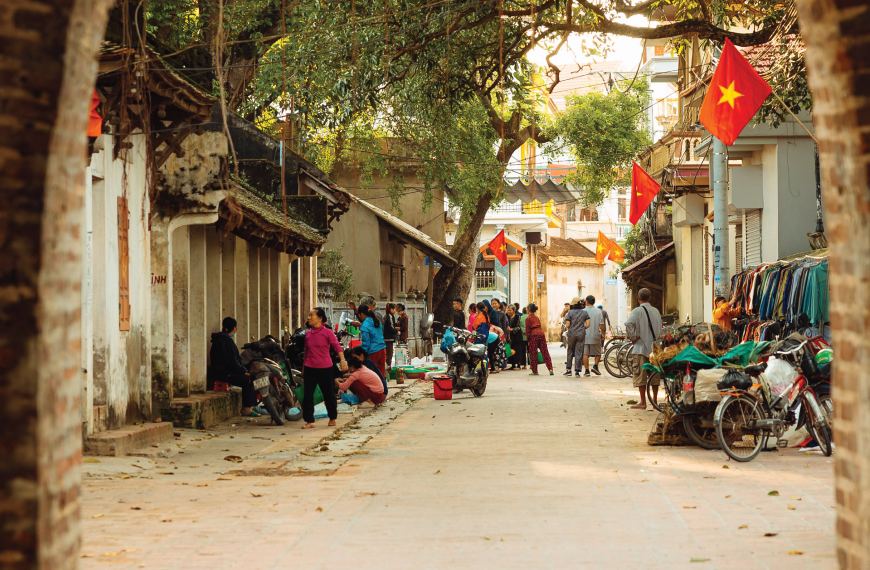
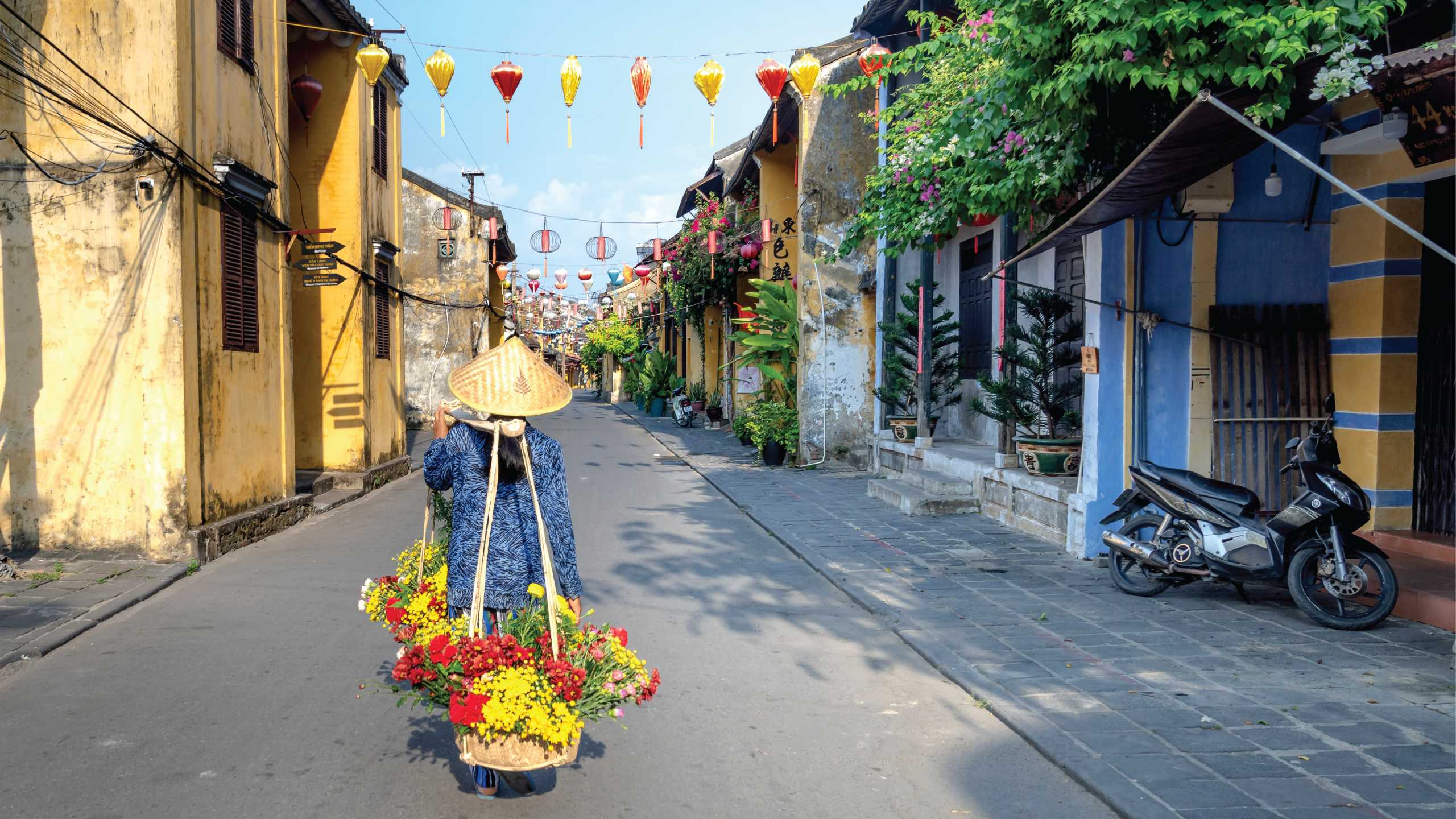
What they describe is what Thailand felt like in the early 2000s. Streets where the Western foreigner is still slightly unusual and the local response is curiosity rather than pricing calculation. Cafes where the menu is in Vietnamese first and English second. Markets where the vegetables are still being sold by the woman who grew them, not by a middleman who bought them in bulk. Beach towns that still feel like beach towns rather than like 24-hour hospitality zones running on industrial scale. Bus journeys where you sit next to a Vietnamese family rather than next to fourteen other foreigners on a backpacker shuttle. Rented motorbikes that the man hands over with a handshake rather than a deposit form and an upsell on insurance.
I cannot vouch for any of this directly. I have not been. But the consistency of the description across multiple friends, with different backgrounds and different reasons for travelling, suggests that what they are describing is real. They are describing the texture of a country that has not yet been industrialised by mass tourism in the way Thailand has been industrialised over the last fifteen years.
The Vietnam tourist boom is happening now, in 2025, but the country has not yet been hollowed out by it in the way Thailand has. The hotels are still mostly owned by local Vietnamese families. The restaurants are still mostly local. The cab drivers are mostly using meters or Grab, not the Bangkok-style 200-baht-per-kilometer scam negotiations. The Western foreigner has not yet been categorised by the tourism economy as a separate species to be priced for accordingly. That moment will come for Vietnam too, probably within the next ten years, but as of 2025 it has not arrived.
That is what my friends are reporting back, and it is consistent with everything the data says. Vietnam is in the early part of its tourism arc, the part that Thailand was in twenty years ago. The country I came to. The country I fell in love with. The country that no longer exists in the form I remember.
How Cheap Is It Actually
This is the part where the numbers do most of the work, and the numbers are remarkable.
A modern one-bedroom apartment in central Hanoi rents for between 400 and 550 US dollars per month. In Ho Chi Minh City, the same costs 500 to 700 dollars. In Da Nang or Hoi An or Nha Trang, the same can be had for 300 to 450. By comparison, Bangkok one-bedroom apartments in the central expat districts run from 700 to 1,500 dollars. The Vietnamese cost is roughly half the equivalent in Thailand.
A single expat in Ho Chi Minh City lives comfortably on 700 to 1,300 US dollars per month, all in. A couple in Hanoi or Ho Chi Minh lives a comfortable middle-class life on less than 1,300 dollars per month combined. In the smaller cities, that same couple’s budget drops to around 800 to 1,100 dollars per month, including housing, food, utilities, transport, the occasional massage, and dining out daily.
The cost-of-living index data from multiple international expat services confirms the same thing. Vietnam is roughly 20 to 30 per cent cheaper than Thailand on a like-for-like basis. Da Nang specifically is 29 per cent cheaper than Chiang Mai. Ho Chi Minh City is 21 per cent cheaper than Phuket. Hanoi is among the most affordable major cities in Southeast Asia.
Vietnam’s food is, by every account I have heard, in the same league as Thailand’s at a meaningful discount. A bowl of pho in a Hanoi street stall costs the equivalent of one to two US dollars. A full Vietnamese meal in a Ho Chi Minh local restaurant runs three to five dollars. The street food culture is alive and unindustrialised in a way Thailand’s street food culture was a decade ago.
Internet costs four to thirteen dollars per month for unlimited home broadband. Coworking spaces in Ho Chi Minh and Hanoi cost 80 to 200 dollars per month, with Da Nang significantly cheaper. The infrastructure is, on some measures, not yet at Thai levels. Power outages happen more frequently. Older buildings have less reliable water pressure. But the price is dramatically lower, and the newer developments increasingly match Thai quality.
The Move That Is Already Happening
The Western foreigners moving to Vietnam in 2026 are doing what the Western foreigners moving to Thailand in 2005 did. They are arriving at the beginning of an arc, not at the end of it.
The men I have spoken to who have made the move tell me the same things they would have said about Thailand twenty years ago. The locals are warm and unaffected. The food is fantastic and almost free. The girls are pretty and the relationships do not start with a pricing conversation. The rent for a decent apartment is what they used to pay in 2005 in Bangkok. The pace of life is slower than they expected. The country is welcoming the Western retiree the way Thailand used to.
The difference is critical. Thailand is in its decline arc. Vietnam is in its growth arc. A Western foreigner moving to Vietnam in 2026 is putting his life into a country whose tourism, economy, and openness to foreigners are all moving in the right direction simultaneously. A Western foreigner moving to Thailand in 2026 is doing the opposite.
I have written before on the structural decline of Thailand, the demographic collapse, the property market overhang, the visa tightening, the institutional hostility to long-term Western foreigners. I will not repeat the argument here. What I want to flag is that the men who are leaving Thailand for Vietnam in 2026 are not making a holiday decision. They are making a life decision. They are doing it for the same reasons that drove the early waves of Western foreigners to Thailand in the 1990s and early 2000s. The cost of living. The warmth of the welcome. The sense of being in a country that is still genuinely interested in foreigners rather than processing them.
Vietnam, in this sense, is not the new Thailand. Vietnam is the next Thailand. The Western foreigner moving to Hanoi or Da Nang or Hoi An today is the same man who moved to Chiang Mai or Phuket or Hua Hin in 2005. He has read the conditions on the ground. He has done the maths. He has noticed that the place that used to be the destination is no longer the destination. And he has made the move while the new destination is still affordable, still welcoming, and still has the texture of a real country rather than a processed tourism economy.
Where This Leaves Thailand
The Thai response, so far, has been the response of a country that does not understand it is losing. The official narrative continues to talk about market diversification, about high-quality tourism, about the Thai brand. The Tourism Council of Thailand has proposed that the country stop measuring tourism success by arrival numbers and start measuring it by spending per head, length of stay, and repeat visit rates. That is what countries do when they are losing on the headline number and need to change the measure.
Yuthasak Supasorn warned in his December 2025 statement that if Thailand does not move faster, it risks losing the most valuable market segments, including Gen Z travellers, free independent travellers, digital nomads, and the new generation of Chinese tourists, to Vietnam over the next five to ten years. That is the senior figure in Thai tourism saying, openly, that the country could lose its most growth-oriented segments to its neighbour. The political class is not yet processing this. The Tourism Authority of Thailand is still running campaigns based on the assumption that the country is the default Southeast Asian choice and just needs better marketing to recover its position.
It is not the marketing. It is the country. Twenty years of price inflation, twenty years of visa tightening, twenty years of foreigner-pricing, twenty years of crackdowns and scandals and unsolved drink-spiking deaths in Koh Phangan, twenty years of progressive hostility from a state that increasingly treats foreigners as a resource to be extracted from rather than a community to be welcomed. The product has degraded. And Vietnam is what Thailand used to be, at a price Thailand has not been since the early 2000s.
A Few Final Honest Words
I should be careful here, because I have not been to Vietnam. Everything I have written in this article is based on research, on the testimony of friends I trust, and on the public data. I cannot tell you whether Hanoi in 2026 actually has the texture my friends describe. I have not stood on those streets myself. I do not know whether the perception of “what Thailand used to be” survives the first month of actually living there.
What I can tell you is that the numbers are unambiguous. Thailand is contracting and Vietnam is expanding, in tourism, in foreign investment interest, in expat inflow, and in the most important and least quantifiable category, which is reputation. The country that the Western tourism community is talking about as the rising destination is no longer Thailand. The country that long-term foreigners are quietly relocating to is no longer Thailand. The country that backpackers, digital nomads, retirees, freelancers, and the next generation of Western foreigners are heading toward is no longer Thailand.
That does not mean Thailand is finished. Thailand has natural assets that no policy decision can take away. The beaches will still be there. The temples will still be there. The food will still be there. The country will still get tourists for as long as those things exist. But the position Thailand held for thirty years, as the default choice for any Western person curious about Southeast Asia, is being lost. It is being lost to Vietnam, in real time, in front of everyone, and the only people who do not seem to see it clearly are the people running the Thai state.
I live in Thailand. I have been here for twenty years. I am not moving to Vietnam any time soon. But the comparison interested me enough that I did the research, and the research has put my finger on something I had been sensing without quite being able to articulate. The country I live in is no longer the country it used to be. The country I have never visited is now the country mine used to be. And the comparison, however much I might want to dismiss it, has become impossible to avoid.
The man who moved to Thailand in 2005 made the right call. The man making the same move today is making it to Vietnam. And I think, on balance, he is right.
Frequently Asked Questions
Is Vietnam really overtaking Thailand on tourism?
By the most important measure, the trajectory of international arrivals, yes. In 2025 Vietnam received 21.1 to 21.2 million international arrivals, up 20.4 per cent on 2024 and 17.8 per cent above the pre-COVID peak in 2019. Thailand received 32.97 million, a 7.23 per cent decline on 2024 and still below the 2019 peak of nearly 40 million. In 2019 Thailand drew more than double the visitors of Vietnam. By 2025 the gap had narrowed to roughly 1.5 times. At the current rates of change, Vietnam will catch and overtake Thailand on annual international arrivals within the decade. Thailand is still the larger destination in 2026 in absolute terms, but the trend lines are unambiguous.
Is Vietnam cheaper than Thailand for tourists and long-stay foreigners?
Yes, by a meaningful margin. Cost-of-living index data from multiple international expat services confirms Vietnam is roughly 20 to 30 per cent cheaper than Thailand on a like-for-like basis. A modern one-bedroom apartment in Hanoi costs 400 to 550 US dollars per month, in Ho Chi Minh City 500 to 700, in Da Nang or Hoi An 300 to 450. The equivalent Bangkok expat-district apartment costs 700 to 1,500. A bowl of pho in a Hanoi street stall is one to two dollars. A full Vietnamese meal in a Ho Chi Minh local restaurant is three to five. Da Nang is 29 per cent cheaper than Chiang Mai. Ho Chi Minh City is 21 per cent cheaper than Phuket. The cost gap is real and consistent across categories.
Are Vietnam visas easier or harder than Thai visas?
On paper, Vietnam’s visa regime is more restrictive than Thailand’s. The Henley Passport Index ranked Vietnam 80th out of 227 countries and territories for travel freedom in 2025, compared to Thailand at 35th, Indonesia at 48th, and Singapore at 15th. The CEO of Alma Resort, Herbert Laubichler-Pichler, has publicly acknowledged that Vietnam still lags Thailand and Indonesia in visa openness. However, in operational terms, the practical reality for most Western tourists is comparable. Vietnam offers a 90-day multiple-entry e-visa to all countries worldwide for 50 US dollars, processed in three to five working days. UK, French, German, Italian, and Spanish citizens get 45 days visa-free. Most ASEAN nationals get 30 days visa-free. The trajectory is towards openness, not away from it.
Why is Thailand losing tourists in 2025?
Several reasons compound. Chinese arrivals collapsed 33.8 per cent in 2025 and recovered to only around 40 per cent of pre-COVID levels, primarily because of safety concerns following high-profile incidents and a perception that Thailand is no longer the welcoming destination it once was. Russian arrivals, previously concentrated in Phuket and Pattaya, have shifted significantly to Vietnam. The Thai government’s progressive visa tightening (the cancellation of the 60-day visa-free policy in May 2026, the TM30 enforcement reactivation, the Three No’s campaign) has signalled to international tourists that the country is less welcoming than it used to be. The Tourism Authority of Thailand had to revise the 2025 forecast downward twice during the year, from 37 million to 33 million to 32 million.
Is Vietnam safer than Thailand for tourists?
By the recent international safety rating data, Vietnam scores higher than Thailand on tourist safety perception. The shift in Chinese tourist sentiment after high-profile safety incidents in Thailand has been the most visible expression of this. Independent travel safety indices place Vietnam in the upper-middle range for Southeast Asian destinations on perceived safety, while Thailand has slipped on the same indices over the past three years. The unsolved drink-spiking deaths on Koh Phangan in 2025, the casino scam centre kidnappings, and the perception of a tightening Thai state hostile to foreigners have contributed to the safety narrative shifting against Thailand. Vietnam, despite having its own issues with petty crime and traffic safety, is currently perceived as the safer destination by most international travel publications.
What is the “old real Thailand feel” that Vietnam supposedly has?
The phrase describes the texture of a country at an earlier stage of its tourism arc, before mass tourism has industrialised the foreigner-facing economy. Specifically: street vendors who still sell their own produce rather than middleman-supplied stock, restaurants where the menu is in the local language first and English second, beach towns that still function as beach towns rather than 24-hour hospitality zones, local people whose response to the Western face is curiosity rather than immediate pricing calculation, transport that operates on local norms rather than foreigner-specific rates. Western foreigners who travelled to Thailand in the early 2000s describe this texture as the thing they originally came for. They report finding it in Vietnam in 2025-2026, particularly in Hanoi, Da Nang, Hoi An, and the smaller coastal cities.
Can foreigners own property in Vietnam?
Foreigners cannot own land in Vietnam, similar to Thailand. They can own leasehold properties built on the land, with leases typically set at 50 years and sometimes extending to 99 years, with renewal possible. Foreign investors are allowed to own multiple leasehold properties subject to specific rules. The average property price in Ho Chi Minh City is approximately 2,000 to 4,500 US dollars per square metre. In Hanoi it is approximately 1,300 to 2,500. A three-bedroom property in Ho Chi Minh City costs around 180,000 US dollars on average, compared to similar Bangkok properties at higher levels.
Are Western foreigners moving from Thailand to Vietnam?
In growing numbers, yes. The pattern is similar to the wave of Western foreigners who moved from more expensive Southeast Asian destinations to Thailand in the 1990s and early 2000s. The current Vietnam-bound movement includes digital nomads, freelancers, retirees, online business operators, and long-term Thailand expats who have decided that the country they originally came for no longer exists in Thailand. The exact numbers are difficult to confirm because Vietnam does not publish long-stay foreign resident data in the same format Thailand does, but anecdotal evidence from expat community forums and the growth in foreign-targeted residential developments in Da Nang and Ho Chi Minh suggests the movement is significant.
What are the downsides of Vietnam compared to Thailand?
Several. Vietnam’s infrastructure is, on average, less developed than Thailand’s. Power outages happen more frequently. Older buildings have less reliable water pressure. Internet, while affordable, can be less stable. Healthcare quality, while improving rapidly, has not yet matched Thailand’s private hospital network. The visa regime, despite the e-visa improvements, still requires more administrative engagement than Thailand’s longer visa-free entry options. Vietnam also has its own structural issues including political opacity, environmental challenges, and rapid urbanisation. The country is not a fairy tale. It is currently at the stage of its development arc that makes the Western foreigner trade-off favourable, but it has real shortcomings.
Should I move to Vietnam instead of Thailand?
I cannot make that decision for anyone reading this, and I have not made it for myself. I still live in Thailand. What I can say is that the conditions that made Thailand attractive to the original wave of Western foreigners in the 1990s and 2000s no longer exist in Thailand at the same level, but they do exist in Vietnam in 2026. The cost is lower. The welcome is warmer. The texture of the country is closer to the original Thailand experience. The trajectory is right rather than wrong. For someone considering a Southeast Asian move in 2026 who has not already established a life in Thailand, Vietnam should be on the shortlist. For someone already established in Thailand with property, family, and roots, the calculation is more complicated and very personal. But the comparison, on the data, has tilted in Vietnam’s favour for the first time in a generation.