The Pattern I Have Watched For Twenty Years
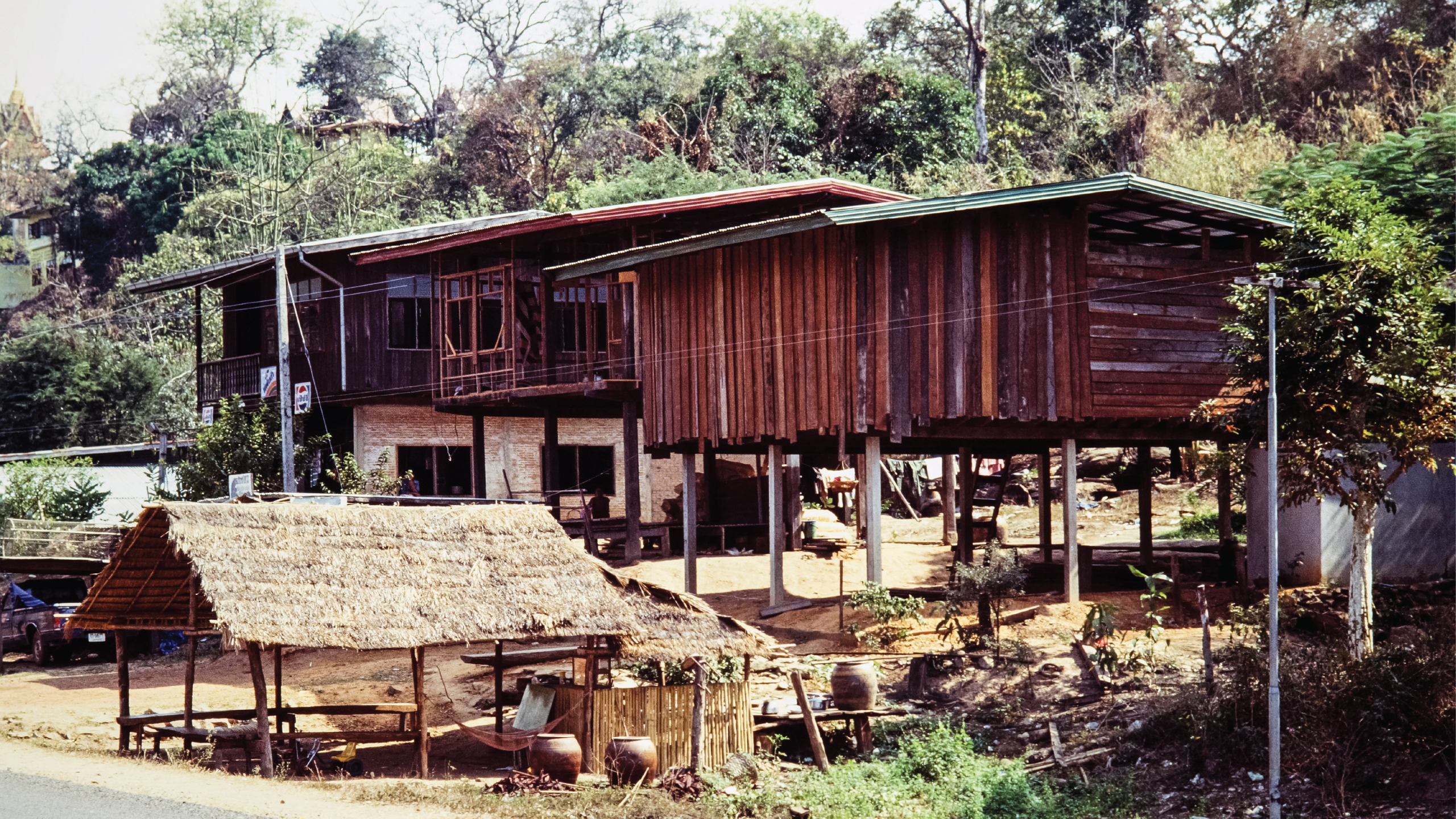
I have lived in many places in Thailand over the years. Starting out in Bangkok, I moved to Chiang Mai, then rural Chiang Mai, then back to Chiang Mai city. But it was my time in rural Chiang Mai that gave me the idea for this article first. Because over the twenty years I have been in Thailand, I have watched the same pattern repeat itself so many times that I think it deserves an honest look. The pattern is the Western foreign man, somewhere in his fifties or sixties usually, who ends up living in a Thai village. Not in Bangkok, not in Chiang Mai city, not in Phuket or Pattaya or Hua Hin, or any of the usual expat haunts, but out in a rural village usually in Isan. Guys like this are everywhere if you start looking, and the pattern is so consistent across so many men that I want to walk through, in this article, why it happens, what the reasons the man tells himself are, and what the reality of village life actually delivers, because the gap between the two is one of the more interesting things I have observed in two decades of living in Thailand.
The First Surface Reason: He Met His Thai Wife
Let me start with the surface reasons, because these are the ones the man himself will give you if you ask him. The easy answer is that he met his Thai wife and moved to her village, and that is definitely true as far as it goes. But it is an incomplete answer, because the question worth asking is not why he ended up with a Thai wife. The question is why specifically her village, rather than a city the two of them might have chosen together, and I believe the answer to that is structural. She is the local. He is the outsider. Her network is in the village, her family is in the village, her language fluency is at its peak in the village, her ability to operate inside the Thai system is at its strongest in the place she grew up. He, by contrast, can operate anywhere or nowhere with roughly equal difficulty. So the default gravity of the relationship is toward her place, not toward his preference. Most men, when they sit down and tell themselves they chose the village, are actually describing a slow accumulation of small surrenders that ended with him living there. It was not a decision in and of itself, it was the next best thing.
The Second Reason: He Thinks The Village Is Cheap
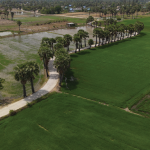
The second reason the man gives is that the village is supposedly cheap. And it is cheap, on the surface. A million baht in Isan and you can build a small house on a plot of land the family sold to you for a special price. The same million baht in Bangkok buys you a tiny condominium in a suburb that no-one would want to live in. The same million baht in Chiang Mai city can buy you a two-bedroom townhouse in a moo bahn, but not the sort of place you envisage when you think move to Thailand. The village makes him feel like a property owner in a way the city never could. He can stand on his land. He can plant trees. He can build a wall around it, and he can show his family back home photographs of his three-bedroom house with land, and he is genuinely proud, because in Britain or America or Australia, the same money would now buy him almost nothing. The village makes him feel wealthy in a way his home country no longer does. Let’s not forget however that he owns none of it.
The Third Reason: The Romance Of Putting Down Roots
The third reason is that he believes he is putting down roots in the country. There is a romance to having his own land, his own house, and in a way, his own piece of the country. The village makes this affordable in a way no city in Thailand does any more. The roots feeling matters to a man who has lived his life in rented apartments in his home country, or in serviced condos in Bangkok, or who has spent twenty years moving from one short-term housing situation to another. The village house, even with all its legal complications around foreign ownership, feels like the first thing he has owned that is fully his.
The Fourth Reason: Escaping What Urban Thailand Has Become
The fourth reason, and I believe one of the most important reasons, is that he is not happy with what other parts of Thailand have become. Pattaya is no longer what it was. Phuket is overrun. Bangkok is congested, expensive, and increasingly hostile to long-term Western residents, and Chiang Mai gets three months of unbreathable pollution every year. The village seems like the remaining option that still feels like the Thailand he visited originally. He looks at the urban Thailand of 2026 and sees a country that has stopped making sense for him, and the village seems like the part of Thailand that has not yet been overrun, has not yet become unaffordable, has not yet turned on him in the way the cities have. So the village is also, in part, a retreat. A retreat from a Thailand that he can feel is closing in around him.
The Fifth Reason: The Status Reversal He Will Not Say Out Loud
Lastly, the fifth reason is the one he will not always say out loud. He wants the kind of property that, back home, would now cost more than he has. He wants the bigger house, the bigger plot, the visible scale of property ownership that has become impossible for him in his home country. And the Thai village delivers that, on paper, for less money than he has. The man who would be a council flat tenant in Liverpool is, in a Surin village, the foreigner with the biggest house on the road. The status reversal is real and it matters to him, even if he cannot quite name it as the reason he is there.
So those are the surface reasons. The wife, the supposed cheapness, the roots feeling, the retreat from urban Thailand, the property scale. All of them have something true in them, but importantly, none of them are the whole story.
The Deeper Reason: The Gravity Of The Wife’s Family
The deeper reason, the one underneath all of the others, is the gravity of the wife’s family. Because the wife wants to be near her parents. The wife is a dutiful daughter under cultural expectations that go back centuries. She is expected to look after her parents in their old age. She is expected to remit money to her household. She is expected to be the visible success story of the village that married up to a foreigner. The husband may have his own preferences about where to live, but the wife’s gravity is to the village, and most men, eventually, default to the wife’s gravity, because resisting it requires a constant low-grade conflict that most marriages will not sustain. So the village is not really his choice even though he tells himself it is. The village is her gravitational pull, dressed up in his reasons. And once you see this dynamic clearly, you start to recognise it in almost every Western-Thai marriage that ends up rural.
What Thai Village Life Actually Delivers: The Burning
Now let’s have an honest look at what village life actually delivers compared to what the man went there expecting. Because this is where the gap opens up, and it opens up wide.
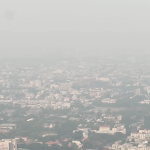
Start with the burning. It is constant. Lighting fires is a guilty pleasure of the rural population, burning anything any time they get a chance. They will think nothing of starting a fire right next door to your house, and nothing of the smoke protruding through your windows and the ash landing on your car. Three months of every year, from February through April and sometimes longer, agricultural Thailand burns even more than normal. The farmers clear their fields by setting fire to the crop residue, because modern farming techniques have not yet reached the village. The burning is responsible for fifty-one per cent of the PM2.5 pollution in Chiang Mai province during the burning season, according to a 2024 study. The northern provinces of Thailand routinely record the worst air quality in the world during March and April. In April 2026 the haze in Pai was so severe that locals were producing blood clots from their nasal passages. And the village man, the man who moved out of the city to escape pollution and find clean rural air, is sitting next to the field that is burning. The smoke is unbearable. The PM2.5 inside his house is worse than the PM2.5 was on the worst day of his Bangkok years. He has not escaped the pollution. He has moved closer to its source.
The Charcoal Production That Never Stopped
Next there is the charcoal production. While there is a ready supply of electric and gas hobs, and the gas bottles needed to operate them, many villages still cook over charcoal, charcoal that they make in little huts, the smoke of which again ends up over your land and in your house and your lungs. The daily lighting of the charcoal for cooking again gives the same outcome. The man who has moved to the village does not feel like he is in the Thailand he fell in love with, he feels like he has gone back a century in time and is living surrounded by people, who themselves are nice, welcoming, friendly and warm, yet still stuck in their ways and are not being told to change with the times.
The Village Tannoy System And The Noise You Did Not Plan For
Then there is the village tannoy system. The village headman gets on at four or five o’clock in the morning and if your house was built next to a speaker, it is tough luck. The temple events are constant and the bass from the music shakes the walls of your house. The volume is calibrated to reach the furthest house in the village, which means the houses closer in get it at industrial decibel levels, starting before dawn, running through the day, and ending sometime in the evening. The man who moved to the village to find quiet has, in fact, moved to one of the loudest residential environments available in modern Thailand.
Then there is the noise from everywhere else. The wedding next door at six in the morning with full loudspeaker setup. The funeral that runs for seven days. The merit-making ceremony that takes over the road outside your gate. The neighbour playing music at full volume on a Sunday afternoon because nobody in the village would think to complain. The dogs. Most houses have at least one dog. None of them are trained. They bark through the night. The Thai concept of private quiet at the village level is fundamentally different from what the Western man has imagined when he pictured rural life. He pictured silence and birdsong. He got the village PA system, the dog chorus, and the wedding next door.
The Practical Difficulty Of Buying Anything In A Thai Village
Then there is the practical difficulty of buying anything. No supermarket. No specialist shops. No imported food. No bookshop. No cinema. No decent restaurant outside the standard somtam, laab, and gaeng repertoire. The shops that sell meat require a good sniff of the produce to make sure it is not old, as old meat is not thrown out. The nearest decent hospital is an hour or two by car. The nearest dentist who speaks any English is in the city. The nearest specialist medical service is wherever the city is. The man who has lived in cities his whole life, who is used to going downstairs for a coffee, who is used to walking to a bookshop, who is used to the basic infrastructure of urban life, finds himself in a village where the convenience store is a thirty-minute drive and the nearest anything more sophisticated than that is a major expedition.
The Isolation The Marketing Never Mentions
Then there is the isolation. No English-speaking neighbours apart from the other foreigners who fell into the same trap. No expat community. The wife’s family speak the local dialect, often only that, with Central Thai as a second language and English as a non-language. The husband ends up in a state of permanent linguistic exclusion. Conversations happen around him without him understanding any of them. Family decisions are made in front of him in a language he cannot follow. Jokes are told at his expense or not, and he has no way of knowing which. The cognitive isolation in a village setting for a non-Thai-speaking foreigner is profound, and it accumulates over years in ways the man does not always recognise until it has already shaped him.
The Family Proximity That Never Ends
And then there is the family proximity, which is the thing that will surprise most foreign men more than anything else on this list. Her parents live next door. Her brother lives across the road. Her sister visits every weekend. Her nephews come over uninvited. There is no concept of a private nuclear-family household in the village context. The husband has married into the family, and the family is now permanently in his life and permanently in his house. The privacy he assumed his property gave him does not exist. The boundary between his household and the wider family compound is permeable in both directions, and he is the only person in the situation who finds this strange.
And the financial extraction follows from the family proximity. The wife is expected to support her parents, her siblings, her extended family. The man’s pension or his savings become the village’s resources. Every illness in the family becomes a bill he is quietly expected to cover. Every land dispute the family is involved in becomes his to fund the lawyer for. Every nephew’s education becomes a quiet expectation. The village man is not just a husband. He is the village’s foreign sponsor, and the role comes with obligations he did not sign up for and cannot, in practice, refuse without losing the marriage.
The Legal Vulnerability That Makes Everything Worse
Now let me get to the legal vulnerability, because this is the part that makes everything else worse. Foreign men cannot own land in Thailand, we know this already. The land must be in the wife’s name. Even if he pays for it. And the Supreme Court of Thailand, in Decision 1523/2565 in 2022, confirmed that even if the house is registered as the wife’s personal property, with a Land Office letter of confirmation stating that the foreign husband waives his claim, the property can still be deemed marital property under Section 1474 of the Civil and Commercial Code. The administrative letter does not override the statute. The protections that exist for the foreign husband, the usufruct, the superficies, the long lease, all of them must be properly registered at the Land Office to be enforceable. Most men do not register them properly. Most men trust the wife and skip the legal scaffolding. And in a contested divorce, the foreign husband can claim reimbursement of his personal funds, but only if he can prove the funds were personal, which is itself a contested process that often results in pennies on the dollar after years of legal expense.
Even Watertight Legal Protection Cannot Fix The Lived Reality
Now think about this. Even if you have a properly registered thirty-year lease on the house and the land, even if you have a watertight usufruct, even if every legal protection a Thai lawyer can construct is in place, would you actually want to continue living in your ex-wife’s village, surrounded by her family, after the divorce? The legal protection is technical. The lived reality of staying would be intolerable. The neighbours are her cousins. The temple committee includes her uncle. The headman is her father’s friend. The village would close around you the day the marriage ended, and the lease that you spent ten thousand baht on would protect a piece of property you could no longer bear to occupy. The legal scaffolding is real but the social scaffolding makes it largely meaningless.
The Village Is Not The Answer
So this is where I have ended up, after twenty years of watching the village pattern play out across so many marriages I have lost count. The village is not the answer. The village is what happens when a man defaults to the path of least resistance, which is the wife’s gravity, the supposed cheapness, the appearance of property wealth, the escape from the urban Thailand that has become unbearable. The village solves none of the structural foreigner-in-Thailand problems and adds new ones the man did not anticipate. The pollution is worse than the city, not better. The noise is harder, not softer. The isolation is profound, not peaceful. The family pressure is constant, not warm. The legal vulnerability is more acute, not better protected. And the man who has gone there for peace, for clean air, for property, for connection, has actually gone there for the village’s gravity, dressed up in his reasons.
The Honest Ledger The Marketing Never Shows You
The man considering the village move owes himself an honest look at what the village actually delivers, because the marketing of the rural Thai life is one of the more successful pieces of self-deception running in the long-term expat community. He went for peace and got the tannoy. He went for clean air and got the burning. He went for property and got the lease nobody will enforce. He went for connection and got the family that is on his doorstep every morning and is not leaving. None of this is the village’s fault. The village is what it is. The fault is in the marketing, in the romance, in the assumption that rural Thailand is the answer when in fact rural Thailand is just the part of Thailand that the man has not yet had to learn about. And the man who is currently in the village, reading this, has every right to be there if it is genuinely working for him. But the man who is considering the move, who is being pulled by his wife’s gravity toward her parents’ road, who is telling himself he will be happier there than he is now, owes it to himself to look at the ledger honestly before he commits. Because once the house is built and the wife’s family is established next door, the path back is much harder than the path in.
Frequently Asked Questions
Why do so many Western men end up living in Thai villages?
Because of the gravitational pull of the wife’s family. The Thai wife’s network, language fluency, and ability to operate inside the Thai system are at their peak in her home village. The Western husband, by contrast, can operate anywhere or nowhere with roughly equal difficulty. So the default direction of the relationship is toward her place. Most men, when they sit down and tell themselves they chose the village, are actually describing a slow accumulation of small surrenders that ended with him living there. It was not a decision so much as a series of small concessions to her gravity.
Is property in a Thai village actually cheap?
On the surface, yes. A million baht in Isan can build a small house on a plot of land the family sold at a “special price.” The same money in Bangkok buys you a tiny condominium nobody would want. The same money in Chiang Mai city buys a small townhouse. The village delivers a sense of property scale the city never could, which is part of the appeal. But the foreigner owns none of it. Thai law prohibits foreign land ownership, the title must be in the wife’s name, and the Supreme Court of Thailand has confirmed in Decision 1523/2565 (2022) that the property can be deemed marital under Section 1474 of the Civil and Commercial Code even if registered as her personal property.
How bad is the air pollution in rural Thailand?
Among the worst in the world during the burning season. From February through April and sometimes longer, agricultural Thailand burns crop residue because modern farming techniques have not reached the village. The burning is responsible for fifty-one per cent of the PM2.5 pollution in Chiang Mai province during the burning season according to a 2024 study. The northern provinces routinely record the worst air quality on the planet during March and April. In April 2026 the haze in Pai was severe enough to cause locals to produce blood clots from their nasal passages. The man who moved to the village to escape city pollution has moved closer to the source.
What is the village tannoy system?
A village-wide public address speaker network used by the village headman, the temple, and ceremonial organisers. The headman gets on at four or five in the morning. The temple events are constant. The bass from temple music shakes the walls of nearby houses. The volume is calibrated to reach the furthest house in the village, which means houses closer to the speakers get it at industrial decibel levels, starting before dawn, running through the day, and ending in the evening. The man who moved to the village expecting peace and quiet finds himself in one of the loudest residential environments available in modern Thailand.
What is the financial impact of marrying into a Thai village family?
The wife is expected to support her parents, her siblings, and her extended family. The man’s pension or his savings become the village’s resources. Every illness in the family becomes a bill he is quietly expected to cover. Every land dispute the family is involved in becomes his to fund the lawyer for. Every nephew’s education becomes a quiet expectation. The village man is not just a husband. He is the village’s foreign sponsor, and the role comes with obligations he did not sign up for and cannot, in practice, refuse without losing the marriage.
What legal protection does a foreign husband have over property in his wife’s village?
Limited. Foreign men cannot own land in Thailand. The land must be in the Thai wife’s name. The Supreme Court ruling in Decision 1523/2565 (2022) confirmed that even if the property is registered as the wife’s personal property with a Land Office letter of confirmation, it can still be deemed marital property under Section 1474 of the Civil and Commercial Code. The administrative letter does not override the statute. The available protections (usufruct, superficies, long lease) must be properly registered at the Land Office to be enforceable, and most men skip the legal scaffolding entirely because they trust the wife. In a contested divorce, reimbursement of personal funds can be claimed but only with proof those funds were personal, which is itself a contested and expensive process.
Even with legal protection, would a Western man want to stay in the village after divorce?
No. The legal scaffolding is real but the social scaffolding makes it largely meaningless. The neighbours are the ex-wife’s cousins. The temple committee includes her uncle. The headman is her father’s friend. The village would close around the foreign husband the day the marriage ended, and the thirty-year lease that the lawyer set up would protect a property the husband could no longer bear to occupy. The structural reality of rural Thai village life means the foreigner who loses the marriage effectively loses the property, regardless of what the paperwork says.
Sources
- Civil and Commercial Code of Thailand — Sections 1465 to 1493, the Thailand Law Library’s bilingual reference of the Marriage chapter including the critical Section 1471 (personal property/Sin Suan Tua), Section 1472 (Land Office administrative classification), Section 1474 (marital property/Sin Somros and the presumption that property acquired during marriage is marital unless proven otherwise), and Sections 1533-1535 on equal division upon divorce
https://library.siam-legal.com/thai-law/civil-and-commercial-code-marriage-section-1465-1493/ - Supreme Court of Thailand — Decision No. 1523/2565 (2022), the landmark ruling in which the Court held that a Land Office “confirmation letter” signed by spouses does not determine the legal status of land acquired during marriage and that property acquired during marriage is presumed marital under Section 1474 of the Civil and Commercial Code, the case that makes every “land in the wife’s name with a Land Office declaration” structure vulnerable to reclassification in a contested divorce
https://thailawonline.com/supreme-court-decisions/ - Samui For Sale Legal Practice — Land Real Estate Acquisition By A Thai Married To A Foreigner, detailed analysis of how Supreme Court Decision 1523/2565 (2022) operates in practice, including the documented case of a foreign husband who wired 4 million baht from abroad for land registered solely in his Thai wife’s name and obtained reimbursement only after presenting bank statements and the land purchase agreement to the court
https://www.samuiforsale.com/knowledge/land-ownership-and-thai-spouse.html - Samui For Sale Legal Practice — Divorce And The Division Of The Marital Home, the legal commentary explaining how the foreign spouse can claim reimbursement of personal funds even though title cannot be reassigned, with the practical observation that prenuptial agreements can adjust management under Section 1476 but cannot rewrite the classification rules of Section 1474 or override the equal-division requirement of Section 1533
https://www.samuiforsale.com/family-law/division-divorce-marital-home.html - Land Code Act of Thailand — Section 86 prohibition on foreign land ownership and Section 93 inheritance provisions, the foundational legal framework that requires all property purchased by a foreign husband to be registered in the Thai wife’s name and that creates the structural vulnerability the entire article is built around
https://www.thailawforum.com/articles/landcode.html - Chansuebsri et al. (2024) — “Chemical composition and origins of PM2.5 in Chiang Mai (Thailand) by integrated source apportionment and potential source areas,” published in ScienceDirect’s peer-reviewed environmental research journal, the foundational 2024 study showing biomass burning contributed up to 51 per cent of PM2.5 during the smoke-haze period in Chiang Mai, with the main source area along the Thai-Myanmar border and up to 23 per cent transboundary pollution from India
https://www.sciencedirect.com/science/article/abs/pii/S1352231024001924 - NASA Earth Observatory — Smoke Shrouds Northern Thailand, satellite analysis from April 2026 documenting that approximately 70 per cent of fine particulate matter (PM2.5) in Chiang Mai in April comes from biomass burning, with charcoal burning for cooking and heating specifically named as a contributor alongside vehicles, power plants, and industry, the satellite-imagery confirmation of what the article describes from ground level in the village context
https://science.nasa.gov/earth/earth-observatory/smoke-shrouds-northern-thailand/ - Mongabay News — Karen Community Fighting Corn And Coal For Clean Air In Northern Thailand, the November 2025 reporting confirming that farmers are estimated to be responsible for roughly one-third of PM2.5 pollution rising to 51 per cent in Chiang Mai province during the March-April burning season, with the additional context that in September 2025 Bangkok and four northern provinces were declared pollution control zones granting authorities emergency powers when pollution peaks
https://news.mongabay.com/2025/11/karen-community-fighting-corn-and-coal-for-clean-air-in-northern-thailand/ - Chiang Mai University — Near Real-Time Biomass Burning PM2.5 Emission Estimation, January 2026 peer-reviewed study confirming that cumulative emissions from January to April 2024 exceeded 250,000 tons, dominated by Chiang Mai (25.8 per cent) and Mae Hong Son (25.5 per cent) which together contributed 51.3 per cent of regional emissions, the academic confirmation of the burning-season scale that destroys the rural-clean-air assumption
https://www.ncbi.nlm.nih.gov/pmc/articles/PMC12846012/ - Grist — When Is It Safe To Burn Fields, the July 2024 investigative reporting documenting that Chiang Mai frequently tops charts as the world’s most polluted city during the first few months of the year, with breathing PM2.5 at levels common in Chiang Mai comparable to picking up a smoking habit, including the contextual data that one-third of Thailand’s labor force is employed in agriculture and 33 per cent of farmland in the north is used to grow corn primarily for animal feed
https://grist.org/international/fired-app-system-targeted-solution-to-agricultural-burning-in-thailand/