A System Designed To Make Sure Foreigners Never Have A Say
I’ve lived in Thailand for twenty years. And in that time I’ve discovered that the very exchange this country’s stock market operates on was designed, from the inside, to make sure people like me never have a say. If you have money invested here right now, I need you to read this article to the end. Because once you see it, you cannot unsee it.
A few years ago, I walked into a Kasikorn Securities office and opened a brokerage account. I’d been living in Thailand long enough by that point that I thought it was time to put some money to work here. I wasn’t thinking about anything complicated. Just basic investing. Buy some shares in Thai companies, hold them, let them grow. The kind of thing that millions of people do in markets around the world without thinking twice about it. I’d been paying tax here, spending here, building a life here. It seemed like the obvious next step.
The account opened fine. The paperwork was quite painless actually, which tells you something about how easy they’ve made it to get to the stage where they take your money. And then I logged in for the first time to look at the market. And within about twenty minutes of looking at the structure of what I was being asked to invest in, I decided not to. I messed around a bit but that was it. The account is still open. There’s even two hundred and seventy-one baht still in there.
The Four Realisations That Stopped Me Investing
It wasn’t one thing that put me off. It was a series of small realisations that added up very quickly to a picture that didn’t look like a stock market I wanted to be part of. The first was a button I was asked to click. The second was what I found when I looked at who actually controlled the companies I was supposed to be buying. The third was what happened when I compared this market’s performance to literally any other market in the region. And the fourth, the one I didn’t discover until much later when I started putting this article together, was so structurally embedded in how the exchange itself operates that once I understood it, I understood everything. We’ll get to that closer to the end.
That’s what this article is about. Tying it all together is something that the OECD, the Organisation for Economic Co-operation and Development, published in a formal review of Thailand’s capital markets in 2025. They said it in diplomatic language. I’m going to say it in plain English. If you are currently invested in Thailand, I’m not telling you to change your mind. But I’m asking you whether you can unsee what I’m about to show you. And whether enriching the Thai elite even more so than they currently are, at your expense, still sounds like a good idea.
What The Stock Exchange Of Thailand Looks Like On Paper
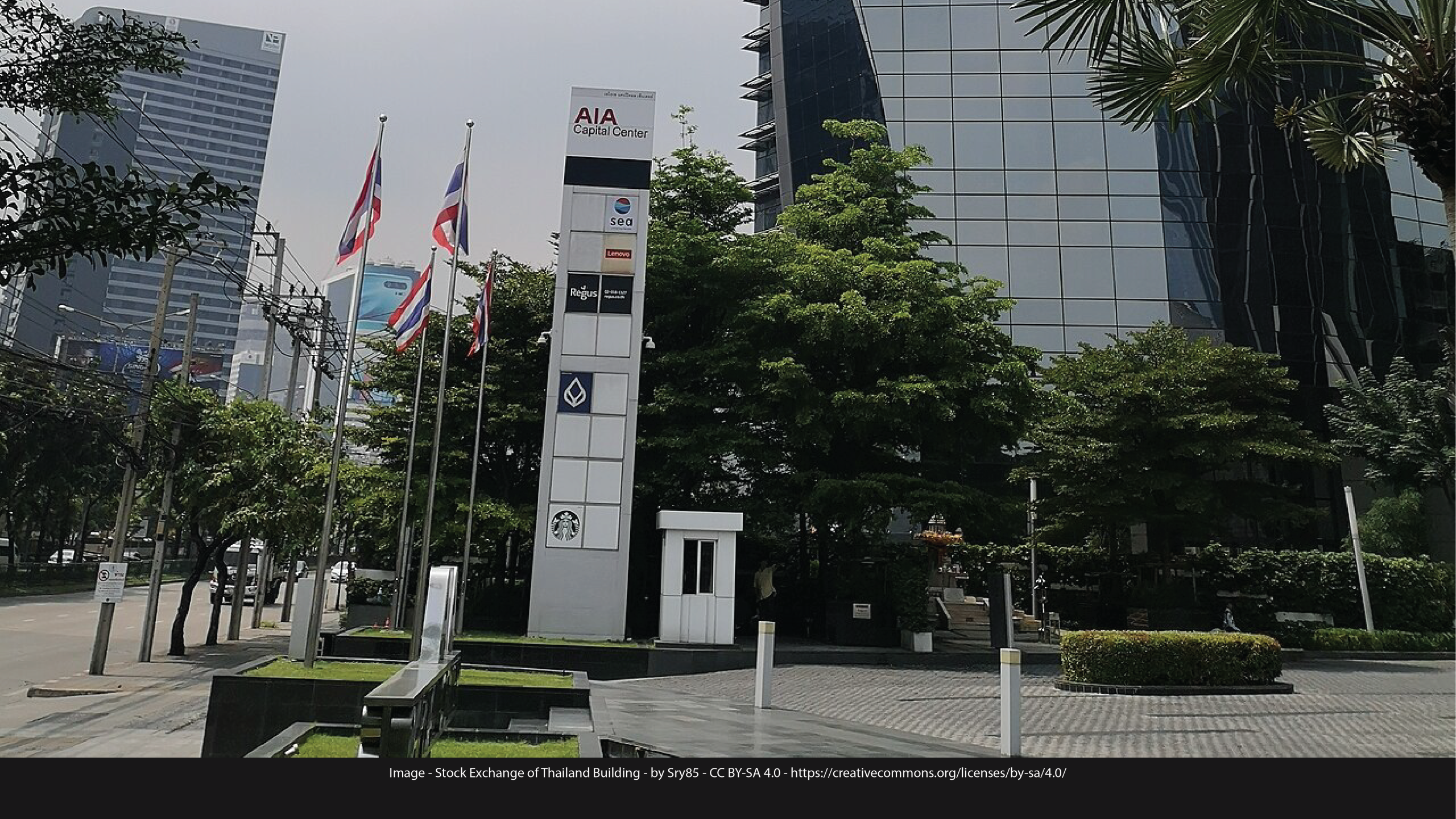
The Stock Exchange of Thailand, the SET, was established on the thirtieth of April 1975, when trading officially began for the first time. It started with eight listed companies. Five of them are still listed today, Bangkok Bank, Berli Jucker, Dusit Thani, TCAP, and, out of an abundance of caution, one that shall remain unnamed. It was originally called the Securities Exchange of Thailand. The name changed to the Stock Exchange of Thailand on the first of January 1991. Today there are around eight hundred and seventy listed companies across the main board and the MAI, the market for smaller firms. The total market capitalisation is roughly three hundred and eighty billion US dollars, making it the third largest exchange in ASEAN.
On paper, it’s a proper stock exchange. It looks like one. It has the infrastructure of one. It has the building, the indices, the listed companies, the trading volumes, the regulatory framework. International index providers like FTSE and MSCI track it. Fund managers around the world allocate to it. Everything you’d expect from a national stock market in the second largest economy in Southeast Asia.
But paper and reality aren’t the same thing. And the gap between what this exchange presents itself as and what it actually is, structurally, mechanically, in terms of who holds the power and who takes the risk, is one of the widest I’ve ever seen. I’ve lived in this country for twenty years. I’ve watched this market from the outside for most of that time. And the more I learned about how it actually works, the more I understood why I was right not to put money into it.
What Is An NVDR And Why Does It Matter
When I opened my Kasikorn Securities account and went to place my first trade, the system asked me to select something. Not a stock. Not a quantity. A type. NVDR. Non-Voting Depository Receipt.
If you’re not familiar with this, here’s what it means in plain language. As a foreigner, you can put your money into a Thai-listed company. You can take all the financial risk. You get dividends. You get rights issues. Your position goes up and down with the market like everyone else’s. But you don’t get a vote. Not at the annual general meeting. Not on board composition. Not on executive pay. Not on mergers. Not on dividend policy. Not on anything.
Now technically, there are foreign shares you can buy that do carry voting rights. But in practice, foreign shares are often priced differently, are illiquid, or the foreign allocation is already fully taken. For most stocks, most of the time, NVDR is your only realistic option.
The system was introduced in 2001. The idea, officially, was to allow foreign investors to participate in the Thai market without breaching foreign ownership limits, which cap foreign holdings at forty-nine percent in most companies. So instead of buying actual shares, you buy a receipt. The receipt gives you the economics. It strips the governance.
I remember looking at that and thinking, right, so they want my money, but they don’t want my opinion. I’d initially thought I’d buy foreign shares. I couldn’t, not for any of the companies I was looking at. That was the first moment. The moment where the picture of what this market actually is started to come into focus.
But it got worse. Because when I started looking at who controlled the companies I was supposed to be investing in, the NVDR stopped looking like a quirk and started looking like a deliberate and subtle feature, set up to do the exact opposite of its stated intention. But still, this is not even close to the worst of it.
More Than Half The Companies On The SET Are Family Controlled
The Stock Exchange of Thailand’s own research, published in 2023, surveyed seven hundred and ninety-one listed companies. Of those, four hundred and fifty-one, fifty-seven percent, were identified as family businesses. The definition they used was a company where a single family holds more than twenty percent of listed shares and maintains management control.
Let that settle for a second. More than half the companies on this exchange are controlled by the family that founded them.
The OECD’s 2025 Capital Market Review confirmed it and went further. Strategic individuals, meaning founders, their relatives, and connected insiders, are the largest shareholders in fifty-one percent of all Thai listed companies, holding an average twenty-six percent of equity. That’s the second highest figure among every peer country the OECD surveyed. Well above the regional average of eleven percent. More than triple the global average of seven percent.
And the minimum free float required to stay listed? Fifteen percent. That means a family can hold eighty-five percent of a company and it still qualifies as a listed, public security on this exchange. The SET president himself acknowledged that the free-float calculation is flawed, that shares classified as free float often haven’t been traded in years and are effectively illiquid.
There’s also a restriction that most people don’t know about until they hit it. Foreigners cannot serve as a director of a Thai public company unless they’re a permanent resident in Thailand. Even then, the practical barriers are enormous. Board seats go to family members, to connected individuals, to the networks that have always held them. The academic research backs this up. A study covering Thai family firms found that sixty-five percent appoint a member of the controlling family as CEO. The largest families held, on average, forty-five percent of shares. These aren’t companies where governance is contested. These are companies where governance is inherited.
The Bangkok Post reported at the SET’s own Family Business Forum in 2025 that in Thailand, ninety-nine point seven percent of startups are family-founded. One of the highest rates anywhere on earth. And fewer than half survive to the third generation. There’s an old saying. The first generation builds it. The second expands it. The third destroys it. The stock market is full of companies at various points along that line. The problem is you don’t know where they are until it’s too late. And as a foreigner holding NVDRs, you had no vote that could have influenced any of it.
How Badly The SET Has Performed Compared To Other Markets
Now, you might think, so what. Family-controlled companies exist everywhere. Some of the best-run companies in Asia are family firms. And that’s true. But the question is whether the market as a whole rewards investors. And in Thailand, the answer is one of the most damning in global finance.
The SET index peaked at 1,852 in 2018. By mid-2025, it had fallen to 1,053 intraday. Nearly eight hundred points gone over seven years. Bloomberg tracked ninety-two indices worldwide and Thailand was dead last in the first quarter of 2025, down sixteen percent. By June it was down twenty-four percent year to date. The worst performer among every major market on the planet.
While this was happening, the S&P 500 roughly doubled. Vietnam’s market grew. Indonesia grew. India went vertical. Every comparison makes Thailand look worse.
Why The Engine Of The Thai Stock Market Has Stopped Working
And the reason it looks worse is that the fundamental engine of any stock market, the thing that makes prices go up over the long term, has stopped working. Earnings per share on the SET have barely moved in over a decade. Kasikorn Securities identified this explicitly, calling it one of five structural traps. EPS stuck at ninety to ninety-five. Quarterly profits capped at about twenty-five billion baht. Year after year. No growth.
The OECD confirmed it. Return on equity and return on assets have been declining since 2016. They pointed to the reason why. Thailand’s stock market is dominated by old economy sectors. Banks. Energy. Property. Construction materials. The OECD stated directly that “a reliance on old economy stocks with relatively low growth potential has weighed on investor interest.” There are almost no technology companies on the SET. No innovation stories. The future isn’t listed here. The past is.
GDP growth for 2026 is projected at one point five to one point eight percent. The slowest in three decades outside crisis years. For comparison, Vietnam is growing at nearly six percent. Indonesia at four and a half. Malaysia at four point two. From 2013 to 2024, Thailand’s average growth rate was one point nine percent. Every single major regional peer outperformed it by a factor of two or more. The economy underneath the market isn’t growing. The earnings aren’t growing. And if neither of those things is growing, then anything holding the index up isn’t fundamentals. It’s hope. And hope has been wrong every single year for seven years running.
The Forecasts Always Promise A Recovery That Never Comes
Kasikorn Securities laid out the pattern. Every January, forecasts start optimistic. By December, they’ve been revised down by about one percent. Every year. Like clockwork. At the start of 2025, the consensus target for the SET was 1,550. By December, the index closed at 1,259. A ten percent loss. The forecasts were wrong by nearly three hundred points. For 2026, CGS International set a year-end target of 1,400. Predicated on political clarity, government stimulus, lower interest rates, and foreign inflows attracted by what they called “compelling valuations.” Those are the same ingredients that were supposed to work last year. And the year before. And the year before that. The growth never comes. Conveniently, the forecast always does.
The Stark, Energy Absolute, And JKN Frauds
The family control structure doesn’t just shape the market. It shapes the failures.
Stark Corporation was a top one hundred listed company. Wire and cable manufacturer. Sixty billion baht at peak valuation. The auditors found over two hundred suspicious transactions. Fictitious sales worth eight billion baht. Cash recycled through fake customers. Share price dropped ninety-nine percent. Total estimated damage, a hundred billion baht. The majority shareholder was heir to the TOA Paint fortune. Creditors filed for a hundred and thirty billion baht in asset seizures.
Energy Absolute was a blue-chip renewable energy company. The growth story of the Thai market. CEO charged with procurement fraud going back years. Share price fell ninety-five percent. Eighty-one billion baht in debt. Dropped from the SET’s own sustainability index.
JKN Global Group. Founder convicted of fraud. Sentenced to two years. Had already fled to Mexico with a new citizenship. The SEC found fictitious creditors and debtors used to inflate financials.
Three companies. Three founders or founding families in control. Three frauds. Three sets of investors who funded the risk and had zero governance power to prevent any of it.
And these aren’t isolated. MORE. IFEC. EARTH. The same pattern, over and over. The OECD noted that financial penalties in civil cases are “often too low to effectively deter misconduct.” An analyst at Liberator Securities called corruption and irregularities “a key factor damaging the image and credibility of the Thai capital market.” By the time authorities act, the damage is done. In multiple cases, the executives were connected individuals who left the country before charges were filed. Let’s say it how it is here. The people who committed the fraud are gone. The people who funded the companies through NVDRs, who had no vote, no board seat, no warning, are still here. Holding positions that went to zero. Waiting for a legal process that has more chance of convicting a soi dog for walking in front of your car than it does of convicting one of their own. And at a pace that makes the damage permanent long before the verdict arrives.
How Much Money Foreign Investors Have Pulled Out Of Thailand
Foreign investors noticed. They didn’t wait for reform. They didn’t wait for the next rally. They left. In 2025, foreign investors pulled a net hundred and seven billion baht out of Thai equities. In the first quarter alone, the outflow was nearly sixty-nine billion. Trading values hit a twenty-year low. The only consistent net buyers left were Thai retail investors, retail investors who still believe they are investing in a fair system, who bought a hundred and fifty-eight billion baht in 2025. Everyone else, foreign institutions, local institutions, brokers, all of them, sold. The people with the most information, the most resources, the most experience across global markets, looked at Thailand and took their money elsewhere. The people still buying are the ones with the fewest alternatives.
The Stock Exchange Of Thailand Built And Owns The NVDR System Itself
Everything up to this point, the family control, the NVDR, the performance, the frauds, is bad. But none of it is the thing that made me understand what this market actually is. What I’m about to tell you is the thing that changed everything for me. And if you have money in this market right now, this is the part you need to hear.
The thing I didn’t know, the thing that most people investing here don’t know, is who operates the NVDR system. It’s not a third-party company. It’s not an independent registrar. It’s not a government body. It’s a subsidiary of the Stock Exchange of Thailand itself. Thai NVDR Company Limited. Created by the SET. Owned by the SET. Run by the SET.
Let that sit for a moment. The exchange. The entity that presents itself as the neutral marketplace. The infrastructure that’s supposed to serve all participants equally. That entity built and operates the mechanism that strips foreign investors of their governance rights.
Here’s how it works. When you buy an NVDR, you’re not buying a share in a company. You’re buying a receipt. Thai NVDR Company buys the actual shares. It becomes the registered shareholder. It holds the stock in its name. Your name isn’t on the register. Thai NVDR Company’s name is.
And when there’s a shareholders’ meeting and it’s time to vote on the future of the company you’re funding, Thai NVDR Company has a policy. It does not exercise the voting rights. Except in the single case of a delisting vote, those votes simply don’t get used. They don’t go to you. They don’t go to anyone. They vanish. They are structurally, deliberately, by design, deleted from the governance of the company.
How The NVDR Structure Boosts The Voting Power Of Founding Families
I need you to understand what that actually means in practice. Because this is not a technicality. This is the mechanism that holds the entire structure together.
NVDRs represent twenty-eight percent of the total market value on the SET. Around thirty percent of total trading value. Among foreign transactions, NVDRs account for roughly half of all trading on the main board. That is an enormous block of capital. Billions upon billions of baht. And every single vote attached to that capital is being held by a subsidiary of the exchange that has an explicit policy of never using them. Those votes are not abstentions. They’re not being held in reserve. They are functionally destroyed. Every single meeting. Every single company. Every single year.
Now think about what that does to the balance of power. A founding family holds an average twenty-six percent of shares. On paper, that’s twenty-six percent of the vote. But twenty-eight percent of the market’s total voting power is sitting in a subsidiary that never votes. Those votes are removed from play. Permanently. Which means the effective voting pool isn’t a hundred percent. It’s seventy-two percent. And twenty-six out of seventy-two isn’t twenty-six percent anymore. It’s thirty-six percent. The NVDR system gives the founding family a ten percentage point uplift in voting power that they didn’t buy, didn’t earn, and didn’t have to disclose. It was handed to them by the structure of the exchange itself. And for families with larger holdings, the distortion is even worse. A family holding forty percent of shares, which is below the average for the largest Thai families, has effective voting power of fifty-five point six percent. That’s outright majority control. Without owning a majority of shares. In fact, a family only needs to hold thirty-six percent of total shares to have an effective majority of the votes that are actually cast. That’s the threshold. And the system was built to make sure they clear it.
Coincidence? You can make your own mind up on that one.
What The OECD Actually Said About NVDRs In 2025
And here’s where it all comes together. The OECD, in their 2025 Capital Market Review, said this in black and white. NVDRs, and I quote, “originally designed to bypass foreign ownership limits, have reinforced concentrated control and reduced transparency.” They recommended Thailand “reform or phase out NVDRs.”
The organisation that reviews capital markets for the developed world looked at this system and concluded that the mechanism presented as helping foreign investors actually reinforces insider control. It’s not a conspiracy theory. It’s not an angry expat opinion. It’s in the OECD’s published review, available for anyone to read. The exchange built a subsidiary that collects foreign money and deletes foreign votes. And it’s been doing it since 2001.
And if Thailand does eventually reform NVDRs, you can bet with the same certainty as death that the reform will come with stipulations designed to make sure the Thai elite keep living the way wealthy Brits used to live in Victorian England.
The SET Index Itself Overstates The Market’s Real Size
One more thing. The main SET index, the number you see on every financial screen, the number that represents Thailand’s stock market to the world, is calculated using full market capitalisation. Not free-float adjusted. That means a company where the founding family holds seventy percent of shares and only fifteen percent actually trades gets the same index weight as if all its shares were freely available. The OECD recommended Thailand phase out non-free-float-adjusted indices. The headline number that represents this market overstates its actual investable size. It makes the whole thing look bigger, more liquid, and more open than it structurally is.
The Lie Is The Word “Public” In “Public Stock Exchange”
I opened a Kasikorn Securities account a few years ago because I thought Thailand had a stock market. It does. It has a building. It has an index. It has listed companies and trading hours and a regulator and everything you’d expect a stock market to have.
But underneath all of that, what it actually has is a system where more than half the companies are controlled by the founding family. Where the minimum free float to stay listed is fifteen percent. Where earnings haven’t grown in a decade. Where the index uses a calculation method that overstates the market’s real size. Where the companies that were supposed to be the growth stories turned out to be frauds run by people who were allowed to quietly leave the country. Where foreign investors provide roughly a third of the trading activity but have zero governance rights on NVDRs. And where the mechanism that strips those rights is built, owned, and operated by the exchange itself.
The lie isn’t something someone said. The lie is the word “public” in “public stock exchange.” Because on every level, who controls the companies, who has voting power, how the index is calculated, and who built the system that makes all of it possible, this market was designed for one group of people. And the button I clicked when I opened my account told me that it was not made for me.
Frequently Asked Questions
What is an NVDR on the Stock Exchange of Thailand?
A Non-Voting Depository Receipt is the instrument most foreign investors are forced to use when investing in Thai-listed companies. It gives the foreign investor the full economic exposure, dividends, rights issues, capital gains, and losses, but strips out all governance rights. The NVDR holder does not vote at annual general meetings, on board composition, on executive pay, on mergers, on dividend policy, or on anything. The system was introduced in 2001 ostensibly to allow foreign investors to participate without breaching Thailand’s 49 percent foreign ownership cap.
Who operates and owns the NVDR system in Thailand?
Thai NVDR Company Limited operates the system. The company is a subsidiary of the Stock Exchange of Thailand itself. The exchange that presents itself as the neutral marketplace is the same entity that built and operates the mechanism that strips foreign investors of their governance rights. When an NVDR is purchased, Thai NVDR Company becomes the registered shareholder. The foreigner’s name is not on the company’s register. The exchange subsidiary’s name is.
What happens to the votes attached to NVDR shares?
They are not used. Thai NVDR Company has a published policy of not exercising the voting rights attached to the shares it holds, except in the single case of a delisting vote. The votes are not abstentions. They are not held in reserve. They are functionally destroyed at every shareholders’ meeting, every year, for every company that has NVDR holdings. NVDRs represent around 28 percent of the total market value on the SET.
How concentrated is family control on the Thai stock exchange?
Heavily. The SET’s own research found 57 percent of 791 listed companies are family businesses with a single family holding more than 20 percent of listed shares and maintaining management control. The OECD’s 2025 Capital Market Review found strategic individuals are the largest shareholders in 51 percent of all Thai listed companies, holding an average 26 percent of equity, more than triple the global average of 7 percent. The minimum free float required to stay listed is 15 percent, meaning a family can hold 85 percent and the company still qualifies as listed.
How has the SET performed compared to other markets?
Badly. The SET index peaked at 1,852 in 2018 and fell to 1,053 intraday by mid-2025. Bloomberg tracked 92 global indices and Thailand was dead last in the first quarter of 2025, down 16 percent. By June 2025 it was down 24 percent year to date, the worst performer among every major market on the planet. While the SET fell, the S&P 500 roughly doubled, Vietnam grew, Indonesia grew, India went vertical. Earnings per share on the SET have barely moved in over a decade. GDP growth for 2026 is projected at 1.5 to 1.8 percent, the slowest in three decades outside crisis years.
What did the OECD say about Thailand’s NVDR system?
The OECD’s 2025 Capital Market Review stated directly that NVDRs, “originally designed to bypass foreign ownership limits, have reinforced concentrated control and reduced transparency.” The OECD recommended Thailand “reform or phase out NVDRs.” The OECD also recommended phasing out non-free-float-adjusted indices, since the SET’s headline index overstates the market’s actual investable size by counting full market capitalisation rather than adjusting for actual trading float.
Should foreign investors put money into the Thai stock market?
That decision is the foreign investor’s to make. The structural facts are these. The exchange runs on a non-voting depository receipt system that systematically strips foreign votes. The system is operated by a subsidiary of the exchange itself. More than half the listed companies are family-controlled. Earnings have not grown in over a decade. The index has been the worst performer in the world in recent years. Major frauds at Stark Corporation, Energy Absolute, and JKN Global Group have wiped out billions in foreign capital with the executives often having fled the country before charges arrived. Foreign investors pulled a net 107 billion baht out of Thai equities in 2025 alone. The people with the most information and the most resources looked at this market and left.
Sources
1. OECD Capital Market Review of Thailand 2025 Claim: The OECD published a formal review of Thailand’s capital markets in 2025. Source: OECD Capital Market Review of Thailand 2025 – Assessment and Recommendations https://www.oecd.org/en/publications/oecd-capital-market-review-of-thailand-2025_0a975590-en/full-report/assessment-and-recommendations_a3bec273.html The review covers ownership, NVDRs, index construction, and reform recommendations across multiple chapters.
2. Establishment of the Stock Exchange of Thailand Claim: The SET was established on 30 April 1975, when trading officially began. Source: Wikipedia – Stock Exchange of Thailand https://en.wikipedia.org/wiki/Stock_Exchange_of_Thailand
3. Number of listed companies Claim: There are around 870 listed companies across the main board and the MAI. Source: Wikipedia – Stock Exchange of Thailand https://en.wikipedia.org/wiki/Stock_Exchange_of_Thailand States 868 listed companies as of 17 March 2026 – 639 on the main exchange and 229 on MAI.
4. Market capitalisation and ASEAN ranking Claim: Total market capitalisation is roughly $380 billion, making the SET the third largest exchange in ASEAN. Source: Wikipedia – Stock Exchange of Thailand https://en.wikipedia.org/wiki/Stock_Exchange_of_Thailand
5. NVDRs as an available product Claim: When opening a securities account, the system offers NVDRs as an option. Source: SET – Thai NVDR Company Limited https://www.set.or.th/nvdr/en/about/whatis.html Also: Clearstream – Investment Regulation Thailand https://www.clearstream.com/clearstream-en/res-library/market-coverage/investment-regulation-thailand-1280826
6. NVDRs carry no voting rights Claim: As a foreigner, investing via NVDRs provides full financial benefits but no voting rights. Source: SET – Thai NVDR Company Limited https://www.set.or.th/nvdr/en/about/whatis.html Also: Thanathip Partners – Thailand NVDRs Legal Framework https://www.thanathippartners.com/insights/publications/thailand_nvdrs-t2.html
7. NVDRs introduced in 2001 Claim: The NVDR system was introduced in 2001. Source: Thanathip Partners – Thailand NVDRs Legal Framework https://www.thanathippartners.com/insights/publications/thailand_nvdrs-t2.html
8. Foreign ownership limits of 49% Claim: NVDRs were designed to allow foreign participation without breaching the 49% foreign ownership cap. Source: Thanathip Partners – Thailand NVDRs Legal Framework https://www.thanathippartners.com/insights/publications/thailand_nvdrs-t2.html Also: Clearstream – Investment Regulation Thailand https://www.clearstream.com/clearstream-en/res-library/market-coverage/investment-regulation-thailand-1280826
9. 57% of Thai listed companies are family businesses Claim: A SET survey of 791 companies found 451 (57%) were family businesses. Source: Nation Thailand – SET Survey: Thai Family-Run Businesses (September 2023) https://www.nationthailand.com/business/trading-investment/40030745 Also: ASEAN Exchanges – Thai Stock Market: Growth Path for Family Business https://www.aseanexchanges.org/content/thai-stock-market-growth-path-for-family-business
10. Strategic individuals are the largest shareholders in 51% of Thai listed companies Claim: The OECD confirmed strategic individuals are the largest shareholders in 51% of all Thai listed companies, holding an average 26% of equity. Source: OECD Capital Market Review of Thailand 2025 – The Public Equity Market https://www.oecd.org/en/publications/oecd-capital-market-review-of-thailand-2025_0a975590-en/full-report/the-public-equity-market_40efbfd8.html
11. Second highest among OECD peer countries Claim: The 26% strategic-individual figure is second highest among all peer countries surveyed, well above the regional average of 11% and more than triple the global average of 7%. Source: OECD Capital Market Review of Thailand 2025 – The Public Equity Market https://www.oecd.org/en/publications/oecd-capital-market-review-of-thailand-2025_0a975590-en/full-report/the-public-equity-market_40efbfd8.html
12. Minimum free float requirement is 15% Claim: The minimum free float required to stay listed on the SET is 15%. Source: SET – Free Float Requirements https://www.set.or.th/en/listing/listed-company/simplified-regulations/maintaining-status/free-float
13. SET president acknowledged free-float calculation is flawed Claim: The SET president acknowledged that shares classified as free float often haven’t been traded in years and are effectively illiquid. Source: Bangkok Post – SET Hastens Free-Float Share Calculation Changes https://www.bangkokpost.com/business/2054319/set-hastens-free-float-share-calculation-changes
14. Restrictions on foreign directors Claim: Foreigners cannot serve as a director of a Thai public company unless they are a permanent resident. Source: Public Limited Companies Act B.E. 2535 – requires at least half of directors to be domiciled in Thailand. Also: ScienceDirect – Family Control and Cost of Debt: Evidence from Thailand https://www.sciencedirect.com/science/article/abs/pii/S0927538X19304810 Note: This claim should be cross-checked against the Public Limited Companies Act directly or a Thai corporate law source for exact wording.
15. 65% of Thai family firms appoint a family member as CEO Claim: A study found 65% of Thai family firms appoint a controlling family member as CEO, with the largest families holding an average 45% of shares. Source: ScienceDirect – Family Control and Cost of Debt: Evidence from Thailand https://www.sciencedirect.com/science/article/abs/pii/S0927538X19304810
16. 99.7% of Thai startups are family-founded Claim: At the SET’s Family Business Forum in 2025, it was reported that 99.7% of Thai startups are family-founded. Source: Bangkok Post – Breaking the Family Business Curse (SET Forum 2025) https://www.bangkokpost.com/business/general/3129657/breaking-the-family-business-curse
17. SET index peak and decline Claim: The SET index peaked at 1,852 in 2018 and fell to 1,053 intraday by mid-2025. Source: Wikipedia – Stock Exchange of Thailand https://en.wikipedia.org/wiki/Stock_Exchange_of_Thailand
18. Worst performing index globally in Q1 2025 Claim: Bloomberg tracked 92 indices worldwide and Thailand was dead last in Q1 2025, down 16%. Source: Wikipedia – Stock Exchange of Thailand https://en.wikipedia.org/wiki/Stock_Exchange_of_Thailand Original source: Bloomberg – Thai Turmoil Threatens Gains in World’s Worst Stock Market https://www.bloomberg.com/news/articles/2025-07-02/thai-turmoil-threatens-early-gains-in-world-s-worst-stock-market
19. Down 24% year to date by June 2025 Claim: By June 2025 the SET was down 24% year to date. Source: Bloomberg – Thai Stocks Decline to Five-Year Low (June 2025) https://www.bloomberg.com/news/articles/2025-06-19/thai-stock-index-poised-for-five-year-low-on-political-upheaval Also: Kaohoon International https://www.kaohooninternational.com/markets/573548
20. EPS stuck at 90-95 for over a decade Claim: Kasikorn Securities identified flat EPS as one of five structural traps, with quarterly profits capped at around 25 billion baht. Source: Nation Thailand – Thai Stock Market Takes Another Hit (June 2024) https://www.nationthailand.com/business/trading-investment/40038995
21. ROE and ROA declining since 2016 Claim: The OECD confirmed return on equity and return on assets have been declining since 2016. Source: OECD Capital Market Review of Thailand 2025 – The Public Equity Market https://www.oecd.org/en/publications/oecd-capital-market-review-of-thailand-2025_0a975590-en/full-report/the-public-equity-market_40efbfd8.html
22. OECD on old economy stocks Claim: The OECD stated that reliance on old economy stocks with low growth potential has weighed on investor interest. Source: OECD Capital Market Review of Thailand 2025 – Assessment and Recommendations https://www.oecd.org/en/publications/oecd-capital-market-review-of-thailand-2025_0a975590-en/full-report/assessment-and-recommendations_a3bec273.html
23. Almost no technology companies on the SET Claim: Thailand’s transition to a new economy has lagged behind, with minimal technology representation on the SET. Source: Wikipedia – Stock Exchange of Thailand https://en.wikipedia.org/wiki/Stock_Exchange_of_Thailand Also: SET sector breakdown https://www.set.or.th/en/market/index/set/overview
24. GDP growth comparisons Claim: Thailand’s 2026 GDP growth is projected at 1.5-1.8%, compared to Vietnam at nearly 6%, Indonesia at 4.5%, and Malaysia at 4.2%. Source: Nation Thailand – Thailand Faces Weakest Growth in Three Decades (December 2025) https://www.nationthailand.com/business/economy/40060602 Also: OECD Capital Market Review of Thailand 2025 – The Corporate Sector https://www.oecd.org/en/publications/oecd-capital-market-review-of-thailand-2025_0a975590-en/full-report/the-corporate-sector_008c96e5.html
25. Average growth rate of 1.9% from 2013-2024 Claim: Thailand’s average growth rate from 2013 to 2024 was 1.9%. Source: Wikipedia – Stock Exchange of Thailand https://en.wikipedia.org/wiki/Stock_Exchange_of_Thailand
26. Consensus target vs actual close in 2025 Claim: The consensus target for the SET at the start of 2025 was 1,550. The index closed the year at 1,259. Source: Nation Thailand – Crisis of Confidence: Corporate Scandals Drove SET to Seven-Year Lows (December 2025) https://www.nationthailand.com/business/banking-finance/40060447
27. CGS International 2026 target of 1,400 Claim: CGS International set a year-end 2026 target of 1,400 for the SET. Note: This figure was referenced in financial media research notes. Search for “CGS International SET target 2026 1400” in Nation Thailand, Bangkok Post, or Kaohoon International for the original source.
28. Stark Corporation fraud Claim: Auditors found over 200 suspicious transactions, fictitious sales worth 8 billion baht, and the share price dropped 99%. Source: Bangkok Post – A 99% Stock Crash and Shock Default https://www.bangkokpost.com/business/2598188/a-99-stock-crash-and-shock-default-raise-alarm-in-thailand Also: Global Investigations Review – Thailand: Corporate Fraud and Accounting Scandals (2026) https://globalinvestigationsreview.com/guide/the-practitioners-guide-global-investigations/2026/article/thailand-corporate-fraud-and-accounting-scandals-reveal-cracks-in-governance-and-public-trust
29. Total estimated damage of 100 billion baht Claim: The total estimated damage from the Stark fraud was 100 billion baht. Source: Nation Thailand – Thailand’s Stock Market Crisis: Corporate Fraud Shatters Confidence (December 2025) https://www.nationthailand.com/business/banking-finance/40060389
30. Stark majority shareholder and asset seizures Claim: The majority shareholder was heir to the TOA Paint fortune, and creditors filed for 130 billion baht in asset seizures. Source: Global Investigations Review – Thailand: Corporate Fraud and Accounting Scandals (2026) https://globalinvestigationsreview.com/guide/the-practitioners-guide-global-investigations/2026/article/thailand-corporate-fraud-and-accounting-scandals-reveal-cracks-in-governance-and-public-trust
31. Energy Absolute fraud Claim: The CEO was charged with procurement fraud, the share price fell 95%, 81 billion baht in debt, and the company was dropped from the SET’s sustainability index. Source: Nation Thailand – Thailand’s Stock Market Crisis: Corporate Fraud Shatters Confidence (December 2025) https://www.nationthailand.com/business/banking-finance/40060389 Also: Nation Thailand – Scandals and Slumping Market (December 2024) https://www.nationthailand.com/business/banking-finance/40044624
32. JKN Global Group fraud Claim: The founder was convicted of fraud, sentenced to two years, fled to Mexico with a new citizenship, and the SEC found fictitious creditors and debtors. Source: Global Investigations Review – Thailand: Corporate Fraud and Accounting Scandals (2026) https://globalinvestigationsreview.com/guide/the-practitioners-guide-global-investigations/2026/article/thailand-corporate-fraud-and-accounting-scandals-reveal-cracks-in-governance-and-public-trust
33. OECD on low financial penalties Claim: The OECD noted that financial penalties in civil cases are often too low to effectively deter misconduct. Source: OECD Capital Market Review of Thailand 2025 – Assessment and Recommendations https://www.oecd.org/en/publications/oecd-capital-market-review-of-thailand-2025_0a975590-en/full-report/assessment-and-recommendations_a3bec273.html
34. Liberator Securities analyst on corruption Claim: An analyst at Liberator Securities called corruption and irregularities a key factor damaging the credibility of the Thai capital market. Source: Nation Thailand – Crisis of Confidence: Corporate Scandals Drove SET to Seven-Year Lows (December 2025) https://www.nationthailand.com/business/banking-finance/40060447
35. Foreign investors pulled 107 billion baht out in 2025 Claim: Foreign investors pulled a net 107 billion baht out of Thai equities in 2025, with nearly 69 billion in Q1 alone. Source: Wikipedia – Stock Exchange of Thailand https://en.wikipedia.org/wiki/Stock_Exchange_of_Thailand Also: Nation Thailand – Crisis of Confidence https://www.nationthailand.com/business/banking-finance/40060447
36. Trading values hit a 20-year low Claim: Trading values on the SET hit a 20-year low. Source: Nation Thailand – Crisis of Confidence: Corporate Scandals Drove SET to Seven-Year Lows (December 2025) https://www.nationthailand.com/business/banking-finance/40060447
37. Thai retail investors bought 158 billion baht in 2025 Claim: Thai retail investors were the only net buyers, purchasing 158 billion baht in 2025. Source: Nation Thailand – Crisis of Confidence: Corporate Scandals Drove SET to Seven-Year Lows (December 2025) https://www.nationthailand.com/business/banking-finance/40060447
38. Commentary on informed investors leaving This is editorial commentary based on the sourced outflow data in sources 35-37.
39. Thai NVDR Company Limited is a SET subsidiary Claim: The entity that operates the NVDR system is Thai NVDR Company Limited, a subsidiary of the Stock Exchange of Thailand. Source: SET – Thai NVDR Company Limited https://www.set.or.th/nvdr/en/about/whatis.html Also: Loxley – Major Shareholders page (representative example) https://www.loxley.co.th/en/investor-relations/shareholder-information/major-shareholders
40. NVDR registration structure Claim: When an investor buys NVDRs, Thai NVDR Company buys the actual shares and becomes the registered holder. Source: Thanathip Partners – Thailand NVDRs Legal Framework https://www.thanathippartners.com/insights/publications/thailand_nvdrs-t2.html
41. Thai NVDR Company does not exercise voting rights Claim: Thai NVDR Company has a policy of not exercising voting rights, except in the single case of a delisting vote. Source: Thanathip Partners – Thailand NVDRs Legal Framework https://www.thanathippartners.com/insights/publications/thailand_nvdrs-t2.html
42. NVDRs represent 28% of total market value Claim: NVDRs represent 28% of total market value, around 30% of total trading value, and roughly half of all foreign transactions on the main board. Source: OECD Capital Market Review of Thailand 2025 – The Public Equity Market https://www.oecd.org/en/publications/oecd-capital-market-review-of-thailand-2025_0a975590-en/full-report/the-public-equity-market_40efbfd8.html
43. Effective control calculation Claim: With families holding an average 26% and 28% of voting power sitting in a non-voting subsidiary, families need only 36% of total shares for an effective voting majority. Sources: The 26% and 28% figures are from the OECD (sources 10 and 42). The 36% figure is derived arithmetic – 26 out of 72 effective voting shares equals 36.1%.
44. 36% threshold for effective majority This is a derived conclusion based on the sourced figures in source 43. The arithmetic is straightforward and does not require a separate source.
45. OECD on NVDRs reinforcing concentrated control Claim: The OECD stated that NVDRs have reinforced concentrated control and reduced transparency, and recommended Thailand reform or phase out NVDRs. Source: OECD Capital Market Review of Thailand 2025 – Assessment and Recommendations https://www.oecd.org/en/publications/oecd-capital-market-review-of-thailand-2025_0a975590-en/full-report/assessment-and-recommendations_a3bec273.html
46. SET index uses full market capitalisation, not free-float adjusted Claim: The main SET index is calculated using full market capitalisation rather than free-float adjusted capitalisation. Source: Wikipedia – SET Index https://en.wikipedia.org/wiki/SET_Index Also: Bangkok Post – SET Hastens Free-Float Share Calculation Changes https://www.bangkokpost.com/business/2054319/set-hastens-free-float-share-calculation-changes
47. OECD recommended phasing out non-free-float-adjusted indices Claim: The OECD recommended Thailand phase out non-free-float-adjusted indices. Source: OECD Capital Market Review of Thailand 2025 https://www.oecd.org/en/publications/oecd-capital-market-review-of-thailand-2025_0a975590-en.html
48. The headline number overstates investable size This is editorial commentary supported by sources 12, 13, 46, and 47.
All sources were verified at the time of production. Some sources such as Bloomberg articles may be behind a paywall. Where possible, alternative or supporting sources have been provided.