The Rural Chiang Mai Checkpoint I Watched Nine Years Ago
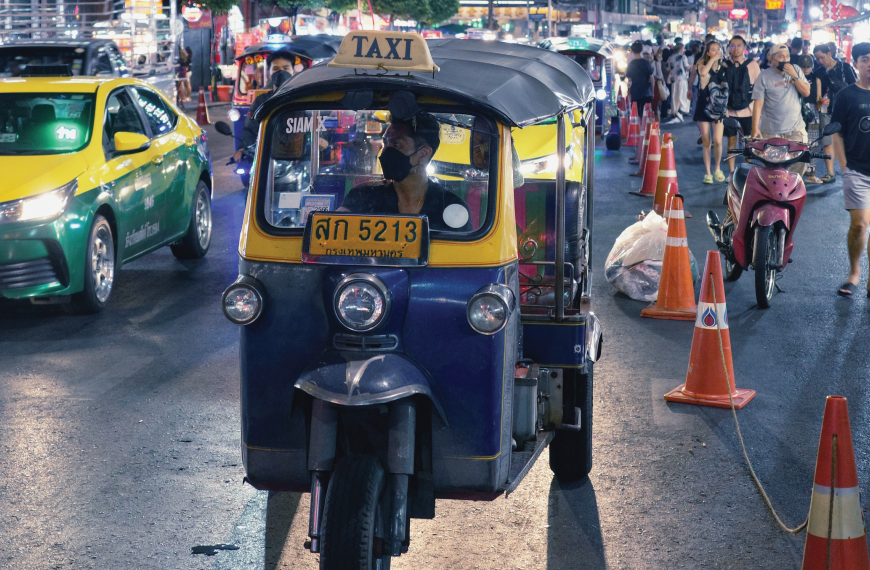
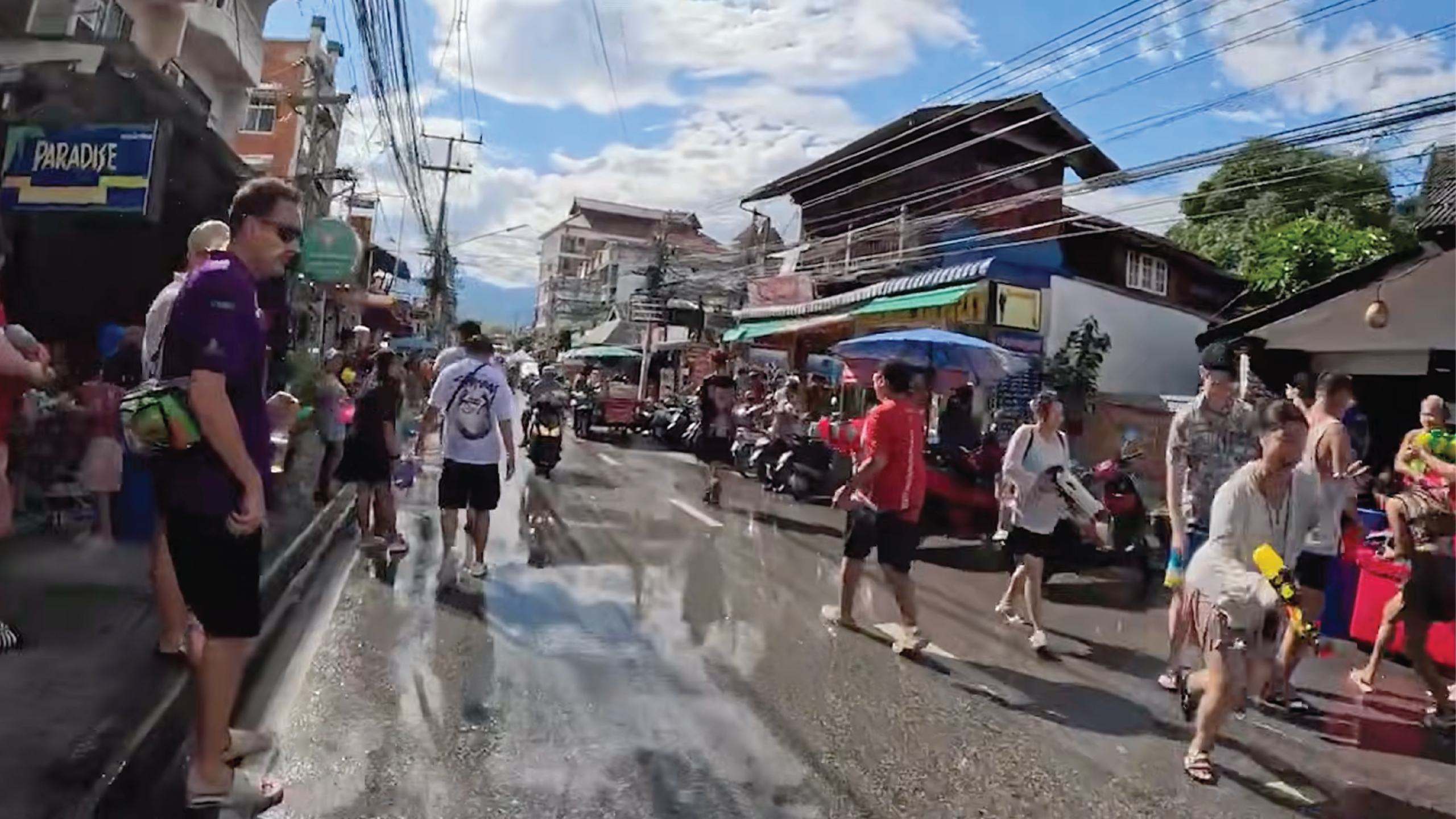
About nine years ago, during Songkran, I was riding my bike in the evening in rural Chiang Mai. Small checkpoint ahead. A few officers pulling people over. I had everything, licence, helmet, insurance, so I was fine. But there were Thai guys there who were not fine. They were being treated like dogs. The officers appeared to be getting a little bit too much pleasure out of it, you could see it in their faces, the way small men light up when they finally get to feel big. Money was changing hands. Nothing looked official. I know what an official fine looks like. This was not that. This was cash in hand, no receipt, no ticket, no paperwork. The police even joked with me about it.
Now, I am not saying they would have treated me the same way, they are not that stupid. Even if I had been blind drunk they would not have looked at me with that kind of contempt. Five hundred baht and on your way. But the way they were getting off on the power of it, over their own people, on a public road, during a festival, made me feel sick. I stood there and said nothing. Because my family are Thai. Because I live there. Because what was I supposed to do.
A few weeks later I was eating at a local place and two of the same officers were at a nearby table drinking. I even said hi. They were friendly enough. I cannot tell you exactly how many beers they had because they were already there when I arrived. But there were at least five large bottles of Leo on that table. Then they got up, climbed on their motorbike, and rode away.
What I Hate Myself For Now
And I want to be honest about something I am not proud of. At the time, I found it funny. In that dark, hopeless way where the system is so rotten that laughing is the only thing left. The officers who shake down their own people at drink-driving checkpoints are themselves drinking and driving. And I laughed. And I hate myself for it.
If you have spent any time in rural Thailand, how many times have you seen police officers drinking and driving? Not heard about. Seen. I saw it regularly. Everyone around me saw it. Nobody said a word. Because the system does not work for ordinary people. It feeds off their silence and gets fat on the fact that they cannot fight back.
What Do You Expect From People Who Grow Up In This System
Now. Someone is going to listen to that and say: well, people should not drink and drive.
And they are right. Of course they are right.
But I need you to think about something before you type that comment. What do you expect. Seriously. What do you actually expect from people who grow up in a system where the most powerful, most visible, most protected people in the country do far, far worse than drink-driving every single day and never face a single consequence. And those with money who do drink and drive pay the family of the victim and the family of the victim are the ones expected to wai to the bastard who killed their son or their daughter, as if they should somehow be grateful that someone of such class and character had even been in the vicinity of their deceased relative.
The Billionaires Whose Songkran Pays For The Police That Beat Their People
Su Xuming, also known as Charoen Sirivadhanabhakdi, whose new royalty bestowed name probably gave him a few over excited nights alone in bed, worth 10.5 billion dollars, the man who owns Chang beer, controls the national alcohol supply, half the hotels in Southeast Asia, and a supermarket chain. His family traces back to a Chinese street vendor. He was allowed in. The door was shut behind him. And every Songkran, his company sells more beer than at any other time of the year while the people who drink it die on the roads. His alcohol sales rose 6.5 to 7.5 percent off the back of the 2024 Songkran alone. When COVID cancelled the festival in 2020, his beer sales dropped 8.8 percent. That is how dependent his fortune is on this one week. And the government made it easier for him. In 2024 it cut the tax on bars and pubs from 10 percent to 5 percent. It literally made it cheaper to get drunk during the deadliest week of the year so that his numbers would look better.
Vorayuth Yoovidhya, grandson of the co-founder of Red Bull. A drink that only someone with an intellectual deficiency would still buy once they know what this family got away with. Worth 26.4 billion dollars. Killed a police officer while drunk and high behind the wheel of a Ferrari. Dragged the body more than a hundred metres down a Bangkok street. Fled the country on a private jet. Never spent a night in prison. The charges were dropped. The last one expires in 2027. The dead officer’s family received 3 million baht. Blood money they almost certainly had to bow their heads and say thank you for. From a family worth 26.4 billion dollars.
Anutin Charnvirakul, or as I prefer to call him, Mr Hypocrite, the current Prime Minister of Thailand, called Western foreigners dirty, said they never shower, and told the country to be more afraid of farang than Asians during a pandemic that started in China. He declared personal assets of 3.9 billion baht. Three private jets. A Rolls-Royce. Twenty-two luxury watches. Half a billion baht in aircraft alone. And this is the man who goes on television during Songkran and tells the nation to celebrate responsibly.
Premchai Karnasuta, president of one of Thailand’s largest construction companies, the man who built Suvarnabhumi Airport, gets his kicks from eating endangered animals. Caught in a UNESCO-protected wildlife sanctuary with a skinned black panther, rifles, and a pot of soup made from the panther’s tail. I can only assume he reserved its penis for a more private affair. Served less than two years.
You Do Not Get A Law-Abiding Population From A Lawless Elite
These are the people at the top. These are the role models. These are the examples the system sets. And then the same system turns around and lectures a 22-year-old kid on a motorcycle about having a beer at Songkran. A kid who earns less in his whole lifetime than Anutin’s Rolls-Royce costs. A kid whose real income has fallen 18.5 percent in five years. A kid riding a motorcycle with bald tyres because that is what he can afford. A kid whose only purpose in this system is to be something the people above him can squeeze dry and discard.
You do not get a law-abiding population from a lawless elite. You do not get respect for rules from a system that only enforces them downward. People learn from what they see. And what ordinary Thai people see, every single day, is that the rules are for them and the rewards are for someone else.
The Thai Beer Duopoly That Owns Songkran
The Thai beer market is a duopoly. Boon Rawd Brewery, the Bhirombhakdi family, produces Singha and Leo and holds roughly 60 percent. Thai Beverage, Charoen’s company, produces Chang and holds 32 percent. Together with Heineken they control 95.7 percent of the market by value. That is not competition. That is a stranglehold. And Songkran is the week it squeezes hardest.
Songkran 2025 generated 22.27 billion baht in economic activity. The Maha Songkran World Water Festival alone brought in 1.58 billion. The government collected 678 million baht in tax from the event. 5.27 million domestic travellers. And a headline this year in the international press: “Thailand Pins Everything on Songkran to Revitalize Tourism and Overcome the Looming Economic Crisis.”
They are not hiding it. They are telling you. The economy depends on this week. The alcohol sales depend on this week. The tax revenue depends on this week. And the cost of all of it is paid by the people on the motorcycles.
The Songkran Road Toll Is Not Bad Luck. It Is Structural Inequality.
Ninety-five people dead in the first three days of Songkran 2026. Five hundred and fifteen accidents. Four hundred and eighty-six injuries. Speeding caused 46 percent. Drunk driving caused a quarter. Motorcycles were involved in 77 percent. Last year the full week killed 253. The year before, 480, sixty-nine people a day, nearly double the normal rate.
The dead are overwhelmingly young, poor, rural, and on two wheels. Motorcycles account for up to 82 percent of Songkran road deaths. The most vulnerable age group is 20 to 29. Forty-three percent of accidents involve faulty vehicle parts, because the people riding cannot afford to maintain them. Published academic research links the ‘seven dangerous days’ directly to structural inequality. The people who die are not unlucky. They are poor. And the system that profits from their drinking has never once invested in keeping them alive.
How Thai Police Checkpoints Actually Work
Police officers in Thailand earn a salary so low it is an embarrassment to the uniform. They buy their own equipment, maintain their own bikes, and fund the gap between what the state pays them and what it costs to survive from the people they pull over at checkpoints. Checkpoints closer to the cities have seen some improvements. In rural Thailand it is a different story entirely, the people are poorer, more vulnerable, and far less able to do anything about it. I suppose nobody expected witnesses to move out there.
There are two quotas, official fines and unofficial payments. If the officer writes an official ticket, the money goes through the Police Ticket Management system and the officer sees nothing. If the officer takes cash on the spot, the money stays, and a cut goes around the department. The government does not need to pay a proper salary because it has outsourced the cost of policing to the people being policed.
On the first day of Songkran 2026, over 15,000 helmet fines, 13,000 speeding fines, 3,800 seatbelt fines. Over 35,000 stops in one day. Nine days before the festival, fines were quadrupled, no helmet went from 1,000 to 4,000 baht. In any normal country you might look at that and think: good, they are taking road safety seriously. But when you have lived in Thailand long enough, you know exactly what quadrupling the fines nine days before the biggest travel week of the year actually means. It means the price went up. Not the safety. The price.
The Songkran Shakedown Menu
The Songkran rules read like a shakedown menu. Splashing someone who does not want to be splashed, at a water festival, up to 60,000 baht. Wrong clothes, 5,000. Powder without consent, 5,000. Loud music, 10,000. Rules designed to be broken by everyone at the festival and enforced against whoever the officer chooses. The Supreme Administrative Court ruled in 2025 that traffic fines issued since July 2020 were unlawful, officers had denied people the right to dispute and imposed illegal rates. The court said the system was unconstitutional. The system kept running. Eighteen traffic officers in Udon Thani were suspended for suspected checkpoint bribery. That was the one that made the news.
The System Is Working Exactly As Designed
The billionaire sells the beer. The government cuts the tax. The tourists fill the hotels. The police collect the fines and the cash. The revenue gets counted. The bodies get counted. The Prime Minister, three private jets, twenty-two watches, 3.9 billion baht, tells the nation to be careful. And next year they do it all again.
Because it works. Not for the 22-year-old on the motorcycle. Not for the families who lose someone on a rural highway every April. Not for the Thai men I watched being treated like dogs at a checkpoint in rural Chiang Mai nine years ago while the officers joked about it.
It works for the people it was always designed to work for. The people who sell the alcohol. The people who collect the tax. The people who take the bribes. The people who have never once had to ride a motorcycle home in the dark on a road the state could not be bothered to light, after a week the state made it cheaper to drink through, past checkpoints staffed by officers the state does not pay enough to feed.
That is Songkran. That is the racket. And the people who pay for it, with their money at the checkpoints, with their health on the roads, and sometimes with their lives, are the same people who never had a say in any of it.
Frequently Asked Questions
How many people die during Thailand’s Songkran festival?
In 2026, ninety-five people died in the first three days alone, with 515 accidents and 486 injuries. The full week of Songkran 2025 killed 253 people. The year before that killed 480 people, an average of sixty-nine people per day, nearly double the normal Thai road death rate. Motorcycles account for up to 82 percent of Songkran road fatalities. The most vulnerable age group is 20 to 29. Forty-three percent of accidents involve faulty vehicle parts, because the riders cannot afford proper maintenance. Speeding causes 46 percent of accidents, drunk driving causes a quarter.
Who profits from Songkran in Thailand?
The Thai alcohol industry, the hotel sector, the tourism authority, and the government tax base. Songkran 2025 generated 22.27 billion baht in economic activity. The government collected 678 million baht in tax. Charoen Sirivadhanabhakdi (worth 10.5 billion dollars), who owns Chang beer through Thai Beverage, saw alcohol sales rise 6.5 to 7.5 percent off the back of the 2024 festival. When COVID cancelled Songkran in 2020, his beer sales dropped 8.8 percent. The Thai beer market is a duopoly between Boon Rawd Brewery (Singha, Leo, the Bhirombhakdi family at roughly 60 percent) and Thai Beverage (Chang at 32 percent), with Heineken bringing the combined control to 95.7 percent of the market.
Why did Thailand cut the tax on bars and pubs in 2024?
The government reduced the tax on bars and pubs from 10 percent to 5 percent in 2024. The cut made it cheaper to get drunk during the deadliest week of the year on Thai roads. The beneficiary was the alcohol duopoly that depends on Songkran for the largest single week of annual sales. The policy made the alcohol industry’s numbers look better at the cost of the people who would die on motorcycles in the week that followed. The Thai government has chosen, repeatedly, alcohol industry revenue over road safety.
What is the Thai checkpoint bribery system?
Thai police officers are paid a salary so low that the state has effectively outsourced the cost of policing to the people being policed. Officers buy their own equipment and maintain their own vehicles. The gap between official pay and the cost of doing the job is filled by cash collected at checkpoints, with a cut going around the department. Official fines go through the Police Ticket Management system and the officer sees nothing. Cash taken on the spot stays. The system means quadrupling fines before Songkran does not raise safety, it raises the price of the bribe.
Did Thailand actually rule its traffic fines were unconstitutional?
Yes. The Supreme Administrative Court ruled in 2025 that traffic fines issued since July 2020 were unlawful, finding that officers had denied people the right to dispute and had imposed illegal rates. The court said the system was unconstitutional. The system kept running. Eighteen traffic officers in Udon Thani were suspended for suspected checkpoint bribery, the one case that made the news. The Court’s ruling has not changed the practice on the ground because the system that produces the bribery is structural.
Who is Vorayuth Yoovidhya?
The grandson of the co-founder of Red Bull, worth approximately 26.4 billion dollars. In 2012 he killed Bangkok police officer Sergeant Wichian Klanprasert while driving a Ferrari drunk and on drugs, dragging the body more than a hundred metres down a Bangkok street. He fled the country on a private jet. He has never spent a night in prison. The charges were progressively dropped, with the last one expiring in 2027. The dead officer’s family received 3 million baht in settlement from a family worth tens of billions of dollars. The Vorayuth case is the single clearest example of how Thai law operates differently for the rich than for the 22-year-old on the motorcycle at the Songkran checkpoint.
What is the real lesson of Songkran in Thailand?
That the system is working precisely as designed. The billionaire sells the beer. The government cuts the tax. The tourists fill the hotels. The police collect the fines and the bribes. The revenue gets counted. The bodies get counted. The Prime Minister tells the nation to celebrate responsibly. And next year it happens again. The people who pay for it, with their money at the checkpoints, with their health on the roads, and sometimes with their lives, are the same people who never had a say in any of it. Songkran is the most concentrated example of structural inequality in Thai public life, and the festival’s death toll is not bad luck but the predictable output of the architecture above it.
Sources
- 95 dead in 3 days, Songkran 2026
https://www.bangkokpost.com/thailand/general/3236273/ - 2025 full week: 253 deaths, 1,538 crashes
https://english.news.cn/asiapacific/20250418/31322d76add745b4ac0cf675a0f35801/c.html - 2024 Songkran: 480 deaths, 69/day vs normal 38/day
https://pmc.ncbi.nlm.nih.gov/articles/PMC11652744/ - Speeding 46%, drunk driving 24.5%, motorcycles 77%
https://www.nationthailand.com/news/general/40065003 - Beer market: Boon Rawd 60%, ThaiBev 32%, combined 95.7%
https://www.krungsri.com/en/research/industry/industry-outlook/food-beverage/beverage/io/io-beverage-2024-2026 - Songkran boosted alcohol sales 6.5–7.5%
https://www.krungsri.com/en/research/industry/industry-outlook/food-beverage/beverage/io/beverage-2025-2027 - COVID cancellation: beer −8.8%, spirits −8.5%
https://www.krungsri.com/en/research/industry/industry-outlook/food-beverage/beverage/io/io-beverage-2022 - Tax on bars/pubs cut from 10% to 5%
https://www.euromonitor.com/alcoholic-drinks-in-thailand/report - ThaiBev — Charoen Sirivadhanabhakdi, $10.5B
https://en.wikipedia.org/wiki/ThaiBev - Vorayuth Yoovidhya — Red Bull hit and run, charges dropped
https://en.wikipedia.org/wiki/Vorayuth_Yoovidhya - Anutin assets 3.9B baht, 3 jets, 22 watches, Rolls-Royce
https://www.bangkokpost.com/thailand/politics/3101564/ - Anutin “dirty farang” remarks
https://www.khaosodenglish.com/news/2020/03/13/health-minister-dirty-europeans-pose-virus-risks-to-thailand/ - Premchai — panther, UNESCO sanctuary, served <2 years
https://en.wikipedia.org/wiki/Premchai_Karnasuta - Poorest workers real income fell 18.5%
https://www.krungsri.com/en/research/research-intelligence/household-wealth-2025 - Motorcycles 82% of deaths, inequality link — academic research
https://pmc.ncbi.nlm.nih.gov/articles/PMC11652744/ - 43% accidents from faulty vehicle parts
https://pmc.ncbi.nlm.nih.gov/articles/PMC11652744/ - No high-speed rail, trains 8–12x slower
https://pmc.ncbi.nlm.nih.gov/articles/PMC11652744/ - Police salary ~6,000 baht, buy own equipment
https://library.siam-legal.com/bribery-in-thailand/ - Two quotas: fines and bribes, cut around department
https://thethaiger.com/thai-life/how-to-deal-with-traffic-stops-and-thai-cops - 35,000+ stops first day 2026
https://www.thaiexaminer.com/thai-news-foreigners/2026/04/12/thailand-in-songkran-party-mode/ - Fines quadrupled April 1, 2026
https://www.nationthailand.com/news/general/40064520 - Fine menu: splashing 60,000, dress 5,000
https://www.nationthailand.com/news/general/40064997 - Supreme Court: fines since July 2020 unlawful
https://thethaiger.com/news/opinion/how-thailand-s-new-traffic-fines-are-playing-out - 18 Udon Thani officers suspended
https://www.thailandblog.nl/en/achtergrond/achtergrond-politie-in-thailand-tussen-macht-geld-en-wantrouwen/ - 22.27 billion baht, 678M tax, 5.27M travellers
https://thai.news/news/thailand/thailands-maha-songkran-festival-boosts-tourism-revenue-to-1-58-billion-baht-in-2025 - “Thailand Pins Everything on Songkran”
https://www.travelandtourworld.com/news/article/thailand-pins-everything-on-songkran-to-revitalize-tourism-and-overcome-the-looming-economic-crisis/