The Conversation Happening In Every Western Foreigner Bar In The Philippines
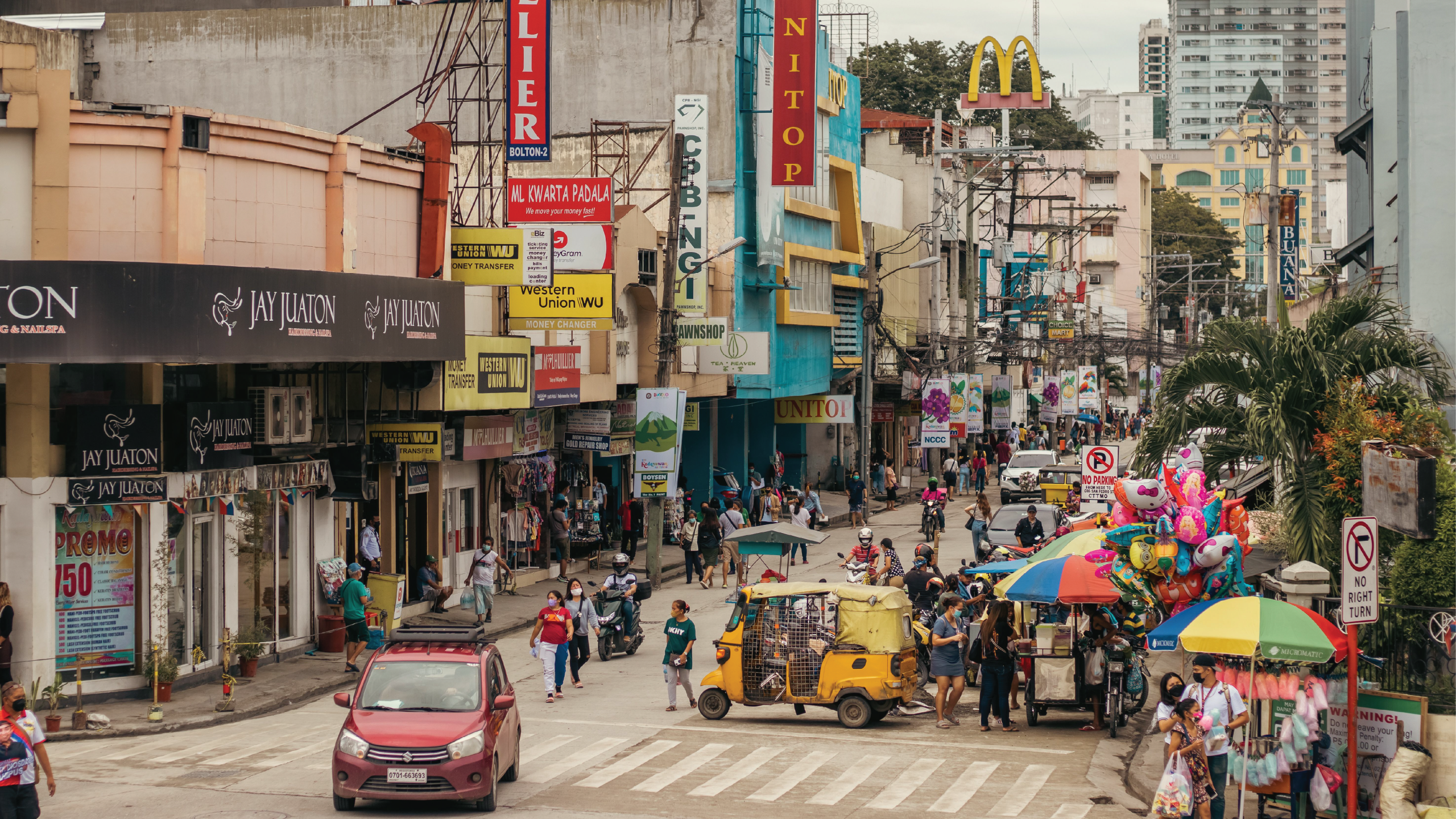
In the bars of Angeles City, in the condo blocks of Cebu, in the gated subdivisions of Davao and Iloilo, that same conversation is happening again this year. The conversation is about leaving, and this is not necessarily in the way foreigners always talk about leaving, the half-joke after a bad week with the Bureau of Immigration or another power cut or yet another typhoon, but the real conversation. The one where the pension or the other fixed income has been calculated against the rising cost of living, the family has been visited back home for the first time in years, and the conclusion has been reached. The Philippines is not what it was even three years ago, and the foreigners who built lives in the Philippines are now, in measurable numbers, packing up and leaving.
What I am gathering from people on the ground is the same story told from different angles. Many of the foreigners who have been in the country for a decade or two, who married Filipinas, built businesses, and put down what they thought were permanent roots, are packing up and calling it a day. The country has changed. The sums no longer add up. The political weather has gone bad. And the welcome that brought them there is being slowly replaced by something colder, more bureaucratic, and more openly hostile to the foreigner who is no longer arriving with new money to spend.
This is not an article about whether you should move to the Philippines. This is an article about why so many of the people who already did are now reversing the decision. Because once you understand what is driving the exodus, you understand something important about the country itself. Not the brochure version. The structural version. And it tells you everything about what the Philippines is becoming in 2026.
The Money That Brought Them Here Is The Money That Is Sending Them Home
Start with the money, because the money is what brought most of them here in the first place. The Philippines sold itself, for two decades, as the cheap, English-speaking, friendly alternative to Thailand. Before it was always a given, the pension that bought a comfortable life back at home, bought a luxury life in Cebu. It worked, that was the deal. The pension that wouldn’t stretch at home, that bought a comfortable life in the Philippines and the appeal was real.
This no longer works. If we take a look at the Philippines inflation rate in April 2026, it hit seven point two per cent. That’s the official figure, from the Philippine Statistics Authority, the country’s own data agency. The same agency had recorded one point four per cent inflation in April 2025. In twelve months, the inflation rate has more than quintupled. Food inflation specifically hit six per cent in April 2026, up from two point nine per cent in March. The food on the table is going up faster than almost any other major category. And for foreign retirees on fixed pensions paid in dollars, pounds, or euros, this is a structural disaster.
Because here is what most foreigners do not understand until they have lived through it. Even though the Philippines peso has been relatively stable in 2026, unlike the strengthening Thai baht, the pesos themselves now buy substantially less food, less rent, less electricity, and less of everything that makes up a monthly budget. The squeeze is not from the exchange rate as of yet. The squeeze is from inside the country itself.
A pension of two thousand US dollars a month, which was a comfortable upper-middle-class income in the Philippines as recently as 2023, is now, after the food inflation and the rent inflation and the utility increases, a tightening budget. The retirement villages in Tagaytay and Bacolod and Subic that were sold as affordable paradise four years ago are now budget calculations that no longer make financial sense without many compromises. And the foreigners on the marginal end of the affordability curve, the men on a single state pension, the couples on combined fixed incomes, the early retirees who calculated their twenty-year plan in 2020 figures, are finding out, one electricity bill at a time, that the numbers have moved.
The Bureau of Immigration Tightening Around Long-Term Residents
The second reason is everything I covered in the Foreigners Are Collateral Damage article. The Bureau of Immigration enforcement campaign. The detentions. The blacklisting. The Marcos-Duterte political war that has weaponised every state institution against visible foreigner-targets. The conveyor belt that has been built and that does not stop running just because the political reasons for building it have shifted.
Long-term foreign residents have reported a steady tightening of the visa rules. Visa renewals taking longer. Annual reporting requirements being enforced more strictly than in previous years. The ACR I-Card Annual Report deadline now actively penalised for non-compliance. The administrative friction of being a legal foreign resident, they say, has measurably increased.
This is not enforcement against criminals. This is the steady tightening of the daily grind of being a legal long-term resident. The foreigner with the Filipina wife and the kids and the small business and the property in her name is finding that every renewal cycle takes longer, costs more, and produces more uncertainty. And the men who have done this for fifteen or twenty years are starting to ask, openly, whether the country actually wants them to stay.
Philippines Crime Climbing Five Years Running
The Philippines crime index in 2026 sits at forty-three point five according to Numbeo’s international comparative data. The index has been climbing for five years in a row. The Philippines is now classified in the moderate-to-high crime band, sitting above most of Southeast Asia and well above Thailand, Vietnam, Malaysia, and Indonesia. The official PNP figures show different trends in different years, but the on-the-ground experience reported by long-term foreign residents has been consistent. The country is not getting safer. The streets that felt safe a decade ago feel less safe now. The neighbourhoods that absorbed foreigners then have begun, in some areas, to repel them now.
And the specific crime pattern affecting foreigners has changed. The Angeles City and Cebu robbery cases. The Manila motorcycle snatching pattern. The Boracay scam network. The Bohol kidnapping concern. The fact that foreigners in the provinces are killed by people they know, as I covered in the Easy Trap article, not by random strangers, and the people who know them include neighbours, business partners, in-laws, and sometimes the local police. The pattern has not improved across the period these foreigners have been here. It has, in measurable ways, got worse.
For a retiree in his sixties or seventies, the calculation around safety changes. The energy to navigate a higher-crime environment, the willingness to absorb the occasional theft, the tolerance for police that cannot or will not help, all of these things diminish with age. And the same expat who shrugged off a phone snatching in 2018 is, in 2026, sitting at his kitchen table calculating whether his wife and kids would be safer in a place where the police actually function and the streets are actually lit.
The Philippine Healthcare System Was Never Built For Ageing Foreigners
The Philippines healthcare system is structurally not built for ageing foreign residents. PhilHealth, the national insurance scheme, is largely closed to long-term foreign residents who are not formally employed by Philippine companies. Private hospital insurance for foreigners over sixty-five is either punitive in cost or unavailable. The medical evacuation industry exists because the local healthcare system, outside the top private hospitals in Manila and Cebu, cannot handle serious cases. The 2020 PhilHealth fraud scandal, in which billions of pesos were misappropriated by senior officials, is a window into how the national system actually operates.
For the foreigner in his thirties or forties, healthcare is an abstract concern. For the foreigner in his sixties, it is the dominant concern. And many foreigners who have been in the country for fifteen or twenty years are now, in their late sixties and seventies, hitting the point where the healthcare equation has gone wrong. The cardiac event that needed a Manila hospital and an air ambulance back to the home country. The cancer diagnosis that meant flying to Singapore or Bangkok for treatment because the Philippines could not provide it. The dementia diagnosis in the spouse and the realisation that no Philippine facility can adequately care for a Western retiree with that condition. The reality that ageing in the Philippines, for a foreigner, eventually means leaving the Philippines.
The Country Itself Has Changed
The hardest reason to put into figures is that the country itself has changed, because it is the qualitative experience of having lived somewhere for a long time and watched it become something different. The Philippines of 2010 was a country where ordinary Filipinos still had some hope that their government, their economy, their basic institutions might improve. The Philippines of 2026 is a country where that hope has largely been replaced by resignation. The Marcos-Duterte war is one symptom of that. The Vice President’s impeachment proceedings, the ICC case against the former President, the political theatre that has consumed every level of government, all of it produces a national mood that is harder to live inside than the mood of fifteen years ago.
And ordinary Filipinos are voting with their feet. The Overseas Filipino Worker population now sits at approximately one point nine six million, with remittances reaching thirty-eight billion dollars annually, around eight and a half per cent of Philippine GDP. The country’s own people are leaving, in numbers that reshape the entire economy, because the home version of the country no longer offers them what they need. Foreigners watching this dynamic do not draw their conclusion from a single statistic. They draw it from watching their Filipina wife’s brother leave for Dubai, her cousin leave for Saudi Arabia, her best friend leave for Canada, her old schoolteacher leave for Italy. The country is losing its own people. And the foreigners in the country are starting to ask why they are still here when the locals are leaving.
The Math Of The Original Decision Has Shifted On Every Variable
Every foreigner who came to the Philippines did a calculation at the time. The calculation included the cost of living, the friendliness of the people, the warmth of the climate, the quality of the food, the language, the visa system, the property situation, and the perceived alternative back home. For many of them, the calculation made sense in 2010 or 2015. Britain was getting more expensive. America was politically alarming. Australia was unaffordable. The Philippines was cheap, warm, friendly, and English-speaking. The math worked.
In 2026, the math has shifted on every variable simultaneously. The Philippines is no longer cheap, not by the margin it used to be. The friendliness has not disappeared, but the structural environment around it has hardened. The visa system has tightened. The crime has not improved. The healthcare has not improved. The political environment has actively worsened. And back home, while many of the trends continue, the comparative gap has narrowed. A pensioner returning to the UK or to the US or to Australia in 2026 is not returning to the same financial impossibility he left ten years ago. The home countries have problems. The Philippines has problems too. The arbitrage that brought him here has narrowed to the point where many foreigners are now, honestly, just better off going home.
The Realisation Most Of Them Will Not Say Out Loud
The reason most of the men spoken to do not say out loud, even though it sits underneath all the others. The realisation that they were never going to be Filipinos. That after twenty years of marriage, twenty years of contribution, twenty years of trying to integrate, they were always going to be the foreigner. The visa renewal. The financial requirement. The bank account scrutiny. The neighbour’s polite distance. The wife’s family’s quiet expectation that the money would never stop. The country’s structural commitment to never letting them belong, no matter how long they stayed. The realisation that the Philippines, for all its surface warmth, was never going to give them a country in the way the country they left had given them one. And that going home, even with all the home country’s flaws, was going home. And the Philippines was not.
That realisation, for the foreigners reaching it in 2026, is the thing that finally tips them over the edge. The numbers could be borderline and the man could stay. The numbers could be tight and the man could stay. But once the man has admitted, even silently, that he was never going to belong, the numbers no longer need to be the decisive factor. The numbers are just the excuse he gives his wife.
What This Means For The Philippines Itself
The Philippines is losing the foreign residents who funded the local economies they lived in, who built businesses, who employed Filipino staff, who paid rent to Filipino landlords, who bought property through Filipino spouses, who paid school fees for Filipino stepchildren, who put money into communities that needed it. The conveyor-belt model the Bureau of Immigration and the political class have built around foreign arrivals does not account for what happens when the long-term residents start to leave faster than the new arrivals come in. The Philippines has not begun to model this. The Department of Tourism is still running campaigns in foreign capitals. The Bureau of Immigration is still processing visa renewals as if the numbers will keep going up forever. The local economies of Angeles, Cebu, Davao, and Iloilo that were built around the foreign presence are not yet showing the contraction that is coming.
But it is coming. And the foreigners who are leaving in 2026 are the leading edge of it.
What This Means For You If You Are Still Considering The Move
If you are reading this from outside the Philippines and you are still considering moving there, the honest message is this. The country that the brochures and the retirement guides are selling is not the country that exists in 2026. The numbers that worked in 2015 do not work in 2026. The crime that was tolerable in 2010 has trended in the wrong direction for five years running. The healthcare that was acceptable in your forties will not be acceptable in your seventies. The political environment has actively worsened. The Bureau of Immigration is no longer the relaxed administrative body it was a decade ago. And the foreigners who have been here for twenty years, the ones whose experience is worth listening to, are leaving.
If they are leaving, you should at least understand why before you arrive. Because the reasons they came are not the reasons that are true any more. And the country you are imagining is not the country you will land in.
The Philippines was a country I considered for myself once. I have been changing my mind on that for a while now and the only honest thing I can do is tell the truth about what’s actually going on there right now.
Frequently Asked Questions
Are Western foreigners actually leaving the Philippines in 2026?
Yes, in growing numbers. Long-term foreign residents in the major expat centres of Angeles City, Cebu, Davao, and Iloilo are reporting that the conversations among the community have shifted decisively toward leaving. The drivers are inflation, the tightening of the Bureau of Immigration enforcement environment, the rising crime index, the healthcare squeeze, and the political instability of the Marcos-Duterte conflict. Foreigners who have been in the country for fifteen or twenty years, who married Filipinas, built businesses, and put down roots, are now packing up and returning to their home countries.
How bad is Philippines inflation in 2026?
The Philippines headline inflation rate hit 7.2% in April 2026, according to the Philippine Statistics Authority. This is up from 1.4% in April 2025, a more than fivefold increase in twelve months. Food inflation specifically hit 6% in April 2026, up from 2.9% in March. For foreign retirees on fixed pensions paid in dollars, pounds, or euros, the inflation is a structural disaster because the Philippine peso has been relatively stable against major currencies. The pensions are not buying more pesos to absorb the price increases, so purchasing power inside the country is contracting fast.
Is the cost of living in the Philippines still cheap for Western retirees?
Not by the margin it used to be. A pension of US$2,000 a month, which was a comfortable upper-middle-class income in the Philippines as recently as 2023, is now a tightening budget after the food, rent, and utility inflation of 2026. The retirement villages in Tagaytay, Bacolod, and Subic that were sold as affordable paradise four years ago are now requiring compromises foreigners did not budget for. The cheap-Philippines narrative was true in 2015. It is increasingly not true in 2026.
Is crime in the Philippines getting worse?
According to Numbeo’s international comparative data, the Philippines crime index in 2026 sits at 43.5 and has been climbing for five years in a row. The country is in the moderate-to-high crime band, well above Thailand, Vietnam, Malaysia, and Indonesia. The on-the-ground experience reported by long-term foreign residents has been consistent with the index. The specific crime patterns affecting foreigners include robbery in Angeles City and Cebu, motorcycle snatching in Manila, scam networks in Boracay, kidnapping concerns in Bohol, and the documented pattern of foreigners being killed by people they know rather than by random strangers.
Can ageing Western foreigners get good healthcare in the Philippines?
Increasingly difficult. PhilHealth, the national insurance scheme, is largely closed to long-term foreign residents who are not formally employed by Philippine companies. Private hospital insurance for foreigners over 65 is either punitive in cost or unavailable. The medical evacuation industry exists because the local healthcare system, outside the top private hospitals in Manila and Cebu, cannot handle serious cases. The cardiac event, the cancer diagnosis, the dementia diagnosis, all of these are reasons Western foreigners eventually have to leave the Philippines to receive adequate care.
Why are Filipinos themselves leaving the Philippines?
Approximately 1.96 million Filipinos are now Overseas Filipino Workers, with remittances reaching $38 billion annually, around 8.5% of Philippine GDP. The country’s own people are leaving in numbers that reshape the entire economy because the home version of the country no longer offers them what they need. Foreigners watching this dynamic draw their conclusion from watching their Filipina wife’s brother leave for Dubai, her cousin leave for Saudi Arabia, her best friend leave for Canada, her old schoolteacher leave for Italy. The country is losing its own people, and the foreigners are starting to ask why they are still there when the locals are leaving.
What is the deepest reason long-term foreigners are leaving the Philippines?
The realisation that they were never going to be Filipinos. After twenty years of marriage, twenty years of contribution, twenty years of trying to integrate, they were always going to be the foreigner. The visa renewal. The financial requirement. The bank account scrutiny. The neighbour’s polite distance. The wife’s family’s quiet expectation that the money would never stop. The country’s structural commitment to never letting them belong, no matter how long they stayed. Once the man has admitted, even silently, that he was never going to belong, the financial numbers stop being the decisive factor. They are just the excuse he gives his wife.
Sources
- Philippine Statistics Authority — Consumer Price Index and Inflation Rate, April 2026 official release confirming that headline inflation hit 7.2 per cent in April 2026, up from 4.1 per cent in March 2026 and from 1.4 per cent in April 2025, with food and non-alcoholic beverages inflation accelerating from 2.9 per cent to 6 per cent in a single month, the structural data driving the affordability collapse for foreign retirees on fixed pensions
https://psa.gov.ph/price-indices/cpi-ir - Numbeo — Philippines Crime Index 2026, the international comparative database recording the Philippines crime index at 43.5 in 2026, up from 43.1 in 2025, with the index now climbing for five years in a row and placing the Philippines in the moderate-to-high crime band well above Thailand, Vietnam, Malaysia, and Indonesia
https://www.numbeo.com/crime/country_result.jsp?country=Philippines - Fragomen — Philippines Annual Report for Alien Certificate of Registration Identity Card Holders, immigration law firm advisory confirming that foreign nationals holding a valid ACR I-Card must file their Annual Report by March 1, 2026, to avoid delays to renewal applications or fines, the documentation of the tightening administrative friction long-term foreign residents are experiencing
https://www.fragomen.com/insights/philippines-deadline-upcoming-for-annual-report-for-alien-certificate-of-registration-identity-card-holders.html - Bureau of Immigration Philippines — Official policy framework on the Three No’s enforcement campaign, ACR I-Card requirements, blacklisting procedures, and the Bicutan detention facility, the institutional architecture that has weaponised the immigration system against long-term foreign residents in the Marcos-Duterte political war
https://immigration.gov.ph/ - PhilHealth Annual Report and 2020 Fraud Scandal Documentation — the Philippine Health Insurance Corporation’s accumulated coverage gaps for long-term foreign residents who are not formally employed by Philippine companies, with the 2020 fraud scandal documenting how billions of pesos were misappropriated by senior officials, demonstrating the structural inability of the national health system to support ageing Western retirees
https://www.philhealth.gov.ph/ - Philippine Statistics Authority and Commission on Filipinos Overseas — Overseas Filipino Worker statistics confirming approximately 1.96 million Filipinos working overseas with annual remittances reaching $38 billion, representing approximately 8.5 per cent of Philippine GDP, the structural exodus of the country’s own people that foreigners are watching in real time and drawing their own conclusions from
https://psa.gov.ph/statistics/survey/labor-and-employment/survey-overseas-filipinos - International Criminal Court — Official ICC case page on Rodrigo Roa Duterte, documenting the March 2025 arrest, the surrender to the Court, and the April 2026 confirmation of crimes against humanity charges by Pre-Trial Chamber I, the political event at the heart of the Marcos-Duterte war that is reshaping the national mood and the administrative environment foreign residents have to operate inside
https://www.icc-cpi.int/philippines/duterte - House of Representatives of the Philippines — Impeachment proceedings against Vice President Sara Duterte, the formal institutional process through which the Marcos administration is moving to remove the sitting Vice President, the continuing political warfare between the two dynasties at the institutional level that is producing the national environment of resignation foreign residents now describe
https://www.congress.gov.ph/ - Bangko Sentral ng Pilipinas — Official central bank data on the Philippine peso exchange rate against major currencies through 2026, confirming the peso has held relatively steady at 56 to 59 pesos to the US dollar, meaning foreign pensions paid in dollars, pounds, or euros are not benefiting from currency depreciation to offset domestic inflation, the structural reason the affordability squeeze is being felt from inside the country rather than from the exchange rate
https://www.bsp.gov.ph/SitePages/Statistics/ExchangeRate.aspx - Bureau of Immigration Philippines — Foreign Residents Statistics, official documentation showing over 133,000 registered foreign residents in the Philippines as of early 2026, with the country experiencing a 13 per cent increase in registered foreign nationals in 2024, the data context against which the long-term resident exodus is now beginning to register as a counter-trend that the Department of Tourism and the Bureau of Immigration are not yet modelling
https://immigration.gov.ph/statistics/