Why I Am Writing This Down Now
There is a particular kind of conversation I have ended up having a lot over the past five years, and it goes something like this. A Western man, usually in his late fifties or early sixties, usually divorced, usually disillusioned with his country of origin, has decided he is going to move to the Philippines. He has spent six months on the dating apps. There has been a scouting trip. By then he has fallen for the place, or for a particular person in the place, and he wants to know what I think. So when I tell him honestly what I think, he gets defensive, and the conversation ends with him telling me I have just become bitter about Asia. Then twelve to eighteen months later, he is back, and the conversation is different. By then he has often lost a chunk of money he could not really afford to lose. The partner who seemed so perfect in the first six months had financial obligations he did not fully understand. Peso after peso has flowed into a condo, or a house, or a small business that is now much harder to recover than he imagined, and he is asking me what went wrong.
Writing It Down So I Do Not Have to Repeat It
So I have decided to write this down once, properly, so that the next time I have the conversation I can just point the man at the article. Maybe one of you reading this is the man who is about to make the move. Maybe one of you reading this is the man who has already made the move and is starting to feel the friction without quite knowing where it is coming from. Either way, this is the conversation. This is the version many people avoid because it is uncomfortable to say out loud. Honestly, you can take it or leave it, but at least you cannot say you were not told.
The Thing I Want to Say Plainly
The Philippines is not an easy country for foreigners to win in. Not in the way you may be picturing when you watch the videos and read the blogs. Certainly not in the way it is often presented by people selling the dream, whether that is romance, property, lifestyle, retirement, or a cheap second act in the sun. The country has its own rules, its own social logic, its own legal limits, and its own way of handling money, family, time, and obligation. Those things do not always line up with the assumptions a Western foreigner brings with him. So the reason many people miss this is that none of the individual pieces look big at first glance. Each one looks like a small quirk, a cultural difference, a minor inconvenience you smile through. Stack them up over months and years, however, and you realise the overall system is not naturally set up around your interests.
What I Am Not Saying
I am not coming to this from a bitter place, and I want to be clear about that before I go any further. There is a lot I love about the Philippines. The warmth of many people I have met is real. The food is something else, especially the regional stuff that never makes it into the Manila restaurants. And there is a charm to the country, and to Filipinas in particular, that a lot of Western men find very hard to resist. So none of what I am about to say takes any of that away. But the warmth of individuals and the genuine charm of the country are not the same thing as the system you are walking into when you arrive as a Western foreigner with a pension, a savings account, and a dream of building a life there. Those are two different things. And the moment you confuse them, the country can start costing you money, time, and emotional energy in ways you did not budget for. It may happen politely. It may happen slowly. But one day you can still look up and realise the dream has cost you something you cannot get back.
The Language Thing Is the Gateway to Everything Else
Let me start with the language, because the language is the gateway to everything else that happens in this article. Tagalog is a real language with real grammar, and the Philippines is also a country of many other languages and regional identities. Specifically, English is widely spoken at the surface level in the Philippines. That much is true. What is not true is the implied promise that you, as a Western foreigner, will always be able to function in the country on English alone the way you might function in Singapore or in parts of Malaysia.
Because the English you encounter is often the English of the transaction. It is the English of the menu, the airport, the mall, the receptionist at the condo. By contrast, it is not always the English of the negotiation, the family conversation, the price discussion among the staff before they tell you the number, or the side comment between two people while you stand there trying to work out what is going on. Honestly, the foreigner who arrives believing he can navigate the Philippines on English alone may constantly miss part of the conversation. And the part he is missing can be the part that determines what he pays, how he is treated, and whether the situation around him is working in his favour or not.
What Tagalog Would Actually Give You
I am not telling you to spend three years studying Tagalog before you book your flight. But I am telling you that even basic functional Tagalog gives you something that pure English never will. Specifically, it gives you access to the side comment, the family aside, the price discussion, and the small pieces of information that are happening half a metre away from you while you stand there smiling. The foreigner who picks up two hundred phrases of Tagalog is operating with significantly more information than the foreigner who has none, and the difference compounds over years of daily transactions. By contrast, many Western foreigners arriving in their late fifties or sixties are not going to put in the work to get there. So the language disadvantage is one many newcomers carry from day one to the end of their time in the country.
The Smile Can Mean More Than a Westerner Thinks
Now let me talk about the smile, because this one took me years to understand. Filipino warmth is real. The smile is genuine in many cases. But the smile, in the Philippines, can also be part of how social discomfort is managed. The smile is sometimes what you receive when something has gone wrong and the person in front of you needs the situation not to become confrontational. You might receive it when a price has moved and the staff member needs the exchange to remain pleasant. And you might receive it when a promise has been broken and the person who broke it is trying to keep the interaction soft rather than direct.
So the Western foreigner who reads every Filipino or Filipina smile as pure warmth may be misreading some of his daily interactions. Some smiles are warmth. Some smiles are politeness. Some smiles are embarrassment. Some smiles are conflict management. The trick is learning to tell the difference, and almost nobody from the West arrives knowing how. Honestly, the moment you start reading the smile as information rather than simply as meaning, the Philippines becomes a substantially easier country to navigate, but the adjustment is hard and it takes years.
How to Tell the Difference
The warmth smile arrives slowly, lingers, and is accompanied by eye contact that holds. The social-management smile often arrives quickly, is followed by a fast continuation of whatever transaction is in progress, and the eyes may flick away the moment the smile has done its work. Notably, this kind of smile can come with a head tilt, a slight raise of the eyebrows, or a soft Filipino phrase you do not catch. Specifically, the warmth smile comes with the whole face. Once you start watching for the difference, you start to see more clearly what is happening around you, and the country begins to make sense in a way it did not before.
How Money Can Flow in a Filipino Family
I want to talk about something I noticed in my early years going to the Philippines that I do not think gets discussed honestly enough. The way money can flow in a Filipino family is often different from the way money flows in a Western family, and this matters enormously for the foreigner who ends up with a Filipina partner.
In the West, when an adult earns money, that money is broadly considered hers. She might support her parents in old age. She might help out a sibling in trouble. But the default assumption is that her income is her income, and what she gives away is her choice. By contrast, in many Filipino families, the default assumption can be that anything earned by one member of the extended family may be available, at least morally, to be drawn on by others who have need. The brother who lost his job, the cousin whose business failed, the aunt whose roof needs fixing, the nephew who wants to go to university, all of them may be seen as legitimate responsibilities within the wider family structure. The person who refuses the claim can be seen not as financially disciplined, but as someone failing in a family duty.
What This Means When You Partner With a Filipina
So when the Western foreigner partners with a Filipina, what he may not realise is that he is not only entering a private romantic relationship in the Western sense. He may also be stepping into a wider family system with expectations he does not fully understand. His savings, his pension, his salary, and his property plans can become part of a conversation that stretches beyond the couple. Resistance is possible. Setting boundaries is possible. And explaining Western financial individualism to a culture that often places heavier emphasis on family support is possible. But he may be resisting the weight of the family system his partner belongs to. Honestly, many foreigners eventually give in, because the cost of refusing can feel like pressure on the relationship itself. And once they give in without limits, the savings can start to drain in ways they had not budgeted for.
The Specific Asks That May Come
The specific shape of this varies, but the pattern is familiar enough to be worth discussing. First, there is the immediate family. Her mother needs medication, her father has a leak in the roof, her sister cannot afford the school fees. Then, the immediate family can expand outward. The cousin who has a business idea wants a small loan to get it started. The uncle who has been having a hard time wants help with funeral expenses. And eventually, the asks can reach a scale that makes the original Western pension look quite small.
Ultimately, none of this is necessarily presented as taking advantage of you. In many cases, it is presented as the normal functioning of a family. The Filipina you have partnered with may experience it as the normal functioning of her family. The cost falls on you because you are the one with the dollar-denominated income, but the system she is operating inside may not see this as exploitation. It may see it as being a good family member. Honestly, your refusal may be experienced as a moral failing on your part, rather than as a reasonable financial boundary. That is the cultural gap, and bridging it without losing your savings is one of the hardest things about being a Western foreigner in a Filipino relationship or marriage.
The Price Quoting System You May Not Notice
Now I want to talk about prices, because this is where the small things stack up into something serious. There is no official two-tier pricing system in the Philippines the way there is in some other countries in the region. What there is, instead, is something subtler and harder to push back on.
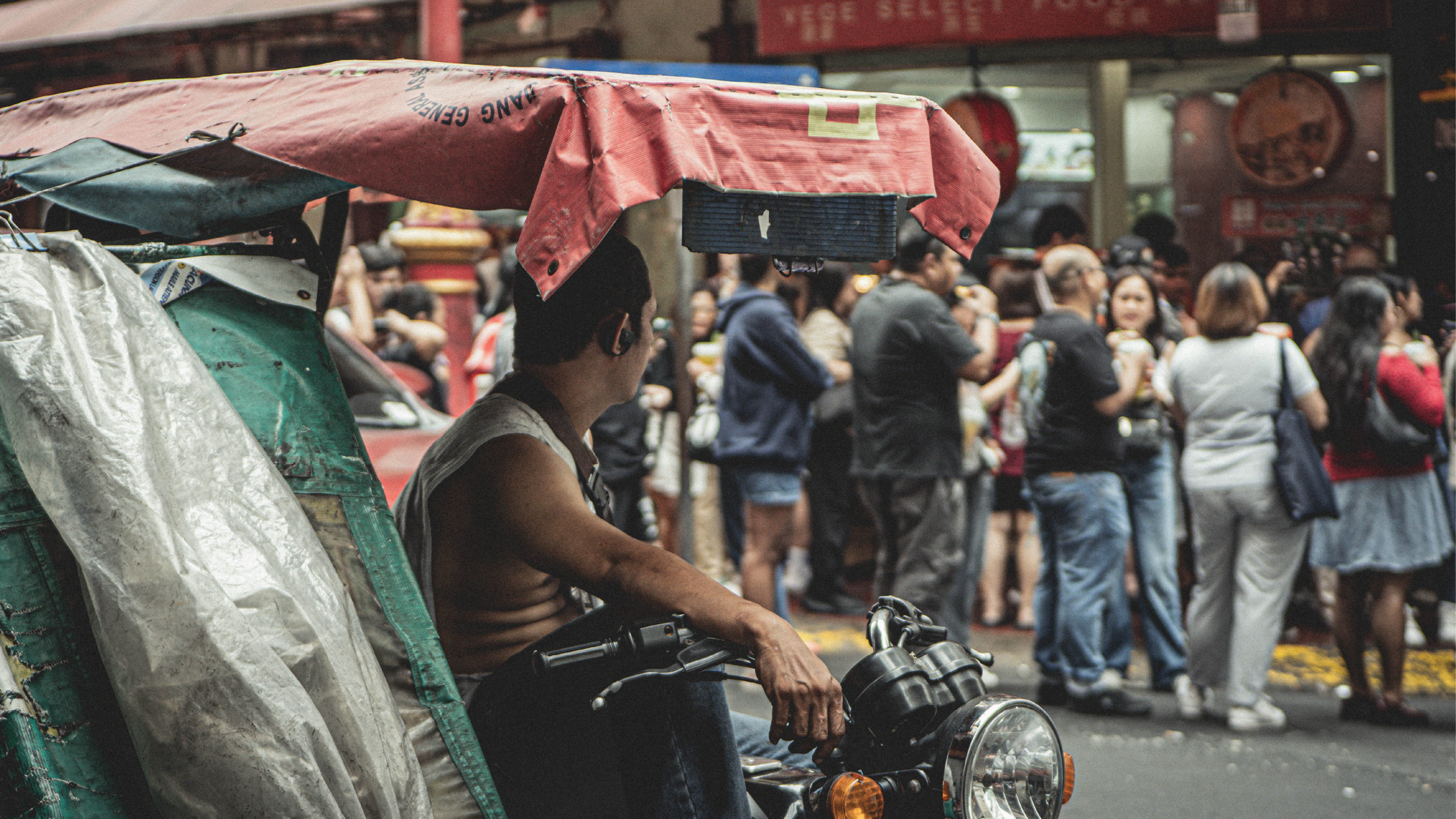
Specifically, the Western foreigner may get quoted prices that are higher than the local quote, especially in informal situations where the price is not written down. A jeepney ride, a meal, a bottle of water, a haircut, a tricycle ride, a small repair on the condo, all of them can quietly cost the foreigner more than they cost his Filipino neighbour. The difference might be twenty pesos here, fifty pesos there, a hundred pesos on the bigger items. Multiply it across every transaction, across every day, across every year, and you are looking at a sum that materially affects how far your money goes.
Honestly, the foreigner who proudly tells you he never gets ripped off may still be getting gently overcharged on small daily transactions without noticing. The amounts are often too small for him to push back on. The smile that accompanies the higher number is too warm for him to question. And the shame of being seen as cheap can be too painful for him to risk. So he pays the higher price, day after day, transaction after transaction, until the cumulative cost of being a foreigner in the country is something he is paying without realising he is paying it.
The Price Is Often Decided When You Show Interest
There is something else about price that is worth understanding. Specifically, in parts of daily life in the Philippines, asking the price can be the trigger for the price being decided. The price may not be fixed in the Western sense. The price may be shaped by the moment, the person asking, the location, the language, and the perceived ability to pay. So the answer to “how much is this” is not always a number that exists independently of you. It may be the number the seller thinks is realistic based on your appearance, your accent, your shoes, the watch on your wrist, or the brand of phone in your hand.
So the Western foreigner who walks into the transaction believing there is a fixed price he is simply being told is often the easiest person to overcharge. By contrast, the Filipina or Filipino who walks into the same transaction knows the price may be a negotiation, and negotiates from a different starting position. Honestly, the foreigner who learns to treat some quoted prices as the opening of a discussion rather than the end of one can save a meaningful percentage of his daily outgoings. Many foreigners never learn this, because asking the price differently feels rude in a Western frame, and the cultural translation never quite happens.
Time Flows Differently
Let me talk about time, because time is the other thing that quietly works against the foreigner. In the West, time is broadly assumed to be money. An appointment at three means three. A delivery promised on Tuesday means Tuesday. A contractor who said the work would take a week is held to a week.
By contrast, in the Philippines, time is often much more fluid, and the fluidity is not random from the foreigner’s point of view. Specifically, the system can end up treating the foreigner’s time as flexible, especially when he does not have local status, language, or someone pushing on his behalf. When a contractor is late, the person with stronger local standing may get seen first. When a delivery is delayed, the foreigner who has paid in advance may be the one who waits. When a government office closes for an unexpected holiday, the foreigner who has flown across the city to get his paperwork done may be the one whose day is wasted. The system absorbs the foreigner’s time without compensating him for it, and it does so with such gentle politeness that he often does not realise the cost until later.
What Time Loss Actually Costs
The cumulative cost of time loss is harder to calculate than the cumulative cost of price overcharging, but it is real. Specifically, the foreigner who waits four hours for a contractor who said he would arrive at nine in the morning has lost those four hours. The foreigner who has flown across Manila to renew his visa only to discover the office is closed has lost the day and the fare. The foreigner who has booked an appointment with a government office two weeks in advance only to be told to come back next week has lost the original booking effort. Honestly, none of these are catastrophic individually. All of them, stacked up over years, represent a substantial amount of the foreigner’s actual life that the system has absorbed and not returned.
The Legal System Was Not Designed Around You
Now I want to talk about the legal system, because this is where the small things turn into the serious things. The Western foreigner is broadly used to a legal system in which the law is the law, and the rich man and the poor man are at least theoretically subject to the same rules. By contrast, in the Philippines, the legal system can be difficult, slow, relationship-driven, and expensive to navigate, especially for someone who does not understand the language, the culture, or the local networks.
So when a foreigner gets into a dispute with a local, whether it is over property, over a contract, over an injury, over a debt, or over a business arrangement, the foreigner who walks into the legal system expecting clean Western-style adjudication may be in trouble. The local side may have the network. He may have the language. He may have the cultural fluency to know which lawyer to speak to, which official matters, and which path is realistic. By contrast, the foreigner may have none of that, and his foreignness itself can become a disadvantage. Honestly, the foreigners I have seen do best in legal disputes in the Philippines have usually had one thing in common: a Filipino partner, adviser, lawyer, or advocate with serious local understanding who was willing to fight on their behalf. The foreigners who have walked in alone, trusting that the case would simply be decided on its merits, have often had a much harder time.
What This Means Before You Sign Anything
The practical implication is that the Western foreigner should treat every contract, every business arrangement, every property purchase, and every employment relationship as something that may be very difficult to enforce if things go wrong. So if he can absorb the loss of whatever he is putting in, the transaction may be workable. If he cannot absorb the loss, the transaction is too risky, regardless of how solid it looks on paper. By contrast with Western jurisdictions where the law is often imagined as the backstop, in the Philippines your real backstop may be your own willingness and ability to walk away from what you have committed. Honestly, the foreigner who internalises this and acts accordingly will avoid many of the worst outcomes that befall those who do not.
Property Briefly Because I Have Covered It Elsewhere
I want to flag property briefly here, because I have done a whole separate piece on this and I do not want to repeat the argument in full. But it is worth flagging in the context of the wider picture. Specifically, the foreigner cannot own land in the Philippines. He can own a condo within the legal quota, but he cannot own the land underneath. So everything he builds, every dollar he sinks into a house, every peso he puts into a property he thinks of as his, may be sitting on land that he does not legally own. The land may be owned by his wife, his girlfriend, his Filipina business partner, or a nominee arrangement he does not fully control. And when the relationship goes wrong, the legal system that is difficult for him to navigate is the system that may decide what he gets back. Honestly, you can imagine how risky that becomes if he has put in money he cannot afford to lose.
How the Mechanisms All Connect
So when I say the Philippines is not an easy country for foreigners to win in, all of these mechanisms are what I mean. The language gap can work against you. So can the way politeness and smiles are used to manage discomfort. The family financial expectations can work against you. So can informal price quoting. The time culture can work against you. So can the legal system. And the land laws clearly work against you if you do not understand them before committing money. None of it looks big when you arrive. All of it adds up over years to a system that, however warm it may feel on the surface, is not naturally arranged around the Western foreigner’s interests.
The Foreigners Who Do Well
Now I want to be careful here, because I am not telling you not to go. I am not telling you the Philippines is a terrible country or that the people are bad. I have explained that I love a lot about the country. What I am telling you is that the foreigner who goes in without his eyes open is the foreigner who comes out the other side having paid a price he did not budget for.
The foreigners I have seen do well in the Philippines have all done a particular thing. They have arrived without illusions. They have understood from day one that they are walking into a country where the default settings may not favour them, and they have built their lives around mitigating each of those default settings as they go. Specifically, they keep their finances ring-fenced from their partner’s family. They learn enough Tagalog, or at least enough local language, to catch some of the side comments. Negotiating prices becomes a matter of habit, not a special occasion. Money never goes into property they cannot afford to walk away from. And they stay out of the legal system wherever possible, and when they cannot stay out of it, they make sure they have the cultural and linguistic support to navigate it. Honestly, they treat the smile as information, not as the whole meaning of the interaction.
So those foreigners are not bitter. They are not making the Philippines worse for anyone. Honestly, they are just operating with their eyes open. Indeed, they have understood that the country is what it is, and they have decided to engage with it on those terms.
The Foreigners Who Lose
The foreigners who lose, the ones I have watched lose over twenty years of watching this region, are the ones who never made that adjustment. They believed the brochure. The smiles seemed simple. The system would treat them, they thought, the way a Western system would treat them. So they put their money into property in their wife’s name. The contractor seemed trustworthy. Lawyers got paid up front. Local prices, they assumed, applied to them. The language remained unlearned. Reading the smile never happened. And the wider family financial expectations remained invisible to them. Year by year, transaction by transaction, the country became more expensive than they expected, and the life they thought they were buying became much harder to control.
So that is the version of the Philippines that the videos often do not show you. The friendly smiles are real, but the system underneath them is not automatically friendly to the foreigner. It is not necessarily hostile either. It is simply designed around its own people, its own logic, its own legal structure, and its own cultural expectations. The Western foreigner is not at the centre of that design. He was never meant to be. The country has its own logic, and the logic does not have you in mind.
Why I Have Said This Out Loud
I tell you this because someone needs to. Honestly, I tell you this because too few people say it before the money has already gone in. I tell you this because I have watched too many men arrive in the Philippines convinced they were going to win, and I have watched the country quietly cost them far more than they expected, smile by smile, peso by peso, year by year, until they had very little left to argue with. So every one of those men, if you had asked him in the first year, would have told you he was the exception. He was the smart one. He was the one who had it figured out. Eventually, he discovered he had misunderstood the place, and he found that out slowly, the way you often find things out in the Philippines. Politely. Gently. And often after the important decisions have already been made.
The Honest Closing
Go to the Philippines if you want to. Visit. Spend time there. Get to know the people. Eat the food. Watch the sunsets in Palawan and Siargao. But know what you are walking into before you commit your life to it. Ultimately, the country is not built around you. The country is built for itself. So if you arrive understanding that, you might just be one of the foreigners who comes out the other side intact. If you arrive not understanding it, you may become one of the foreigners I have watched lose money, time, options, and confidence before he ever really understood what was happening.
That is the honest version. That is what I have to say. Take from it what you will.
Frequently Asked Questions
What does the author mean by “the Philippines is not an easy country for foreigners to win in”?
Specifically, the author means that there are parts of the country’s culture, legal structure, property rules, family expectations, price habits, and daily life that can put the Western foreigner on the weaker side if he arrives without understanding them. By contrast with the headline arguments about visas and property restrictions that get most of the airtime, many of the actual losses happen in the small daily transactions that nobody warns the prospective resident about. The language gap, the smile being used to manage social discomfort, the family financial pool the foreigner may unwittingly join when he partners with a Filipina, the price quoting that sometimes happens on the spot, the time delays, the legal system that often requires local understanding to navigate, and the property restrictions all stack up over years into a system that can cost the foreigner far more than he expected.
Is the author saying not to move to the Philippines?
No. Specifically, the author makes the point repeatedly that he is not telling anyone not to move. He loves a lot about the country. What he is saying is that the foreigner who goes in without understanding how the system actually operates is the foreigner who may pay a price he did not budget for. By contrast, the foreigner who arrives with his eyes open, who understands the default settings, and who builds his life around mitigating each of them, can do well in the Philippines. The article is a warning about the unexamined version of the move, not a blanket recommendation against the move itself.
What is the most important thing the prospective Western foreigner should learn before he goes?
Honestly, the most important single adjustment is learning to read social signals as information rather than taking them at face value. Specifically, the Filipino or Filipina smile can be a sign of warmth, but it can also be a way of managing discomfort, embarrassment, delay, a disagreement, or a situation where the foreigner is not being told everything directly. The foreigner who treats every smile as simple warmth may misread some of his daily interactions. The foreigner who learns to distinguish warmth from politeness, embarrassment, or social management sees the country with substantially more clarity, and that adjustment affects many of the long-term arrangements he enters into.
How does Filipino family money culture differ from Western family money culture?
Specifically, in the West, what an adult earns is broadly considered hers. By contrast, in many Filipino families, the default assumption can be that anything earned by one member of the extended family is available, at least morally, to help others who have need. So when a Western foreigner partners with a Filipina, he may be partnering not only with her, but with a wider family financial structure. His savings, his pension, his salary, and his property plans may become part of expectations he did not fully understand. The brother, the cousin, the aunt, the nephew may all have claims that are considered normal within that family culture, and the person who refuses those claims may be seen as breaking family obligations rather than simply setting a financial boundary.
What practical steps can the Western foreigner take to protect his finances?
Specifically, the foreigners the author has seen do well have all done the same things. They keep their finances ring-fenced from their partner’s family. Money never goes into property they cannot afford to walk away from. Every informal price is treated carefully, and negotiation becomes a habit where appropriate. Enough Tagalog, or enough local language, gets learned to catch some of the side comments. And they stay out of the legal system wherever possible, and when they cannot, they make sure they have local advice, local understanding, and cultural support to navigate it. Honestly, the foreigner who internalises these adjustments from day one is the foreigner who has a much better chance of coming out the other side with his pension and savings still intact.
Why is the price quoted to the foreigner sometimes different from the local price?
Specifically, there is no official two-tier pricing system in the Philippines. But the Western foreigner may still get quoted higher prices in informal settings where prices are flexible and not written down. The price is sometimes shaped by the person asking, based on what the seller thinks that person may be willing or able to pay. So the cumulative cost of being a foreigner across hundreds of daily transactions can be substantial, even though no individual transaction is large enough to push back on without seeming rude.
How does the legal system actually work for foreigners in disputes?
Specifically, the Philippine legal system can be difficult, slow, expensive, and relationship-driven to navigate, especially for someone who does not understand the language, the local culture, or the practical realities of the system. Local parties may have the network, the language, and the cultural fluency to understand which path is realistic. By contrast, foreign parties often lack those advantages, and their foreignness can become a disadvantage. So the practical implication is that the foreigner should treat every contract and arrangement as something that may be difficult to enforce if things go wrong, and should only commit what he can afford to lose.
How does this compare with other Southeast Asian countries the author has written about?
By contrast with Thailand, which has its own well-documented problems but where the long-term Western foreigner has historically been able to operate at a position of some standing, the Philippines version of the foreigner-versus-system dynamic can be harder to mitigate in certain areas. Compared to Vietnam, which the author has criticised for the absence of freehold at the constitutional level, the Philippines does have freehold for its own citizens but excludes the foreigner from land ownership. And compared to Cambodia, which the author has described as offering one of the simpler long-stay visa frameworks in the region, the Philippines has its own long-stay routes but also comes with broader administrative and financial considerations. Honestly, each country in the region has its own particular friction for the Western foreigner, and the Philippines version of that friction is the cumulative many-small-mechanisms version this article has described.
What is the author’s emotional position on the Philippines?
Specifically, the author makes clear that he loves a lot about the Philippines. The warmth of many people he has met, the food, especially the regional food, and the sunsets in Palawan and Siargao all matter. By contrast, the article distinguishes between the warmth of individuals and the genuine charm of the country on one hand, and the system the Western foreigner is walking into on the other. Honestly, the author’s position is that the two are different things, and that the foreigner who confuses them may be the foreigner who pays a much higher price than he expected.
What is the practical takeaway from the article?
Ultimately, the takeaway is that the Western foreigner who wants to move to the Philippines needs to understand that the default settings of the country are not built around him, and that the difference between the foreigners who do well and the foreigners who lose is often whether they arrived with their eyes open. Specifically, the language gap, the smile as social signal, the family financial expectations, the informal price quoting, the time delays, the legal system requiring local navigation, and the property restrictions all need to be understood before commitment, not after. Honestly, the foreigner who treats this article as a warning rather than as a bitter complaint is the foreigner who is more likely to come out the other side of his Philippines adventure with his pension and savings still attached to him.
Sources
- Philippine Statistics Authority Languages Documentation — the official Philippine statistical body’s documentation of Filipino, English, and the regional Philippine languages referenced in the article’s language-as-gateway argument
https://psa.gov.ph/ - Wikipedia Filipino Family Culture — the documentation of the Filipino extended family system including the cultural expectation that earned income is available to extended family members in need referenced in the article’s family money flow section
https://en.wikipedia.org/wiki/Filipino_culture - Wikipedia Utang na Loob and Hiya Filipino Cultural Concepts — the documentation of the Filipino cultural concepts of debt of gratitude (utang na loob) and shame (hiya) that underpin the extended family financial obligation system referenced in the article
https://en.wikipedia.org/wiki/Utang_na_loob - Wikipedia Pakikisama Filipino Smoothing Behaviour — the documentation of the Filipino cultural concept of pakikisama (smooth interpersonal relationship maintenance) that underpins the smile-as-management-tool dynamic referenced in the article
https://en.wikipedia.org/wiki/Pakikisama - Philippine Constitution 1987 Article XII Section 7 Foreign Land Ownership Restrictions — the foundational constitutional provision restricting land ownership to Philippine citizens and corporations 60 per cent owned by Philippine citizens referenced in the article’s property restrictions section
https://www.officialgazette.gov.ph/constitutions/1987-constitution/ - Republic Act 4726 Philippines Condominium Act — the foundational legislation governing condominium ownership including the 40 per cent foreign ownership quota for condominium projects referenced in the article’s property restrictions section
https://www.officialgazette.gov.ph/1966/06/18/republic-act-no-4726/ - Philippine Bureau of Immigration Visa Documentation — the official Philippine immigration body’s documentation of the various visa categories available to foreign residents including the SRRV referenced in the article’s regional comparison section
https://immigration.gov.ph/ - Philippine Retirement Authority SRRV Programme Documentation — the official documentation of the Special Resident Retirement Visa programme deposit requirements ranging from 10,000 to 50,000 dollars depending on age and category referenced in the article’s regional comparison
https://pra.gov.ph/ - World Bank Philippines Country Overview — the international institution’s documentation of the Philippine economy, the OFW remittance dependence, and the broader development context referenced in the article’s framework about how the country operates
https://www.worldbank.org/en/country/philippines/overview - Numbeo Manila Cost of Living Database — the international cost-of-living database documenting the price differentials and broader cost framework that the article references in the price-quoting-on-the-spot section
https://www.numbeo.com/cost-of-living/in/Manila - University of the Philippines Asian Center Filipino Family Studies — the academic documentation of Filipino family financial dynamics including the extended family income-sharing expectations and the cultural pressure on the earner that the article describes
https://ac.upd.edu.ph/ - Philippine Statistics Authority OFW Remittances Statistics — the official documentation of the 35.6 billion dollar 2025 record OFW remittance flow that contextualises the family-as-economic-unit framework referenced in the article
https://psa.gov.ph/statistics/survey/labor-force/ofw - Philippine Supreme Court Civil Procedure Documentation — the official documentation of the Philippine civil court procedures, the typical timeframes for property disputes, and the broader legal navigation context referenced in the article’s legal system section
https://sc.judiciary.gov.ph/ - Transparency International Philippines Corruption Perceptions Index — the international corruption assessment ranking the Philippines that contextualises the legal system as navigation rather than adjudication framework referenced in the article
https://www.transparency.org/en/countries/philippines - Wikipedia Philippine Family Code — the documentation of the Philippine Family Code governing marriage, property division between spouses, and the broader legal framework affecting the Western foreigner-Filipina partnership referenced in the article
https://en.wikipedia.org/wiki/Family_Code_of_the_Philippines - Wikipedia Foreign Property Ownership in the Philippines — the comprehensive documentation of the constitutional and statutory framework restricting foreign land ownership including the condominium 40 per cent quota and the various workarounds referenced in the article
https://en.wikipedia.org/wiki/Property_law_in_the_Philippines - Expatistan Manila Price Index — the international expatriate cost-of-living tracking platform documenting Manila pricing differentials that contextualise the article’s price-quoting-on-the-spot argument
https://www.expatistan.com/cost-of-living/manila