
Why I Want To Make This Argument At The Regional Level
I want to write something different in this piece. Not a country-specific critique. Not another analysis of why a single Southeast Asian government has tightened its visa system or distorted its property market or shifted away from the Western foreigner. Something broader.
My argument is about Southeast Asia as a region, about what it offers the Western foreigner who has chosen to live here, and about the single biggest problem that runs across every country in the region. In my honest view, this problem deserves to be discussed at the regional level rather than at the country-by-country level.
Let me start with the part that almost nobody writes about clearly. Standard expat content focuses on individual countries. Standard travel writing focuses on individual destinations. But a Western foreigner who lives in Southeast Asia in 2026 is operating across a region of eleven countries that, taken together, offer the best combination of climate, cost, culture, food, and historical depth available anywhere in the world. Genuinely good is what this region is. My argument is not against Southeast Asia. It is for it, made by someone who has lived here for a long time, who has chosen to stay, who has built a family and a working life across multiple countries in the region, and who is in a position to say what is genuinely working and what is genuinely not.
So let me start with what is working.
The Cost-Of-Living Advantage Still Works For The Western Pension
Southeast Asia offers the Western foreigner a combination of qualities that no other region in the world can match. Let me be specific about what those qualities are, because standard travel writing covers them in cheerful brochure form rather than in substantive structural form.
First comes the cost-of-living advantage. Even with the recent compression I have written about in the Thailand and Philippines pieces, the region still operates at a price point that allows a Western pension or savings to support a quality of life that would be impossible in Britain, the United States, Australia, or Western Europe. A modest British pension that would produce a constrained existence in a provincial English town can produce a comfortable existence in Penang, in Chiang Mai, in Phnom Penh, in Da Nang, in Bali, in Cebu, or in any number of other regional destinations. This cost-of-living arbitrage is genuinely real, even if it is narrowing.
The Cultural Depth That Nowhere Else Matches
Cultural depth is the second quality. Civilisations that produced this region are old, sophisticated, and continuously inhabited. Thai Buddhism, Vietnamese Confucianism, Indonesian Hinduism in Bali, Islamic culture across the archipelago, Malaysian and Singaporean Chinese commerce, Filipino Catholicism, Burmese Theravada, Cambodian Khmer heritage, and Lao quiet traditionalism, taken together, produce a region with a cultural texture that the Western foreigner cannot find anywhere else at the same price point and accessibility.
Even simpler destinations have something the foreigner is engaging with rather than just visiting. This cultural offering is real and unmatched.
The Climate And The Historical Accessibility
Climate is the third quality. Tropical year-round warmth, with the regional variations of the wet and dry seasons, is one of the things the Western foreigner from a cold northern country comes here for. Such a climate is not perfect for everyone, and the Western foreigner who cannot tolerate heat or humidity is going to struggle. For those who can adapt, however, the climate is one of the structural advantages of the region that does not diminish.
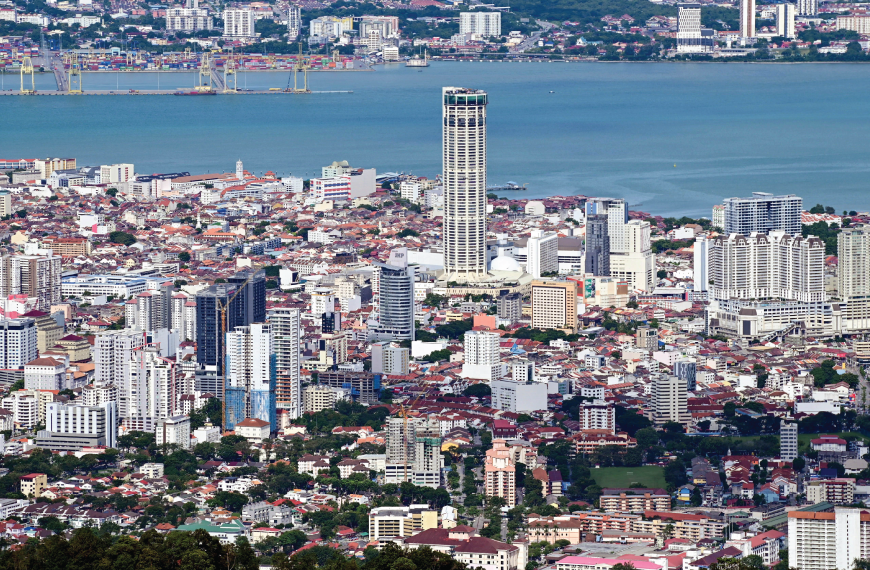
Historical accessibility is the fourth quality. Southeast Asia is, in many parts, still recognisably the region the European colonial powers built or substantially developed. Penang, Singapore, Malacca, parts of Yangon, the French quarter of Phnom Penh, the colonial-era hill stations across Malaysia and parts of Burma, railway networks built by British and French engineers, and the urban planning frameworks of the major colonial cities. A Western foreigner is engaging with a region that, in significant respects, was made by the West and that still bears the visible marks of that making. There is a strange comfort in this for the foreigner who has come from a Britain or a France or a Netherlands whose own civic infrastructure has been progressively neglected. Colonial-era buildings in Penang are better maintained than many of the equivalent civic buildings in northern England.
The Deep Welcome The Region Has Historically Offered
The fifth quality, and this is the one that the Western expat community itself does not usually articulate clearly, is the deep, structural welcome that the region has historically offered the Western foreigner. Bar girls who learned English to serve the bases of the 1960s and 1970s. Hotel staff trained in the British colonial tradition. Medical professionals trained in Western hospitals. Lawyers and accountants comfortable operating in English. Merchant communities that grew up serving Western trade.
A Westerner who has spent time in Southeast Asia has been operating inside an infrastructure of welcome that was built over centuries and that, even now in its partial state of decline, is more accessible than the equivalent welcome in many other parts of the world the Westerner might consider.
These five things, the cost, the culture, the climate, the heritage, and the welcome, are genuinely real. They are why I came, why I stayed, and why I am writing about the region rather than from Britain, where I was born. My argument about the regional problem is made in the context of these five things being good. There is a problem, but the good things are also real. Both can be true.
The Single Biggest Problem That Runs Across The Whole Region
So here is the problem. A Western foreigner who has chosen Southeast Asia as the place to live the rest of his life has no country in this region that allows him to do so on terms that match the contribution he is making and that recognise the historical relationship the West has had with this part of the world.
Let me lay this out carefully, because the framing matters.
Every country in Southeast Asia has its own visa system. Every system is designed primarily for the convenience of the host country rather than for the dignity or stability of the Western foreigner.
The Country-By-Country Visa Picture In 2026
Thailand has the retirement extension, the marriage extension, and the Long-Term Resident visa, but all of them are subject to annual renewal and discretionary refusal. Philippines has the SRRV, but the program has been subject to repeated reforms that have raised the financial thresholds. Malaysia has the MM2H, but the qualifying conditions have been repeatedly tightened in ways that have made it less accessible than it was a decade ago.
Indonesia has the Second Home Visa and the Retirement KITAS, but both are expensive and bureaucratically complicated. Singapore is selective to the point of being effectively closed to anyone who is not bringing in substantial wealth or specific skills. Vietnam has no formal retirement visa at all. Laos has the same gap I have written about. Cambodia operates a renewable business visa rather than a formal retirement framework. Burma is closed for political reasons. Brunei is structurally closed. Timor-Leste has not built the framework.
The Conditional Permission That Runs Across All Of It
What this all amounts to is that the Western foreigner who has chosen to live in Southeast Asia is operating, in every country, on a permission that is granted at the discretion of the host state, that can be withdrawn at any time, that has to be renewed annually or every few years, and that gives him no path to permanent residency or citizenship without conditions that are deliberately set at a level most retirees and long-stay foreigners cannot meet.
This is the problem. Not specific to one country. Regional. Every Southeast Asian country has, in different forms, made the same choice. A Western foreigner is welcome to come, welcome to spend, welcome to bring in his pension and his savings and his lifetime of accumulated capital, welcome to integrate into the local economy as a consumer, but not welcome to settle, not welcome to be granted the kind of permanence that would let him build a proper life in the country.
Why This Matters More Than The Individual Country Critiques
I have written extensively about the individual country problems. The Thailand doom spiral. Philippines cost rise. Bali destruction. Cambodia transformation. Vietnam comparison. Singapore unreachability. Each of those critiques is real and each of them stands.
But the deeper problem is the regional one, and that is the part that almost nobody is articulating clearly.
Why Country-Hopping Is Not The Solution
A Western foreigner who is unhappy with Thailand can move to the Philippines. One who is unhappy with the Philippines can try Malaysia. One who is unhappy with Malaysia can consider Indonesia. The country-hopping is a real option, and many long-term foreigners have used it as a coping mechanism.
But the country-hopping itself is a symptom of the regional problem, not a solution to it. A foreigner who has hopped to his third country in twenty years is still operating, in his third country, on the same kind of conditional permission that drove him out of the first two. He has not solved the problem. He has just moved the location of the problem.
What the Western foreigner actually wants is not the ability to switch between Southeast Asian countries every few years as the visa rules tighten in each one. What he wants is a stable, dignified, permanent place to be in the region. A country, any country, where he can be a permanent resident with rights that approximate citizenship without necessarily being citizenship. A place where his contribution is recognised, where his roots can deepen over the rest of his life, where his children if he has them can grow up with a clear sense of where they belong, and where the relationship between him and the host society is something other than a perpetual customer-and-government transaction.
No country in Southeast Asia offers him this. Each country, in different forms, offers him a conditional welcome that is renewed annually at the discretion of the host state. The cumulative effect is that the long-term Western foreigner in Southeast Asia is, in functional terms, a permanent guest who is never allowed to become a permanent resident on terms that match the depth of his commitment to the region.
The Historical Relationship That Deserves Recognition
I want to make a particular point about why this regional gap is more significant for the Western foreigner than it would be for, say, the Chinese or Indian or Arab foreigner who is operating in the same region under the same conditions.
A historical relationship between the West and Southeast Asia exists that is unique in world history.
The Western Administrative Inheritance Across The Region
Consider the depth of it. Britain administered Singapore for 144 years and Burma for 62 years. British rule extended across Malaya and the Straits Settlements for over a century. France administered Indochina for nearly a century. Dutch authorities administered Indonesia for over 300 years. Spain and then America administered the Philippines.
Across the entire region for the better part of two centuries, Britain was the dominant naval and commercial power. Institutional frameworks were built by the colonial powers. Legal systems were introduced by them. Commercial networks were established by them. Educational institutions were founded by them. Civil services were trained by them. Railway networks were laid down by them. Port cities were developed by them. English was brought as a working language across the region.
A Western foreigner who comes to Southeast Asia in 2026 is not coming as a stranger. In many cases, he is the descendant of the people who built the institutional substrate on which the modern countries of the region still operate.
What This Looks Like On The Ground
A British retiree in Penang is walking past buildings his great-grandfather might have helped administer. One in Singapore is operating inside a legal system his ancestors codified. A French retiree in Phnom Penh is walking past the riverfront his country built. A Dutch retiree in parts of Indonesia is, in significant respects, returning to a country where his nation’s role was foundational rather than incidental.
This historical relationship deserves recognition in the regional visa framework, and currently it does not get any. A Western foreigner who has chosen to spend the rest of his life in Southeast Asia is treated, by every country in the region, as if his historical relationship with the region were the same as that of any other foreign visitor. A Chinese investor who has been in the region for ten years has the same visa categories available to him as the British retiree whose family contribution to the region spans six generations.
Why This Is Not An Argument For Colonial Privilege
I am not arguing for colonial-era privilege. Nor am I arguing that British retirees should be allowed to behave as the colonial administrators behaved. What I am arguing is that the specific historical relationship between the West and Southeast Asia is sufficiently deep, sufficiently constructive, and sufficiently unusual in world history that it deserves recognition in the modern visa framework. A Briton retiring to Singapore is not the same as a Russian retiring to Singapore. Their historical relationships are different. An institutional framework the Briton is operating inside was built by his ancestors. Current visa systems pretend that this distinction does not exist.
What A Regional Response Would Look Like
I want to be specific about what a serious response to this problem would look like, because the alternative is to leave the argument at the level of complaint. Channels covering this region have done too much complaining and not enough constructive proposing.
A regional response would involve the ten ASEAN member states (the eleventh, Timor-Leste, will join shortly) recognising that the Western foreigner population in Southeast Asia, while small in absolute terms, represents a meaningful and stable inflow of foreign currency, a meaningful and stable consumer base, and a meaningful and stable contributor to the small-business and professional-services economies of the major regional destinations.
The Role The ASEAN Secretariat Could Play
ASEAN secretariat could coordinate a regional framework for long-term Western residence that would standardise the qualifying conditions, simplify the renewal procedures, and create a pathway to permanent residency that is genuinely accessible to the long-term Western foreigner who has contributed to a Southeast Asian country for ten or fifteen or twenty years.
The framework could include a regional acknowledgement of the specific historical relationship between the West and the region, perhaps in the form of priority access for nationals of the former colonial powers in their respective former colonies. A British retiree would have a clearer pathway in Singapore, Malaysia, and Burma. French retirees would have a clearer pathway in Vietnam, Laos, and Cambodia. Dutch retirees would have a clearer pathway in Indonesia. Spanish retirees would have a clearer pathway in the Philippines. American retirees would have a clearer pathway in the Philippines through the post-1898 administrative relationship. None of this would close the visa systems to other foreigners. It would simply recognise, formally, that the historical relationships in question are real and that they deserve recognition.
The Practical Mechanics Of A Sensible Framework
Financial qualifications could be standardised at levels that are accessible to a modest Western pension rather than set at the luxury thresholds that the current MM2H and Second Home Visa programs have moved toward. A qualifying income could be set at a level that matches the actual cost of living in the destination country rather than at a level designed to filter for high-net-worth applicants only.
Renewal procedures could be simplified and standardised. A regional long-stay visa, recognised across multiple ASEAN countries, would allow the Western foreigner to live primarily in one country while travelling freely in others, without needing to navigate ten separate visa systems each with its own quirks and renewal timelines.
A pathway to permanent residency could be set at a clear timeline, perhaps ten or fifteen years of continuous residence and tax payment in a single ASEAN country, after which the foreign resident would acquire permanent rights to live in that country, to lease and in some defined cases to purchase property, to use local healthcare and banking services, and to be treated as a permanent member of the host society rather than as a perpetual guest.
This is not a radical proposal. European Union has operated similar long-term-residence frameworks for non-EU citizens for two decades. Most developed economies have permanent-residence pathways for foreign residents who have contributed to the host society over a sustained period. A Southeast Asian gap is the absence of this framework. Building it would be the regional response.
Why ASEAN Has Not Done This Yet
Reasons ASEAN has not built a regional Western-foreigner framework are partly political, partly historical, and partly the consequence of the structure of the ASEAN secretariat itself.
Politically, post-independence governments of the region have, in most cases, been reluctant to grant any formal recognition to the historical Western relationship, because that recognition cuts against the post-colonial nationalist narratives those governments were built on. Burmese renaming of Rangoon to Yangon, Indonesian removal of Dutch place names, Thai presentation of itself as having never been colonised, are all part of the same pattern. Granting the Western foreigner formal regional residence rights on the basis of the historical relationship would require the regional governments to acknowledge that the historical relationship exists in a way they have spent decades trying to underplay.
Historically, the ASEAN framework was built for the management of intra-regional relationships rather than for the management of the region’s external relationships with the former colonial powers. Free movement of ASEAN nationals across ASEAN countries has been a long-term goal, achieved partially through the ASEAN Economic Community framework. An equivalent framework for non-ASEAN foreigners, even those with deep historical ties to the region, has not been built.
How The Structural Difficulty Could Be Overcome
Structurally, the ASEAN secretariat operates on the basis of consensus among the member states, and any controversial proposal can be blocked by any single state. A Western-foreigner regional residence framework would require buy-in from all ten members, which would be difficult to achieve given the political sensitivities involved.
But the structural difficulty does not mean the framework is impossible. ASEAN has built complex regional frameworks for intra-regional trade, for transport, for the digital economy, for environmental coordination, and for many other policy areas. It could, if the political will existed, build a regional Western-foreigner residence framework. Political will would have to come either from within the ASEAN governments themselves, perhaps because they recognised the structural economic benefits of attracting and retaining a stable Western retirement community, or from external pressure from the former colonial powers, perhaps through bilateral diplomatic engagement with the major Asian capitals.
The current configuration, in which the Western foreigner is operating across a region of eleven countries with no coherent regional framework for his presence, is in functional terms the result of nobody having made the argument at the regional level. An argument is what I am making in this article. Implementation would require political work that the Western foreign community in the region has not, so far, been willing to organise itself to undertake.
What This Means For The Long-Term Western Foreigner
For the long-term Western foreigner who has been reading my work on the various country-specific issues, the regional argument is the deeper one. The country-specific problems are real, and the country-specific responses are necessary. But the country-specific problems are also symptoms of the deeper regional problem, and the regional problem is unlikely to be solved by country-specific responses alone.
A Western foreigner who is unhappy with Thailand’s visa tightening, who is considering the Philippines or Vietnam or Malaysia as alternatives, is making a rational country-by-country decision. The deeper truth is that any country he moves to is going to present him with the same structural conditional welcome, just with different specific terms. Philippines may be more welcoming today than Thailand. In ten years it may not be. Vietnam may build a retirement visa that is attractive today. In ten years the political winds may shift. Malaysia may keep MM2H accessible. Or it may tighten further. Country-by-country decisions are short-term responses to a long-term regional gap.
The Deeper Recognition Required
A long-term Western foreigner in Southeast Asia needs to understand that the region, taken as a whole, has not made the institutional commitment to him that he might have expected when he first decided to make his life here. This region offers him real things, the things I listed at the start of this piece, but it has not offered him the one thing that would actually let him build a proper life, which is a stable, dignified, permanent place to be.
This is the biggest problem with Southeast Asia for the long-term Western foreigner. It is the regional problem that runs underneath all the country-specific ones. In my honest view, it deserves a regional response that has not, so far, been forthcoming from either ASEAN or the former colonial powers themselves.
The Argument That Has Not Yet Been Made
An argument worth making clearly is needed because the alternative is to keep producing country-by-country critiques that treat each new visa tightening or each new cost rise as an isolated problem. Country-by-country critiques are real, but they miss the deeper point. A deeper point exists, which is that the entire region has, in different forms, chosen not to give the Western foreigner the stable place he is asking for. That choice was made at the country level, but the resolution will have to be made at the regional level. A regional response, when it comes, will require the Western foreign community itself to articulate the argument clearly, persistently, and constructively, in the political conversations that take place between the Western capitals and the ASEAN secretariat.
What Will Happen If Nothing Changes
Until that happens, the region will continue to offer the Western foreigner the things it has always offered, and continue to withhold the one thing he most wants. Cost-of-living advantages will narrow. Cultural welcome will narrow. Visa systems will tighten. Country-hopping will continue. A long-term Western foreigner will continue to operate, in the region he has chosen as his home, as a perpetual guest in countries that have never quite decided whether they want him to stay.
That is the biggest problem with Southeast Asia. It is fixable. A fix would benefit the region as much as it would benefit the Western foreigners themselves. An argument deserves to be made.
Frequently Asked Questions
What is the biggest single problem with Southeast Asia for long-term Western foreigners?
The absence of any country in the region that offers the Western foreigner a stable, dignified, permanent place to live on terms that match his contribution and recognise the historical relationship between the West and the region. Every Southeast Asian country has its own visa system, but every one of those systems is designed primarily for the convenience of the host state rather than for the dignity or stability of the Western foreigner. The result is that the long-term Western foreigner in Southeast Asia is, in functional terms, a perpetual guest with no clear pathway to genuine permanence in any single country.
Is this just a complaint about visa rules?
No, it is a structural argument. Visa rules are the surface symptom. A deeper issue exists, which is that the entire region has, in different forms, made the same choice not to grant the Western foreigner the kind of permanent residence rights that would let him build a proper life in any single country. The structural framework is regional, not country-specific. Country-specific visa tightenings, financial qualification raises, property restrictions, and renewal complications are all expressions of the same underlying regional pattern.
Why does the historical relationship between the West and Southeast Asia matter for this argument?
Because the West did not arrive in Southeast Asia as casual visitors. Britain administered Singapore for 144 years, Burma for 62 years, and Malaysia and the Straits Settlements for over a century. France administered Indochina for nearly a century. Dutch authorities administered Indonesia for over 300 years. Spain and then America administered the Philippines for nearly four centuries combined. An institutional, legal, commercial, and infrastructural framework on which modern Southeast Asia operates was, in large part, built or substantially developed during these periods of Western administration. A Western foreigner who comes to the region in 2026 is, in many cases, the descendant of the people who built the substrate the modern countries still operate on. That specific historical relationship deserves recognition in the modern visa framework and currently does not get any.
Are you arguing for the return of colonial privileges?
No. My argument is not for colonial-era privilege, for return of colonial-era institutions, or for the Western foreigner to be granted any rights superior to the rights of the citizens of the host countries. What I am arguing for is recognition of the specific historical relationship in the form of clearer pathways to long-term residence and permanent residence for the descendants of the populations that built the institutional substrate of the modern region. This is a recognition argument, not a privilege argument.
What would a regional response look like in practice?
A regional framework, coordinated by the ASEAN secretariat, that would standardise the qualifying conditions for Western long-term residence across member states, simplify the renewal procedures, and create a pathway to permanent residency that is genuinely accessible to the long-term Western foreigner. The framework could include priority pathways for nationals of the former colonial powers in their respective former colonies. Financial qualifications could be set at levels accessible to a modest Western pension rather than at luxury thresholds. A pathway to permanent residency could be set at a defined timeline, perhaps ten or fifteen years of continuous residence and tax payment in a single ASEAN country.
Why has ASEAN not built this framework?
Several reasons compound. Politically, post-independence governments of the region have been reluctant to grant formal recognition to the Western historical relationship because that recognition cuts against the post-colonial nationalist narratives those governments were built on. Historically, the ASEAN framework was designed for intra-regional cooperation rather than for managing the relationship with the former colonial powers. Structurally, the ASEAN secretariat operates by consensus, and any controversial proposal can be blocked by any single state. The cumulative result is that the Western-foreigner regional residence framework has not, so far, been on the ASEAN agenda. An argument made in the article is that it should be.
What countries have the best current frameworks for Western foreigners?
Best current frameworks are Malaysia’s MM2H, Singapore’s restrictive but functional Employment Pass and Permanent Residency system for high-skilled or high-net-worth applicants, the Philippines SRRV, and Thailand’s combination of retirement extension, marriage extension, and LTR visa. None of these is a comprehensive long-term residence framework. Each has tightening conditions, discretionary renewal, financial thresholds that have been rising, and no clear path to genuine permanence on accessible terms. A newer Indonesian Second Home Visa is in the same category. Vietnam and Laos have not built formal frameworks. Cambodia operates on renewable business visas. Burma is closed.
What is the role of the Western expat community itself in solving this?
A Western foreign community in Southeast Asia has, so far, not organised itself to make the regional argument in any coherent political form. The community is dispersed across multiple countries, operates through informal networks rather than formal organisations, and tends to focus on country-specific responses rather than on the regional structural argument. A serious response to the regional gap would require the Western foreign community to articulate the argument in the diplomatic and political conversations between the Western capitals and the ASEAN secretariat. This is work that has not been done and that, in my view, deserves to be done.
Is this argument anti-Asian or anti-ASEAN?
No. The argument is the opposite of anti-Asian or anti-ASEAN. It is an argument made by a long-term Western resident of the region who has chosen the region as his home, who has built his life here, who has married into a Southeast Asian country, who values the region deeply, and who is asking the regional institutions to recognise the contribution that long-term Western foreigners are making and to provide the institutional framework that would allow that contribution to continue and deepen. The argument is constructive. It asks for more engagement with the region, not less. It asks for genuine permanence, not for the exit options that the visa-tightening environment is currently pushing toward.
What is the practical takeaway for the Western foreigner in Southeast Asia in 2026?
Understand that the country-by-country decision is a short-term response to a deeper regional problem. The country you are currently in is one of eleven that has, in different forms, made the same structural choice not to offer the long-term Western foreigner a genuine path to permanence. Moving to a different country addresses the symptom but not the cause. A deeper response is to engage with the regional argument, to articulate it in conversations with other long-term foreigners, to support the political work that would be required to build a regional framework, and to recognise that the answer to the country-specific frustrations is not country-hopping but the construction of a regional framework that does not currently exist. That work is long-term. The benefits, if it succeeds, would extend across the next generation of Western foreigners who come to make the same kind of life in the same kind of region.
Sources
- ASEAN Secretariat — Official Documentation Of Member States And Institutional Framework, the official intergovernmental organisation portal documenting the ten current ASEAN member states (Brunei, Cambodia, Indonesia, Laos, Malaysia, Burma/Myanmar, Philippines, Singapore, Thailand, Vietnam) with Timor-Leste in the process of accession as the eleventh member, the structure of the ASEAN consensus-based decision-making framework, the ASEAN Economic Community (AEC) free-movement provisions for ASEAN nationals, and the absence of any equivalent framework for non-ASEAN long-term foreign residents. The portal is the primary source for the article’s structural argument about the regional governance gap on Western-foreigner residence rights
https://asean.org/ - Thailand Bureau of Immigration — Long-Term Resident Visa, Retirement Extension, and Marriage Extension Documentation, the official Thai immigration agency documentation of the various long-stay visa categories available to Western foreigners including the LTR visa (with its tier-based financial qualifications), the retirement extension (with the 800,000 THB Thai bank account requirement), the marriage extension (with the 400,000 THB requirement and family-based documentation), and the broader framework of annual renewal and discretionary refusal that the article identifies as the conditional-welcome pattern
https://www.immigration.go.th/ - Philippine Retirement Authority — Special Resident Retiree’s Visa (SRRV) Program Documentation, the official Philippine government documentation of the SRRV program including the various tiers (SRRV Smile, SRRV Classic, SRRV Human Touch, SRRV Courtesy), the financial qualifications which have been progressively raised through repeated program reforms, and the eligibility conditions for Western retirees and long-stay foreign residents in the Philippines. The PRA documentation is the source for the article’s claim about the Philippines SRRV having been subject to repeated reforms that have raised the financial thresholds
https://www.pra.gov.ph/ - Malaysia My Second Home (MM2H) Programme — Official Documentation Of Qualifying Conditions And Program Changes, the official Malaysian government portal documenting the MM2H program including the financial qualifications (fixed deposit, monthly offshore income), the tier-based residency offerings, the changes implemented over recent years that have substantially tightened the qualifying conditions, and the broader framework of the Malaysian long-term residence offering to Western foreigners. The piece confirms the article’s claim that MM2H qualifying conditions have been repeatedly tightened in ways that have made the program less accessible than it was a decade ago
https://www.mm2h.gov.my/ - Indonesia Directorate General of Immigration — Second Home Visa and Retirement KITAS Documentation, the official Indonesian government immigration documentation of the long-stay visa categories available to Western foreigners including the Second Home Visa (with its USD 130,000 deposit or property purchase requirement and 5-10 year validity), the Retirement KITAS (with its age 55+ minimum and various sponsorship and financial requirements), and the structural framework of the Indonesian long-term residence offering. The piece confirms the article’s claim that Indonesia’s frameworks are expensive and bureaucratically complicated
https://www.imigrasi.go.id/ - Singapore Immigration and Checkpoints Authority (ICA) — Long-Term Pass, Employment Pass, and Permanent Residency Documentation, the official Singapore government documentation of the long-stay framework including the Employment Pass (with its progressively raised minimum salary threshold of S$5,000 per month for general applicants and higher for older applicants in financial services), the EntrePass for entrepreneurs, the Permanent Residency competitive and discretionary framework, and the absence of a dedicated retirement visa equivalent to those offered by Thailand, the Philippines, or Malaysia. The piece is the source for the article’s claim that Singapore is selective to the point of being effectively closed to anyone who is not bringing in substantial wealth or specific skills
https://www.ica.gov.sg/ - Vietnam Immigration Department — Long-Stay Visa And Temporary Residence Card Documentation, the official Vietnamese government immigration documentation confirming the absence of any formal retirement visa category in Vietnam, the available long-stay options through Temporary Residence Cards (TRC) tied to investment, employment, or family relationships, and the structural absence of a dedicated Western-retiree pathway despite the country’s growing reputation as a Southeast Asian alternative to Thailand. The piece is the source for the article’s claim that Vietnam has no formal retirement visa at all
https://xuatnhapcanh.gov.vn/ - Lao Ministry of Foreign Affairs — Visa Categories And Application Information, the official Lao government foreign affairs portal documenting the various visa categories available to foreign nationals including the tourist visa, business visa (LA-B2 sponsored through Lao agents), work visa, spouse visa, and non-immigrant visa categories. The portal confirms the absence of any formal retirement visa category in Laos and is referenced indirectly in the article through the broader “Laos has the same gap” framing that points to the channel’s existing Laos long-stay visa argument
http://www.mofa.gov.la/ - Cambodia Ministry of Interior — Visa Extension And Long-Stay Documentation, the official Cambodian government documentation of the visa framework including the EB (ordinary) visa renewable through business sponsorship, the absence of a dedicated retirement visa category, and the structural reliance on agent-mediated business visa renewals as the standard long-stay mechanism for Western foreigners in Cambodia. The piece is the source for the article’s claim that Cambodia operates a renewable business visa rather than a formal retirement framework
https://www.moi.gov.kh/ - Wikipedia — History Of Singapore Under British Rule, the comprehensive documentation of the 144 years of British administration of Singapore from the founding by Sir Stamford Raffles on 29 January 1819 to the merger with Malaysia in 1963 and full independence in 1965. The piece confirms the historical depth of the British relationship with Singapore including the legal system foundation, the civil service tradition, the commercial framework, the educational institutions, and the broader institutional substrate that the modern Singapore state inherited and has continued to operate
https://en.wikipedia.org/wiki/History_of_Singapore - Wikipedia — British Rule In Burma, the comprehensive documentation of the 62 years of British administration of Burma from the annexation to British India in 1886 through to independence in 1948, the framework of indirect rule, the institutional inheritance the modern Burmese state operated until 1989 (when the renaming campaign formalised the post-colonial nationalist narrative), and the broader historical relationship that the article references in the regional argument about Western administrative inheritance across Southeast Asia
https://en.wikipedia.org/wiki/British_rule_in_Burma - Wikipedia — French Indochina, the comprehensive documentation of the French administration of Indochina (Vietnam, Laos, and Cambodia) from the 1860s until the 1954 Geneva Accords, the institutional, legal, and infrastructural framework the French built across the region, the urban planning legacy in Hanoi, Saigon, Phnom Penh, Vientiane, and Luang Prabang, and the broader French cultural and administrative inheritance that the article references in the historical-relationship argument for clearer French-retiree pathways in Vietnam, Laos, and Cambodia
https://en.wikipedia.org/wiki/French_Indochina - Wikipedia — Dutch East Indies, the comprehensive documentation of the over 300 years of Dutch administration of what became modern Indonesia from the early 17th century VOC trading-post period through to the full colonial administration of the Dutch East Indies and to Indonesian independence in 1949. The piece is the foundational documentation of the depth of the Dutch institutional, legal, and commercial inheritance in modern Indonesia that the article references in the historical-relationship argument for clearer Dutch-retiree pathways in Indonesia
https://en.wikipedia.org/wiki/Dutch_East_Indies - Wikipedia — Spanish Colonial Period Of The Philippines And American Period Of The Philippines, the comprehensive documentation of the combined nearly four centuries of Western administration of the Philippines (Spanish from 1565 to 1898, American from 1898 to 1946), the institutional, religious, legal, and commercial inheritance that produced the modern Filipino state, and the broader Western administrative depth that the article references in the historical-relationship argument for clearer Spanish-retiree and American-retiree pathways in the Philippines
https://en.wikipedia.org/wiki/Spanish_colonization_of_the_Philippines - Wikipedia — Straits Settlements, the comprehensive documentation of the British colonial entity that administered Penang (from 1786), Singapore (from 1819), and Malacca (from 1824) under direct British rule until 1946, the institutional and legal inheritance the modern Malaysian and Singaporean states acquired from this framework, the establishment of the common-law tradition across the Strait region, and the broader cultural and administrative inheritance that the article references in the historical-relationship argument for clearer British-retiree pathways in Malaysia and Singapore
https://en.wikipedia.org/wiki/Straits_Settlements - European Union — EU Long-Term Residence Directive (2003/109/EC), the official EU documentation of the long-term residence framework for non-EU citizens who have lived legally in an EU member state for at least five years, the rights and protections granted under the framework, and the broader institutional model that the article references as a comparative example of what a sensible regional long-term-residence framework looks like in practice. The EU directive is the canonical international example of a regional framework that provides genuine pathway to permanence for long-term foreign residents who have contributed to the host society
https://eur-lex.europa.eu/legal-content/EN/TXT/?uri=CELEX:32003L0109 - The Thaiger — Has Thailand Lost Its Edge Comparing Expat Life Across Southeast Asia, published February 2026, the comprehensive regional comparison analysis confirming the structural decline of the Western foreigner’s position across multiple ASEAN destinations including the Thailand visa tightening (visa runs capped at two per calendar year from November 2025, retirement extension scrutiny, 60-day visa-free entry cancellation), the Philippines cost rise, the Malaysian MM2H tightening, and the broader competitive positioning of the various Southeast Asian destinations against each other in the Western foreigner market. The piece is the foundational regional comparison underpinning the article’s argument about the country-hopping pattern
https://thethaiger.com/travel/thailand-travel/has-thailand-lost-its-edge-comparing-expat-life-across-southeast-asia - East Asia Forum — Laos’s Year Of Consolidation And Strategic Balancing, published February 2026, the comprehensive analytical assessment of the Lao economic and political situation confirming the broader regional context including the foreign-investment patterns, the structural reliance on Chinese capital, the absence of formal Western-retiree pathways in Laos, and the regional dynamics that the article references in its broader argument about the gap in Southeast Asian Western-foreigner residence frameworks
https://eastasiaforum.org/2026/02/18/laoss-year-of-consolidation-and-strategic-balancing/ - Sumba Sunset Cliff — Can Foreigners Own Land In Indonesia 2025 Legal Guide, published June 2025, the documentation of Indonesian foreign-property restrictions including the Hak Pakai (right of use) and Hak Guna Bangunan (HGB) frameworks available to long-stay foreign residents, the limitations on direct foreign property ownership, and the broader structural framework of foreign rights in Indonesia. The piece confirms the article’s broader argument about the conditional nature of Western foreigner residence rights across ASEAN countries
https://sumbasunsetcliff.com/post/foreign-ownership-indonesia-land-guide - United Nations Department Of Economic And Social Affairs — International Migration Stock Estimates For Southeast Asia, the official UN documentation of the foreign-resident populations across Southeast Asian countries including the Western foreigner segments in Thailand, Malaysia, the Philippines, Indonesia, Singapore, and Vietnam. The data confirms the structural picture of the Western foreigner as a numerically small but economically meaningful segment of the regional foreign-resident population, supporting the article’s argument that the Western foreigner community represents a meaningful and stable contributor that the regional framework should recognise
https://www.un.org/development/desa/pd/content/international-migration - Organisation For Economic Cooperation And Development (OECD) — Permanent Residence Programs International Comparison, the official OECD documentation of permanent-residence frameworks across developed and emerging economies including the standard timelines (typically 5-10 years of continuous residence), the financial qualifications, the integration requirements, and the broader institutional model of permanent residence as the standard mechanism for recognising long-term foreign-resident contribution to the host society. The piece is the international benchmarking source for the article’s claim that the absence of a permanent-residence pathway is unusual relative to the international standard
https://www.oecd.org/migration/ - Wikipedia — ASEAN Economic Community (AEC), the comprehensive documentation of the ASEAN Economic Community framework including the free-movement provisions for ASEAN nationals across member states, the structural framework for intra-regional cooperation, and the absence of any equivalent framework for non-ASEAN long-term foreign residents. The piece is the foundational source for the article’s argument that ASEAN has built sophisticated regional frameworks in other domains and has the institutional capacity to build a Western-foreigner residence framework if the political will existed
https://en.wikipedia.org/wiki/ASEAN_Economic_Community - Wikipedia — Timor-Leste ASEAN Accession, the documentation of the Timor-Leste application for ASEAN membership which was formally approved in principle in November 2022 and is in the process of full implementation, expected to be completed in 2025-2026. The piece is the source for the article’s reference to the eleventh ASEAN member state currently in the accession process and the framing of Southeast Asia as a region of eleven countries when Timor-Leste accession completes
https://en.wikipedia.org/wiki/Timor-Leste%E2%80%93ASEAN_relations - International Organization For Migration (IOM) — Southeast Asia Migration Trends Reports, the official intergovernmental migration organisation documentation of migration flows into and within Southeast Asia including the Western foreign-resident segments, the visa and residence policy frameworks across the region, the comparative analysis of receiving-country frameworks, and the broader institutional context for the article’s structural argument about the regional gap in Western-foreigner residence rights
https://www.iom.int/countries/southeast-asia - Asian Development Bank — Southeast Asia Demographic And Economic Outlook, the official multilateral development bank documentation of the demographic, economic, and policy trajectory of the Southeast Asian region including the rising middle classes across the major ASEAN economies, the structural economic position of the Western foreign-resident community, the changing competitive dynamics between Western and Asian sources of foreign currency, and the broader context for the article’s argument about the strategic case for ASEAN to recognise the Western-foreigner contribution through a regional residence framework
https://www.adb.org/countries/ - Wikipedia — Visa Policy Of The Philippines, the comprehensive documentation of the Philippine visa framework including the SRRV program, the standard tourist visa with extension provisions, the Special Investor’s Resident Visa (SIRV), the various long-stay categories, and the broader institutional framework within which the Western foreigner population in the Philippines operates. The piece provides cross-referenced confirmation of the practical mechanics of long-term Western residence in the Philippines as part of the article’s regional country-by-country survey
https://en.wikipedia.org/wiki/Visa_policy_of_the_Philippines - Wikipedia — Visa Policy Of Thailand, the comprehensive documentation of the Thai visa framework including the retirement extension, the marriage extension, the LTR visa, the SMART visa, the tourist visa categories, the Digital Arrival Card system, and the recent tightening including the visa run cap and the 60-day visa-free entry cancellation. The piece provides cross-referenced confirmation of the practical mechanics of long-term Western residence in Thailand as part of the article’s regional country-by-country survey
https://en.wikipedia.org/wiki/Visa_policy_of_Thailand