The Kipling Poem That Opened Up A Country For Me
“By the old Moulmein Pagoda, lookin’ lazy at the sea, There’s a Burma girl a-settin’, and I know she thinks o’ me; For the wind is in the palm-trees, and the temple-bells they say: ‘Come you back, you British soldier; come you back to Mandalay!'”
I was a child when I first read those lines. Rudyard Kipling’s Mandalay, written in 1890, narrated by a Cockney soldier who had served in the Third Anglo-Burmese War and could not stop thinking, back in grey London, about the country he had been posted to and the girl he had left behind. The poem is not a sophisticated piece of imperial advocacy. It is something more powerful than that. It is the voice of an ordinary British working man who had seen something on the other side of the world that nothing in his English life had prepared him for, and could not, for the rest of his days, get it out of his head.
The old Moulmein Pagoda. The Burma girl looking out across the sea. The wind in the palm trees. The temple bells. The road to Mandalay where the flying-fishes play. The dawn coming up like thunder out of China across the bay.
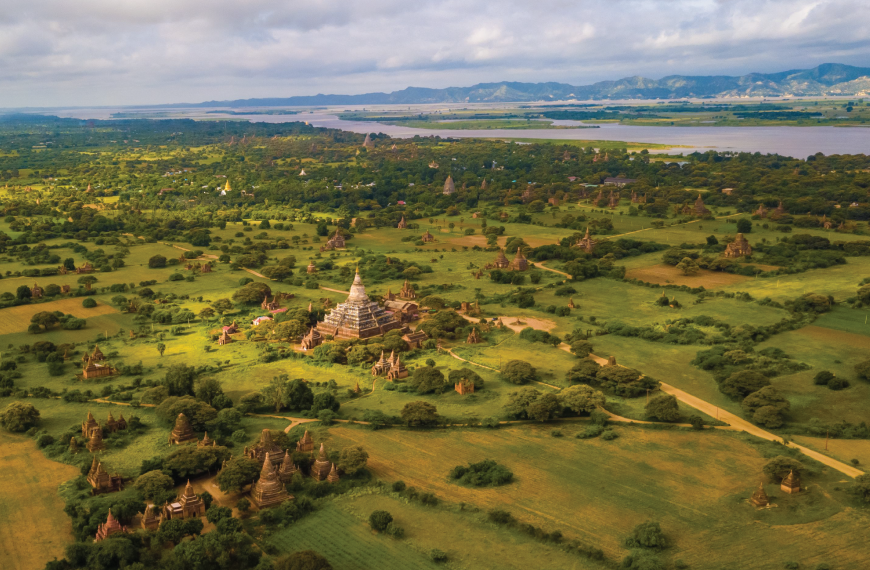
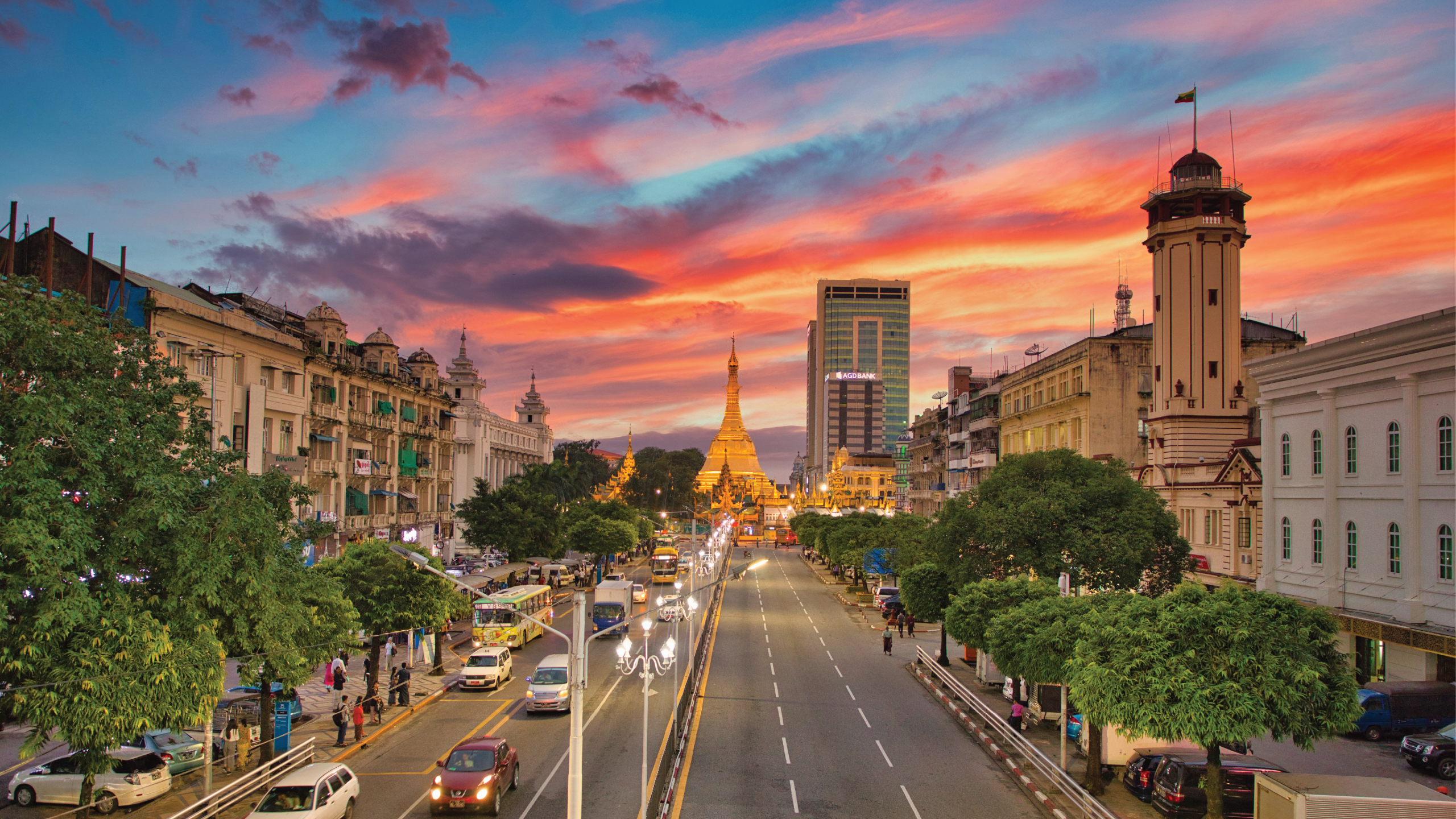
I read those lines as a boy in Yorkshire and they opened up a country in my imagination that has stayed open ever since. The country was Burma. Not Myanmar. The Burma of the British soldier and the British administration and the British trade routes through Rangoon and Mandalay and Moulmein. The Burma of the Irrawaddy and the rice fields and the gilded pagodas. The Burma of Kipling and of George Orwell and of John Masters and of the long British military and civilian presence that defined the country I read about as a child.
I will always call it Burma. And I want to explain, in this article, why I think that name is the more honest one, and why the renaming to Myanmar that the military junta imposed in 1989 was the political act of a government that had no democratic mandate to make it, and why the country in my imagination and the country in the imagination of every Western reader who first encountered it through the literature of the British era is still called by its proper name.
I Have Been To Burma. Briefly. And It Has Stayed With Me.
I have been to Burma. Not for long. Not in any way that gives me the standing to claim deep knowledge of the country in the way I claim deep knowledge of Thailand. But I have stood on Burmese ground.
The last time I crossed into Burma was many years ago now, doing a border run from Thailand. The standard expat ritual of the early 2010s. Drive up to Mae Sai in the far north of Chiang Rai province, park the car, walk across the bridge over the Sai River, get the exit stamp on the Thai side, get the entry stamp on the Burmese side at Tachileik, spend a few hours in the little border town, do whatever shopping or photography the day allowed, walk back across, get the new ninety days in the passport, drive home.
The border crossing itself was, by the standards of any meaningful international travel, almost nothing. Tachileik is the Burmese town that sits across from Mae Sai and that exists in significant part because of the border traffic. The market is full of fake everything. The temple at the top of the hill is real but quiet. The atmosphere is part Burmese, part Shan, part something else that belongs to the Golden Triangle’s complicated history of poppy, smuggling, and the long ungovernable border between the Burmese central government and the ethnic states of the north and east. I spent perhaps three or four hours on Burmese soil. I did not get further into the country than the immediate frontier zone.
And yet what struck me, even from that brief crossing, was the unmistakable sense that this was not Thailand. The Thai border town on one side had Bangkok shopping plazas and 7-Elevens and motorcycle taxis. The Burmese town on the other side had a different rhythm, different faces, a different language reaching my ear in fragments, a different history pressing up against the bridge from the other direction. The country I was standing in for a few hours had been part of British India for over a century. The Thai country I had just walked out of had never been colonised. The two countries had developed along completely different paths since 1886, and the difference was visible within a hundred yards of the international bridge.
But the thing that struck me, walking back across to the Thai side, was the realisation that I had not seen Burma. I had been in Burma, technically. But I had not been able to see the Burma of Kipling or Orwell or of the British administration that had built the railway from Rangoon to Mandalay and the river steamers up the Irrawaddy and the colonial buildings in Yangon that still stood, in disrepair, behind the closed borders of the country the junta had cut off from the world. The Burma I wanted to see, the Burma my imagination had been carrying since the Moulmein Pagoda first reached me as a boy, was not accessible from Tachileik. To see that Burma, you needed to be allowed into the country proper, and the country proper had been, for most of my adult life, structurally closed to the kind of slow, exploratory travel the literature would have invited.
That gap between the Burma in my head and the Burma I was able to stand on for an afternoon at Tachileik has stayed with me. It is one of the regrets of my time in Southeast Asia. I have been to Thailand for twenty years. I have been to Malaysia repeatedly. I have been to the Philippines and Cambodia and Laos. I have not been to the Burma I wanted to see. And by the time the country opened up in the 2011-2020 window, my life was anchored in Chiang Mai and I never made the trip down to Yangon or up to Mandalay or out to the Irrawaddy that I had been promising myself since I was a child. And then the country closed again, and the chance was gone.
Why The Name Burma Is The Right Name
The country was called Burma in English from the early nineteenth century until 1989. The Burmese language has long used multiple names for the country itself, including Bama (the colloquial form) and Myanma (the literary form), with both names referring to the same place. The English word “Burma” derives from the colloquial Bama. The English transliteration “Myanmar” derives from the literary Myanma. The two names are not different countries. They are different registers of the same Burmese word.
In 1989, the State Law and Order Restoration Council, the military junta that had seized power in the brutal crackdown on the 1988 democracy movement that left thousands of Burmese citizens dead, decreed that the English name of the country would be changed from Burma to Myanmar. The decree was issued by a regime that had no electoral legitimacy, that had just killed its own people in the streets of Yangon, and that was attempting to launder its international image by appropriating the more formal version of the country’s name as the official English-language designation.
The democratic opposition rejected the renaming at the time. Aung San Suu Kyi, then under house arrest, the leader of the National League for Democracy that had won the 1990 elections that the junta refused to honour, continued to use “Burma” in English. Her father, the independence leader General Aung San who had negotiated the country’s independence from Britain in 1947, had called it Burma. The democratic movement in exile called it Burma. The British government, the American government, and most Western media for many years afterwards continued to call it Burma, specifically because they did not want to legitimise the junta’s renaming.
The use of “Myanmar” by Western governments and Western media has slowly become more common over the past two decades, but it has done so on the basis that the regime in Yangon (and later Naypyidaw) is the legal sovereign of the country, not on the basis that the renaming itself was legitimate. The democratic opposition inside Burma, and the Burmese diaspora abroad, have continued in significant numbers to call the country Burma. So have many older British, American, Australian, and Indian observers who lived through the period when the renaming was first imposed.
The name Burma is not, as some now claim, a colonial holdover. The name Burma is what the country’s own democratic opposition called it during the years when it was being murdered for asking for the vote. To call the country Burma in 2026 is to side with the democratic opposition and against the regime that renamed it without a mandate. To call it Myanmar is to side with the diplomatic convenience of accepting the regime’s decisions as legitimate. I know which side I am on.
The British Period In Burma Honestly
Burma was annexed in three stages by the British between 1824 and 1886. The First Anglo-Burmese War of 1824-1826 resulted in the annexation of Arakan and Tenasserim. The Second Anglo-Burmese War of 1852 added Lower Burma including the capital Rangoon. The Third Anglo-Burmese War of 1885, which was the war Kipling’s Cockney soldier in Mandalay had been part of, completed the conquest by annexing Upper Burma and the royal capital of Mandalay. By 1886, the entire country was part of British India.
The British administered Burma as a province of British India until 1937, when it became a separate British colony. The period of direct British rule lasted until independence in 1948.
The historical record of British Burma is, like the historical record of British India, complicated. There were administrative reforms that modernised the country’s infrastructure, courts, and education system. There were also the harsh realities of imperial extraction, the rice export economy that pulled Burmese agriculture into the global market in ways that benefited British traders and Indian intermediaries more than Burmese farmers, the introduction of Indian labour that altered the ethnic composition of the country in ways that produced tensions still visible today, and the destruction of the Burmese monarchy and the traditional Buddhist administrative structures that the British found inconvenient.
But the British also built. They built the railway from Rangoon to Mandalay that still carries Burmese passengers today. They built the river steamer fleet that ran the Irrawaddy from the delta to the upper reaches of the country, the famous Irrawaddy Flotilla Company that was at its peak the largest privately owned fleet of river boats in the world. They built the Strand Hotel in Rangoon in 1901 (yes, by the Sarkies Brothers, the same Armenian hoteliers who built the Eastern and Oriental in Penang and Raffles in Singapore). They built Rangoon University, which produced the generation of Burmese intellectuals and political leaders who eventually negotiated independence. They built the courts, the schools, the hospitals, the postal system, the telegraph, the port at Rangoon that made the city one of the great trading hubs of South and Southeast Asia in the late nineteenth and early twentieth centuries.
George Orwell, who served as a British colonial police officer in Burma in the 1920s, hated what the empire was doing to Burma and wrote some of the most influential anti-imperial literature in English on the basis of his experience there. Orwell’s Burmese Days, his essay Shooting an Elephant, his essay A Hanging, are all required reading for anyone who wants to understand the moral complexity of the British administration of the country. Orwell was British. He had seen the empire from the inside. He turned against it. And his record of what he saw is one of the most honest documents of any colonial period anywhere in the world.
The honest position on British Burma is not the cartoon position that the modern academic press wants you to adopt. It is the Orwell position. The empire did real harm. The empire also built real things. The Burmese who suffered under it produced, in part because of the education the empire provided, the intellectual and political leadership that eventually won independence. The country that emerged from the British period in 1948, the Union of Burma under the leadership of U Nu and Aung San (before his assassination), was a functioning parliamentary democracy with English-language institutions, a free press, and an educated civil service. The military takeover of 1962 destroyed all of that. The Burma of the British period, for all its flaws, was a more open and more functional country than the Burma the military produced after 1962.
What Burma Has Become Since 1989
The renaming of Burma to Myanmar in 1989 was not a moment of national renewal. It was the consolidation of the military’s grip on the country after the 1988 massacres. The junta calculated that a new English-language name would help reset the country’s international image. The renaming was, in essence, a rebranding exercise carried out by a government that had just killed thousands of its own people.
The decades since have been brutal. The 1990 election that the National League for Democracy won decisively was annulled by the junta. Aung San Suu Kyi was held under house arrest for fifteen of the next twenty years. The country was placed under Western sanctions. The economy collapsed. The infrastructure decayed. The educational system produced graduates who could not read English at the level their parents could. The ethnic civil wars on the country’s peripheries continued. The Rohingya crisis of 2017, which produced what United Nations investigators described as ethnic cleansing with genocidal intent, was conducted by a military that had been in power continuously since 1962 and that had learned, over six decades, that it could act with complete impunity inside the borders of the country.
The brief democratic opening from 2011 to 2020 was the only window of light in the entire post-1962 period. It collapsed in February 2021 when the military, led by General Min Aung Hlaing, staged a coup against the democratically elected NLD government, arrested Aung San Suu Kyi for the second time, and returned the country to direct military rule. The civil war that has followed has killed tens of thousands of people, displaced millions, and reduced large parts of the country to a state of effective lawlessness.
The country that calls itself Myanmar today is the country the junta produced. The country called Burma, the country in Kipling’s poem and Orwell’s essays and the democratic opposition’s literature, is the country that might have been if the military had not seized power in 1962. The two names are not interchangeable. They represent two different national trajectories, only one of which the country was ever allowed to pursue.
What The Renaming Costs Us
When you say “Myanmar” instead of “Burma,” you are accepting the regime’s framing. You are accepting that the junta had the authority to rename the country. You are accepting that the international community’s decision to follow the regime’s renaming was correct, despite the regime never having held an election that legitimised it. You are accepting, in essence, that political reality is whatever the people with the guns say it is.
When you say “Burma,” you are doing something different. You are siding with the country’s democratic tradition. With Aung San and U Nu and the parliamentary government that came out of independence in 1948. With Aung San Suu Kyi and the NLD and the millions who voted for them in 1990 and 2015 and 2020. With the diaspora that left when the military closed the country in the 1960s and 1970s and 1980s. With the Burmese citizens who are currently dying in the civil war the junta started in 2021. With the country that might have been.
To call it Burma is also to acknowledge the British literary and historical record that introduced the country to the wider English-speaking world. Kipling. Orwell. John Masters. The Irrawaddy Flotilla. The Strand Hotel. The university. The railway. The whole accumulated body of writing and infrastructure and institutional memory that made Burma a real place in the imagination of Western readers for over a century. To rename Burma is to erase, by linguistic decree, the country those writers and administrators and traders and soldiers actually knew.
The country has more right than most to have its name argued over. Because the country has been, for most of the last sixty years, denied the right to argue over anything else.
I Was A Child When I First Read The Poem
I was a child when I first read Kipling’s Mandalay. The country it opened up for me has stayed open ever since.
I have stood on Burmese ground, briefly, at Tachileik, where the border was just a bridge and the country beyond was just a market and a hill temple and the unmistakable sense that this was somewhere genuinely different from the Thailand I had left behind. I never made the trip into Burma proper that I had been promising myself since I was a boy. I regret that now. I will probably never get to make it.
But I still have the country in my head. And the country in my head is Burma. The old Moulmein Pagoda by the sea. The road to Mandalay where the flying-fishes play. The Burma girl looking east across the bay. The Cockney soldier in grey London who could not stop thinking about it. The British administrators and the Burmese intellectuals and the railway and the river steamers and the Strand Hotel in Rangoon. The country that produced Aung San Suu Kyi and the democratic movement that the world failed to protect. The country that is still, somewhere underneath the junta and the civil war and the renaming, alive in its own people’s memory.
That country is called Burma. I knew it as Burma when I was a child. The democratic opposition inside the country calls it Burma when they speak in English about the country they want back. The exiled writers and journalists call it Burma. And until the country is free again and its own democratic government decides, in a free vote, what English-language name it wants to be known by, I will keep calling it Burma too.
Because the name matters. And the people whose name it is have not yet been allowed to make the decision.
Frequently Asked Questions
When did Burma change its name to Myanmar?
In 1989, the State Law and Order Restoration Council (SLORC), the military junta that had seized power following the brutal crackdown on the 1988 democracy movement in which thousands of Burmese citizens were killed, decreed that the English name of the country would be changed from Burma to Myanmar. The renaming was carried out by a regime that had no electoral legitimacy, that had just killed its own people in the streets of Yangon, and that was attempting to launder its international image. The democratic opposition, including Aung San Suu Kyi and the National League for Democracy, rejected the renaming and continued to use “Burma” in English.
Why do many people still call it Burma?
Because the renaming was imposed by an unelected military junta without democratic legitimacy. The democratic opposition inside the country has continued to use “Burma” in English. The Burmese diaspora abroad uses “Burma” in significant numbers. Major Western governments, including the United States and the United Kingdom, used “Burma” exclusively for many years after 1989 specifically because they did not want to legitimise the junta’s renaming. To call the country Burma in 2026 is to side with the democratic opposition rather than with the regime that renamed it.
Was Burma part of British India?
Yes. Burma was annexed by Britain in three stages: the First Anglo-Burmese War (1824-1826) annexed Arakan and Tenasserim, the Second Anglo-Burmese War (1852) added Lower Burma including Rangoon, and the Third Anglo-Burmese War (1885) completed the conquest by annexing Upper Burma and Mandalay. The country was administered as a province of British India from 1886 until 1937, when it was constituted as a separate British colony. Independence was achieved in 1948 under the leadership of U Nu, following the assassination of independence leader Aung San.
What is Kipling’s poem Mandalay about?
A poem written by Rudyard Kipling in 1890, narrated by a Cockney soldier who had served in the Third Anglo-Burmese War and could not stop thinking, back in grey London, about Burma and the Burmese woman he had left behind. The poem opens with the famous lines about the old Moulmein Pagoda looking lazy at the sea, and the road to Mandalay where the flying-fishes play. The poem is one of the most enduring pieces of English-language writing about Burma and shaped the imaginations of generations of British readers who encountered the country through it.
Who was George Orwell in relation to Burma?
A British colonial police officer who served in Burma from 1922 to 1927 and whose experience there produced some of the most influential anti-imperial literature in English. Orwell’s novel Burmese Days (1934) and his essays Shooting an Elephant and A Hanging draw directly on his Burma experience. Orwell hated what the British Empire was doing to Burma and wrote about it with brutal honesty. His record of the British administration is one of the most morally serious documents from any colonial period anywhere.
What is the Strand Hotel in Rangoon?
A British colonial-era luxury hotel in Yangon (Rangoon), built in 1901 by the Sarkies Brothers, the Armenian hoteliers who also built the Eastern and Oriental Hotel in Penang (1885) and Raffles Hotel in Singapore (1887). The three hotels together formed the iconic British colonial luxury hotel tradition across Southeast Asia. The Strand survives today, though in greatly altered condition, as one of the surviving heritage buildings from British Burma in central Yangon.
What happened to Burma after the 1962 military coup?
The military, led by General Ne Win, seized power in 1962 and remained in power continuously until 2011. The 1962-1988 period under the Burma Socialist Programme Party reduced what had been a functioning parliamentary democracy with English-language institutions, a free press, and an educated civil service to one of the poorest and most isolated countries in Asia. The 1988 democracy movement was crushed in a brutal crackdown that killed thousands. The 1990 election was won by Aung San Suu Kyi’s National League for Democracy and immediately annulled by the junta. The brief democratic opening from 2011 to 2020 ended with the February 2021 military coup, which returned the country to direct military rule and triggered the civil war that continues today.
Who is Aung San Suu Kyi?
The daughter of Burmese independence leader Aung San (assassinated 1947), the long-time leader of the National League for Democracy, the recipient of the Nobel Peace Prize in 1991, and the figure who led the Burmese democratic opposition through fifteen years of house arrest and decades of struggle against the military regime. Her party won the 1990 election (which the junta annulled), the 2015 election (which produced the brief democratic opening), and the 2020 election (which the military overthrew in the February 2021 coup). She has been in detention since the 2021 coup. She uses “Burma” in English.
Has Burma’s name controversy been settled internationally?
No. The United Nations and most international bodies now use “Myanmar” as the official designation, having gradually shifted from “Burma” over the past two decades on the basis that the government in Naypyidaw is the legal sovereign authority. The US government, the UK government, and many Western media outlets oscillate between the two names, sometimes using “Burma” for political reasons (to side with the democratic opposition) and “Myanmar” for technical reasons (to follow international diplomatic convention). Many older British, American, Australian, and Indian writers, journalists, and political observers continue to use “Burma” exclusively. The Burmese democratic opposition uses “Burma” in English. The Burmese diaspora uses “Burma” in significant numbers. The name remains genuinely contested.
Is using the name Burma a political statement?
Yes. It is a political statement that sides with the country’s democratic tradition and against the military regime that imposed the renaming without electoral legitimacy. It acknowledges the British literary and historical record (Kipling, Orwell, the Irrawaddy Flotilla, the Strand Hotel) that introduced the country to the wider English-speaking world. It honours the democratic opposition that has continued, through six decades of military rule, to call the country by the name it carried during the only period when it was a functioning parliamentary democracy. Until the country is free again and its own democratic government decides, in a free vote, what English-language name it wants to be known by, calling it Burma is the more honest position.
Sources
- Rudyard Kipling — Mandalay (1890), the full text of the poem published in Barrack-Room Ballads and Other Verses (1892), narrated by a Cockney soldier reflecting on his service in Burma during the Third Anglo-Burmese War, with the famous opening lines “By the old Moulmein Pagoda, lookin’ lazy at the sea, There’s a Burma girl a-settin’, and I know she thinks o’ me; For the wind is in the palm-trees, and the temple-bells they say: ‘Come you back, you British soldier; come you back to Mandalay!'”
https://www.poetryfoundation.org/poems/46782/mandalay - Adaptation of Expressions Law (Burma), 18 June 1989 — The statute enacted by the State Law and Order Restoration Council (SLORC) that officially renamed “Burma” as “Myanmar” and “Burmese” as “Myanma” in English, and permitted authorities to rename any state, division, township, town, ward, village-tract, village, river, stream, forest, mountain, or island. The renaming was imposed by a regime that had taken power through the September 1988 military coup that killed thousands of pro-democracy protesters and that had no electoral legitimacy
https://en.wikipedia.org/wiki/List_of_renamed_places_in_Myanmar - 8888 Uprising Wikipedia — Comprehensive documentation of the nationwide pro-democracy uprising in Burma from March to September 1988, the demands for multi-party federal liberal democracy and the resignation of dictator Ne Win, the suppression by the army with estimates ranging from 350 (official count) to 3,000-10,000 deaths, and the military coup of 18 September 1988 that established the State Law and Order Restoration Council (SLORC) as the new ruling junta
https://en.wikipedia.org/wiki/8888_Uprising - Council on Foreign Relations — Myanmar’s Troubled History Coups Military Rule and Ethnic Conflict, the authoritative backgrounder confirming that the 1988 crackdown killed at least 3,000 protesters, that in 1989 the new military regime changed the country’s name from the Union of Burma to the Union of Myanmar with Rangoon renamed Yangon, and that the renaming was imposed by the military junta in the immediate aftermath of the mass killings of the democratic opposition
https://www.cfr.org/backgrounders/myanmar-history-coup-military-rule-ethnic-conflict-rohingya - GlobalSecurity.org — 8.8.88 People’s Uprising and SLORC Coup in Burma, the comprehensive historical documentation that on 18 September 1988 the military deposed Ne Win’s Burmese Socialist Programme Party, abolished the constitution, and established the State Law and Order Restoration Council as the ruling junta. The SLORC sent the army into the streets, an estimated additional 3,000 were killed, more than 10,000 students fled into the hills and border areas, and the regime subsequently changed the country’s name from Burma to Myanmar
https://www.globalsecurity.org/military/world/war/slorc.htm - Foreign Policy in Focus — Burma, the policy analysis confirming the framing that “the democracy movement calls it Burma, while SLORC insists on Myanmar,” that the SLORC junta has been condemned by the UN every year since 1989 for human rights abuses, and that the regime continues to refuse to recognise the results of the 1990 elections overwhelmingly won by Aung San Suu Kyi and the National League for Democracy
https://fpif.org/burma/ - Beyond Intractability — Development Democratization Good Governance and Security A Case Study of Burma Myanmar, the academic case study confirming that in 1989 the military government officially changed the country’s English translation from Burma to Myanmar, that the National League for Democracy and other nations and groups repudiate the name change as a refusal to recognise the legitimacy of the military government or its authority to rename the country, and that the 1990 election was won by Aung San Suu Kyi’s NLD with the military refusing to honour the result
https://www.beyondintractability.org/casestudy/bergen-burma - Marco Bünte — Burma’s Transition to “Disciplined Democracy” (academic paper) — The German Institute of Global and Area Studies analysis that explicitly states “Throughout this paper, Burma is employed in preference to Myanmar, though this is highly contested terrain. The name Burma is less obviously associated with the dominant ethnic group,” and documents the SLORC coup of 18 August 1988 that re-established direct military rule which continued for over 21 years until 30 March 2011
https://www.files.ethz.ch/isn/134189/wp177_buente.pdf - First Anglo-Burmese War (1824-1826) — Historical documentation of the first British annexation of Burmese territory, resulting in the Treaty of Yandabo signed on 24 February 1826 under which the Burmese ceded Arakan and Tenasserim to the British East India Company, the beginning of the three-stage British conquest of Burma that would be completed in 1886
https://en.wikipedia.org/wiki/First_Anglo-Burmese_War - Second Anglo-Burmese War (1852) — Historical documentation of the second stage of British annexation under which Lower Burma including the major commercial port of Rangoon was added to British India, providing the British with control over the rice-growing delta region that would become the foundation of Burma’s colonial export economy
https://en.wikipedia.org/wiki/Second_Anglo-Burmese_War - Third Anglo-Burmese War (1885) — Historical documentation of the war Kipling’s Cockney soldier in Mandalay had been part of, the war that completed the British conquest of Burma by annexing Upper Burma and the royal capital of Mandalay, ending the Konbaung Dynasty and bringing the entire country under British administration as part of British India
https://en.wikipedia.org/wiki/Third_Anglo-Burmese_War - British Rule in Burma (1824-1948) — The comprehensive historical documentation of the period during which Burma was administered first as a province of British India and then, from 1937, as a separate British colony. The 124-year British period saw the development of the rice export economy, the railway network from Rangoon to Mandalay, the river steamer fleet on the Irrawaddy, the establishment of Rangoon University, and the building of the civic infrastructure that produced the educated Burmese elite who eventually negotiated independence in 1948
https://en.wikipedia.org/wiki/British_rule_in_Burma - George Orwell — Burmese Days (1934), the autobiographical novel based on Orwell’s service as a British colonial police officer in Burma from 1922 to 1927, one of the most influential anti-imperial novels in English. The novel and Orwell’s accompanying essays Shooting an Elephant (1936) and A Hanging (1931) draw directly on his Burma experience and constitute one of the most morally serious records of any British colonial administration anywhere
https://en.wikipedia.org/wiki/Burmese_Days - George Orwell — Shooting an Elephant (1936), the essay drawn from Orwell’s experience as a colonial police officer in Burma, one of the foundational pieces of English-language anti-imperial writing, in which Orwell describes being compelled by the dynamic of imperial authority to shoot an elephant he did not want to kill, the parable he uses to explain the moral corruption that empire imposes on its agents as well as on its subjects
https://www.orwellfoundation.com/the-orwell-foundation/orwell/essays-and-other-works/shooting-an-elephant/ - Irrawaddy Flotilla Company — Historical documentation of the British shipping company founded in 1865 that at its peak in the early twentieth century was one of the largest privately owned fleets of river boats in the world, operating over 600 vessels on the Irrawaddy River and its tributaries and providing the transport infrastructure that connected Rangoon to Mandalay and the upper reaches of Burma until the company’s vessels were scuttled to prevent capture by Japanese forces in 1942
https://en.wikipedia.org/wiki/Irrawaddy_Flotilla_Company - The Strand Hotel Yangon (Rangoon) — Heritage documentation of the iconic British colonial-era luxury hotel built in 1901 by the Sarkies Brothers, the Armenian hoteliers who also built the Eastern and Oriental Hotel in Penang (1885) and Raffles Hotel in Singapore (1887). The Strand remains one of the surviving heritage buildings from British Burma in central Yangon and is part of the same British colonial luxury hotel tradition documented across Southeast Asia
https://hotelthestrand.com/ - Sarkies Brothers — Wikipedia documentation of the four Armenian brothers (Martin, Tigran, Aviet, and Arshak Sarkies) who built and operated a network of luxury hotels across Southeast Asia in the late 19th and early 20th centuries, including the Strand in Rangoon (1901), the Eastern and Oriental in Penang (1885), and Raffles in Singapore (1887), connecting the British colonial heritage hotel tradition across Burma, Malaya, and the Straits Settlements
https://en.wikipedia.org/wiki/Sarkies_Brothers - University of Rangoon (Yangon University) — Heritage documentation of the university founded in 1878 as Rangoon College, becoming a constituent college of the University of Calcutta and subsequently the independent University of Rangoon in 1920. The institution produced the generation of Burmese intellectuals, lawyers, and political leaders who negotiated independence from Britain in 1948, including independence leader Aung San and U Nu, and was central to the 1988 pro-democracy uprising
https://en.wikipedia.org/wiki/University_of_Yangon - Aung San — Wikipedia documentation of the Burmese independence leader (1915-1947), founder of the modern Burmese Army, and the figure who negotiated Burma’s independence from Britain on 27 January 1947 at the Aung San-Attlee Agreement. Aung San was assassinated on 19 July 1947 six months before independence, and his daughter Aung San Suu Kyi would later lead the democratic opposition against the military regime that took power in 1962
https://en.wikipedia.org/wiki/Aung_San - Union of Burma 1948-1962 — Historical documentation of the first independent Burmese state under the Anti-Fascist People’s Freedom League (AFPFL) led civilian government, the country’s only sustained period as a functioning parliamentary democracy with English-language institutions, a free press, and an educated civil service. The 1962 military coup by General Ne Win ended this period and began the 49-year era of direct military rule that produced the Burma the world has known since
https://en.wikipedia.org/wiki/History_of_Burma_(1948%E2%80%931962) - Aung San Suu Kyi — Wikipedia documentation of the daughter of independence leader Aung San, the long-time leader of the National League for Democracy, Nobel Peace Prize laureate (1991), and central figure of the Burmese democratic opposition. She was detained in 1989 and spent more than 15 years in prison and under house arrest until her 2010 release, won the 1990 election (annulled by the junta), led the 2015 and 2020 NLD election victories, and has been in detention since the February 2021 military coup that overthrew her government
https://en.wikipedia.org/wiki/Aung_San_Suu_Kyi - National League for Democracy (NLD) — The political party founded in 1988 by Aung San Suu Kyi and other democracy advocates, winner of the 1990 election (annulled by the junta), winner of the 2015 election that produced the brief democratic opening from 2015 to 2020, winner of the 2020 election overthrown by the February 2021 military coup. The NLD has continued to use “Burma” in English in its official communications, rejecting the SLORC renaming as the act of an illegitimate regime
https://en.wikipedia.org/wiki/National_League_for_Democracy - 2021 Myanmar Military Coup — Historical documentation of the 1 February 2021 coup d’état staged by the Tatmadaw under General Min Aung Hlaing against the democratically elected NLD government, the second arrest of Aung San Suu Kyi, the establishment of the State Administration Council as the new ruling military body, and the civil war that has followed and that has killed tens of thousands of people and displaced millions across Burma
https://en.wikipedia.org/wiki/2021_Myanmar_coup_d%27%C3%A9tat - United Nations Human Rights Council — Independent Investigative Mechanism for Myanmar (IIMM), the United Nations body established to collect and preserve evidence of the most serious international crimes and violations of international law committed in Burma since 2011, including the 2017 Rohingya crisis (which UN investigators described as ethnic cleansing with genocidal intent) and the human rights violations since the February 2021 coup
https://iimm.un.org/ - Tachileik Border Crossing (Burma-Thailand) — The frontier town in eastern Shan State, Burma, opposite the Thai town of Mae Sai in Chiang Rai province, connected by the Sai River bridge that is the primary land border crossing between the two countries. The crossing was, throughout the 1990s and 2000s, the standard site for the Thai expat “border run” ritual under which foreign residents would cross briefly into Burma to reset their Thai visa stamps before returning
https://en.wikipedia.org/wiki/Tachileik - Mae Sai District — The northernmost district of Chiang Rai Province, Thailand, sitting on the Burmese border opposite Tachileik, the primary land crossing point between Thailand and Burma, and historically one of the main locations for the Thai visa-run pattern that long-term foreign residents in Thailand used throughout the 1990s and 2000s to reset their permitted stay periods
https://en.wikipedia.org/wiki/Mae_Sai_district - Design Observer — Burma (Myanmar) 1989, the published photographic essay and historical commentary confirming that in June 1989 SLORC adopted the name “Union of Myanmar,” that the name was recognised by the United Nations but not by the US or UK governments, that Rangoon was simultaneously renamed Yangon, and that the military regime had killed an estimated 3,000 civilians during the 8888 Uprising only four months before the renaming was imposed
https://designobserver.com/burma-myanmar-1989/ - Rohingya Crisis 2017 and UN Fact-Finding Mission — The United Nations Independent International Fact-Finding Mission on Myanmar’s documentation of the 2017 military operations against the Rohingya population of Rakhine State, which UN investigators described as carrying out “ethnic cleansing” with “genocidal intent,” displacing over 700,000 Rohingya into Bangladesh and providing the international evidentiary foundation for the ongoing genocide case at the International Court of Justice
https://www.ohchr.org/en/hr-bodies/hrc/myanmar-ffm/index