A City I Have Come To Love More Than Almost Any Other In Southeast Asia
I want to talk about a city I have come to love, perhaps more than any other I have spent time in across Southeast Asia. Georgetown, Penang. The old colonial capital of British Malaya’s northern reach. The place where, if you walk the right streets in the right light, you can still see what the British actually built when they were doing it properly, before the entire region decided that concrete towers and shopping malls were the future and that the streets the British put down should be either knocked down or hidden behind air-conditioning.
I should concede something at the start, because I want to be honest. Georgetown is touristy. It is a UNESCO World Heritage Site, listed in 2008, and the listing has done what listings do. The street art has gone Instagram. The clan jetties have queues. The famous chendul stand on Penang Road has a number-take queue from 9am. The trishaw drivers know the dollar value of every selfie. And yes, the rents on the old shophouses have gone, in twenty years, from a few hundred ringgit a month to numbers that would make a London estate agent blush. The tourism economy has done what tourism economies always do, which is to industrialise the very thing the tourists came to see.
But here is the thing. Even with all of that, Georgetown is still the last place I know of in Southeast Asia where the layers of history have not been bulldozed. Bangkok knocked down most of its old quarter for highways and shopping malls decades ago. Saigon has lost most of its French colonial fabric. Manila lost almost everything in the war and then lost more to Marcos-era development. Singapore has its conservation district, but Singapore has scrubbed and varnished its history into something more like a museum exhibit than a living city. Hanoi has its Old Quarter but it is overwhelmed and decaying. Georgetown is somehow, miraculously, still standing. Still functional. Still alive. The shophouses are still shops. The temples are still temples. The clan houses are still clan houses. The streets still mean what they meant when they were drawn.
And that matters, because what you are walking through when you walk through Georgetown is not a theme park. It is the last functioning example of what the British built when British colonial administration was at its peak in this part of the world. And whatever the modern fashion is for pretending that the colonial era was uniformly catastrophic, the historical record in Penang says something more complicated, and I want to take a few moments to be honest about it.
What The British Actually Built In Penang
Francis Light landed on Penang Island in August 1786. He was an officer of the British East India Company, working under a charter from Kedah’s sultan, and he established what became the settlement of George Town, named after King George III. The reason this matters is that, unlike many later colonial cities in the region, Penang was not founded by conquest. It was founded by treaty, in exchange for British military protection of the Sultan against Siamese pressure from the north. The arrangement was complicated and not without its later disputes, but the foundational fact is that the British did not arrive in Penang as invaders. They arrived as administrators of a treaty port.
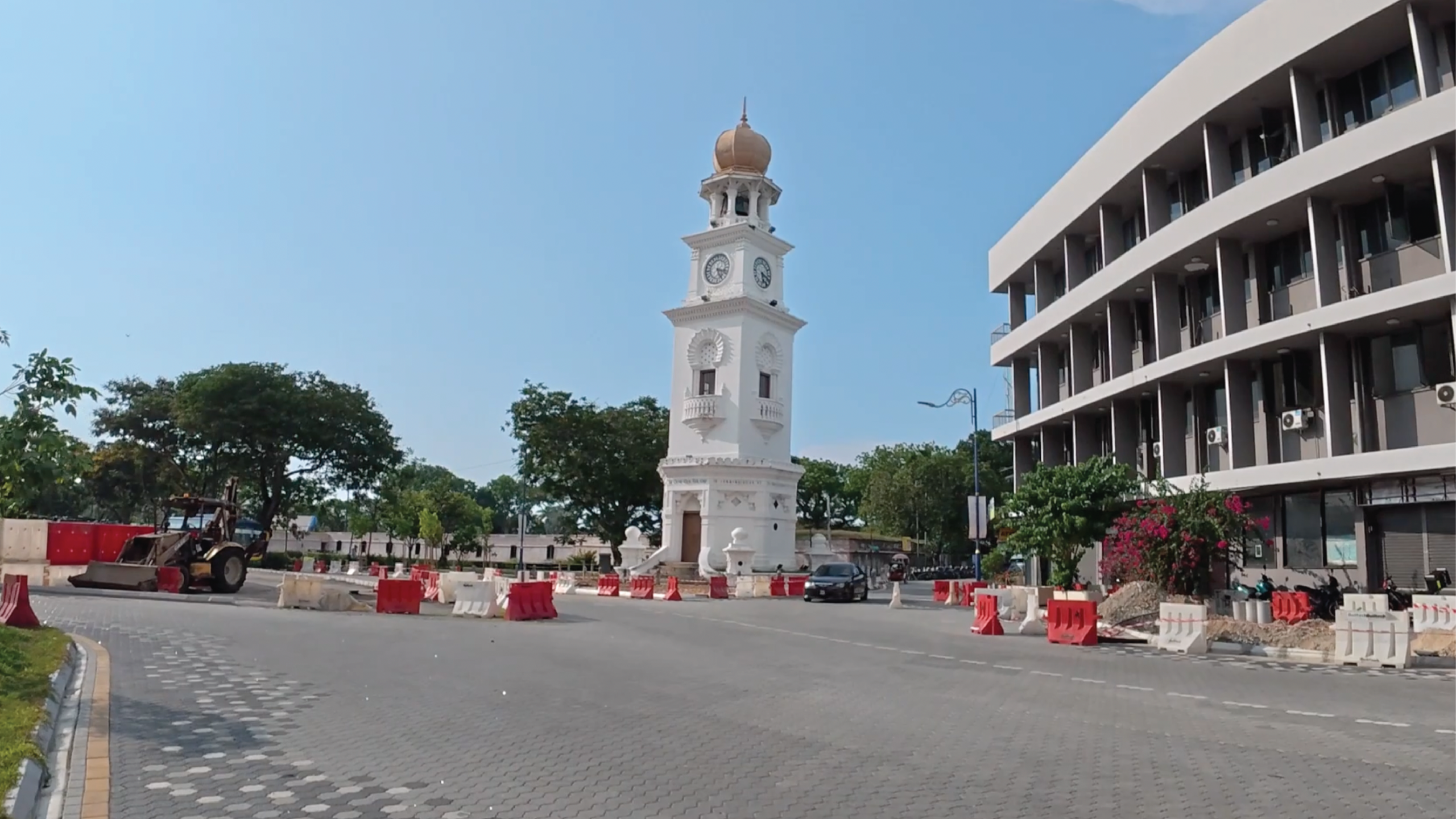
What they built over the next hundred and fifty years was a city that, by the standards of any major colonial undertaking anywhere in the world, was extraordinarily well-planned. The grid layout in the old commercial quarter. The shophouse architecture that combined Chinese, Indian, Malay, and British traditions into something that became its own school of building. The civic infrastructure of courts, customs houses, schools, hospitals, a botanic garden, a racecourse, a public library, and the clock tower at the foot of Fort Cornwallis that Cheah Chen Eok donated in 1897 to commemorate the Diamond Jubilee of Queen Victoria. That clock tower is still there. It is sixty feet high, one foot for each year of Queen Victoria’s reign at that point, and it stands at the harbour edge looking out across the strait to the mainland. It is one of the most quietly elegant monuments to the British monarchy anywhere in the former colonial world, and the fact that a wealthy Chinese merchant donated it tells you something important about the actual texture of British Penang. The relationships between the British administration, the Chinese commercial communities, the Indian merchant networks, the Malay aristocracy, and the working population were not the cartoon of imperial brutality that the modern academic press tends to portray. They were complicated, often genuinely cooperative, and often productive.
The British built the Eastern and Oriental Hotel in 1885, which is still operating, still elegant, still the place where the old Penang society would meet for evening drinks. They built Saint George’s Church in 1818, the oldest Anglican church in Southeast Asia, still standing on Lebuh Farquhar. They built the Penang High Court, the original Town Hall, the Supreme Court, the old Police Headquarters, the Standard Chartered Bank building, the HSBC building, the Hong Kong and Shanghai Bank’s original Penang branch. They built the road network. They built the port. They built the railway terminus across the strait at Butterworth. They built the system that made George Town one of the most important commercial entrepots in Southeast Asia from the 1820s onwards.
And here is the part that the modern political fashion does not want to admit. The Chinese communities that arrived in Penang in the nineteenth century, fleeing instability in southern China, built their fortunes alongside the British administration, not against it. The clan associations, the temples, the shophouse rows on Armenian Street and Cannon Street and Lebuh Acheh, the famous Khoo Kongsi clan house, the Cheah Kongsi, the Yap Kongsi, the Tan Kongsi, all of them grew up in the British era and most of them have their foundational documents acknowledging the British colonial administration as the framework that made the prosperity possible. The Chinese millionaires of nineteenth-century Penang were able to build what they built because the British provided the rule of law, the property rights, the courts, the port infrastructure, and the trade networks that made commerce on that scale possible.
This is the texture of Penang that the UNESCO listing actually recognises. The listing is for what the inscription calls the “outstanding universal value” of George Town as a multicultural trading port that emerged from the meeting of European, Chinese, Indian, and Malay cultures under British colonial administration. The British were not incidental to what makes Penang special. The British were the architecture that made it possible.
My Dream Of Owning A Shophouse In Penang
I have been to Georgetown more times than I can count over the years, and every time I walk down Armenian Street or Lebuh Acheh or Lebuh Chulia, I find myself looking at the shophouses and doing the same thing every Western expat in this part of the world eventually does. I imagine owning one. Restoring one. Living in the upper floors and running something small from the ground floor. A bookshop. A coffee place. A gallery. A consultancy with a brass plaque on the door.
It is, honestly, my dream. A two-storey shophouse with the original tiles, the original air well in the middle, the original Chinese carved screens at the front, the original timber stairs going up to the family rooms on the floor above. Restored properly. Quietly. With a fan turning slowly in the upper room and the smell of old wood and the sound of the street outside. The kind of life that the rich Chinese towkays of nineteenth-century Penang lived, on a quieter scale.
It is also, unfortunately, completely unaffordable for most of us now. A heritage shophouse in the core UNESCO zone of Georgetown, properly restored, will run somewhere between two and a half million ringgit at the bottom end and ten million ringgit at the top end. That is between roughly four hundred thousand pounds and one and a half million pounds. For a building that twenty years ago would have sold for under fifty thousand pounds. The UNESCO listing has done what UNESCO listings always do. It has rescued the buildings from demolition and made them inaccessible to anyone except institutional buyers, very wealthy locals, and a small number of foreign investors who got in early.
I have spent hours walking past the ones that have boards in the windows. Looking at the agent’s photo. Doing the math. Working out whether some configuration of selling everything I own back home and convincing my wife and committing to the next twenty years on a single, slightly mad project would actually work. And the math, every time, does not quite work. The price has moved beyond the point where a normal Western pension or a normal Western expat business income can absorb it.
That is the bittersweet truth of falling in love with a place at the wrong moment in its history. The thing that makes it beautiful is also what makes it expensive. And the thing that makes it accessible to you culturally is what makes it inaccessible to you financially.
Malaysia Compared To Thailand Honestly
I lived in Thailand for twenty years. I now live in Malaysia. And I want to be honest about the comparison, because I think Malaysia is genuinely undersold to the Western foreigner audience.
Malaysia is cheaper than Thailand on most fronts that matter. Rent in Georgetown, in the parts foreigners actually live in, is substantially below comparable Thai cities. Petrol is famously subsidised, around half the Thai price. Tolls on the highways are reasonable. Domestic flights, once you understand the network, are inexpensive. Healthcare, both public and private, is significantly cheaper than Thailand for comparable quality, and in the major Penang hospitals the quality is excellent. Property prices, outside the UNESCO zone I just mentioned, are also lower than Thai equivalents in the major cities.
The food is, in my honest opinion, better. Penang specifically is one of the great food cities of the world, with Chinese, Malay, Indian, and Peranakan traditions all running in parallel and all available within ten minutes of wherever you are standing. The hawker culture is alive. The prices are still reasonable. The variety is in a different league from most of Thailand. I have eaten a plate of char kway teow on a plastic stool at midnight in Georgetown that beat anything I have ever paid four times as much for in Bangkok.
The cultural history is also, by any honest measure, more interesting. Malaysia is the meeting point of Chinese, Indian, Malay, Indonesian, Thai, and European cultural currents in a way that Thailand simply is not. Thailand is essentially a Thai cultural monolith with overlays. Malaysia is a genuine plural society with multiple living traditions running in parallel. You can walk from a Chinese clan house on one street to an Indian temple on the next to a Malay kampung house behind it, and all of them are functioning communities, not museums.
And the visa system, while not perfect, is more rational than what Thailand has become. The MM2H (Malaysia My Second Home) programme has had its issues and its tightenings, but the underlying framework is more legible than the labyrinth of Thai retirement visa requirements I have covered before. Malaysia is not as warm a welcome as Thailand was in 2005. Nothing in Southeast Asia is. But it is a more workable welcome than what Thailand has become in 2026.
The Honest Negatives Of Living In Malaysia As A Western Foreigner
Now, the negatives. Because nowhere in Southeast Asia is a fairy tale.
Foreigners in Malaysia cannot fully belong. Permanent residency is possible but extraordinarily difficult. Citizenship is more or less impossible by any normal route. Property ownership is restricted by price thresholds that vary by state but exclude most foreigners from the lower end of the market. The Malay ethnic preference policies, the bumiputera framework, are real, and they shape access to certain professions, certain government roles, certain forms of business. Western foreigners are, in legal terms, permanent guests no matter how long they stay. That is the same architecture that runs across most of Southeast Asia. Malaysia is more transparent about it than some others, which I personally find easier to live with, but the architecture is there.
Penang specifically has its own challenges. The traffic in Georgetown is appalling. The humidity is, on a bad month, oppressive. The mainland side of the island has industrial belt issues. The political situation in Malaysia at the federal level is more turbulent than the country deserves. The state of relations between the federal government and Penang’s predominantly Chinese-majority state government has been tense for years.
And the longer-term question of how Malaysia handles its plural identity, how the Malay majority’s political dominance interacts with the Chinese and Indian minorities’ economic activity, is unresolved in a way that could go badly wrong in the next generation. The country has avoided the worst outcomes other plural societies have suffered, but the structural tensions are real and the foreign resident is, in the long term, downstream of how those tensions play out.
Why The British Should Be Allowed To Live There
I want to make a slightly unfashionable argument, and I want to make it directly.
The British built Penang. The framework that made Georgetown the city it became, the rule of law that allowed the Chinese commercial communities to prosper, the architecture that the UNESCO listing now protects, all of it was British work. The British civilian and military families who lived in Penang for over a hundred and fifty years, who built the schools and the churches and the courts and the port, who ran the administration that made Penang the prosperous trading city it became, are part of the historical foundation of what Georgetown is.
It does not seem unreasonable to me that the descendants of that history should have a clearer pathway to live in Penang now than the current visa system allows. Not as conquerors. Not as a return to the colonial framework. As an acknowledgement that there is a historical relationship between Britain and this place that runs deeper than tourism, and that the structures that made Georgetown worth preserving were largely built by British hands working alongside Chinese, Indian, and Malay hands in a productive arrangement that lasted for a century and a half.
The current arrangement makes a British retiree wanting to spend his pension in Penang go through more or less the same visa scrutiny as a Bangladeshi, a Pakistani, or a Chinese national. Which is fine in the abstract. But it ignores the specific historical relationship that exists between Britain and this particular place. And it treats the historical contribution as if it never happened.
I am not arguing for special privilege. I am arguing for recognition. A British retiree of moderate means who wants to live in Penang and spend his pension there and pay his taxes and respect the place is doing nothing more than continuing a relationship that has existed for two and a half centuries.
The Old Buildings I Wish I Could See In Their Time
The bit that catches me, every time I walk through Georgetown, is the fire station. The Beach Street Central Fire Station, opened in 1909, with the brass pole and the red brick and the proportions of a small Edwardian civic building dropped into the tropics. It is still functioning. Firemen still work there. The original equipment areas have been preserved. And if you stand outside in the late afternoon when the light is going amber, you can see exactly what George Town looked like in 1920, when this was one of the great trading ports of the British Empire and a Chinese towkay would walk past in a white linen suit on his way to dinner at the Eastern and Oriental.
I would give a great deal to be able to walk those streets in 1920. To see the harbour full of trading vessels. To see the godowns full of tin and rubber and rattan and tobacco. To hear the languages in the street, Hokkien and Tamil and Malay and English all running in parallel. To see the lamps lit at dusk along Beach Street. To eat at a coffee shop where the owner remembered the founding of the place by his grandfather. To live, for one evening, inside the city as it was when the British administration was at its height and the Chinese commercial communities were at their commercial peak and the whole machine of Georgetown was running the way it was designed to run.
The traces are still there. That is what makes Georgetown the last bastion. You can still see what it was. You can walk the streets and see the shophouses and the clan houses and the church and the clock tower and the old fire station and the Eastern and Oriental and you can stitch it together in your head into what it once was. Nowhere else in Southeast Asia gives you that anymore.
And that is why, with all its tourist problems and its UNESCO crowds and its expensive shophouses, I love it. Because it is the closest thing left to the Southeast Asia that the West built alongside Asia at the height of the relationship, and it is still standing, and it is still functioning, and it is still beautiful.
Whether the world that built it can ever be honest about it again is another question. But the city is there. The clock tower is there. The shophouses are there. And as long as I can keep coming back, I will keep walking those streets and imagining the version of myself that, in some other century, would have lived in one of those upper rooms and watched the harbour in the evening and known that this was the best place a man like me could possibly be.
Frequently Asked Questions
When did the British arrive in Penang?
Francis Light, an officer of the British East India Company, landed on Penang Island in August 1786 and established the settlement of George Town, named after King George III. Unlike many later colonial cities in the region, Penang was not founded by conquest. It was founded by treaty with the Sultan of Kedah, in exchange for British military protection against pressure from Siam in the north. The arrangement made Penang one of the foundational British settlements in Southeast Asia and the basis for the wider Straits Settlements administration that included Singapore and Malacca.
What is the Cheah Chen Eok clock tower in Georgetown?
The clock tower at the foot of Fort Cornwallis in Georgetown is a sixty-foot monument donated by the wealthy Chinese merchant Cheah Chen Eok in 1897 to commemorate the Diamond Jubilee of Queen Victoria. The tower stands one foot in height for each year of Queen Victoria’s reign at that point. It is one of the most elegant monuments to the British monarchy in the former colonial world, and the fact that a Chinese commercial figure donated it tells you something important about the texture of relationships between the British administration and the Chinese communities that built their fortunes alongside it.
What is the Eastern and Oriental Hotel?
The Eastern and Oriental Hotel is a historic British colonial hotel in Georgetown, built in 1885 by the Sarkies Brothers (the same family that built Raffles in Singapore and the Strand in Yangon). It is one of the great surviving heritage hotels of Southeast Asia. The hotel is still operating, still elegant, and was for over a century the place where Penang’s colonial-era and post-colonial society met for evening drinks and social occasions. It sits on Lebuh Farquhar facing the strait and remains one of the iconic buildings of British Penang.
What is Saint George’s Church Penang?
Saint George’s Church on Lebuh Farquhar in Georgetown is the oldest Anglican church in Southeast Asia, built in 1818. The church is still functioning and stands as one of the foundational pieces of British religious architecture in the region. It is one of the surviving structures from the early British administration of Penang and remains an important heritage building in the UNESCO World Heritage core zone.
Why is Georgetown a UNESCO World Heritage Site?
Georgetown was inscribed as a UNESCO World Heritage Site in 2008 alongside Malacca, recognised for what the listing calls the “outstanding universal value” of George Town as a multicultural trading port that emerged from the meeting of European, Chinese, Indian, and Malay cultures under British colonial administration. The listing protects the core heritage zone including the shophouse rows, the clan houses, the religious buildings, the colonial civic architecture, and the urban grid laid down by the British.
How much does a heritage shophouse in Georgetown cost?
A heritage shophouse in the core UNESCO zone of Georgetown, properly restored, currently runs somewhere between 2.5 million Malaysian ringgit at the bottom end and 10 million ringgit at the top end, depending on size, location, and condition. That is roughly £400,000 to £1.5 million in pounds sterling. Twenty years ago, the same buildings would have sold for under £50,000. The UNESCO listing has rescued the buildings from demolition and dramatically inflated prices, making them inaccessible to most Western retirees who would otherwise be ideal stewards of the architecture.
How does Malaysia compare to Thailand for Western foreign residents?
Malaysia is cheaper than Thailand on most fronts that matter. Rent in Penang is substantially below comparable Thai cities. Petrol is subsidised at around half the Thai price. Healthcare, both public and private, is significantly cheaper than Thailand for comparable quality, and the major Penang hospitals are excellent. The food, particularly in Penang, is in a different league from most of Thailand. The cultural history is more interesting because Malaysia is a genuine plural society with Chinese, Indian, Malay, Indonesian, and European traditions running in parallel as living communities. The visa system, while not perfect, is more rational than what Thailand has become.
What are the negatives of living in Malaysia for a Western foreigner?
Foreigners in Malaysia cannot fully belong. Permanent residency is possible but extraordinarily difficult to obtain. Citizenship is essentially impossible by any normal route. Property ownership is restricted by price thresholds that vary by state. The bumiputera (Malay ethnic preference) framework shapes access to certain professions, certain government roles, and certain forms of business. Penang has its own challenges including bad traffic in Georgetown, oppressive humidity in certain months, and tense federal-state political relations. The longer-term question of how Malaysia handles its plural identity is unresolved in a way that could become difficult in the next generation.
What is the MM2H visa programme?
The Malaysia My Second Home (MM2H) programme is Malaysia’s long-stay visa scheme for foreign nationals. It has had multiple iterations and tightenings, particularly in the last few years, with financial requirements raised significantly. The current programme is more demanding than the early version but remains more rational and legible than the labyrinth of Thai retirement visa requirements. MM2H is the standard route for Western retirees considering Malaysia as a long-stay destination.
Why should the British have historical recognition in Penang specifically?
Because Penang was a treaty port established by Britain in 1786 and developed under British administration for over 150 years until Malaysian independence. The framework that made Georgetown the city it became, the rule of law that allowed the Chinese commercial communities to prosper, and the architecture that the UNESCO listing now protects, were all British work. The British civilian and military families who built the schools, churches, courts, port, and civic infrastructure are part of the historical foundation of what Georgetown is. A British retiree wanting to live in Penang in modest circumstances is continuing a relationship that has existed for two and a half centuries, not establishing a new claim.
Sources
- UNESCO World Heritage Centre — Melaka and George Town, Historic Cities of the Straits of Malacca, the official inscription documentation confirming that the property was inscribed on the World Heritage List by the World Heritage Committee at its 32nd session in Quebec City on 7 July 2008 under criteria (ii), (iii) and (iv), recognising the outstanding universal value of George Town as a multicultural trading port that emerged from 500 years of trading and cultural exchanges between East and West in the Straits of Malacca
https://whc.unesco.org/en/list/1223/ - George Town World Heritage Incorporated — About GTWHS and the Outstanding Universal Value, the official Penang state agency documentation explaining that the joint inscription of Melaka and George Town as a UNESCO World Heritage Site on 7 July 2008 was based on the Outstanding Universal Value of cultural diversity embodied in living heritage and built heritage, recognising the property as the most complete surviving historic city centres on the Straits of Malacca with a multi-cultural living heritage from trade routes linking Great Britain and Europe through the Middle East, the Indian subcontinent and the Malay Archipelago to China
https://gtwhi.com.my/about-us/george-town-unesco-world-heritage-site/ - Tourism Malaysia Corporate Site — Melaka and George Town on UNESCO World Heritage List, the official Malaysian government tourism authority announcement of the 7 July 2008 UNESCO inscription, describing the two cities as having developed over 500 years of trading and cultural exchanges between East and West in the Straits of Malacca, with the influences of Asia and Europe endowing the towns with a specific multicultural heritage that is both tangible and intangible
https://www.tourism.gov.my/media/view/melaka-and-george-town-on-unesco-world-heritage-list - UNESCO World Heritage Centre — Sustainable Tourism Guide 3 Case Study Melaka and George Town, the published case study confirming the joint 2008 inscription, the rise in Malaysian tourist arrivals from 10.2 million in 2000 to 24.6 million in 2010, and that 5.96 million visitors visited Penang in 2009 alongside 3.76 million in Melaka, alongside the management challenges of balancing development with the protection of the Outstanding Universal Value
https://whc.unesco.org/en/sustainabletourismtoolkit/guide3/melaka/ - Wikipedia — Francis Light, the documentation of the British East India Company officer who landed on Penang Island in August 1786 under a charter from the Sultan of Kedah and established the settlement of George Town, named after King George III. Light’s settlement was founded by treaty rather than by conquest, in exchange for British military protection of Kedah against pressure from Siam in the north
https://en.wikipedia.org/wiki/Francis_Light - Wikipedia — George Town, Penang, the documentation of the city’s founding by Francis Light in 1786, its status as the capital city of the State of Penang, its history as a major British entrepot in the Straits Settlements, and its 2008 designation alongside Melaka as a UNESCO World Heritage Site, with details of the colonial-era civic architecture and the multicultural communities that built up around the British administration
https://en.wikipedia.org/wiki/George_Town,_Penang - Wikipedia — Jubilee Clock Tower (Queen Victoria Memorial Clock Tower), the documentation of the Moorish-style clocktower at the intersection of Light Street and Beach Street in George Town, built to commemorate the Diamond Jubilee of Queen Victoria in 1897, sixty feet tall with one foot for each year of Victoria’s reign, donated by the Chinese business magnate Cheah Chen Eok who pledged 30,000 British Trade Dollars towards its construction, with the tower formally unveiled on 24 July 1902 after construction delays
https://en.wikipedia.org/wiki/Jubilee_Clock_Tower - British Malaya Blog — Life of Opium Magnate Cheah Chen Eok Donor of the Penang Jubilee Clock Tower, the historical analysis documenting that Cheah Chen Eok was the son of a merchant who from humble beginnings working in a shipping supply company from age 16 rose to become one of the wealthiest men in the Straits Settlements, and that in response to the Straits Settlements Government’s call for memorials to mark Queen Victoria’s Diamond Jubilee on 20 June 1897, he placed $30,000 at the disposal of the Penang Municipality with the specific stipulation that the tower be sixty feet high for each year of Queen Victoria’s reign
https://britishmalaya.home.blog/2023/05/11/life-of-opium-magnate-cheah-chen-eok-donor-of-the-penang-jubilee-clock-tower/ - Penang Memoirs — Queen Victoria Memorial Clock Tower A Landmark of Loyalty and History, the documentation confirming that Cheah Chen Eok’s contribution of $30,000 was a significant gesture of allegiance to the British Crown symbolising the strong ties between Penang’s Chinese community and the colonial government, with the tower commemorating Queen Victoria’s 60-year reign from 1837 to 1897 and the stipulation of 60 feet tall (one foot per year) emphasising the personal nature of the dedication
https://penangmemoirs.com/penang-queen-victoria-memorial-clock-tower/ - Eastern and Oriental Hotel Penang — Official heritage documentation of the hotel built in 1885 by the Sarkies Brothers (the Armenian-origin hoteliers who also built Raffles in Singapore and the Strand in Yangon), one of the great surviving heritage hotels of Southeast Asia, still operating today as the iconic British colonial-era hotel of George Town on Lebuh Farquhar facing the Strait of Malacca
https://www.eohotels.com/en/penang/about-us/heritage/ - Saint George’s Church Penang — Heritage documentation of the Anglican parish church on Lebuh Farquhar built in 1818, the oldest Anglican church in Southeast Asia, designed by Royal Engineer Robert Smith and consecrated by the Bishop of Calcutta. The church is a Grade I heritage building within the core UNESCO World Heritage zone and remains in active religious use
https://www.stgeorgespenang.org/ - Penang State Museum — Fort Cornwallis Documentation, the official heritage records of the largest standing fort in Malaysia, located at the north-eastern corner of George Town close to the Jubilee Clock Tower. The fort was originally built by Captain Francis Light in 1786 upon his arrival on Penang Island and was rebuilt in its current form in 1810. The fort is one of the foundational British colonial structures of Penang and sits within the UNESCO core heritage zone
https://penangmuseum.gov.my/ - Khoo Kongsi Penang — Official documentation of the Khoo clan house, one of the largest Chinese clan associations in Malaysia and one of the most architecturally significant clan houses in George Town. The clan house is a key building within the UNESCO World Heritage core zone and demonstrates the Chinese commercial community’s commitment to monumental architecture that the British colonial framework made possible. The Cheah Kongsi, Yap Kongsi, and Tan Kongsi clan houses occupy similar significance
https://khookongsi.com.my/ - Beach Street Central Fire Station Penang — Heritage documentation of the Edwardian-era fire station opened in 1909 on Beach Street, with the original brass pole, red brick façade, and small civic architecture proportions adapted for the tropical setting. The building is one of the best-preserved Edwardian civic structures in Southeast Asia and remains in active use as a fire station
https://en.wikipedia.org/wiki/Beach_Street_Fire_Station - Penang Wikia — George Town UNESCO World Heritage Site, the documentation of the 109.38 hectare core zone and the 150.04 hectare buffer enclave around it, with the buffer roughly delineated along the historic canal that marked George Town’s 19th-century city limits. The site demonstrates the surviving 19th-century cityscape that the UNESCO listing specifically protects
https://penang.fandom.com/wiki/George_Town_UNESCO_World_Heritage_Site - Penang Travel Tips — George Town UNESCO World Heritage Site Background, the comprehensive guide to the inscribed site confirming the 7 July 2008 inscription at the 32nd session of the World Heritage Committee in Quebec City on 2-10 July 2008, with the inscription criteria II, III, and IV recognising the property as exceptional examples of multi-cultural trading towns established by trading activities that resulted in the blending of Malay, Chinese, and Indian cultures with three successive European colonial powers over a period of 500 years
https://www.penang-traveltips.com/george-town-unesco-world-heritage-site.htm - Wikipedia — Sarkies Brothers, the documentation of the four Armenian brothers (Martin, Tigran, Aviet, and Arshak Sarkies) who built and operated a network of luxury hotels across Southeast Asia in the late 19th and early 20th centuries, including the Eastern and Oriental in Penang (1885), Raffles in Singapore (1887), and the Strand in Rangoon (1901), connecting the British colonial heritage hotel tradition across the entire region
https://en.wikipedia.org/wiki/Sarkies_Brothers - Malaysia My Second Home (MM2H) Programme — Official Ministry of Tourism, Arts and Culture documentation of the long-stay visa programme for foreign nationals, including current financial requirements, the offshore deposit requirement, the medical insurance requirement, and the property purchase thresholds that vary by Malaysian state. The programme is the primary route through which Western foreign retirees access long-stay residency in Malaysia, including in Penang
https://www.mm2h.gov.my/ - Penang Heritage Trust — Penang Shophouse Market Data, the heritage organisation’s documentation of historic shophouse pricing in the core UNESCO zone of George Town, confirming the rise in heritage shophouse prices from sub-RM200,000 in the early 2000s to RM2.5 million to RM10 million in the post-UNESCO listing market, with the price escalation primarily attributable to the heritage protection regime, restoration costs, and foreign investor interest
https://www.pht.org.my/ - Malaysian Federal Constitution — Article 153 Bumiputera Special Position, the constitutional foundation of the Malay ethnic preference policies referenced in the article. The Article establishes the special position of the Malays and natives of Sabah and Sarawak in respect of the public service, scholarships, education, training facilities, business permits and licences, the framework that shapes access to certain professions, government roles, and forms of business across Malaysia
https://www.commonlii.org/my/legis/const/1957/ - Wikipedia — Straits Settlements, the historical documentation of the British Crown Colony comprising Penang, Singapore, and Malacca that existed from 1826 to 1946, the administrative framework within which George Town developed as one of the great British commercial entrepots in Southeast Asia. The Straits Settlements provided the rule of law, the property rights, the courts, the port infrastructure, and the trade networks that allowed the Chinese, Indian, Malay, and European communities of Penang to prosper
https://en.wikipedia.org/wiki/Straits_Settlements - Wikipedia — British Malaya, the broader documentation of the British colonial framework across the Malay Peninsula from the late 18th century to the mid-20th century, including the Straits Settlements, the Federated Malay States, and the Unfederated Malay States. The framework that Penang sat within and that produced the prosperous trading economy and the multicultural society that the UNESCO inscription recognises
https://en.wikipedia.org/wiki/British_Malaya - Penang Hokkien Association and Chinese Clan Houses Documentation — The historical record of the major Chinese clan associations of Penang including Khoo Kongsi (Hokkien Khoo clan), Cheah Kongsi (Cheah clan), Yap Kongsi (Yap clan), Tan Kongsi (Tan clan), Lim Kongsi (Lim clan), and others, with their foundational documents and architecture dating from the British colonial era and acknowledging the British administration as the framework within which the Chinese commercial community of Penang built its institutional and commercial prosperity
https://en.wikipedia.org/wiki/Penang_Hokkien - Numbeo — Cost of Living Comparison Penang vs Bangkok 2026, the international comparative database documenting the cost differential between Penang and Bangkok across rent, food, transportation, healthcare, and utilities. The database confirms Malaysia’s lower cost across most major categories for foreign residents, supporting the article’s claim that Penang is materially cheaper than Bangkok in 2026 across most living-cost categories
https://www.numbeo.com/cost-of-living/compare_cities.jsp?country1=Malaysia&city1=Penang&country2=Thailand&city2=Bangkok - Malaysian Ministry of Domestic Trade and Cost of Living — Petrol Subsidy Policy Documentation, the official Malaysian government framework under which RON95 petrol is sold at the subsidised rate of RM2.05 per litre to qualifying motorists, compared to the unsubsidised market rate in neighbouring Thailand. The petrol subsidy is one of the most significant cost-of-living differentials between Malaysia and Thailand for foreign residents
https://www.kpdn.gov.my/