Thailand works very well for foreign men. Right up until the moment they stop being financially useful.
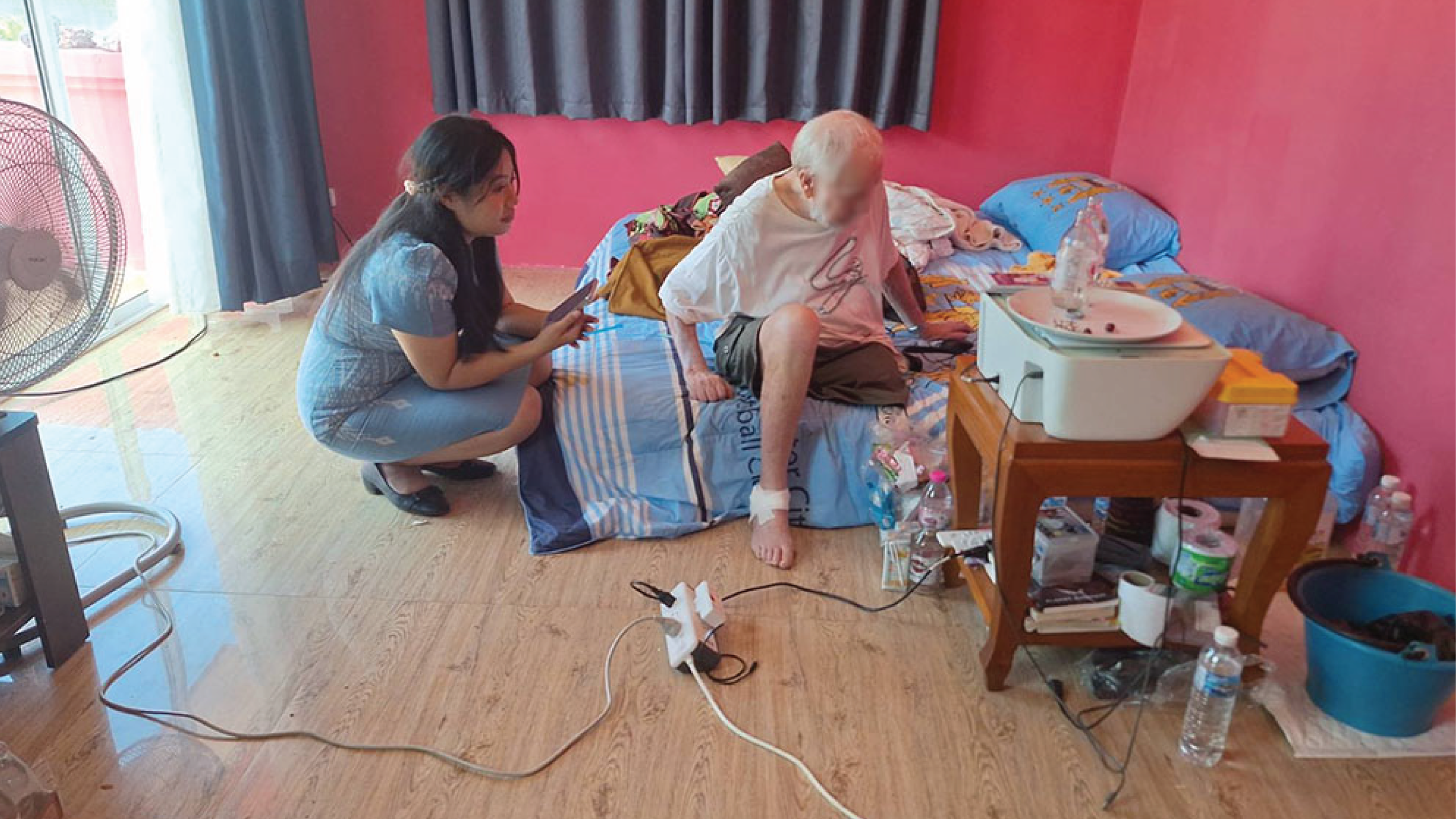
I want you to think about a man. He is real. He is not a composite. His name is Marcus and he is Australian and until recently he was living in rural Udon Thani with his Thai wife. He retired there years ago. He sold his townhouse in Bangkok for over 4 million baht and gave the money to his wife to manage their monthly expenses. His pension went into the same pot. He did what thousands of foreign men do in Thailand. He trusted the system. He trusted the person. He built a life.
Then his wife became a drug addict. The 4 million disappeared. The pension disappeared. She was taken to rehabilitation after suffering severe hallucinations and causing a scene outside the house. Marcus was left alone. He is elderly. He has limited mobility. He could not feed himself. The villagers, ordinary Thai people with very little themselves, were the ones who brought him food. Not the government. Not the embassy. Not the immigration system that had processed his visa renewals for years and taken his fees and stamped his passport and never once asked whether he would be looked after if everything went wrong. The villagers.
When the cameras arrived, Marcus was holding family photographs and asking to go home. “I don’t know if there will be problems there,” he said, “but I’d rather take the risk. I don’t have anyone here anymore.”
And when his wife came back from rehab, she walked through the door and told him to file for divorce and divide the assets before he left. The assets she had already spent.
That is what the end of the dream looks like. Not a sunset on a beach. Not a cold beer on a balcony. An old man in a rural village holding photographs, asking strangers to help him leave a country he gave decades of his life to, because the country never had any intention of giving anything back.
The Welcome That Lasts As Long As Your Money Does
Thailand wants retirees. It wants them badly. The entire visa system for older foreigners is built around one question. Do you have enough money. The retirement visa requires 800,000 baht in a Thai bank account, or a monthly income of 65,000 baht, or a combination of the two. If you have the money, you are welcome. The smile is warm. The visa is stamped. The door is open.
And for the first few years, it is everything they promised. The weather. The food. The cost of living. The healthcare that everyone talks about. The blogs and the retirement guides all say the same thing. You can live like a king in Thailand on a thousand pounds a month. And maybe for a while you can.
But nobody ever talks about what happens at the end of that story. Not the beginning. The end. When the pension does not stretch as far as it used to. When the baht strengthens against the pound or the dollar or the euro and suddenly your income buys less every month. When the cost of living rises because Thailand is not cheap anymore, not in the places foreigners actually live. When the new tax rules mean your foreign income remitted to Thailand is now potentially taxable, an extra two to three thousand dollars a year that did not exist when you moved here. When the insurance premium that was manageable at 55 doubles at 60, doubles again at 65, and becomes unaffordable at 70. When the mandatory insurance the government now requires for certain visa categories covers 400,000 baht, a sum that would not pay for a single serious operation at any private hospital in Bangkok.
Nobody talks about that part. Because that part does not sell the dream.
The Healthcare Trap That Closes In On Older Foreigners
The healthcare that sold you the dream is not what you think it is. Thailand’s private hospitals are publicly listed companies. They are on the stock exchange. They answer to shareholders. And their job is not to keep you alive. Their job is to generate profit from the process of keeping you alive. You are not a patient. You are a revenue line on a quarterly earnings call.
And you pay more than the person in the bed next to you. Not a little more. Several times more. Because you are foreign. The hospitals have different names for it. But the effect is the same. The sicker you get, the more they charge, and the less you can do about it. By the time you are 70, uninsured, and frightened, you are the most profitable kind of patient there is, because you will pay anything they ask, and you have nowhere else to go.
In 2025 alone, unpaid medical bills from foreign tourists and residents cost the Thai government over 3 billion baht. Thai public hospitals are ethically obliged to provide emergency care regardless of ability to pay. So the burden falls on the Thai taxpayer, and the hospitals respond by pricing that risk into every foreign patient’s bill. You are not just paying for your treatment. You are paying a premium for every foreigner who could not pay for theirs.
When You Cannot Pay, The System Does Not Catch You
And when you cannot pay, the system does not catch you. It drops you.
There have been documented cases of hospitals refusing to release a body until the bill was settled. A British woman died in a Thai hospital and her family could not raise the 36,000 pounds to pay the bill. The hospital initially refused to release her remains. A British man on Koh Phangan was diagnosed with a brain tumour. No insurance. A hundred-thousand-pound bill. His survival depended on a crowdfunding campaign run by strangers on the internet.
These are not rare cases. These are the ones that made the news. The ones that did not make the news are in every province. Elderly men in rented rooms in Pattaya and Chiang Mai and Hua Hin, living month to month, no insurance because no company will insure them anymore, no savings because the savings went into the house that is in someone else’s name, no plan for what happens when the body starts to fail because the plan was always: it will be fine. Thailand is cheap. I will manage.
Until you do not manage. And then you discover what you always were.
Every Exit Was Sealed Before You Knew You Needed One
But here is what nobody tells you. It is not the illness that traps you. It is not the cost. It is that by the time any of this happens, every exit has already been sealed. You cannot own the house, it is in her name. You cannot access the savings, they went into a joint account you have no legal control over. You cannot work, your visa forbids it. You cannot claim anything from the state, you are not a citizen. You cannot afford to fly home, the medical bill took what was left. You cannot even stay legally, because the moment your bank balance drops below 800,000 baht, your visa is invalid. You are not trapped by one thing. You are trapped by everything. And every single one of those traps was visible from the start. You just were not supposed to notice until it was too late.
Twenty-Five Years In Thailand And None Of It Counts
There is no safety net for foreigners in Thailand. None. You are a guest. You have always been a guest. And guests do not get to stay when they can no longer pay for the room.
You can live in Thailand for 25 years. Pay rent every month. Eat at local restaurants every day. Put stepchildren through school. Contribute to your wife’s family. Pump money into the local economy every single week for a quarter of a century. And at the end of those 25 years you have earned precisely nothing. No residency. No right to stay. No recognition. Just another visa renewal form and another bank balance check to prove you are still worth keeping.
Twenty-five years. And not a single day of it counts.
Now think about what that means. Not in the abstract. Think about the man who did all of that, who was a good neighbour, a good husband, a good customer, a net contributor to a country that welcomed him with open arms when his wallet was full, and then imagine him sitting in an immigration office being told his visa will not be renewed because his bank balance is 50,000 baht short. Imagine him being told that the 25 years do not matter. That the hundreds of thousands of baht he spent do not matter. That the only thing that matters is the number on a screen today. And if that number is wrong, he is not a resident. He is not a retiree. He is not a human being who built a life. He is an overstayer. And overstayers get deported.
The Rising Number Of Destitute Western Foreigners
The Bangkok Post reported that the number of homeless Western foreigners in Thailand is rising. The Bangkok Community Help Foundation has assisted more than 40 destitute foreigners, repatriating them because there is no Thai system to help. A foundation spokesperson described “an alarming increase in foreign nationals needing help. Many are becoming destitute, without funds and unable to return home.”
And what does the government do when it finds these men? According to Nation Thailand, due to the “Thai-state mentality,” there is no law or mechanism to help. When they are found by police, they are mostly deported.
Deported. After 25 years. That is the thank you.
The System Is Not Broken. It Was Designed This Way.
And this is the part that should make you angry. Because this is not an accident. This is not an oversight. This is a system that was designed, from the ground up, to extract maximum economic value from foreign men for as long as they are able to provide it, and then discard them the moment they cannot.
There is no path to citizenship because citizenship would mean obligation. It would mean the state would have to treat you as a person with rights, not a revenue stream with an expiry date. It would mean healthcare, welfare, legal protection, all the things that cost money. Thailand does not want that cost. Thailand wants the money you bring and none of the responsibility that should come with taking it.
The visa system is not broken. The insurance is not broken. The hospitals are not broken. Every part of the system is functioning precisely as it was designed to function. The design is extraction.
But what should really disturb you is this. While Marcus was sitting in that village waiting for someone to help him leave, the Thai government was running campaigns in his home country to recruit his replacement. New retirement visa promotions. New long-stay packages. New headlines about affordable paradise. The marketing never stops. Because the system does not need any individual foreigner to last. It needs a conveyor belt. One comes in with money. The money is spent. The man is discarded. The next one arrives. The brochure is the same. The smile is the same. The ending is the same. And nobody upstream ever has to look at what comes out the other end.
Marcus Is Not The Cautionary Tale. Marcus Is The System Working.
I want you to think about Marcus again. The man in Udon Thani with the photographs. A man who moved to Thailand, contributed to the local economy, paid his way, trusted the people around him, and ended up alone in a village being fed by neighbours because every institution that had ever taken money from him looked the other way the moment the money stopped.
That man gave more to one Thai province in his years of living there than most Thai politicians declare in their entire asset statements. And the system’s response, when he needed something back, was to start processing his deportation.
But here is the thing that should keep you awake. Marcus is not the cautionary tale. Marcus is the system working. He arrived with money. He spent the money. The money went into the Thai economy, the rent, the food, the hospital visits, the visa fees, the wife’s family, the local businesses. Thailand got everything it wanted from Marcus. Every baht was extracted. And when there was nothing left to take, the system did exactly what it was designed to do. It moved him out to make room for the next one. Marcus is not a failure of the system. Marcus is the product.
The One Question Every Foreign Man Needs To Ask
If you are a foreign man thinking about retiring to Thailand, or if you are already there and you are reading this with that familiar feeling in your stomach that tells you something is not quite right, I want you to ask yourself one question. Not whether the food is good. Not whether the weather is warm. Not whether the cost of living is manageable today. But this:
What happens when the money runs out?
Because Thailand already knows the answer. It has always known. And somewhere right now, in a village in Udon Thani or a rented room in Pattaya or a hospital bed in Chiang Mai, another Marcus is finding out.
Frequently Asked Questions
What happens to retired foreign men in Thailand when their money runs out?
They get processed out. The retirement visa requires 800,000 baht in a Thai bank account or a monthly income of 65,000 baht. The moment the bank balance drops below that, the visa becomes invalid. There is no safety net, no welfare, no path to citizenship, no recognition of years of residence or contribution. According to documented cases reported by the Bangkok Post and Nation Thailand, foreign men found destitute by police are mostly deported. The Bangkok Community Help Foundation has repatriated more than 40 destitute foreigners because there is no Thai state mechanism to help them.
Why are Thai private hospitals so expensive for foreigners?
Because they are publicly listed companies on the Thai stock exchange that answer to shareholders. Their job is to generate profit from medical treatment. Foreigners are charged several times more than Thai patients for the same procedures. In 2025 alone, unpaid medical bills from foreign tourists and residents cost the Thai government over 3 billion baht, and the hospitals price that risk into every foreign patient’s bill. By the time a foreigner is 70, uninsured, and frightened, they are the most profitable category of patient because they will pay anything and have nowhere else to go.
Can foreigners get Thai citizenship after living in Thailand for many years?
In practice, no. The path to Thai citizenship is theoretically possible but practically inaccessible for the vast majority of foreign residents. A foreigner can live in Thailand for 25 years, pay rent every month, contribute to the local economy, and accumulate no residency rights of any kind. Each year is just another visa renewal cycle and another bank balance check. There is no accumulation of standing. No recognition of contribution. No legal protection. The system is structured so that every foreign resident remains permanently a guest, dependent on continued financial proof of usefulness.
What is the retirement visa financial requirement in Thailand?
800,000 baht in a Thai bank account, or a monthly income of 65,000 baht, or a combination of the two. The bank balance must be maintained for visa renewal. The moment the balance drops below the required amount, the visa becomes invalid and the holder becomes an overstayer subject to deportation. The requirement does not adjust for years of residence, contribution to the local economy, or family ties. The number on the screen on the day of renewal is the only thing that matters.
What happens if a foreigner dies in a Thai hospital with an unpaid bill?
In documented cases, Thai hospitals have refused to release the body until the bill is settled. A British woman died in a Thai hospital and her family could not raise the 36,000 pounds owed. The hospital initially refused to release her remains. Repatriation of a body from Thailand to a Western country costs between 5,000 and 15,000 US dollars on top of the hospital bill. If travel insurance has voided coverage for any reason, the family pays. Some families cannot pay. There are documented cases of bodies sitting in Thai hospital morgues for extended periods while families fundraise or argue with insurance companies.
Why does the Thai government keep marketing retirement abroad if these cases keep happening?
Because the system does not need any individual foreigner to last. It needs a conveyor belt. One foreigner arrives with money. The money flows into the Thai economy through rent, food, hospital visits, visa fees, the wife’s family, local businesses. Eventually the money runs out. The foreigner is processed out. The next foreigner arrives. The marketing brochures continue running in his home country before the previous one has even left. The Thai state benefits from the inflow at every stage and bears no responsibility for the outflow. The conveyor belt is the design.
What should foreign men considering retirement in Thailand actually think about?
Not whether the food is good. Not whether the weather is warm. Not whether the cost of living is manageable today. The honest question is what happens when the money runs out. What happens when the pension does not stretch as far as it did. What happens when insurance becomes unaffordable. What happens when health declines and care becomes essential. What happens when the bank balance drops below 800,000 baht. The Thai system has already decided what happens in all of these cases. The foreign retiree just has not been told.
Sources
- Marcus – elderly Australian, Udon Thani, wife drug addict, destitute
https://www.khaosodenglish.com/news/2025/08/13/elderly-australian-gets-help-to-return-home-after-tragic-life-in-thailand/ - “Alarming increase” in destitute foreigners, 40+ repatriated
https://www.bangkokpost.com/thailand/pr/3233288/a-silent-crisis-the-rise-of-homeless-foreign-nationals-in-thailand - Homeless foreigners rising, “no law or mechanism to help”
https://www.nationthailand.com/in-focus/30212916 - Bangkok Post: homeless foreigners on the rise, charity warns
https://www.bangkokpost.com/thailand/politics/365343/homeless-foreigners-on-the-rise-in-thailand-charity-warns - Khon Kaen University: “foreigners’ rights not very well protected”
https://www.bangkokpost.com/thailand/politics/365343/homeless-foreigners-on-the-rise-in-thailand-charity-warns - UK woman died, hospital refused to release body until bill paid
https://www.thaiexaminer.com/thai-news-foreigners/2018/10/24/uk-man-stranded-in-thailand-facing-a-100000-medical-bill-may-be-rescued-by-crowd-funding-success/ - UK man brain tumour, £100,000 bill, crowdfunding
https://www.thaiexaminer.com/thai-news-foreigners/2018/10/24/uk-man-stranded-in-thailand-facing-a-100000-medical-bill-may-be-rescued-by-crowd-funding-success/ - Unpaid foreign medical bills 3 billion baht in 2025
https://www.travelandtourworld.com/news/article/no-insurance-no-entry-thailands-2026-crackdown-on-uninsured-travelers-and-the-push-for-sustainable-tourism/ - 450 million baht unpaid foreign medical bills (2019 figure)
https://loyaltylobby.com/2019/05/24/thailand-to-impose-mandatory-health-insurance-for-tourists-long-term-elderly-retirees-will-it-happen-this-time/ - Mandatory insurance 400,000 baht — insufficient for serious illness
https://loyaltylobby.com/2019/05/24/thailand-to-impose-mandatory-health-insurance-for-tourists-long-term-elderly-retirees-will-it-happen-this-time/ - Destitute foreigners and unpaid hospital bills — Pattaya Mail
https://www.pattayamail.com/latestnews/news/destitute-foreigners-in-thailand-and-unpaid-hospital-bills-360259 - Bumrungrad Hospital — publicly listed, Stock Exchange of Thailand
https://www.set.or.th/en/market/product/stock/quote/bh/factsheet - BDMS — 47 hospitals, publicly listed, Stock Exchange of Thailand
https://www.set.or.th/en/market/product/stock/quote/bdms/factsheet - Retirement visa: 800,000 baht or 65,000 baht/month requirement
https://www.thaiembassy.com/travel-to-thailand/thai-immigration-crackdowns-what-foreigners-need-to-know-this-year - New tax rules: foreign income taxable, extra $2,400–3,600/year
https://thethaiger.com/guides/thailand-still-expat-favourite-new-rules - Insurance drops elderly, pre-existing conditions excluded
https://www.expatforum.com/threads/retiring-to-thailand-2025.1551177/ - “Rent the money” scam — black market visa fraud
https://library.siam-legal.com/the-rent-the-money-retirement-visa-scam-in-thailand/ - Mandatory insurance for 2026, linked to ETA system
https://www.travelandtourworld.com/news/article/no-insurance-no-entry-thailands-2026-crackdown-on-uninsured-travelers-and-the-push-for-sustainable-tourism/ - “Thai-state mentality” — destitute foreigners mostly deported
https://www.nationthailand.com/in-focus/30212916 - Retirement visa compliance tightening 2026
https://www.lexology.com/library/detail.aspx?g=4f603d29-f6a3-41f4-8ecd-0176d6089615