The Quiet Piece Of Land Outside Chiang Mai That Taught Me The System
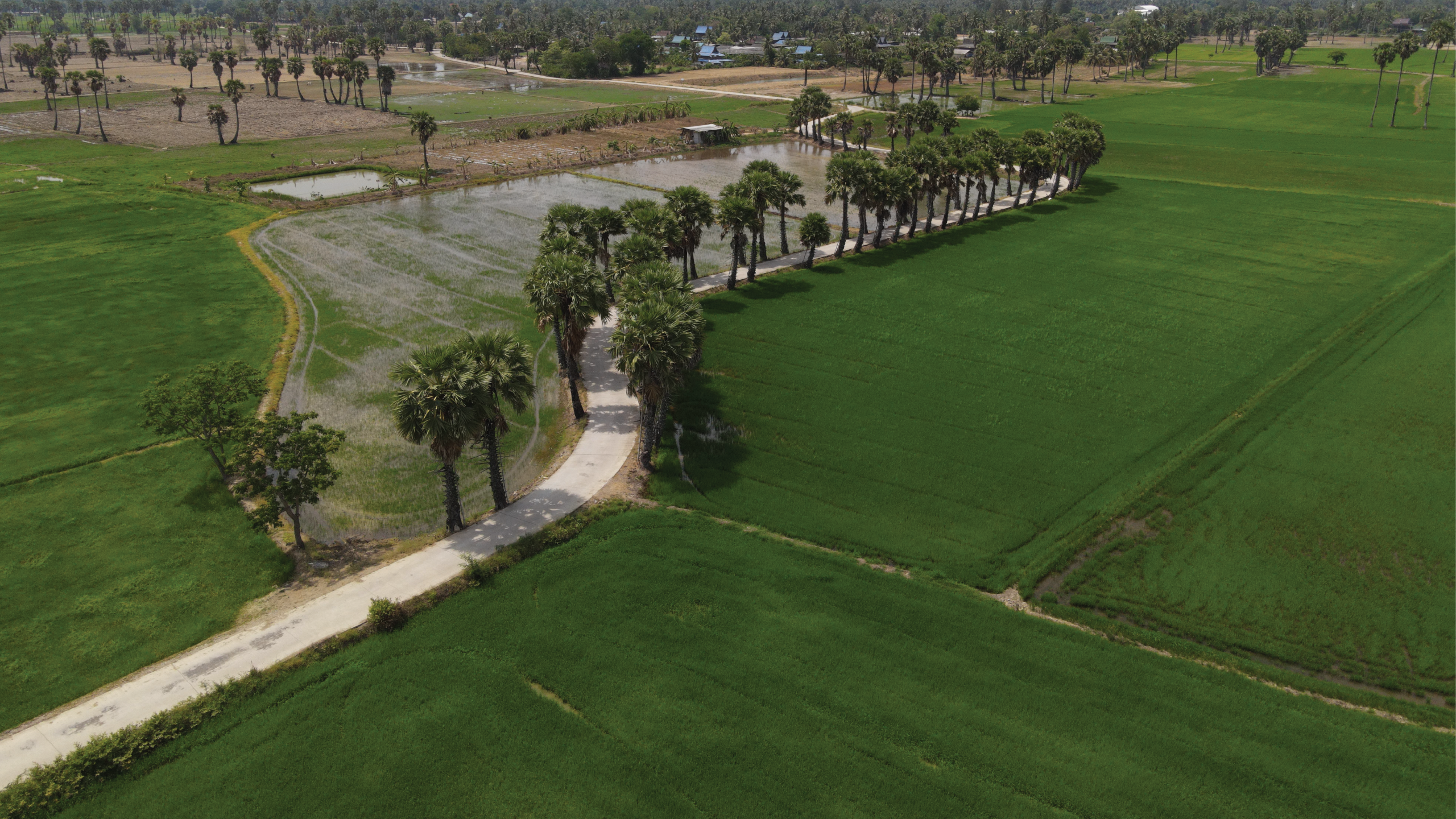
Seven years ago I was looking at land in Thailand. Not to buy, I am a foreigner, I am not allowed to buy land, as the system never tires of reminding me. But my wife is Thai. And we had been looking together for a plot close to her home town, about an hour and a half out of Chiang Mai city, still in the province. I wanted somewhere far enough from the road that you couldn’t hear the traffic. Far enough from the neighbours that you wouldn’t be woken at four in the morning by someone burning a pile of plastic next door. Somewhere quiet. Somewhere green. Somewhere with enough space that you are not living inside someone else’s kitchen.
And I found it. A beautiful piece of land. Set back from everything. Trees. Space. Quiet. Perfect. Fifteen rai. A hundred thousand baht per rai. And then I looked at the title.
Sor Tor Gor. Degraded national reserve forest land. Issued by the Forest Department. It means if someone is living on it they have the right to reside there. But they cannot sell it. They cannot mortgage it. They cannot transfer it to anyone except a direct heir. It is land that exists in a legal nowhere, people live on it, farm on it, raise families on it, but in the eyes of the Thai state it belongs to the forest. People do buy and sell it, money changes hands all the time, but none of it is legally recognised. There is no registration at the Land Office. No enforceable contract. You are paying real money for a gentleman’s agreement on land the state says belongs to the forest, and if it goes wrong you have nothing.
The people on it are, legally speaking, guests on their own land. Guests who have been there for generations. And the forest it supposedly belongs to is gone. It has been gone for decades. The land is just land. But the paperwork says forest, and in Thailand the paperwork is more real than the ground you are standing on.
That was my introduction to the Thai land system. And the deeper I looked, the angrier I got.
Why Rural Thais Are Crammed Together While The Quiet Land Has No Title
Because here is what nobody tells you. In rural Chiang Mai, and across the Thai countryside, people are crammed together on small plots of properly titled land. Chanote land. Full title. That is where the houses sit. On top of each other. Close enough to hear every dog, every motorcycle, every conversation, every karaoke session at two in the morning. But the land those same people farm, their rice paddies, their orchards, their family plots, is scattered across the surrounding area in dozens of small parcels. And most of those parcels have no proper title. They have a Nor Sor 3. Or a Sor Kor 1. Or a Sor Tor Gor. Or nothing at all except a family’s word that they have worked the land since before anyone was writing anything down.
The nice land, the quiet land, the land with space and trees and nobody burning plastic at dawn, is almost never Chanote. At least not in the part of rural Chiang Mai where I spent five years of my life. It is degraded forest. Agricultural reform. Lesser-titled. Untitled. Land that people have lived on for a hundred years but that the state has never formally acknowledged as theirs. Land you cannot buy. Cannot build on legally. Cannot secure a loan against.
And this infuriated me. At the time, for all the wrong reasons. I thought it was incompetence. I thought the system was broken. I thought someone had just never got around to sorting the paperwork out. But it is not incompetence. It is not a backlog. It is not an oversight. It is much, much worse than that.
The state is not protecting the forest. The forest is already gone. The system was never designed to give ordinary people ownership of anything. It was designed to keep them exactly where they are, living on land they cannot prove is theirs, while the people at the top of the system take whatever they want.
The Hierarchy Of Thai Land Titles And Why It Matters
Thailand has a hierarchy of land documentation, and it matters more than almost anything else in this country. At the top is a Chanote, full freehold title, the gold standard, the only document that gives you real ownership. Below that are various lesser titles, confirmed possession, unconfirmed possession, notifications that someone once told the government they were using the land. Each step down the ladder means fewer rights, less security, and less ability to sell, mortgage, or prove that the land is yours. And at the bottom, there is nothing, land that families have lived on for generations that has never been surveyed, never been registered, and never been formally acknowledged by the state. The Sor Tor Gor land I described at the start sits somewhere near the bottom. Millions of Thais are in the same position or worse.
They do not formally own the land they live on. Not because they stole it. Because the state never got around to giving them the paperwork. Or because the state drew a line on a map after the families were already there and declared the land a forest reserve, a national park, or agricultural reform land, categories that transformed the people living on it from residents into criminals overnight.
And here is where it gets ugly. Because while ordinary Thais struggle to get a Chanote for the land their grandparents farmed, the people at the top of the system have spent decades stealing land on a scale that makes a foreigner’s 49-percent company structure look like a parking ticket.
How The Richest Thais Have Systematically Stolen Land Reserved For The Poor
In Thailand, there is a category of land called Sor Por Kor. It is agricultural reform land, allocated specifically to poor and landless farmers. By law, it cannot be sold. It cannot be transferred to anyone except direct heirs. It cannot be mortgaged. It cannot be used for anything other than farming. It is land the state set aside for the people who needed it most.
And it has been stolen. Systematically. For decades. By the richest and most connected people in the country.
Around Khao Yai National Park, one of the most famous parks in Thailand, a UNESCO World Heritage site, investigators found 17 title deeds for land inside the park held by resort owners and politicians. Eighty to ninety percent of the deeds were found to have been illegally acquired. Over 600 rai of fraudulent titles were in the process of being scrapped. One of the country’s most prominent corporations, the Farm Chokchai Group, was found to have encroached on Sor Por Kor land, occupied public areas, and physically blocked the entrance to a village. The majority of its ownership papers were illegally issued.
Prayudh Mahagitsiri, a coffee tycoon and Forbes-listed billionaire, was sentenced to 24 years in prison for colluding with land officials to fraudulently expand title deeds onto forest reserve and Sor Por Kor land to build the Mountain Creek Golf Resort. It was his second conviction. He had already been sentenced to two years and eight months for the same kind of offence in Krabi. A billionaire. Two convictions. Golf courses built on land meant for the poorest farmers in the country.
Luxury resorts. Golf courses. Housing estates. A famous television news anchor’s property. A mega-temple’s 900-rai meditation centre. All found on land that was supposed to be reserved for people who had nothing. In one case in 2026, a temple abbot was caught building an entire village of 500,000-baht units and marketing a hilltop Buddhist park on Sor Por Kor land, agricultural reform land that by law can only be used for farming.
Since 2020, more than twenty luxury mansions and resorts have been demolished in national parks across the Western Forest Complex. The owners included retired military generals and prominent businesspeople. But prosecution almost never follows demolition. The public prosecutor has tended to view these occupations as “lacking intention to encroach.” The buildings come down. The owners walk free.
In 2018, it emerged that the Thai government was building a luxury housing project for judicial officials on the slopes of Suthep Mountain in Chiang Mai, destroying dense forest in the process. The state was building mansions for judges on forest land while simultaneously evicting villagers from their homes on exactly the same legal grounds. The project was cancelled after public outcry. But the fact that it was approved in the first place tells you everything you need to know about who the land system actually serves.
The Ordinary Thais Who Pay The Price For All Of This
Because while the powerful steal land and face demolition notices at worst, the poor are criminalised for existing on land their families have lived on for generations.
When the military junta seized power in 2014, it issued NCPO Order 64, supposedly to reclaim stolen forest land from commercial developers. In practice, it was used overwhelmingly against the poorest and most vulnerable communities in the country. People across Thailand appealed to the National Human Rights Commission because the order designed to target the rich was being used to evict the poor.
In Sai Thong National Park, fourteen land rights defenders were prosecuted. Villagers were sued for trespassing on land their families had occupied long before the park boundaries were drawn. The court imprisoned them and ordered them to pay damages to the state. To the state. For living on land the state drew a circle around after the fact.
In Tha Woe, Chaiyaphum province, families were called to a meeting with security forces about a land dispute. They were told to sign a form proving their attendance. The form turned out to be a document acknowledging their “consent” to leave. Nine families were evicted. Their crops were destroyed.
Grandfather Khaw-Ee Meemi was a hundred years old when he testified in court. He told the judge he was born on the land in 1911. That was thirty years before Thailand’s first forestry law was even written. Fifty years before the first National Park law existed. He was born there. His parents were born there. The forest was in front of him when he opened his eyes for the first time. The state evicted him anyway. They burned his house.
That is the system. A hundred-year-old man, born on the land before any of the laws existed, loses his home to the state. A billionaire builds a golf course on land reserved for the poorest farmers in the country and gets away with it for years before anyone notices.
Billy: The Land Rights Activist Whose Bones Were Found In An Oil Drum
Khaw-Ee’s grandson was a man called Porlajee Rakchongcharoen. Most people knew him as Billy. He was a Karen community activist. He fought for the land rights of the Karen indigenous people who had lived in and around Kaeng Krachan National Park, Thailand’s largest, for generations.
In 2011, the park chief, Chaiwat Limlikit-aksorn, led a team that burned the homes and rice barns of over twenty Karen families inside the park. Billy helped the families file a lawsuit against Chaiwat and the Department of National Parks. The case was ongoing.
On April 17th 2014, Billy was stopped at a park checkpoint by Chaiwat and four of his men. They said he was in illegal possession of wild honey. He was detained. He was never seen alive again.
For five years, nobody knew what happened. Then in 2019, divers found bone fragments inside an oil drum at the bottom of a reservoir near the park office. The bones had burn marks and cracks. DNA testing matched them to Billy’s mother. His remains had been burned in an oil drum and dumped in a waterway near the office of the man who arrested him. He was due to testify against that man the very next day.
Chaiwat was charged with murder. In September 2023, the court acquitted him. Insufficient evidence. He was sentenced to three years for dereliction of duty, for failing to report Billy’s arrest. His three subordinates were acquitted entirely. The court said they were following orders. Draw your own conclusions.
And here is the detail that should make your blood run cold. Despite everything, the burning of Karen homes, the allegations of murder, the bone fragments in the oil drum, Chaiwat was not fired. He was promoted. First to head the national “Tiger Corps” wildlife unit. Then to director of the government’s national park division. The man accused of murdering a land rights activist was put in charge of more parks.
Billy’s wife, Pinnapa, said: “I did not get the justice that I deserve. I’ve been fighting this case for nine years. And I think the courts in Thailand are not very fair.”
Of more than ninety enforced disappearance cases recorded by the United Nations in Thailand, only one other case involving officials has ever gone to trial. Getting these cases to court, one human rights lawyer said, has been “almost impossible.”
Billy is not the only one. Den Khamlae, a community leader in Chaiyaphum fighting against industrial eucalyptus plantations on farmers’ land, disappeared in 2016. His wife was jailed for supporting the land defence.
The Rule Nobody Says Out Loud
Thailand tells foreigners they cannot own land. It tells them this is about sovereignty. About protecting Thai identity. About keeping Thai resources in Thai hands.
But the biggest land thieves in Thailand are Thai. Billionaires who build golf courses on farmland allocated to the poor. Generals whose luxury mansions sit inside national parks. Temples that swallow hundreds of rai of agricultural reform land. Politicians whose families hold title deeds on forest that is supposed to belong to everyone. And a state that draws park boundaries around communities that have existed for centuries and then calls the people who live there criminals.
The system is not designed to protect ordinary Thais. Ordinary Thais are the primary victims of it. They are the ones crammed onto small plots of Chanote land while the fields they farm have no title at all. They are the ones living on Sor Tor Gor land, degraded forest that the state will not acknowledge as theirs even though the forest disappeared decades ago and the families have been there for a century. They are the ones evicted when a park boundary moves. They are the ones prosecuted for trespassing on land their grandparents were born on. They are the ones whose leaders end up as bone fragments in an oil drum when they fight back.
And the people who actually steal land, who build resorts on protected forest, who fraudulently title thousands of rai, who burn indigenous homes the same year they push for a World Heritage listing, face demolition orders at worst and promotions at best.
I went looking for a quiet piece of land outside Chiang Mai. I found a Sor Tor Gor plot. Degraded forest land. Beautiful. Peaceful. The family on it had been there for generations. They cannot sell it. They cannot mortgage it. They cannot prove it is theirs in any way the state respects. The forest is gone. The land is just land. But the paperwork says forest, and in Thailand the paperwork is more real than the ground you are standing on.
Meanwhile, a billionaire builds a golf course on farmland reserved for the poorest people in the country. A general retires into a luxury villa inside a national park. A temple swallows 900 rai of agricultural reform land and sells meditation condos. A park chief burns Karen homes, the activist who tried to stop him ends up as bone fragments in an oil drum, and the park chief gets promoted.
And if you are a foreigner who wants to buy a house for your family, the system looks you in the eye and says: this land is not for you. Keep Thailand Thai.
They are not keeping it Thai. They are keeping it theirs. And the land you are standing on, wherever you are in this country, probably has a story worse than anything I just told you. They just made sure nobody wrote it down.
Frequently Asked Questions
What are the different types of land title in Thailand?
Thailand has a hierarchy of land documentation. At the top is the Chanote, full freehold title and the gold standard, the only document that gives real ownership and full rights to sell, mortgage, or build legally. Below that are lesser titles including Nor Sor 3 Gor (confirmed possession), Nor Sor 3 (notice of possession), and Sor Kor 1 (older notification of land use). Below those is Sor Por Kor (agricultural reform land for poor farmers, which cannot legally be sold) and Sor Tor Gor (degraded national reserve forest land where residents have the right to live but cannot sell, mortgage, or transfer outside of direct heirs). At the bottom is unregistered land that families have lived on for generations with no formal state recognition at all.
What is Sor Tor Gor land?
Sor Tor Gor is degraded national reserve forest land issued by the Forest Department. People living on it have the right to reside there but cannot sell it, cannot mortgage it, and cannot transfer it to anyone except a direct heir. It is land that exists in a legal nowhere. Families live, farm, and raise children on it, but in the eyes of the Thai state it belongs to the forest. Money changes hands informally all the time but none of it is legally recognised. There is no registration at the Land Office and no enforceable contract. The forest the paperwork refers to has often been gone for decades, but the paperwork is more real than the ground.
What is Sor Por Kor land?
Sor Por Kor is agricultural reform land allocated by the Thai state specifically to poor and landless farmers. By law it cannot be sold, cannot be transferred except to direct heirs, cannot be mortgaged, and cannot be used for anything other than farming. Despite this, it has been systematically taken over for decades by some of the richest and most connected people in Thailand. Luxury resorts, golf courses, housing estates, a temple’s 900-rai meditation centre, and a coffee tycoon’s golf resort have all been built on Sor Por Kor land that was supposed to be reserved for the poor.
Who is Prayudh Mahagitsiri?
A Thai coffee tycoon and Forbes-listed billionaire who was sentenced to 24 years in prison for colluding with land officials to fraudulently expand title deeds onto forest reserve and Sor Por Kor land to build the Mountain Creek Golf Resort. It was his second conviction for the same kind of offence. He had previously been sentenced to two years and eight months in Krabi for similar fraud. The case is one of the clearest demonstrations of the architecture of Thai elite land theft: agricultural reform land allocated to poor farmers, fraudulently titled, and converted into a golf course for the wealthy.
What happened around Khao Yai National Park?
Investigators found 17 title deeds for land inside Khao Yai National Park, a UNESCO World Heritage Site, held by resort owners and politicians. Between 80 and 90 percent of the deeds were found to have been illegally acquired. Over 600 rai of fraudulent titles were in the process of being scrapped. The Farm Chokchai Group, one of Thailand’s most prominent agricultural corporations, was found to have encroached on Sor Por Kor land, occupied public areas, and physically blocked the entrance to a village, with the majority of its ownership papers illegally issued.
Who was Billy Porlajee Rakchongcharoen?
Billy was a Karen community land rights activist who fought for the rights of indigenous Karen communities living in and around Kaeng Krachan National Park, Thailand’s largest. After park chief Chaiwat Limlikit-aksorn led the burning of over 20 Karen families’ homes in 2011, Billy helped the families file a lawsuit against him. On April 17, 2014, Billy was stopped at a park checkpoint by Chaiwat and four of his men, allegedly for possessing wild honey, and was never seen alive again. In 2019, bone fragments were found in an oil drum at the bottom of a reservoir near the park office, with DNA matching Billy’s mother. He had been due to testify against Chaiwat the next day.
What happened to the park chief who detained Billy?
In September 2023, Chaiwat Limlikit-aksorn was acquitted of murder by the Thai court on grounds of insufficient evidence. He was sentenced to three years for dereliction of duty for failing to report Billy’s arrest. His three subordinates were acquitted entirely on the grounds that they were following orders. Despite the allegations of murder, the bone fragments in the oil drum, and the burning of Karen homes, Chaiwat was not fired. He was promoted. First to head the national Tiger Corps wildlife unit. Then to director of the government’s national park division.
What is NCPO Order 64?
A 2014 order issued by the National Council for Peace and Order (the Thai military junta) supposedly designed to reclaim forest land from commercial developers. In practice, it was used overwhelmingly against the poorest and most vulnerable communities in Thailand, evicting villagers and indigenous groups from land their families had lived on for generations. People across Thailand appealed to the National Human Rights Commission because the order designed to target the rich was being used to evict the poor.
What was the Chiang Mai Suthep Mountain judicial housing controversy?
In 2018, it emerged that the Thai government was building a luxury housing project for judicial officials on the slopes of Suthep Mountain in Chiang Mai, destroying dense forest in the process. The state was building mansions for judges on forest land while simultaneously evicting villagers from their homes on exactly the same legal grounds. The project was cancelled after public outcry, but the fact that it was approved in the first place demonstrated who the Thai land system actually serves.
Why are foreigners told they cannot own land in Thailand?
The official justification is sovereignty, Thai identity, and keeping Thai resources in Thai hands. The slogan most often used to defend the restriction is “Keep Thailand Thai.” The reality, when traced through the documented cases of Sor Por Kor land theft, national park encroachment, and the disappearance of land rights activists, is that the system does not keep land Thai. It keeps land in the hands of the small elite who already control most of the country’s titled property. Ordinary Thais are the primary victims of the same system that is used to exclude foreigners. The slogan protects the elite, not the nation.
Sources
1. Sor Por Kor land rules, cannot be sold or transferred
https://www.bangkokpost.com/thailand/general/942521/
2. Khao Yai: 17 title deeds held by resorts/politicians, 80-90% illegal
https://www.bangkokpost.com/thailand/general/942521/
3. Farm Chokchai Group encroachment, illegally issued papers
https://www.bangkokpost.com/thailand/general/942521/
4. Prayudh Mahagitsiri sentenced 24 years, second conviction
https://www.nationthailand.com/news/general/40049469
5. 20+ luxury mansions demolished in national parks since 2020
https://news.mongabay.com/2022/03/thai-authorities-demolish-resorts-in-parks/
6. Owners include retired generals and businesspeople
https://news.mongabay.com/2022/03/thai-authorities-demolish-resorts-in-parks/
7. Prosecutor views occupations as “lacking intention”
https://news.mongabay.com/2022/03/thai-authorities-demolish-resorts-in-parks/
8. Suthep Mountain judicial housing project on forest land
https://www.wrm.org.uy/bulletin-articles/law-crime-and-deforestation-in-the-thai-countryside
9. NCPO Order 64 used against poor villagers
https://www.wrm.org.uy/bulletin-articles/law-crime-and-deforestation-in-the-thai-countryside
10. Sai Thong: 14 defenders prosecuted, imprisoned, ordered to pay state
https://www.tcijthai.com/news/2019/9/english/9373
11. Tha Woe: tricked into signing consent form, 9 families evicted
https://hardstories.org/stories/land-rights/in-thailand-forests-are-encroaching-on-the-people
12. Grandfather Khaw-Ee born 1911, evicted, house burned
https://www.wrm.org.uy/bulletin-articles/law-crime-and-deforestation-in-the-thai-countryside
13. Billy (Porlajee Rakchongcharoen) full case
https://en.wikipedia.org/wiki/Murder_of_Porlajee_Rakchongcharoen
14. Bone fragments in oil drum, DNA match
https://www.voanews.com/a/thai-park-officers-acquitted-of-murder-of-indigenous-rights-activist-/7288880.html
15. Chaiwat acquitted of murder, 3 years dereliction
https://www.bangkokpost.com/thailand/general/2654350/
16. Chaiwat promoted to director of national parks
https://www.hrw.org/news/2020/02/03/thailand-charges-dropped-activists-murder
17. Billy’s wife quote: “courts in Thailand are not very fair”
https://www.voanews.com/a/thai-park-officers-acquitted-of-murder-of-indigenous-rights-activist-/7288880.html
18. 90+ disappearances recorded by UN, one other trial
https://www.voanews.com/a/thai-park-officers-acquitted-of-murder-of-indigenous-rights-activist-/7288880.html
19. Den Khamlae disappeared, wife jailed
https://www.wrm.org.uy/bulletin-articles/law-crime-and-deforestation-in-the-thai-countryside
20. Freedom Beach Phuket raid 2025
https://www.bangkokpost.com/thailand/general/3229150/
21. Temple abbot selling units on SPK land 2026
https://www.bangkokpost.com/thailand/general/3203000/
22. Forest cover dropped from 50% (1970s) to 32% (2020)
https://news.mongabay.com/2022/03/thai-authorities-demolish-resorts-in-parks/
23. Government plans 155 national parks covering 45% of territory
https://www.tcijthai.com/news/2019/9/english/9373
24. Phu Thap Boek: 64 resorts bulldozed
https://www.bangkokpost.com/opinion/opinion/1987963/