The Country Almost Nobody Talks About When They Talk About Southeast Asian Expat Destinations
There is a country in Southeast Asia that almost never appears in the standard expat-destination conversation. It is not Thailand. It is not the Philippines. It is not Vietnam, not Malaysia, not Indonesia, not Cambodia, not Burma. It is the small landlocked country between all of them, with a population of around seven and a half million people, a French colonial heritage that almost nobody outside the region acknowledges, and a quiet, slow, fundamentally unhurried character that has, against considerable odds, survived the past three decades of regional transformation in a way that the better-known destinations have not.
That country is Laos. And I want to make a particular argument about Laos in this article. Not the usual argument about its scenery or its food or its temples, though all of those things are real. The argument I want to make is that Laos is missing one piece of policy infrastructure that, if it existed, could transform the relationship between the country and the Western foreign community, and that the absence of that piece has been preventing Laos from becoming what it could be for a generation. The country needs a proper long-stay visa for Western foreigners. And if it builds one, the upside for Laos could be substantial in ways that, I think, deserve to be talked about honestly rather than buried under the noise of louder Southeast Asian stories.
Let me explain what I mean.
What Laos Actually Has, And What It Lacks
The current visa landscape in Laos is, in operational terms, workable but ad hoc. The country has no formal retirement visa equivalent to those operated by Thailand, the Philippines, Malaysia, or Indonesia. The most common long-stay solution is the LA-B2 business visa, sponsored through a Lao agent or company, issued for three, six, nine, or twelve months and renewable indefinitely as long as the sponsor maintains the paperwork and the renewal fees are paid. The arrangement is, by general practitioner accounts, more straightforward than the Thai retirement extension at the level of financial requirements, with no published income or savings threshold imposed by the sponsoring company.
There is a Lao Digital Immigration Form that launched on the first of September 2025 at selected international checkpoints, and the rollout to further crossings is ongoing. There are tourist visas of thirty to sixty days, extendable up to ninety. There are work permits tied to employment. There is a spouse visa for foreigners married to Lao citizens, though the marriage registration process is long and bureaucratic. The processing time to obtain stable long-stay or residency status, with a sponsor or investment relationship in place, runs around four to ten weeks. From scratch it can stretch to three to six months or longer.
What Laos does not have, and what every other major Southeast Asian destination has built over the past two decades, is a formal, transparent, government-issued long-stay visa specifically designed for Western retirees and long-term foreign residents who want to live in the country on their own terms, with their own funds, without needing to attach themselves to a Lao sponsoring company that has, at best, a tangential relationship to their actual reason for being there.
This is the gap I want to talk about, because it is both the reason that Western foreigners have not moved to Laos at the rate they have moved to other Southeast Asian countries, and the reason that, in my honest view, Laos is missing out on one of the easiest and most beneficial economic opportunities it has in front of it.
Why The Sponsor Model Is Not The Right Solution
The sponsored business visa is a workaround, not a solution. The Western foreigner who is using a Lao agent to maintain his LA-B2 visa is, in legal terms, on a business visa that he is not actually using for business. He is paying a fee to a sponsor he does not need, to maintain a status that does not match what he is actually doing in the country, in order to live in Laos on terms that the country has never formally acknowledged.
This is fine, as far as it goes. The arrangement works for those willing to engage with it. But it is the kind of arrangement that selects against the people Laos would most benefit from attracting. The Western retiree with a settled pension, who has done his research, who is comparing destinations on the basis of how legible and how stable the framework is, is going to look at the Lao sponsored-visa setup and notice that it depends on a private sponsor whose reliability he cannot fully verify in advance, that the renewal mechanics depend on the sponsor continuing to operate, that the legal status he is paying for does not match the activity he is actually conducting, and that the relationship he is entering with the Lao state is mediated entirely through an intermediary he has paid to play a role in his life that is, structurally, not how a respectable framework should work.
He will, in most cases, conclude that the alternative destinations have done a better job of building the legal architecture for the kind of life he is trying to live, and he will go to one of them instead. Thailand has built it, however badly the Thai state has been tightening it in recent years. Malaysia has built it through MM2H. The Philippines has built it through the SRRV. Indonesia has built it through the Second Home Visa and the Retirement KITAS. Vietnam is moving toward formalising long-stay options. The countries that have built the proper architecture are the countries that have attracted the proper Western retirement and long-stay community. Laos, by leaving this gap unfilled, has selected for either the determined-and-resourceful foreigner who is willing to work around the system, or the marginal foreigner who has nowhere better to go. The settled, professional, capital-bringing Western retiree, the kind of resident every developing economy in Asia is competing for, has gone elsewhere.
What A Proper Long-Stay Visa Would Look Like
I think it is worth describing, briefly, what a proper Lao long-stay visa for Western foreigners would actually involve, because the absence of this framework is the entire issue, and there is no reason in principle the country could not build one without much difficulty.
The visa would be a formal, government-issued, multi-year residence permit, applied for directly through Lao consulates and processed by the Lao Ministry of Foreign Affairs rather than mediated through private sponsors. It would carry a transparent financial qualification, comparable to the Thai or Malaysian models, perhaps a deposit or a verified monthly pension income at a level that matches the country’s actual cost of living. It would carry a reasonable validity period, perhaps five years renewable, with the option of upgrading to a longer-term residence permit after sustained residence. It would carry no work rights by default, like the Thai retirement extension, but with the option to apply for a work permit separately if needed. It would carry the right to lease property and to conduct ordinary banking and financial activities, with the right to purchase property emerging at some defined point of residence as the country chose. It would not require attachment to a Lao sponsoring company. It would not require the resident to pretend his retirement was a business activity. It would not require an annual visit to an agent whose reliability he is dependent on. It would simply give him the right to live in Laos on stated terms, for stated reasons, with the stated approval of the Lao state.
This is not a complicated piece of policy. The legal architecture exists in every neighbouring country in some form. The administrative capacity required is well within what the Lao Ministry of Foreign Affairs has already demonstrated in other categories. The political will is the only thing that has been missing, and the political will is the part that, I want to argue, would actually be in the interests of the Lao state to find.
Why This Would Actually Benefit Laos
I want to be specific about why I think a proper long-stay visa would benefit Laos, because the standard objection to opening up to foreign retirees is that it produces gentrification, price distortion, and the kind of cultural friction that has played out badly in other Southeast Asian destinations. I take those objections seriously, and I want to address them directly.
Laos is, in 2026, in a genuinely difficult economic position. The country’s public debt is somewhere around ninety-four per cent of GDP, down from a peak of one hundred and sixteen per cent in 2022, with cumulative deferred debt service to China since 2020 totalling around three and a quarter billion US dollars, equivalent to around nineteen per cent of 2025 GDP. The kip went through a serious currency depreciation crisis between 2022 and 2024, with inflation peaking at forty-one per cent in February 2023. The currency has since stabilised and inflation has come down to single digits, but the underlying vulnerability remains. The country is structurally dependent on Chinese loans, Chinese investment, and Chinese-led infrastructure projects, most notably the Laos-China Railway that connects Vientiane to Kunming and that has done more to integrate Laos into the Chinese economic sphere than into any other regional framework.
The country needs diversification of its foreign economic relationships. It needs sources of foreign currency that do not come with the strings attached to Chinese state lending. It needs reasons for non-Chinese capital to flow into the country in ways that develop the local economy rather than building infrastructure that primarily serves the Chinese export network. And one of the cleanest, simplest ways to attract a steady inflow of foreign currency that is denominated in dollars, pounds, euros, and Australian dollars rather than in renminbi, is to attract a population of Western foreign retirees and long-stay residents who are bringing in their pensions and savings from outside the region.
The numbers do not need to be enormous to be meaningful. Even ten or twenty thousand Western foreigners, each bringing in a pension of fifteen hundred to three thousand dollars a month, paying rent in Lao properties, eating in Lao restaurants, employing Lao service staff, and using Lao banks for their daily financial life, would represent a substantial inflow of stable, predictable, non-Chinese foreign currency into the Lao economy. Multiply by twelve months and the annual figure becomes meaningful in the context of an economy whose total GDP is around seventeen billion dollars. The cumulative effect, over a decade, would be the kind of structural diversification of foreign economic relationships that Laos has been trying to engineer through every other available mechanism and that has been visibly difficult to achieve through any of them.
The Lao Character Is Suited To This In A Way That Other Countries Are Not
There is also a softer point that deserves saying, and that I want to make carefully because it is the part of the argument that the country itself would have to decide whether to accept.
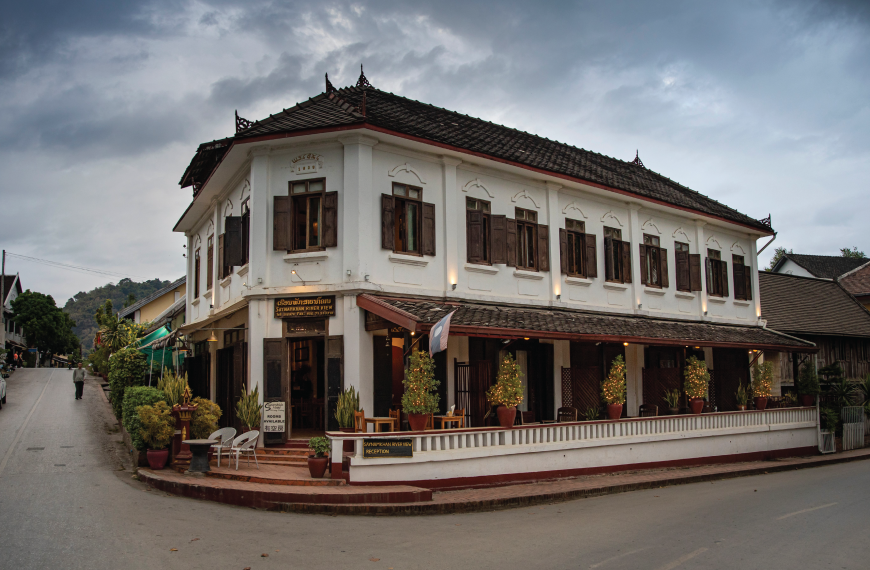
The Lao national character is, in my honest observation across the years, particularly well suited to hosting the kind of Western foreigner who has been driven out of Thailand and the Philippines and the more aggressive parts of Southeast Asia. The Lao tradition is unhurried. The communication style is indirect. The hospitality is genuine and not transactional in the way that has come to dominate the major Thai tourist zones. The country has a particular quality of seriousness about its own culture, anchored in the Theravada Buddhist tradition that still organises daily life in a way that has been progressively diluted in Bangkok, Phnom Penh, and Yangon. The historical heritage is intact in Luang Prabang in a way that the UNESCO World Heritage designation has so far protected. The pace of life is slow in a sense that the Western foreigner of the kind that Laos would benefit from attracting is genuinely seeking.
These are qualities that would survive a controlled, formal Western retiree influx in the way that they have not survived in the Thai or Cambodian equivalents, because the Lao political structure has historically been more willing to manage the pace of foreign engagement with its own society than its neighbours have. The Lao state is not going to allow Vang Vieng to become Canggu, because the Lao state has different instincts about what it wants its country to be. The Western foreigners who would come on a properly designed long-stay visa would be coming into a country whose government has the will and the institutional capacity to manage the pace of their integration, and the Western foreigners themselves would be drawn from the segment of the long-term foreign community in Southeast Asia that has been progressively looking for somewhere quieter, slower, and more recognisable as actual Southeast Asia rather than the over-developed expat zones the region has produced elsewhere.
The Lao state would, in functional terms, get to select for the kind of Western foreigner it actually wants. The ones who are tired of the tightening visa systems in Thailand. The ones who have watched what Bali has become and have decided they want nothing to do with it. The ones who are looking for a quieter base, a lower cost of living, a slower pace, and the kind of cultural depth that the better-known destinations have largely lost. That is a self-selecting community, and it is a community Laos would benefit from rather than be damaged by.
What Laos Would Not Become
I want to be honest about what a long-stay visa for Western foreigners would not do, because the cautionary examples from the rest of the region are real and the Lao government has every reason to be careful.
It would not turn Laos into Bali. Bali is what happens when a destination is opened to the influencer and wellness-retreat demographic at scale, with no enforcement capacity, in a foreign-tourism economy that is allowed to grow faster than the regulatory framework can keep up with. Laos has different state capacity and a different cultural disposition and a different starting point. The country has demonstrated, repeatedly, that it can move slowly when it wants to.
It would not turn Vientiane into Bangkok. Bangkok is what happens when a primate city becomes the engine of a national tourism economy across half a century. Vientiane is structurally not on that trajectory and has not been built for that role.
It would not turn Luang Prabang into Siem Reap. Siem Reap has been allowed to spread outward from Angkor Wat into a hotel-and-restaurant economy that has progressively crowded out the original character of the town. Luang Prabang has been protected by the UNESCO World Heritage framework and by the Lao planning authorities in a way that has so far prevented the same outcome.
A properly designed Lao long-stay visa would attract a small, professional, settled Western retirement and long-stay community over a period of years rather than a sudden surge. It would integrate with the existing Lao tourism economy gradually. It would provide the kind of slow, predictable, diversified foreign currency inflow that the Lao economy actually needs. And it would do this without creating the kinds of distortions that have damaged the cultural and physical environment of the destinations that opened too fast.
The Strategic Case For Laos To Move On This Now
The strategic case for Laos to build a proper long-stay visa framework now, rather than waiting another decade, is that the Western expat community in Southeast Asia is in active motion. The structural tightening in Thailand that I have written about extensively is producing a steady outflow of Western long-term foreigners who are looking for somewhere else to go. The Philippines has become more expensive, as I have also written about. Vietnam is improving its visa offering but has its own structural questions. Cambodia’s relationship with Chinese capital has changed the character of the country in ways that have unsettled the long-term Western community there. Malaysia and Indonesia are credible alternatives but operate at price points that not every retiree can match.
There is, in 2026, a meaningful pool of Western foreigners actively looking for a new base in Southeast Asia. They have means. They have decided they want to stay in the region rather than return to declining Western countries. They are choosing between the available destinations on the basis of what is on offer. And the country that builds the right framework first, with the right terms, with the right cultural disposition to actually welcome them, will capture a disproportionate share of that pool.
Laos has, in my honest view, a window of perhaps five to ten years to position itself as the next sensible destination for the long-term Western foreigner in Southeast Asia. The window is not going to remain open indefinitely. If the Lao state acts now, designs the visa carefully, and presents the country as the quieter, slower, more authentic alternative to the louder destinations, it has a real chance to attract the kind of foreign resident community that would benefit the country economically and culturally for a generation.
If the Lao state does not act, or acts too late, the window will close, and Laos will remain what it currently is, which is the country in Southeast Asia that almost nobody talks about when they talk about where to go. That is a missed opportunity for Laos and a loss for the Western foreigner community that has been looking, increasingly, for somewhere recognisable as the Southeast Asia we originally came for.
I have been thinking about this for a long time and writing about Laos elsewhere as the country that the post-independence settlement treated unfairly relative to its larger neighbours. The visa argument is the one place where I think the country could change its own situation through a single, well-designed piece of policy. The infrastructure exists. The institutional capacity exists. The Western demand exists. The only thing missing is the will to do it. And if the will appears, Laos could become, within a decade, one of the more interesting Western foreigner destinations in Southeast Asia. I genuinely hope it happens.
Frequently Asked Questions
Does Laos have a retirement visa for Western foreigners in 2026?
No, not in the way that Thailand, the Philippines, Malaysia, and Indonesia do. Laos has no formal retirement visa category. The most common long-stay arrangement for Western foreigners is the LA-B2 business visa, which is sponsored through a Lao agent or company and issued for three, six, nine, or twelve months with indefinite renewal as long as the sponsor maintains the paperwork. The arrangement is workable but operates as a workaround rather than as a formal long-stay visa specifically designed for retirees. Some commentary describes a “Laos retirement visa” but in practical legal terms this typically refers to the use of a business visa or non-immigrant visa by retirees, rather than a dedicated retirement visa category.
What is the LA-B2 business visa and how does it work for retirees?
The LA-B2 is a business visa issued by the Lao state, available through a sponsoring Lao company or visa agency. It is the most commonly used long-stay mechanism for Western foreigners not employed in Laos, including retirees, remote workers, and informal residents. The visa is issued for three, six, nine, or twelve months and can be renewed indefinitely as long as the sponsoring entity continues to maintain the paperwork and the renewal fees are paid. There is no published income or savings threshold imposed by the sponsoring company, although in practice the cost of maintaining the sponsorship and the renewal fees represent a meaningful annual expense. The arrangement is more straightforward than the Thai retirement extension at the financial qualification level but is less legible because it depends on a private sponsor relationship rather than a direct state visa.
What would a proper Lao long-stay visa look like in practice?
A formal, multi-year residence permit issued directly by the Lao Ministry of Foreign Affairs rather than mediated through private sponsors. It would carry a transparent financial qualification (a verified pension income or deposit), a reasonable validity period (five years renewable would be reasonable), no work rights by default, the right to lease property and use Lao banks, and the possibility of upgrading to a longer-term residence permit after sustained residence. It would not require attachment to a Lao sponsoring company. It would not require the resident to maintain the legal fiction that his retirement is a business activity. It would simply give him the right to live in Laos on stated terms for stated reasons with the stated approval of the Lao state, similar to the Thai retirement extension, the Malaysian MM2H, the Philippine SRRV, or the Indonesian Retirement KITAS.
Why does Laos not already have a proper long-stay visa?
Several reasons compound. The Lao state has historically been cautious about formal foreign-resident frameworks, preferring to manage foreign presence through case-by-case business and work permit arrangements. The country has been heavily focused on Chinese investment and on the Belt and Road infrastructure relationship rather than on building a broad framework for Western retiree migration. The administrative capacity that would be required to operate a formal long-stay visa system has been deployed elsewhere. The political will to position the country as a Western retirement destination has not been formally articulated. And the Lao state has had limited domestic pressure to build the framework because the Western retiree community has not been large enough to lobby for it. The framework is missing more by default than by deliberate rejection.
What is the current state of the Lao economy in 2026?
Constrained but stabilising. Public debt was around 94 per cent of GDP at the end of 2024, down from a peak of approximately 116 per cent in 2022. Cumulative deferred debt service to China since 2020 totals around 3.23 billion US dollars, equivalent to roughly 19 per cent of 2025 GDP. The Lao kip went through a serious currency depreciation crisis between 2022 and 2024, with inflation peaking at 41 per cent in February 2023, since declining to single digits with the currency stabilising. The country is structurally dependent on Chinese loans, Chinese investment, and Chinese-led infrastructure projects, most notably the Laos-China Railway opened in December 2021. GDP growth is around 3.7 to 4.5 per cent annually. The country received an estimated 4.6 million inbound visitors in 2025.
Would a Western retiree visa actually help the Lao economy?
Yes, structurally. Even a modest community of ten to twenty thousand Western foreigners, each bringing in monthly pensions of 1,500 to 3,000 US dollars, would represent a substantial inflow of stable, predictable, non-Chinese foreign currency. The cumulative annual figure becomes meaningful in the context of an economy with a total GDP of approximately 17 billion US dollars. The community would pay rent in Lao properties, eat in Lao restaurants, employ Lao service staff, and use Lao banks. The diversification of Laos’s foreign currency inflows away from Chinese state lending toward Western retiree pension income would address one of the country’s most pressing structural vulnerabilities, which is its dependence on a single foreign economic relationship.
Would a long-stay visa turn Laos into another Bali?
No, for several reasons. Laos has different state capacity than Indonesia at the provincial level, different cultural instincts about managing foreign presence, and a population of approximately 7.5 million versus Bali’s 4.5 million on a much smaller and more institutionally controlled territory. The Lao state has demonstrated a willingness to manage the pace of foreign engagement with its own society in ways that Bali’s provincial government has not. A properly designed long-stay visa for Western foreigners would attract a small, professional, settled retirement and long-stay community over years rather than a sudden surge, and the type of foreigner attracted would be self-selecting for a quieter and slower lifestyle rather than the influencer and wellness-retreat demographic that has colonised Bali.
Can foreigners buy property in Laos?
Restricted. Under current Lao law, foreigners can only purchase property if they have a valid long-term visa or work permit and have been living in Laos for at least ten years. Foreigners are only allowed to purchase land and build a house on it for their own personal use, not for commercial purposes. The restriction is one of the structural reasons that the Lao foreign-resident community has remained small relative to neighbouring countries, where formalised foreign property ownership pathways (Thai condominium quotas, Malaysian freehold above price thresholds, Indonesian HGB through PT PMA, Philippine condominium ownership) have supported larger foreign resident populations.
What is the Laos-China Railway and why does it matter for this argument?
The Laos-China Railway is a 1,035-kilometre rail line connecting Vientiane to Kunming in China’s Yunnan province, opened in December 2021. China lent approximately 70 per cent of the 6 billion US dollar construction cost. The railway is the single most visible piece of Belt and Road infrastructure in Laos and has substantially integrated the Lao economy into the Chinese trade and investment network. It matters for the long-stay visa argument because it represents the dominant pattern of foreign economic engagement that Laos has been operating under for the past decade. A proper Western retirement and long-stay visa would represent a deliberate diversification away from that pattern, bringing in a different category of foreign capital and a different category of foreign resident community whose interests are more aligned with the development of the local Lao economy than with the use of Laos as a corridor for Chinese trade.
Is now the right time for Laos to introduce a long-stay visa?
Yes, and the window is finite. The Western expat community in Southeast Asia is in active motion. Thailand’s structural visa tightening is producing a steady outflow of long-term Western foreigners looking for new bases. The Philippines has become more expensive. Vietnam is improving but has structural questions. Cambodia’s character has changed. Malaysia and Indonesia operate at higher financial thresholds than every retiree can match. There is, in 2026, a meaningful pool of Western foreigners actively looking for a new Southeast Asian base. The country that builds the right framework first will capture a disproportionate share of that pool. Laos has, on the most plausible assessment, a window of five to ten years to position itself as the sensible alternative destination for the long-term Western foreigner. If the Lao state acts in that window, the country could become one of the most interesting Western foreigner destinations in Southeast Asia within a decade. If the window closes without action, the opportunity will not return at the same scale.
Sources
- AsiaLongStay — Long-Stay Visa Options in Laos for Foreigners, published March 2026, the comprehensive practitioner-level guide to the Lao long-stay visa landscape confirming the launch of the Lao Digital Immigration Form (LDIF) on 1 September 2025 at selected international checkpoints with ongoing rollout to further crossings, the structural reliance on Lao-based sponsoring agents and visa agencies, the absence of a published income or savings requirement imposed by the sponsoring company in contrast to Thailand’s 800,000 THB retirement deposit, and the recommendation that established Vientiane-based agents with expat community track records are the safer choice with fewer options available in Luang Prabang
https://asialongstay.com/laos/procedure/laos-long-term-stay-visa-options - Laos Insider — Long-Term Visa Laos Options for Retirees Expats and Nomads, published March 2026, the practical guide confirming that Laos has no formal “Retirement Visa Laos” or “Digital Nomad Visa Laos” categories but offers easy ways to obtain long-stay visas through alternative mechanisms, that the most common solution is the LA-B2 Business Visa arranged through a sponsoring company or visa agency and issued for 3, 6, 9, or 12 months and renewable indefinitely, that retirees can use this visa without needing a work permit while digital nomads often obtain both the visa and a work permit, that the Spouse Visa SP-B3 is available for foreigners married to Lao citizens but the marriage registration process is long and bureaucratic, and that tourist visas can be extended up to 90 days
https://laosinsider.com/laos-expat-guide/long-term-visa-laos/ - Bamboo Routes — How to Get Retirement Visa in Laos, published June 2025, the documentation of what is described as the Laos retirement visa requirements as of September 2025 including minimum age 50, demonstration of financial stability through pension statements or bank account balances, passport validity of at least six months, valid health insurance, and proof of accommodation through rental contract or property ownership. The piece confirms that the visa is valid for one year and renewable annually but does not lead directly to permanent residency or citizenship under standard procedures. In practical legal terms the arrangement described overlaps with the Non-Immigrant (category O) visa rather than constituting a dedicated retirement visa
https://bambooroutes.com/blogs/news/retirement-visa-laos - Bamboo Routes — Laos The Expat Guide Updated 2026, published February 2026, the comprehensive expat guide confirming that tourist visas for Laos are typically valid for 30 to 60 days, work visas tied to employment can be renewed annually as long as the employer maintains the work permit, that the typical processing time to obtain stable long-stay or residency status in Laos is around 4 to 10 weeks if the foreigner already has an employer or investment sponsor and documents are complete, but the timeline can stretch to 3 to 6 months or longer if starting from scratch. The piece is sourced from the official Lao eVisa portal cross-checked with UK FCDO and US State Department travel advisories
https://bambooroutes.com/blogs/news/laos-expat-guide - USCIS Guide — Retirement Options and Plans as an Expat in Laos, the comprehensive documentation confirming that there is no specific retiree visa category in Laos, that non-Lao nationals wishing to retire in the country can apply for a Non-Immigrant Visa category O valid for up to one year with multiple entries possible, that the visa requires demonstration of sufficient funds, valid passport with at least six months validity, and completed application forms. The piece confirms the structural restriction on foreign property purchase in Laos, with foreigners only allowed to purchase property if they have a valid long-term visa or work permit and have been living in Laos for at least 10 years, and only for personal residential use rather than commercial purposes
https://www.uscisguide.com/international/retirement-options-and-plans-as-an-expat-in-laos/ - Adam Fayed — How Can Expats Retire in Laos A Complete Guide, the comprehensive expat retirement analysis confirming that despite the lack of an official retirement visa Laos allows foreign nationals to get various forms of visas which are frequently renewed, that the business visa is frequently the best option for foreigners wishing to live in Laos for an extended period, and that the structural visa workaround through business visa renewal is the standard mechanism by which Western retirees maintain long-term residence in Laos in the absence of a formal retirement visa framework
https://adamfayed.com/retirement/how-can-expats-retire-in-laos-a-complete-guide/ - The Namkhan Luxury Hotel — A Simple Guide to Long-Stay Visas for Laos Options for Short and Extended Stays, published November 2024, the documentation from a Luang Prabang-based luxury hotel confirming the long-stay visa options available for digital nomads and retirees in Laos, the renewal mechanics for the long-stay visa every few months, and the role of established local agents and hospitality businesses in helping foreigners navigate the visa process. The piece provides confirmation of the on-the-ground operational reality of the Lao sponsored-visa system in 2024-2026
https://thenamkhan.com/a-simple-guide-to-long-stay-visas-for-laos-options-for-short-and-extended-stays/ - East Asia Forum — Laos’s Year of Consolidation and Strategic Balancing, published February 2026, the comprehensive analytical assessment of the Lao economic and political situation in 2025-2026 confirming that the Laos-China Railway expanded its role as a regional transit hub through substantial growth in cross-border cargo and passenger services, that the fifth Lao-Thai Friendship Bridge opened, that an agreement to build the Lao section of the Vientiane-Hanoi expressway was signed and construction of the Laos-Vietnam Railway is expected to begin in 2026, that Laos received an estimated 4.6 million inbound visitors in 2025, and that foreign direct investment in Laos is set to remain resilient led by China through its Belt and Road Initiative followed by Vietnam and Thailand
https://eastasiaforum.org/2026/02/18/laoss-year-of-consolidation-and-strategic-balancing/ - East Asia Forum — Can Laos De-risk from China on Its Own Terms, published March 2026, the analytical assessment confirming the structural risks of Laos’s developmental model of China-backed statist-socialist industrialisation, that by 2019 Laos had accumulated an estimated US$5.25 billion in Chinese loans, that public and publicly guaranteed debt peaked at 115.7 per cent of GDP in 2022 before declining to an estimated 94 per cent by the end of 2024, that including the US$560 million deferral in 2025 cumulative deferred debt service to China since 2020 totals US$3.23 billion (around 19 per cent of 2025 GDP), that inflation has declined from 41 per cent in February 2023 to single digits, and that the Lao kip has stabilised with growth estimates at 3.7-4.5 per cent since 2023
https://eastasiaforum.org/2026/03/24/can-laos-de-risk-from-china-on-its-own-terms/ - Radio Free Asia — Developing Asia’s Laggard Laos Faces Economic Headwinds, published May 2025, the documentation of the Lao economic difficulties confirming the Lao kip persistent weakness eroding purchasing power and raising the cost of servicing the country’s massive debt burden, that the Asian Development Bank predicted Laos growth of 3.9 per cent in 2025 underperforming Developing Asia which the ADB said would grow 4.9 per cent, that the central bank ordered exporters to repatriate a portion of foreign currency earnings in March 2024, that over-investment in the energy sector and the Vientiane-Kunming rail link (for which China lent 70 per cent of the US$6 billion construction costs) have turned Laos into one of Asia’s biggest borrowers, that public debt stood at 97 per cent of GDP, and that the IMF forecasts debt to rise to 127 per cent by 2029 leaving Laos in “external and overall debt distress”
https://www.rfa.org/english/laos/2025/05/23/laos-economy-outlook/ - Lowy Institute — Trapped in Debt China’s Role in Laos’ Economic Crisis, published April 2025, the comprehensive analytical paper by Keith Barney confirming that Laos became one of the heaviest borrowers (relative to GDP) under China’s Belt and Road Initiative, that in 2016 Laos became host to the signature BRI project of the Laos-China Railway (a US$6 billion engineering initiative), that hundreds of thousands of Lao citizens are experiencing new food insecurity or being pushed into transnational labour migration, that total public and publicly guaranteed debt is estimated to exceed 100 per cent of GDP, that if Laos were required to start making full payments total debt service would be US$1.7 billion in 2025 equal to about 90 per cent of total foreign exchange reserves inclusive of the full People’s Bank of China swap line
https://www.lowyinstitute.org/publications/trapped-debt-china-s-role-laos-economic-crisis - Lowy Institute Paper Trapped in Debt Full Report PDF, the complete analytical paper by Keith Barney published April 2025, confirming the cumulative documentation of Lao public debt dynamics, the structural dependence on Chinese loans for the Laos-China Railway and hydropower projects, the framing of the Lao economic model as “Battery of Southeast Asia” and “Turning Land into Capital”, and the broader regional context of Chinese Belt and Road Initiative impact on Southeast Asian sovereign debt sustainability
https://www.lowyinstitute.org/sites/default/files/2025-04/BARNEY-RAJAH-COORAY-Trapped-in-debt.pdf - East Asia Forum — Laos Harvests Development Progress Through the Tourism-Agriculture Nexus, published September 2025, the analytical assessment of the Lao economic development strategy confirming that following the connectivity gains from the construction of the Laos-China Railway Vientiane must pursue a development strategy that maximises these benefits, that the tourism-agriculture nexus offers an approach that could address Laos’s ongoing macroeconomic and structural challenges including fiscal soundness, external debt and economic diversification, and that the tourism and tourism-related sectors have been the most significant direct and indirect beneficiaries of connectivity improvements since the Laos-China Railway started international passenger services in April 2023
https://eastasiaforum.org/2025/09/27/laos-harvests-development-progress-through-the-tourism-agriculture-nexus/ - Radio Free Asia — Laos Belt and Road Poster Child or Problem Child, published June 2025, the analytical reporting confirming the symbiotic but Beijing-favoring relationship between China and Laos under the BRI, the 422-kilometre Laos-China Railway connecting Vientiane to Kunming, the post-COVID tourism recovery with Lao Tourism Department data indicating over 1.6 million foreign visitors in the first half of 2023 (up from 42,000 during 2022), and the broader regional context of Chinese infrastructure penetration of Southeast Asia under the Belt and Road framework
https://www.rfa.org/english/news/laos/bri-china-laos-09292023124018.html - US State Department — 2025 Investment Climate Statements Laos, the official US diplomatic and commercial assessment of the Lao investment climate confirming the macroeconomic challenges caused by a high debt burden including currency depreciation and inflation, that as of mid-2025 the Lao kip has stabilised against the US dollar following a sharp decline since 2018, that overall inflation averaged 23.13 per cent in 2024 with food inflation reaching as high as 25 per cent severely affecting urban households. The piece confirms that the Lao-China Railway has provided some economic opportunities but that many businesses say the benefits have accrued mainly to China, and that the Golden Triangle SEZ in Bokeo province housing the Kings Roman Casino is associated with illegal activities including online scam operations under US Treasury OFAC sanctions designation
https://www.state.gov/reports/2025-investment-climate-statements/laos - Global Security / Radio Free Asia — Laos National Debt Now Larger Than Its GDP, the documentation confirming that the Lao national debt has risen to 112 per cent of its gross domestic product, that the Ministry of Finance has asked China and other lenders to restructure payments, that public debt reached US$18.7 billion at the end of 2022 and could rise to 125 per cent of GDP, with just over half owed to China which helped Laos build the US$6 billion Lao-China High Speed Railway as part of the Belt and Road Initiative. The piece is one of the foundational documentations of the scale of Lao sovereign debt dependence on Chinese state lending
https://www.globalsecurity.org/military/library/news/2023/12/mil-231221-rfa02.htm - Associated Press via Yahoo News — Laos-China Railway to Launch as Debt to Beijing Mounts, the international news organisation’s documentation of the launch of the US$5.9 billion Chinese-built railway that links China’s poor southwest to foreign markets, the 1,035-kilometre line connecting the Laotian capital Vientiane to Kunming in Yunnan, the structural concerns about the project’s potential benefits for Laos beyond serving as a channel for Chinese trade, the analysis from the Center for Global Development that the railway will “generate very positive economic returns” for China but it is harder to see exactly what the economic benefits are going to be for Laos, and the characterisation of the railway as essentially a Chinese public infrastructure project that happens to exist in another country
https://news.yahoo.com/laos-china-railway-launch-debt-011045234.html - Lao Ministry of Foreign Affairs — Visa Categories and Application Information, the official Lao government foreign affairs portal documentation of the various visa categories available to foreign nationals including the tourist visa, business visa, work visa, spouse visa, and non-immigrant visa categories. The portal is the primary state source on which the various private practitioner guides described in earlier sources are based, and represents the official Lao state position on foreign entry and stay requirements as of 2026
http://www.mofa.gov.la/ - Lao Immigration Department — Lao Digital Immigration Form (LDIF) Launch September 2025, the official Lao state announcement of the new digital immigration form system launched on 1 September 2025 at selected international checkpoints with ongoing rollout to further crossings, the modernisation of the Lao border-control infrastructure, and the broader trend of digital transformation in Lao state administration that creates the institutional capacity for a more sophisticated long-stay visa framework if the political will to build one existed
https://immigration.gov.la/ - UNESCO World Heritage Centre — Town of Luang Prabang, the official documentation of the UNESCO World Heritage designation of Luang Prabang as one of the best-preserved traditional towns of Southeast Asia, the protection framework that has substantially preserved the architectural and cultural character of the town through the past three decades of regional transformation, and the institutional anchor that has prevented Luang Prabang from undergoing the development trajectory that has degraded other Southeast Asian heritage destinations including Siem Reap and Hoi An
https://whc.unesco.org/en/list/479/ - Asian Development Bank — Lao People’s Democratic Republic Country Economic Outlook, the official multilateral development bank documentation of the Lao economic indicators including GDP growth projections at 3.7-4.5 per cent across 2023-2025, the public debt sustainability concerns, the inflation trajectory from the 2023 peak back to single digits, and the broader structural assessment of the Lao economy as constrained by debt service obligations but stabilising in the most recent reporting periods
https://www.adb.org/countries/lao-pdr/economy - International Monetary Fund — Lao PDR Article IV Consultation Reports, the official IMF country surveillance documentation confirming the Lao macroeconomic indicators, the public debt trajectory projecting to potentially 127 per cent of GDP by 2029, the external and overall debt distress assessment, the currency stabilisation in the most recent reporting periods, and the broader structural reform recommendations including diversification of foreign currency inflows and reduction of dependence on single-source state lending
https://www.imf.org/en/Countries/LAO - World Bank — Lao PDR Country Overview, the official World Bank documentation of the Lao economic structure including the GDP composition, the foreign investment patterns, the development trajectory, the structural challenges including debt sustainability and currency vulnerability, and the broader assessment of the Lao economic model based on natural resource exports, hydropower production for regional export, and infrastructure-led development under Chinese loans. The World Bank documentation is the foundational source for the article’s claim that the Lao economy needs diversification of foreign currency inflows away from single-source dependence on Chinese state lending
https://www.worldbank.org/en/country/lao - Wikipedia — Economy of Laos, the comprehensive documentation of the Lao economic structure including the GDP composition, the foreign investment patterns, the post-2018 currency crisis and stabilisation, the structural dependence on Chinese loans through the Belt and Road Initiative, the hydropower export model, the Laos-China Railway integration, and the broader trajectory of Lao economic development across the past decade. The piece is the general context source for the article’s broader argument about the Lao economic situation in 2026
https://en.wikipedia.org/wiki/Economy_of_Laos - Wikipedia — Boten-Vientiane Railway (Laos-China Railway), the comprehensive documentation of the 1,035-kilometre rail line connecting Vientiane to Kunming in China’s Yunnan province, opened in December 2021 for cargo and April 2023 for international passenger services, the US$6 billion construction cost with China lending approximately 70 per cent, and the structural integration of the Lao economy into the Chinese trade and investment network that the article describes as the central feature of the foreign economic relationship the country needs to diversify away from
https://en.wikipedia.org/wiki/Boten%E2%80%93Vientiane_railway - Visa Requirements IO — Laos Long-Stay Visa and Digital Nomad Visa Guide 2025, the comprehensive online visa guide confirming the various long-stay and extended-stay visa options in Laos including digital nomad visa workarounds, retirement visa workarounds through the business visa and non-immigrant visa categories, and the comparative context with other Southeast Asian long-stay visa frameworks. The piece is one of the practitioner-level sources confirming the structural workaround character of the current Lao long-stay framework in the absence of a dedicated retirement visa category
https://visarequirements.io/long-stay-visa/laos