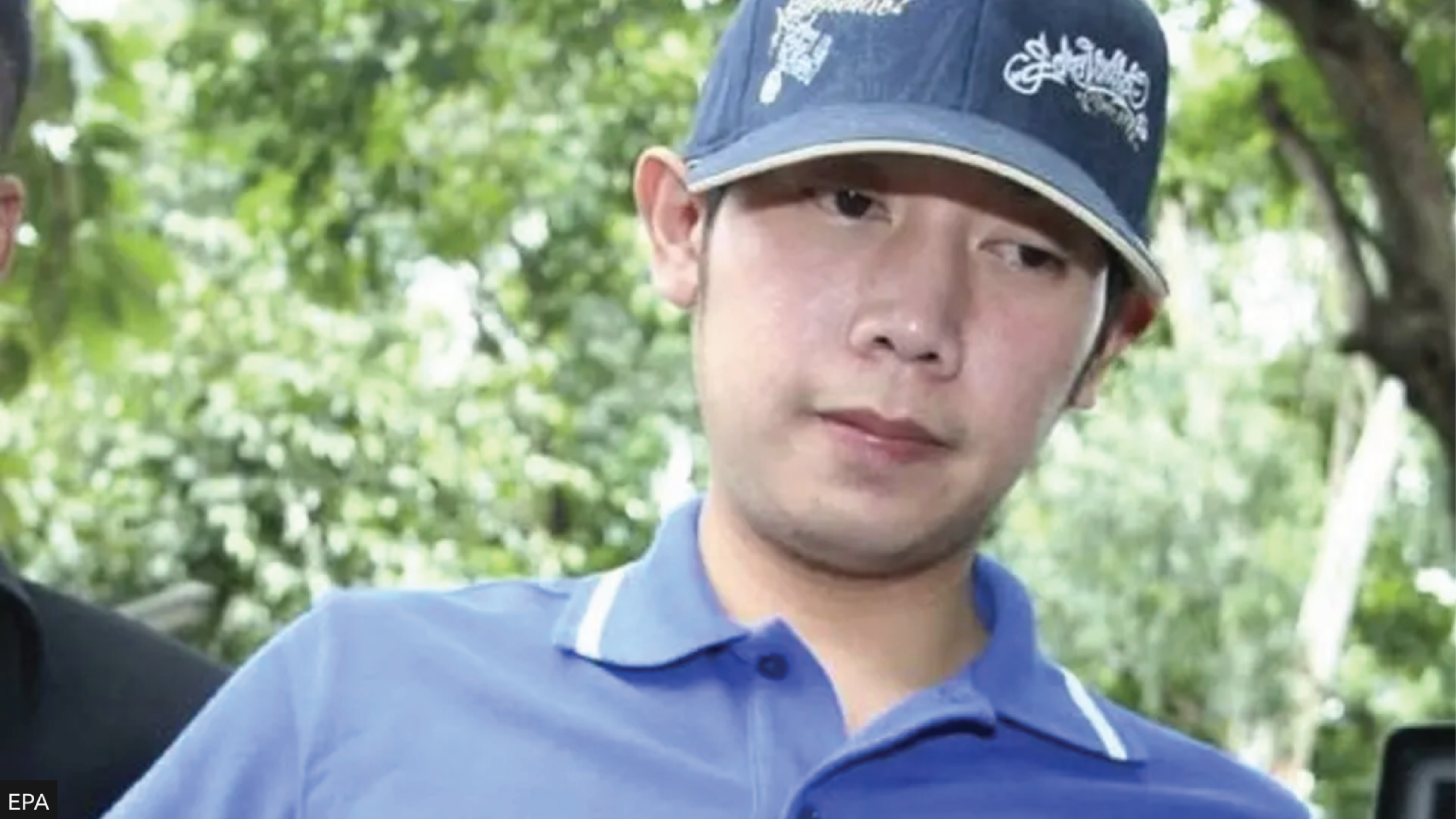
I have covered plenty of stories from Thailand that show the gap between how the country sells itself and how power really works there, but the Red Bull heir case is one of the clearest examples I have ever come across. It begins on Sukhumvit Road in Bangkok before dawn on September 3rd 2012, when Thai police officer Wichian Klanprasert was killed after being hit by a Ferrari. The man accused of driving was Vorayuth “Boss” Yoovidhya, grandson of the family behind Red Bull, and that is what turned a fatal crash into something much bigger. From the start, this was not just a question of what happened on the road. It was a question of what happens in Thailand when an ordinary man is dead, a billionaire family is involved, and the justice system is suddenly forced to prove whether it works the same way for everyone.
This case is something much bigger than one rich man, one Ferrari and one terrible morning in Bangkok. It says something about what happens when ordinary people are expected to respect the law, while the powerful appear able to move around it, wait it out, or benefit from a system that loses urgency at exactly the moment it should become firm. That does not mean ordinary Thai people are responsible for what happened. Many Thai people were furious about this case. The anger came from inside Thailand as much as from outside it. But it does raise a serious question about whether Thailand’s institutions can stand up to money, status and connections when the person in front of them is powerful enough.
The last remaining charge in the case is due to expire on September 3rd 2027. If nothing changes before then, the final legal thread connecting Vorayuth Yoovidhya to the death of Wichian Klanprasert could disappear. That is why the case still matters. It is not old news. It is not just a scandal from the past. It is a test of whether Thailand’s justice system can deliver accountability before time itself closes the case.
The Crash That Started Everything
The crash happened in the early hours of September 3rd 2012 on Sukhumvit Road in Bangkok. Wichian Klanprasert was riding his motorcycle when he was hit by a Ferrari. Reports at the time described the impact as severe, and investigators later traced fluid from the damaged vehicle back to the Yoovidhya family compound. Inside that compound, police found a badly damaged Ferrari.
The man accused of driving was Vorayuth Yoovidhya. He was 27 at the time and came from one of Thailand’s most famous and wealthy families. His grandfather, Chaleo Yoovidhya, was one of the men behind the drink that became Red Bull. That family connection meant the case was never going to be seen as an ordinary road accident. From the beginning, it carried the weight of money, brand power and social status.
If this had been a poor man accused of hitting and killing a police officer, I do not think many people believe the case would have moved in the same way. That is the uncomfortable comparison at the centre of the story. Ordinary people know how fast the law can move when it wants to. They know how little patience the system can have when the person in front of it has no money, no family name and no influence. The anger around this case came from the belief that the usual rules did not seem to carry the same force once the accused came from one of Thailand’s richest families.
The Names That Matter
The name most people remember is Vorayuth Yoovidhya, partly because of the Red Bull connection and partly because the case became international news. But the name that should not be forgotten is Wichian Klanprasert. He was the man who died. He was not a symbol when he left for work. He was not a political talking point. He was a police officer on duty in Bangkok before dawn.
Wichian was 47 years old. He was a police sergeant major. He came from an ordinary background and had family responsibilities. Reports about his life described him as someone who had worked his way into public service and supported people around him. His death should have produced a clear, urgent and transparent legal process. Instead, it became the beginning of a case that stretched across years, then more than a decade, while charges expired and public trust collapsed.
That is why his name matters. In cases involving famous families, major brands and enormous wealth, the victim can disappear from the story. The public remembers the heir, the car, the brand and the scandal, but the person who died becomes a detail. Wichian Klanprasert should not be reduced to a detail. His death is the reason this case exists.
Why This Was Never Just a Car Crash
A fatal crash is already serious. A fatal crash involving a police officer is even more serious. But this case became something larger because of what happened after the crash. The public saw missed summons, delays, expired charges, questions about evidence, a decision to drop charges in 2020, later convictions of prosecutors involved in the handling of the case, and a final limitation deadline approaching in 2027.
That sequence is why the case became symbolic. It suggested that the issue was not only one man accused of reckless driving. It suggested that the system itself had been unable or unwilling to deal with the case in a way that ordinary people could trust. Once the public begins to believe that the powerful can avoid accountability through delay, the damage goes far beyond one case.
The Red Bull heir case became a national symbol because it confirmed something many people already feared: that justice can be experienced differently depending on who you are. For an ordinary person, the legal system can be immediate and unforgiving. For the wealthy and connected, the same system can appear slow, hesitant and full of escape routes. That is the heart of the scandal.
How The Red Bull Fortune Was Built
The Yoovidhya family’s wealth is central to the public meaning of the case. Chaleo Yoovidhya, Vorayuth’s grandfather, came from a modest background and built a business that eventually became connected to one of the most famous drink brands in the world. Red Bull went from a Thai energy drink concept to a global product associated with speed, sport, youth culture, Formula One and extreme performance.
That success story is remarkable in business terms. Red Bull became a global brand, and the Yoovidhya family became one of Thailand’s richest families. The family’s business interests have been reported to include the Thai parent company TCP Group, property, restaurants, other assets and connections to high-end car importing. The family name became associated not only with wealth, but with a global lifestyle.
That is why the contrast in this case has always been so stark. On one side was a police officer killed on a Bangkok road. On the other was a family linked to a global brand, private wealth, international travel and elite status. The legal issue is about one accused man and one fatal crash, but the public meaning of the case cannot be separated from the wealth around him.
The Ferrari and the Symbolism of Status
The car involved in the crash was a Ferrari. That detail has always carried symbolic weight because it turns the case into a picture of status and inequality. A Ferrari in Bangkok is not just a car. It is a statement. It represents money, access, speed and social position. When a police officer dies after being hit by such a car, and the accused driver comes from one of the country’s richest families, the case immediately becomes about more than traffic law.
That symbolism matters because ordinary people understand it instantly. They understand the difference between how a poor motorcyclist is treated and how a man in a Ferrari from a billionaire family might be treated. They understand that the same road can feel like one country for the rich and another for everyone else. That is why the case struck such a nerve.
The public anger was not simply because a Ferrari was involved. It was because the years that followed seemed to confirm the inequality that the image already suggested.
The Attempt To Shift Blame
One of the most troubling early parts of the case was the reported attempt to present another person as the driver. A family chauffeur was initially identified before that version collapsed and Vorayuth was identified as the accused driver. This detail is important because it shaped public perception from the start.
In a case involving a rich family and a fatal crash, any suggestion that blame was first directed toward the hired help immediately damages trust. It makes people wonder whether the priority was truth or protection. It makes later explanations harder to believe. It makes every delay appear more suspicious.
That is not a small point. The early hours of a criminal investigation matter. They set the tone for everything that follows. In this case, the early impression was not of a transparent search for truth. It was of a powerful household trying to contain a disaster. Whether every detail of that impression is fair or not, it became part of how the public understood the case.
The Bail and the Beginning of Delay
Vorayuth was questioned and released on bail. In theory, bail is a normal part of many legal systems. In practice, bail does not mean the same thing to everyone. For an ordinary person, bail can be frightening, restrictive and financially serious. For someone connected to enormous wealth, it can look like a manageable inconvenience.
That is one of the deeper issues exposed by this case. The law often treats numbers as if they affect everyone equally. They do not. A fine, a bond or a legal delay can destroy one person and barely touch another. When a family is worth billions, the financial parts of the legal system can lose much of their force. What remains is whether the institutions themselves are strong enough to enforce accountability.
In this case, the public watched as time passed. Vorayuth was summoned repeatedly and did not appear. His lawyers gave reasons including illness and business abroad. Each delay moved the case further from the original crash and closer to limitation deadlines. That is how the scandal deepened. Justice did not fail in one dramatic moment. It appeared to weaken slowly, one delay at a time.
The Life Abroad While the Case Remained Open
The case became even more damaging when international reporting described Vorayuth’s life abroad after the crash. Associated Press reporting placed him in multiple countries and around luxury settings, including Red Bull-linked events and international travel. For the public, that image was devastating.
It was not the image of a man sitting quietly while awaiting trial. It was the image of a privileged figure moving through the world while a Thai police officer was dead and the case at home was losing time. That is what angered people. Ordinary people knew they could not live that way if they were accused of killing a police officer. They knew they could not repeatedly miss summons, leave the country, move between luxury locations and expect the system to wait.
That is why the phrase “not hiding” became so important in public discussion. Whether he was legally hiding, practically hiding or simply beyond reach, the public impression was clear. He was not living like an ordinary fugitive. He was living like a man protected by status, money and international access. That impression did enormous damage to trust in Thailand’s justice system.
The Family Around Him
The wider family background also became part of the story because it showed the distance between the accused and the victim. Vorayuth came from a world of elite education, luxury cars, international travel and global brand access. His family name was known far beyond Thailand because of Red Bull. That world is almost impossible to compare with the life of a police officer riding a motorcycle to work in Bangkok before dawn.
This is not about saying wealth itself is a crime. It is not. Wealth created through business can be respected. But when wealth appears to help someone avoid the ordinary consequences of the law, it becomes a public problem. A society can tolerate inequality in lifestyle more easily than inequality before justice. People may accept that the rich have bigger houses, better schools and more expensive cars. They do not accept, at least not quietly, that the rich should have a different legal reality.
That is why the case still resonates. It is not only about envy or resentment. It is about the basic expectation that a dead police officer should matter more than a family name.
How The Charges Started To Expire
The legal timeline is one of the most important parts of the case. The speeding charge expired in 2013. The charge related to fleeing the scene expired in 2017. The final remaining charge, reckless driving causing death, is due to expire in 2027.
This is what makes the case feel so corrosive. Time became central. The case did not end quickly with a clear acquittal or conviction. It became a long process in which legal exposure appeared to shrink as the years passed. That is exactly what ordinary people fear when they look at cases involving the powerful. They fear that wealth does not need to win in court if it can simply outlast the process.
The final deadline in 2027 gives the case its remaining urgency. If the last charge expires, the public may never see the full trial that should have tested the evidence in open court. That would not make the questions disappear. It would only confirm the fear that delay can become a form of privilege.
The Charges That Disappeared One By One
The first charge to expire was speeding. That happened in 2013, one year after the crash. The next major charge to expire was related to fleeing the scene. That happened in 2017. By then, the case had already become an international example of how slowly a legal process can move when the person involved has enough money and connections.
In April 2017, an arrest warrant was eventually issued, but Vorayuth had already left Thailand. That timing became another deeply damaging part of the story. For years, there had been delay. Then, when the system finally moved more seriously, the accused was already outside the country. His passport was later revoked and international notices were reported, but the practical result remained the same: he was not in a Thai courtroom.
The remaining reckless driving causing death charge is now the final piece. It is the last legal route still open, and it is due to expire in 2027. That is why this case cannot simply be dismissed as old. It is still moving toward a deadline.
The 2020 Decision To Drop Charges
In 2020, Thai authorities dropped the remaining charges against Vorayuth. The public reaction was immediate and intense. Many people in Thailand saw the decision as confirmation that the legal system worked differently for the wealthy and well-connected. The anger was not limited to foreigners or outside critics. It came from Thai society itself.
That matters because it shows the criticism is not anti-Thai. It is not an attack on ordinary people in Thailand. Many ordinary Thai people were among the most angry. They understood what the case represented. They understood that if the justice system could appear so weak in a case involving the death of a police officer, then ordinary citizens had reason to question what protection they really had.
The public backlash forced renewed scrutiny of the case. It also showed that many Thai people wanted accountability. The issue, again, was not the public. The issue was the institutions.
How The Investigation Came Under Scrutiny
After the 2020 decision, attention returned to how the case had been handled. Questions were raised about evidence, witness statements and the officially recorded speed of the Ferrari. Later proceedings focused on allegations that parts of the case had been altered in ways that helped Vorayuth avoid prosecution.
In 2025, two former prosecutors were convicted in relation to their handling of the case. The court found that their actions damaged public trust in the justice system. That is an extraordinary development because it means the concern was not just public emotion. The legal system itself later recognised serious misconduct by officials connected to the case.
This is one of the most important parts of the story. If people involved in the handling of the case are later punished, but the man accused in the fatal crash still has not faced trial, the public is left with an almost unbearable contradiction. The system can punish parts of the cover-up, but still fail to deliver the central accountability people were waiting for.
The Public Outcry
The public outcry after the dropped charges was enormous because the case already carried years of frustration. People were not reacting to one sudden decision in isolation. They were reacting to a history of delay, expired charges and the perception that wealth had protected the accused.
The boycott calls against Red Bull and the anger on Thai social media showed how deeply the case had entered public consciousness. For many people, Red Bull was no longer just an energy drink. It had become linked, fairly or unfairly, with a case that represented legal inequality. When a brand is tied to speed, sport and glamour, a fatal crash involving a member of the founding family creates a reputational shadow that cannot be removed by corporate distancing alone.
TCP Group has said Vorayuth did not hold a management role and was not a shareholder. That may be an important corporate distinction. But public trust does not always operate like corporate paperwork. For many people, the family, the brand, the wealth and the case remain connected in the public imagination.
The Fresh Charges and the Remaining Deadline
After the public anger in 2020, prosecutors moved again and new charges were discussed. But over time, most of the legal routes narrowed. The final remaining charge is reckless driving causing death, and that is due to expire in 2027.
The date matters because it represents the final legal countdown. September 3rd 2027 will mark fifteen years since the crash. If the case has not moved by then, the last remaining charge may no longer be available. That would make the case one of the clearest examples in Thailand of a legal process that outlasted public anger, media attention and the life of the victim.
That is why the case still haunts the country. The legal system has had years. The public has watched for years. The victim’s family has waited for years. And still the final answer has not arrived.
The Settlement Paid To The Victim’s Family
After the crash, the Yoovidhya family paid money to Wichian’s family. Reports have described the payment as 3 million baht, around 96,000 dollars at the time. The payment became another uncomfortable part of the case because it showed how money can enter tragedy and create an appearance of closure without real accountability.
There is nothing unusual about compensation after a death. Families often receive settlements. But in this case, the amount was compared publicly with the enormous wealth of the Yoovidhya family. That comparison made the payment feel less like justice and more like a small financial inconvenience for one of the richest families in Thailand.
For the victim’s family, no amount of money could restore what was lost. For the public, the payment became another symbol of inequality. A dead police officer’s life appeared to have been placed against a sum that meant very little to the people paying it.
What Wichian’s Family Understood
Wichian’s brother reportedly spoke in terms that showed he understood the power imbalance from the beginning. The family knew they were not dealing with an ordinary accused man. They were dealing with someone from one of the richest and most connected families in the country.
That is one of the most painful parts of this case. Ordinary people often understand the system more honestly than officials do. They know when they are outmatched. They know when money and influence are on the other side. They know when the formal promise of justice does not feel the same as real power.
In a fair system, that should not matter. A victim’s family should not have to consider whether the accused person is too wealthy to challenge. But this case made that question unavoidable.
The Officials Who Were Punished
In 2025, two former prosecutors were convicted in relation to the case. They received prison sentences for abusing their power. The court said their conduct damaged public trust. Other figures were accused or examined, and the handling of the case remained under intense scrutiny.
This is important because it proves that the public suspicion was not baseless. Something had gone seriously wrong in the way the case was handled. The system later admitted, through the court process, that misconduct had occurred.
But that also makes the central failure even harder to accept. If officials could be punished for helping the accused avoid prosecution, why has the accused still not faced the final outcome of the case? How can the machinery around the case be judged, while the central figure remains beyond reach?
That is the question that makes the case so damaging.
The Man At The Centre Has Still Not Served A Day
Despite all of this, Vorayuth Yoovidhya has still not served a day over the crash. He has not faced the trial that would finally test the evidence and arguments in court. He remains the central figure in a case that has punished some of the people around the process, but not yet brought him to a final legal reckoning.
That is why the case feels unfinished. It is not enough for the public to hear that prosecutors were convicted or that reviews were ordered. Those things matter, but they do not answer the main question. The main question is whether the man accused of driving the Ferrari that killed Wichian Klanprasert will ever stand fully before the justice system.
As long as that question remains unanswered, the case remains open in the public mind, even if the legal clock continues to run down.
What Red Bull Means In This Story
Red Bull is one of the most recognisable brands in the world. It is associated with energy, racing, sport and performance. That is why the brand’s connection to this case is so difficult for many people to separate. The company can argue corporate distance from Vorayuth, but the public sees the family name, the wealth, the lifestyle and the Red Bull world surrounding the case.
That does not mean every person working for Red Bull is responsible. It does not mean every part of the brand caused what happened. But brands live in public meaning, not only legal documents. When the public sees a family linked to a global brand and a case that appears to show wealth avoiding justice, the brand is inevitably affected.
That is especially true because the case involved a Ferrari, international travel, Formula One imagery and the kind of elite lifestyle that overlaps with Red Bull’s public identity. The optics could hardly have been worse.
The Money and the Meaning
The Yoovidhya family’s wealth is repeatedly mentioned because the case cannot be understood without it. If the accused had been an ordinary man, the public would not be asking the same questions. The suspicion exists because people believe wealth changed the way the case moved.
The bail amount, the compensation payment, the luxury travel reports and the family fortune all became part of the same public calculation. People looked at the numbers and saw a system where money seemed to reduce consequences. That is what made the case so damaging.
Justice must not only be written in law. It must feel real to the public. If people believe the wealthy can treat legal consequences as administrative problems, then trust collapses.
Who Wichian Klanprasert Was
Wichian Klanprasert was a police officer. He had family, duties and a life that mattered. He was not famous before the crash. He did not have a global brand behind him. He did not move through the world on private jets or appear in luxury settings. He was an ordinary public servant doing his job.
That is why his story matters. The contrast between Wichian and Vorayuth is not just emotional. It is the entire point. One man represented ordinary duty. The other represented extraordinary privilege. When ordinary duty is destroyed and extraordinary privilege appears to survive untouched, the public notices.
If this case is remembered only as the Red Bull heir case, then Wichian disappears. It should also be remembered as the Wichian Klanprasert case, because he is the person whose life was taken.
Why Foreigners Should Pay Attention
Foreigners who live in Thailand, invest in Thailand, travel to Thailand or plan to retire there should pay attention to this case. Not because the victim was foreign. He was not. He was Thai. That actually makes the warning stronger.
If this is how difficult justice can become when the victim is a Thai police officer, what confidence should an ordinary foreigner have if they find themselves up against local wealth, influence, police discretion, legal complexity or official weakness? That is not an attack on Thai people. It is a practical question about legal certainty.
Many Westerners love Thailand. They enjoy the country, spend money there, marry there, rent there, invest there, build lives there and defend it passionately. But affection for a place is not the same as confidence in its institutions. A country can be beautiful and still have serious problems with accountability. A country can be full of kind ordinary people and still have systems that protect the powerful too often.
The Red Bull heir case is one of the clearest examples of why legal certainty matters. Lifestyle is not enough. If the law cannot be trusted when things go wrong, then foreigners and locals alike have reason to worry.
What This Case Says About Thailand’s Institutions
The Red Bull heir case does not prove that all of Thailand is corrupt. It does not prove that ordinary Thai people accept injustice. In fact, the public anger showed the opposite. Many Thai people were furious because they believed the case exposed something rotten in the system.
The case says something about institutions. It says something about prosecutors, police, evidence, status, delay and public trust. It says something about how badly a justice system can damage its own credibility when people believe the powerful are being treated differently.
That distinction is important. Criticising the handling of this case is not the same as attacking a nation or its people. It is criticism of institutional weakness, elite protection and the appearance of unequal justice.
The 2027 Deadline
September 3rd 2027 is the date that hangs over everything. If the final charge expires, the case will shift from an active scandal to a permanent stain. It will become a case where a police officer died, the accused left the country, years passed, charges expired, officials were later punished over the handling of the case, and yet the man at the centre never faced the final trial the public expected.
That would be a devastating message. It would tell ordinary people that time can become a shield for the powerful. It would tell foreigners that legal certainty is not guaranteed. It would tell investors and residents that Thailand’s institutions can struggle when wealth and influence are involved.
The deadline is not just a technical legal date. It is the final test of whether the system can still act.
What The Red Bull Heir Case Really Shows
The case shows how badly public trust can collapse when wealth appears to outrun accountability. It shows how legal delay can become a form of privilege. It shows how a fatal crash can become a national symbol when the public believes the system is protecting the wrong person.
It also shows why public anger matters. Without outrage, the case might have disappeared from view long ago. Without public pressure, the later scrutiny of officials may never have happened. But outrage alone is not justice. Public anger can expose a problem, but only institutions can finish the job.
That is what remains missing. The public has been angry. The media has reported. Officials have been reviewed. Former prosecutors have been convicted. But the accused man has still not stood fully before the law.
My View
I do not see this case as a reason to attack ordinary Thai people. Many ordinary Thai people saw the case the same way critics abroad did. They saw it as a sign that the wealthy can live under different rules. They saw it as a humiliation for the justice system. They saw it as a betrayal of Wichian Klanprasert and his family.
My issue is with the system that allowed the case to reach this point. A serious country cannot ask people to trust its laws while cases like this remain unresolved for more than a decade. A country cannot expect foreign confidence while appearing unable to hold its richest families to the same standard as everyone else. A justice system cannot protect its reputation if the public believes the clock matters more than the truth.
That is why the Red Bull heir case still haunts Thailand. It is not because people cannot move on. It is because the case itself has not properly ended. Until there is a full legal reckoning, or until the final charge expires in 2027, the story remains exactly what it has been for years: a painful reminder that justice delayed can become justice denied.
And the person who should not be forgotten in all of this is Wichian Klanprasert. He was the police officer who died. He was the man whose life was cut short. His name should remain at the centre of the story, because without him this is just another scandal about wealth. With him, it becomes what it really is: a test of whether one ordinary life can still matter when it stands against extraordinary power.
Frequently Asked Questions
What happened in the Red Bull heir case in Thailand?
The Red Bull heir case began after Thai police officer Wichian Klanprasert was killed in Bangkok on September 3rd 2012. He was hit by a Ferrari on Sukhumvit Road. Vorayuth Yoovidhya, known as “Boss”, a grandson of the family behind Red Bull, was accused of driving the car. The case became one of Thailand’s most controversial justice scandals because Vorayuth did not appear for repeated summons, left Thailand, and several charges expired over time.
Who is Vorayuth Yoovidhya?
Vorayuth Yoovidhya is a member of the Yoovidhya family, which is connected to the Red Bull fortune. His grandfather, Chaleo Yoovidhya, was one of the men behind the drink that became Red Bull. Vorayuth became internationally known after being accused in the 2012 Ferrari crash that killed Thai police officer Wichian Klanprasert.
Who was Wichian Klanprasert?
Wichian Klanprasert was a 47-year-old Thai police sergeant major who was killed while riding his motorcycle in Bangkok in the early hours of September 3rd 2012. He was the victim at the centre of the Red Bull heir case. His death became a symbol of public concern over wealth, influence and unequal justice in Thailand.
Why is the Red Bull heir case so controversial?
The case is controversial because it has lasted for more than a decade without Vorayuth Yoovidhya facing trial. He missed repeated summons, left Thailand, and saw several charges expire. The case caused widespread anger because many people believed it showed how wealthy and connected individuals could avoid accountability in Thailand.
What charges expired in the Red Bull heir case?
The speeding charge expired in 2013. The charge related to leaving the scene expired in 2017. The remaining charge of reckless driving causing death is due to expire in 2027. That final deadline is one reason the case continues to attract attention.
Why does the case matter in 2027?
The final remaining charge is due to expire on September 3rd 2027. If Vorayuth Yoovidhya is not brought before the legal process before that deadline, the case may end without him ever facing trial over the death of Wichian Klanprasert.
What happened in 2020?
In 2020, Thai authorities dropped the remaining charges against Vorayuth Yoovidhya. The decision caused major public anger in Thailand and led to renewed scrutiny of how the case had been handled. Many people saw the decision as another example of unequal justice for the wealthy.
Were officials punished over the case?
Yes. In 2025, two former prosecutors were convicted in relation to their handling of the case. They were sentenced to prison for abusing their power. The convictions reinforced public concern that the case had been mishandled from within the justice system itself.
What did TCP Group say about Vorayuth Yoovidhya?
TCP Group has said Vorayuth Yoovidhya did not hold a management role and was not a shareholder. However, the case remains publicly associated with the Red Bull name because of the Yoovidhya family connection, the family’s wealth, and the global visibility of the Red Bull brand.
What does the Red Bull heir case show about Thailand?
The case shows how badly public trust can be damaged when people believe wealth and connections affect justice. It does not mean ordinary Thai people are responsible for what happened. Many Thai people were angry about the case. The issue is whether Thailand’s institutions can hold powerful people accountable under the law.
Why should foreigners care about the case?
Foreigners should care because the case raises questions about legal certainty in Thailand. If justice can become difficult even when the victim is a Thai police officer, foreigners living, investing or spending long periods in Thailand should think carefully about how wealth, influence and legal complexity may affect outcomes when something goes wrong.
Sources
- Associated Press Investigation Into Vorayuth Yoovidhya — the foundational 2017 AP investigation that documented Vorayuth’s social media trail across nine countries, the private jet movements, the Monaco harbour cruising, the Gordon Ramsay London birthday, the Laos thousand-dollar-a-night resort stay, and the Porsche Carrera with B055 RBR plate referenced throughout the article
https://apnews.com/article/thailand-red-bull-heir-vorayuth-yoovidhya - Reuters Coverage of the Vorayuth Yoovidhya Case — the international news agency long-running coverage of the prosecution timeline including the July 2020 Attorney General decision to drop all charges and the subsequent reinstatement of fresh charges in August 2020
https://www.reuters.com/article/thailand-redbull-idUSL4N2EU2W3 - BBC News Vorayuth Yoovidhya Coverage — the BBC documentation of the case timeline including the 2017 Interpol Red Notice, the cancelled Thai passport, and the broader international coverage referenced in the article
https://www.bbc.com/news/world-asia-53536417 - Bangkok Post Coverage of the Red Bull Heir Case — the Thai English-language newspaper long-running coverage of the prosecution timeline, the missed summons appearances, the statute of limitations expiries, and the broader Thai public response
https://www.bangkokpost.com/thailand/general/ - The Nation Thailand Coverage of the Vorayuth Case — the Thai English-language newspaper coverage of the case including the September 3rd 2027 expiry of the reckless driving causing death charge and the broader prosecution timeline
https://www.nationthailand.com/ - Amnesty International Statement on the Vorayuth Yoovidhya Case — the human rights organisation’s documentation of the case as showing different justice systems for different segments of society referenced in the article’s public outcry section
https://www.amnesty.org/en/ - Wikipedia — Vorayuth Yoovidhya, the comprehensive documentation of the September 3rd 2012 crash, the prosecution timeline, the statute of limitations expiries, and the broader case history referenced throughout the article
https://en.wikipedia.org/wiki/Vorayuth_Yoovidhya - Wikipedia — Chaleo Yoovidhya, the documentation of the Red Bull co-founder, the duck seller origin, the 1980s partnership with Dietrich Mateschitz, and the Yoovidhya family commercial framework referenced in the article
https://en.wikipedia.org/wiki/Chaleo_Yoovidhya - Wikipedia — Red Bull, the documentation of the global Red Bull business including the 7.5 billion cans per year, the 171 countries footprint, the Formula One team, and the broader corporate framework referenced in the article
https://en.wikipedia.org/wiki/Red_Bull - Forbes Thailand Rich List — the documentation of the Yoovidhya family at 26.4 billion dollar net worth as Thailand’s second-richest family referenced in the article’s wealth comparison framework
https://www.forbes.com/profile/yoovidhya/ - TCP Group Official Documentation — the Thai parent company official statement that Vorayuth never assumed any role in the management and daily operations of the business and was never a shareholder, referenced in the article’s corporate distancing section
https://www.tcp.com/en/ - Khaosod English Coverage of the April 2025 Prosecutor Convictions — the Thai English-language news outlet coverage of the Nate Naksuk three-year and Chainarong Sangthongaram two-year sentences for abusing their power to help Vorayuth avoid justice
https://www.khaosodenglish.com/ - Thai PBS World Coverage of the Vorayuth Yoovidhya Investigation — the Thai public broadcaster’s coverage of the investigation manipulation including the altered witness statements and the reduced officially recorded speed of the Ferrari
https://www.thaipbsworld.com/ - Interpol Red Notice Database — the international policing organisation’s framework for the Red Notice issued against Vorayuth Yoovidhya after he left Thailand on a private jet in April 2017 referenced in the article’s escape section
https://www.interpol.int/How-we-work/Notices/Red-Notices - Thailand Office of the Attorney General Documentation — the official Thai prosecutorial body’s documentation of the July 2020 decision to drop all remaining charges and the subsequent August 2020 reinstatement of cocaine use and reckless driving causing death charges
https://www.ago.go.th/ - Thailand Criminal Code Statute of Limitations Documentation — the legal framework governing the expiry of criminal charges including the fifteen-year limitation period for reckless driving causing death that governs the September 3rd 2027 expiry deadline referenced in the article
https://www.krisdika.go.th/ - Bradfield College Berkshire Official Documentation — the documentation of the British boarding school referenced in the article as the institution Vorayuth attended at approximately 40,000 dollars per year alongside other children of Thailand’s wealthiest families
https://www.bradfieldcollege.org.uk/