Why This Needs to be Said
We all know Singapore as a global financial city that attracts the wealthiest of foreigners to its shores, but it did not used to be like that. The old school expat can no longer choose Singapore, and I think that is sad. So I want to talk about this today. Specifically, what Singapore used to be like for the expat, what it is like now, and why always choosing money is not necessarily the best choice every time.
Honestly, this is a conversation that the modern Singapore expat community has been reluctant to engage with. The framing is that Singapore has become a global success story, a financial hub on par with London and New York and Hong Kong. By contrast, the honest framing is that Singapore has, over the past two decades, progressively engineered out the texture that once made it one of the most interesting cities in Southeast Asia for the foreigner. What remains is a financial-services machine that operates very efficiently but has lost much of the character that defined the older version of the city. So I want to lay out what has happened, what has been lost, and why the older expat is being priced out of a place that, in my view, was a better city when it had room for him.
What Singapore Used To Be Like for Singapore Expats
Let me describe the Singapore I remember from earlier visits, because the contrast matters.
Specifically, Singapore in the late 1990s and early 2000s was a city that retained substantial British heritage texture. The colonial-era civic architecture along the Padang, the Cricket Club, the Cathedral, the Old Parliament House, the Empress Place buildings, the Fullerton, all of these were standing as the visible expression of the city’s nineteenth-century commercial origins. Notably, Raffles Hotel operated as a working colonial-era hotel rather than the museum-piece tourist attraction it has increasingly become. Meanwhile, the Long Bar served Singapore Slings to a mix of older expats, visiting tourists, and the long-term British and Australian residents who had been in the city for decades.
Importantly, the Tanglin area was a working older-expat neighbourhood. Specifically, the black-and-white colonial-era houses (the bungalows the British civil service built for itself during the colonial period) were rented out to long-term Western residents at prices that the older expat could absorb. The British Club, the Tanglin Club, the various other private members’ institutions that the British administration had left behind were operating as functioning social and recreational hubs for the long-term Western foreigner. Holland Village had a particular character that drew the older expat segment. Joo Chiat retained its Peranakan texture. East Coast operated on a Singaporean-Chinese commercial framework that the older expat could engage with on broadly local terms.
What The Older Singapore Expats Actually Looked Like
The older Singapore expats were, in functional terms, a different category of person from the financial-services professional who has come to dominate the contemporary expat picture. They were, in many cases, long-term British or Australian residents who had arrived during or shortly after the colonial period and had stayed on. Specifically, they might be a regional commercial trader, a shipping agent, a maritime insurance broker, an oil-and-gas industry veteran, a teacher at one of the older international schools, or a journalist for one of the regional newspapers. Importantly, they were not a hedge-fund partner or a private banking director. Rather, they were middle-class professional Westerners who had built a long-term life in the city on a middle-class professional Westerner’s salary.
Crucially, the rent they were paying was the kind of rent a middle-class professional Westerner could pay. A condo or colonial bungalow or apartment that they rented was a place their salary could comfortably cover. Tanglin Club membership was a fee their budget could absorb. Long Bar drinks were drinks they could buy without worrying about the bill. Honestly, Singapore was, in functional terms, a working middle-class expat city at the same time as it was a regional financial centre, and the two roles sat alongside each other without the financial-services role pushing the middle-class expat role out.
What Singapore Has Become In 2026
Now let me describe what Singapore has become in 2026, because the shift is the point of this article.
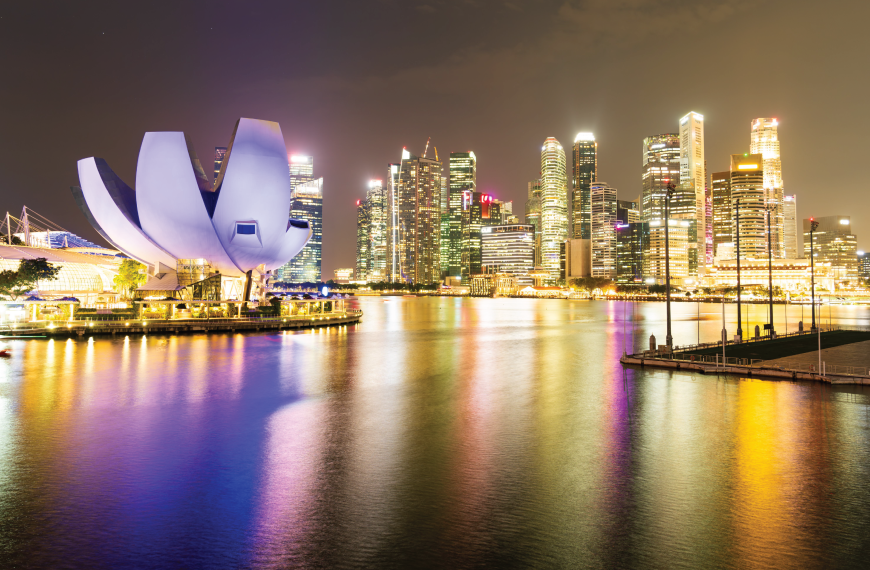
Now, Singapore in 2026 is a financial-services machine. Specifically, the city has been progressively engineered to serve a particular kind of foreigner, the high-net-worth private-banking client, the hedge-fund partner, the family-office principal, the senior corporate executive on a regional package, the digital-economy founder with a substantial exit behind him. Infrastructure has been built for this segment. Furthermore, the housing market prices for this segment. School fees, the club memberships, the restaurants, the broader consumer infrastructure have all recalibrated to serve this segment at the price points that this segment can comfortably absorb.
Today Tanglin in 2026 is no longer a working older-expat neighbourhood. Black-and-white colonial bungalows that were once rented for around 8,000-12,000 Singapore dollars a month now rent at 25,000-40,000 Singapore dollars a month. Condominiums in the central districts that were once accessible to the middle-class professional Westerner are now priced for the high-net-worth segment almost exclusively. Notably, the school fees at the international schools (Tanglin Trust, ACS International, the Australian International School, the United World College, and the various others) have risen to levels that the middle-class professional family simply cannot absorb without sacrificing other parts of the package. Club memberships have escalated similarly. Costs of daily life that the older expat could comfortably afford are now costs that the older expat cannot afford at all.
The Middle-Class Westerner Who No Longer Has A Place
Honestly, in functional terms the middle-class professional Westerner has no place in the Singapore expat picture in 2026. Rent is beyond him. Schools are out of reach. Clubs sit at fees he cannot match. Even the restaurants the Singapore expat scene expects him to participate in are pitched at a level he cannot absorb. So he has been progressively priced out of the city he might have chosen, and the city itself has been progressively recalibrated to serve a different category of foreigner whose budget can absorb the new pricing.
Notably, this is the structural shift that the cheerful Singapore content has been reluctant to engage with. The cheerful framing celebrates Singapore’s rise as a global financial centre. The honest framing acknowledges that the rise has come at a real cost. Specifically, the cost is that the city no longer has room for the middle-class Western foreigner who would, in an older configuration, have been the natural long-term resident of the place. He has been engineered out. What remains is the high-net-worth segment, and the city has been progressively reorganised to serve him at the exclusion of everyone else.
The Friend Who Got In Early And Has Seen The Changes
Now I want to tell you about an older friend of mine who has lived in Singapore for decades, because his story highlights what we’ve lost.
He arrived in the city in the 1980s as a young man in a regional commercial role. By the standards of the older expat picture, he was a typical case. His middle-class professional salary came with no exceptional resources, no family wealth behind him, no high-net-worth status. What he did have was the willingness to commit to the city for the long term, and Singapore at that point was a city that could accept a commitment from someone like him. He found an apartment in a central area at a price he could comfortably afford. He built his life around the older Tanglin and Holland Village expat scene. Specifically, he became a member of one of the older private members’ clubs. He married locally, raised children in the Singapore international school system, and built a multi-decade career across the regional commercial economy.
Crucially, he secured his housing position early. The apartment he bought in the late 1980s, when the central district pricing was still accessible to the middle-class professional, has been the foundation of his ability to remain in the city. Without that foothold, he would have been priced out years ago. With it, he has been able to ride out the progressive escalation in the cost of living and watch the city transform around him. He is, in functional terms, one of the last representatives of the older Singapore expat category, and he is in the position only because he got in early enough to secure the housing position before the market detached from the middle-class professional Westerner’s budget.
What He Has Seen Change Over The Decades
Specifically, what he has watched happen over the decades is the systematic engineering-out of the older expat texture. Specifically, he has watched the older private members’ clubs progressively raise their fees and reorient their membership toward the high-net-worth segment. He has watched the central district neighbourhoods transform from working middle-class expat zones into high-net-worth enclaves. He has watched the international schools raise their fees to levels his children, in their generation, would not have been able to attend without scholarship or substantial financial sacrifice. Furthermore, he has watched the older British heritage texture of the city progressively become packaged into a tourist product rather than a working civic framework, the colonial-era buildings now monetised as luxury hotels and visitor attractions rather than operating as the working civic and commercial institutions they once were.
Honestly, when I have spoken with him over the years, what comes through is not bitterness but a kind of quiet resignation. A city he committed to is no longer the city that exists. His expat category no longer exists in any meaningful numbers. Friends he had who arrived around the same time have, in many cases, retired back to their home countries because the cost of remaining in Singapore became untenable. He remains because of the housing position he secured early, but he is, in functional terms, the last of a category that has been deliberately phased out by the city’s own decisions.
My Own Three Visits And What I Have Seen
Personally, I have visited Singapore three times over the past fifteen years, and I want to share what I have observed across the three visits, because the trajectory is part of the argument I am making.
The first visit was in the early 2010s. At that point the city was already substantially expensive, but it still had pockets of the older texture. Tanglin still had the black-and-white bungalows operating at price points that, while high, were not yet impossible. Long Bar at Raffles still felt like a working historical institution rather than a museum-piece tourist attraction. Holland Village still had the older expat segment alongside the younger Singaporean professional segment. A broader sense at the time was that the city had moved up in cost but had not yet fully detached from the older middle-class professional Westerner.
The second visit was in the late 2010s. By then, the trajectory was clearer. Specifically, the central district pricing had risen substantially. The Tanglin black-and-white bungalows had moved beyond the reach of all but the highest-paying corporate expat packages. The Long Bar had been refurbished in a way that emphasised its tourist function rather than its working-institution function. Furthermore, the older private members’ clubs were openly discussing the fee escalations that progressively narrowed the membership to the high-net-worth segment. Clearly the trajectory was visible. By then the destination was already clear.
The Third Visit And The City I No Longer Recognised
The third visit was last year. By 2025, the city had completed the transformation. The Tanglin area is now substantially a high-net-worth enclave. Holland Village has been progressively reorganised to serve a different consumer segment. Joo Chiat has been preserved as a Peranakan heritage product rather than as a working neighbourhood. Specifically, the central financial district consumer infrastructure now serves the senior corporate and high-net-worth segments almost exclusively. Furthermore, the broader sense of a city that had room for the middle-class professional Westerner has, in my view, vanished, a deliberate consequence of the broader strategic shift.
Indeed, each time I have visited the city has been further out of reach than the visit before. So while the transformation has been happening, I have not been able to see the changes as an improvement. The city is more expensive. By extension, it is more efficient on certain commercial metrics. It is more aligned with the global financial-services framework. But it is, in my view, a poorer city for what it has lost, and the loss is not abstract. The loss is the working middle-class expat texture that gave the older Singapore its character.
Why The British Heritage Texture Matters
Now I want to make a particular point about the British heritage texture, because it is the part of the argument that the cheerful content most aggressively avoids.
Historically, Singapore was a British colonial city from 1819, when Stamford Raffles arrived, to 1959 when self-government came, and through the broader independence period to 1965. During this 146-year period, the British administration built the institutional and physical infrastructure that defined the city. Specifically, the legal system, the civil service tradition, the commercial framework, the urban planning approach, the educational institutions, the private members’ clubs, the colonial-era civic buildings along the Padang, the Raffles Hotel, the broader architectural language of central Singapore, all of this was the inheritance the post-independence government received.
Admittedly, what Singapore has done with that inheritance has been impressive in many respects. The legal system, the civil service tradition, the commercial framework, the broader institutional architecture have been actively maintained and developed by the post-independence government. Notably, this is the point I have made in other articles about the comparison with Burma. Singapore inherited the British framework and ran with it. Burma disavowed it. The two trajectories tell you everything about the importance of how a post-colonial country relates to its colonial inheritance.
How The British Heritage Texture Has Been Progressively Packaged
But there is a part of the British heritage inheritance that Singapore has progressively reorganised in ways that I think have come at a cost. The colonial-era civic texture that operated as a working framework for the middle-class Western expat, the older clubs, the older neighbourhoods, the working historical institutions, has been progressively repositioned as either a heritage tourism product or as a high-net-worth amenity. Raffles Hotel is no longer a working hotel for the older expat in any meaningful sense. By contrast, it is a luxury heritage product priced for the visiting wealthy tourist and the family-office principal entertaining clients. Specifically, the Tanglin and Holland Village expat neighbourhoods have been priced for the high-net-worth segment. The private members’ clubs have escalated their fees to levels that exclude all but the wealthiest applicants.
Honestly, the British heritage that once provided the texture for a working middle-class expat life in Singapore has been progressively converted into a heritage product and a high-net-worth amenity, and the middle-class Western foreigner who once would have engaged with that heritage on working terms has been engineered out of the picture. So the heritage remains visible. By contrast, it no longer functions as the framework for the kind of life it once supported. That is the loss that the cheerful content does not want to acknowledge.
Why Always Choosing Money Is Not The Best Choice
Finally, I want to close with a broader point about the strategic choice Singapore has made, because it bears on the broader Southeast Asian conversation that the long-term Western foreigner needs to be having in 2026.
Singapore has made an explicit strategic decision to position itself as the high-net-worth financial-services destination of Asia. Commercially, the decision has been successful. As a result, the country has become a global financial centre on par with London and New York. Per-capita wealth metrics have risen to levels that few other countries in the region can approach. Specifically, the strategic decision has delivered on its stated objectives.
What Has Been Sacrificed To Achieve The Strategic Position
But the strategic decision has come at a cost. Specifically, the cost is the middle-class Western expat texture that I have described in this article. It is also the older British heritage framework that has progressively transformed. It is the working middle-class professional Westerner who has been engineered out of the city he might have chosen. Above all, it is the broader sense of a city that had room for everyone, that operated as a regional commercial centre with texture and character, that retained the older expat scene as part of its living framework rather than as a heritage display.
Honestly, the strategic decision was always going to come at this cost. A city that decides to position itself for the high-net-worth segment is, by definition, a city that has decided to exclude the middle-class segment. The two cannot coexist in the same urban framework at the same time without one displacing the other. Singapore has decided to displace the middle-class segment. The middle-class segment has, accordingly, been displaced. The high-net-worth segment has, accordingly, been served.
The Personal Observation I Want To Land
I want to land the personal observation I have been forming as I have watched Singapore transform across my three visits.
Ultimately, always choosing money is not necessarily the best choice every time. Specifically, a city that decides to maximise its commercial position by reorienting itself for the wealthiest segment of foreign residents is a city that loses something of its character that money alone cannot replace. The older Singapore had texture, layered communities, the working middle-class expat scene, the British heritage operating as a living framework, the broader sense of a city that was open to a wider range of people. The new Singapore has impressive financial metrics, an efficient commercial framework, world-class amenities for the high-net-worth segment, and a substantially diminished texture.
By contrast, my friend who got in early and remains in the city is one of the last representatives of the older category. When he eventually leaves, by retirement or by other circumstances, the older category will be functionally extinct in Singapore. The version that remains will be the high-net-worth version. So that version has its own virtues. But it is not, in my view, the better version. It is the more commercially successful version, which is not the same thing.
The Honest Verdict On Singapore In 2026
So that is my honest verdict on what Singapore has become. Above all, the city has priced out the old school expat. A middle-class Western foreigner who would once have been the natural long-term resident has been engineered out. British heritage texture has been progressively packaged. Older expat neighbourhoods have been recalibrated for a different segment. By every commercial metric, the city has succeeded. But by the metric of whether the city is a more interesting place than it used to be, my honest view is that it is not.
For the long-term Western foreigner in Southeast Asia in 2026, Singapore has become a place to visit rather than a place to commit to. The high-net-worth segment that the city now serves is genuinely well served. The middle-class segment has been quietly told that it is no longer welcome. Honestly, the cheerful content will not tell this story. But the long-term Western foreigner who has watched the city transform across multiple visits, who has friends who got in early and have seen the changes, who has thought carefully about what Singapore was and what it has become, is in a position to tell it honestly. That is the version I have tried to tell in this article. It is not the cheerful version. But it is, in my view, the honest version, and the honest version is what the older expat deserves to hear before he considers Singapore as a destination he might still have a place in.
Frequently Asked Questions
Why has Singapore priced out the old school expat?
Because the city has made an explicit strategic decision to position itself as the high-net-worth financial-services destination of Asia, and the strategic decision has progressively reshaped the housing market, the school fees, the club memberships, the restaurants, and the broader consumer infrastructure to serve the high-net-worth segment almost exclusively. Specifically, the middle-class Western professional who would once have been the natural long-term resident of the city can no longer afford the rent, the schools, or the broader cost of daily life that the city now expects him to absorb. He has been engineered out by a combination of commercial decisions and policy choices that, over the past two decades, transformed Singapore from a working middle-class expat city into a high-net-worth enclave.
What did the old school Singapore expat look like?
Specifically, a long-term British, Australian, or other Western middle-class professional who had arrived during or shortly after the colonial period and had built a multi-decade life in the city on a middle-class professional Westerner’s salary. He was a regional commercial trader, a shipping agent, a maritime insurance broker, an oil-and-gas industry veteran, a teacher at one of the older international schools, a journalist for one of the regional newspapers. He was not a hedge-fund partner or a private banking director. The rent he was paying, the schools his children attended, the clubs he belonged to, the restaurants he frequented, were all priced at levels his middle-class professional salary could comfortably absorb.
How have central Singapore rents changed for the older expat segment?
Substantially. Specifically, Tanglin black-and-white colonial bungalows that were once rented for around 8,000-12,000 Singapore dollars a month now rent at 25,000-40,000 Singapore dollars a month. Condominiums in the central districts that were once accessible to the middle-class professional Westerner are now priced for the high-net-worth segment almost exclusively. Costs of daily life that the older expat could comfortably afford have become costs that the older expat cannot afford at all.
How has the British heritage texture of Singapore changed?
British heritage that once provided the texture for a working middle-class expat life in Singapore has progressively become into a heritage product and a high-net-worth amenity. Raffles Hotel is no longer a working hotel for the older expat in any meaningful sense. Instead, it has been positioned as a luxury heritage product priced for the visiting wealthy tourist and the family-office principal entertaining clients. Tanglin and Holland Village expat neighbourhoods have been priced for the high-net-worth segment. Private members’ clubs have escalated their fees to levels that exclude all but the wealthiest applicants. Heritage remains visible but no longer functions as the framework for the kind of life it once supported.
Why does the author say Singapore is getting further out of reach with each visit?
Because the trajectory of central Singapore pricing has been consistently upward across the author’s three visits over the past fifteen years. A first visit in the early 2010s found a city that was already substantially expensive but still retained pockets of the older texture. By the second visit in the late 2010s, the central district pricing had risen substantially and the older expat segment had been progressively narrowed. Then the third visit in 2025 found a city that had completed the transformation, with the Tanglin area as a high-net-worth enclave and the broader middle-class Western foreigner essentially absent. Each visit has been further out of reach than the visit before, and the trajectory has not been visible to the author as an improvement.
What about the author’s friend who got in early?
He arrived in Singapore in the 1980s as a young man in a regional commercial role with a middle-class professional salary. Crucially, he secured his housing position early, buying an apartment in a central area in the late 1980s when the pricing was still accessible to the middle-class professional. That housing foothold has been the foundation of his ability to remain in the city across the progressive escalation in the cost of living. Without it, he would have been priced out years ago. With it, he has been able to ride out the transformation, but he is, in functional terms, one of the last representatives of the older Singapore expat category that the city has progressively phased out.
Is Singapore still worth visiting for the older Western foreigner?
Yes, as a visit. Indeed, it is one of the most efficient, well-organised, well-infrastructured cities in Asia. Food remains excellent. Public transport remains world-class. Colonial-era civic architecture remains visible if you know where to look. But as a long-term destination for the middle-class Western foreigner, Singapore is no longer a realistic option. Rent, school fees, club memberships, the broader cost of daily life have moved beyond what the middle-class professional Westerner can comfortably absorb. A high-net-worth segment that the city now serves is well served. By contrast, the middle-class segment has been progressively engineered out.
How does the Singapore transformation compare to other Southeast Asian cities?
Honestly, Singapore has gone the furthest in the direction of pricing for the high-net-worth segment specifically. Bangkok has, in its central districts, made a similar but less complete move, with the foreigner-pricing tier of the central Sukhumvit and Sathorn corridors operating on a related but less extreme version of the same dynamic. Kuala Lumpur, Penang, Phnom Penh, and the other regional capitals have retained substantially more middle-class expat texture, with rental markets, club memberships, and daily-life costs that the middle-class Western professional can still absorb. The Singapore trajectory is, in many respects, the regional outlier, but it is the trajectory that the central districts of several other regional capitals appear to be following at varying speeds.
Why does the cheerful Singapore expat content not engage with this honestly?
Because the cheerful framing celebrates Singapore’s rise as a global financial centre and treats the high-net-worth orientation as a sign of success rather than as a structural choice carrying real costs. Additionally, the cheerful content often has commercial relationships with the high-net-worth-oriented services (private banks, family-office providers, luxury property agents, international school admissions consultants) that benefit from the city’s strategic positioning, so producing content that is honest about the cost of the strategic shift would, in functional terms, hurt the commercial interests of the content creators. The result is that the long-term Western foreigner who has watched the shift unfold is, in many cases, the only person in a position to discuss it honestly.
What is the honest summary of the argument?
Singapore has priced out the old school expat. A middle-class Western foreigner who would once have been the natural long-term resident has been engineered out. British heritage texture has been progressively packaged into a heritage product and a high-net-worth amenity. Older expat neighbourhoods have been recalibrated for a different segment. By every commercial metric, the city has succeeded. But by the metric of whether the city is a more interesting place than it used to be, the honest view is that it is not. Ultimately, always choosing money is not necessarily the best choice every time, and the Singapore trajectory is a useful case study of what gets sacrificed when a city decides to maximise its commercial position at the expense of the broader human texture it once had.
Sources
- Singapore Urban Redevelopment Authority Property Price Index and Rental Index — the official Singapore government documentation of central district rental and sale pricing including the Tanglin and central residential corridors referenced in the article
https://www.ura.gov.sg/Corporate/Property/Property-Data - Singapore Department of Statistics — the official documentation of the Singapore demographic, income, and broader socioeconomic statistics referenced in the article’s high-net-worth orientation argument
https://www.singstat.gov.sg/ - Singapore Land Authority Black-and-White Bungalow Documentation — the official documentation of the colonial-era black-and-white bungalows including the rental framework and the broader heritage administration referenced in the article
https://www.sla.gov.sg/ - Knight Frank Singapore Wealth Report and Residential Market Outlook — the international property consultancy documentation of the Tanglin rental ranges, the high-net-worth orientation of the central districts, and the broader pricing trajectory
https://www.knightfrank.com.sg/research - JLL Singapore Residential Market Outlook — the international property consultancy coverage of central Singapore rental and sale market including the Tanglin and central condominium pricing
https://www.jll.com.sg/ - Colliers Singapore Residential Market Reports — the international property consultancy documentation of central district pricing including the high-net-worth segment trajectory
https://www.colliers.com/en-sg/research - Numbeo Cost of Living in Singapore Database — the international cost-of-living database documenting Singapore rental, food, and broader consumer pricing referenced in the article’s middle-class affordability analysis
https://www.numbeo.com/cost-of-living/in/Singapore - Raffles Hotel Singapore — the documentation of the colonial-era heritage hotel referenced in the article’s older-Singapore section including the Long Bar history and the broader heritage framework
https://www.raffles.com/singapore/ - Tanglin Club — the documentation of the colonial-era private members’ club referenced in the article’s older-expat institutional framework and the fee-escalation argument
https://www.tanglinclub.org.sg/ - British Club Singapore — the documentation of the British Club as one of the older expat private members’ institutions referenced in the article’s working middle-class expat texture argument
https://www.britishclub.org.sg/ - Singapore Cricket Club — the documentation of the Padang Cricket Club as one of the colonial-era civic institutions referenced in the article’s British heritage section
https://www.scc.org.sg/ - Tanglin Trust School Fee Documentation — the documentation of the older Singapore international school referenced in the article’s middle-class expat affordability discussion including the fee trajectory
https://www.tts.edu.sg/ - United World College of South East Asia Singapore — the documentation of one of the Singapore international schools referenced in the article’s school-fee escalation argument for the middle-class expat segment
https://www.uwcsea.edu.sg/ - Australian International School Singapore — the documentation of the Australian International School Singapore referenced in the article’s international school landscape for the older expat segment
https://www.ais.com.sg/ - National Heritage Board Singapore — the official documentation of the Padang civic architecture, the colonial-era buildings, the Empress Place complex, and the broader heritage framework referenced in the article
https://www.nhb.gov.sg/ - Monetary Authority of Singapore Wealth Management Industry Reports — the official Singapore central bank documentation of the private banking, family office, and broader high-net-worth financial services framework that has progressively reoriented the country
https://www.mas.gov.sg/ - Singapore Economic Development Board Wealth Management Hub Documentation — the official documentation of the Singapore strategic positioning as the high-net-worth financial services hub of Asia referenced in the article’s strategic-decision argument
https://www.edb.gov.sg/ - Singapore Immigration and Checkpoints Authority Employment Pass and Permanent Residence Documentation — the official Singapore documentation of the visa and residency framework including the salary thresholds that have progressively excluded the middle-class professional Western foreigner
https://www.ica.gov.sg/ - Singapore Ministry of Manpower Employment Pass Framework — the official documentation of the Employment Pass salary thresholds and the broader work-permit framework that has progressively raised the bar for the foreign professional
https://www.mom.gov.sg/ - Credit Suisse and UBS Global Wealth Reports — the international wealth management reports documenting Singapore’s high-net-worth population growth and the broader wealth concentration referenced in the article
https://www.ubs.com/global/en/family-office-uhnw/reports/global-wealth-report-2024.html - Straits Times Singapore Property and Cost of Living Coverage — the Singapore newspaper coverage of the rental market trajectory, the school-fee escalation, and the broader cost-of-living dynamics referenced in the article
https://www.straitstimes.com/ - Channel News Asia Singapore Property and Economic Coverage — the Singapore broadcaster coverage of the high-net-worth wealth management positioning and the central district pricing trajectory
https://www.channelnewsasia.com/ - Wikipedia — History of Singapore, the comprehensive documentation of the British colonial period from Raffles in 1819 through 1965 independence including the institutional inheritance referenced in the article’s heritage section
https://en.wikipedia.org/wiki/History_of_Singapore - Wikipedia — Stamford Raffles, the documentation of the British East India Company official who founded modern Singapore in 1819 and established the framework that defined the city’s colonial period
https://en.wikipedia.org/wiki/Stamford_Raffles - Wikipedia — Tanglin Singapore, the documentation of the Tanglin area as the historic expat neighbourhood including the black-and-white bungalow framework and the broader residential character referenced in the article
https://en.wikipedia.org/wiki/Tanglin