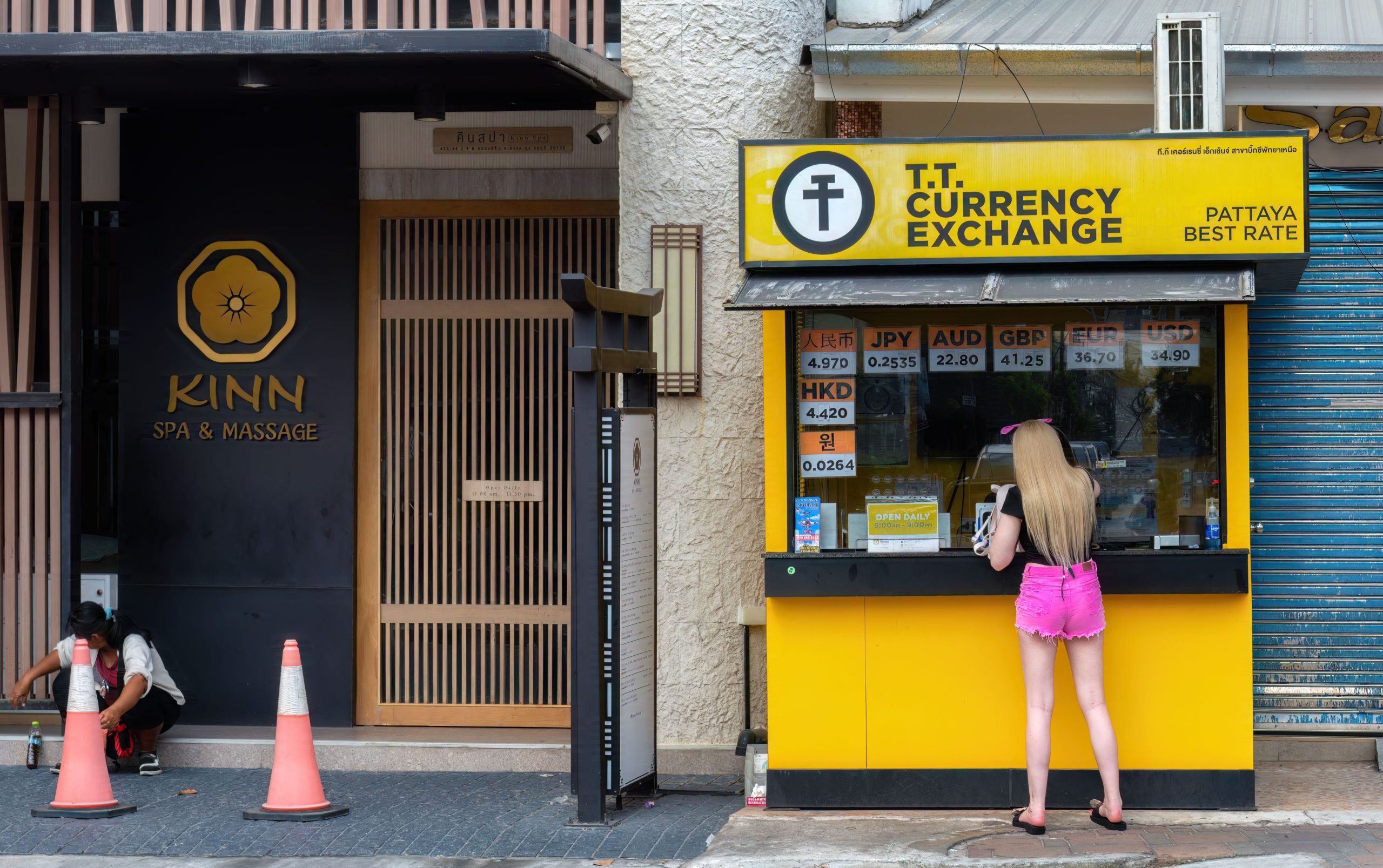
The Champagne That Has Stayed In The Cupboard For Thirteen Years
I’ve had a bottle of champagne laying around for the last thirteen years. I bought it ready to pop the cork the minute the Thai baht went back to its correct value. But I still have it, unopened, because the lie continues. The lie that the Thai baht reflects the underlying value of the Thai economy. The lie that the price tag on a Bangkok condo, on a Chiang Mai plot, or on a Phuket beachfront villa, actually reflects what those things are worth. The lie that the country now charging these prices is the same calibre of country as the countries already charging them. The lie that Thailand has earned the position it has cunningly manoeuvred itself into.
Thirteen years I’ve been waiting. The cork has not been popped. And it’s becoming clearer every year that it will only be popped when the country is forced, painfully, to face the same reality it faced in 1997 and has spent every year since trying to avoid.
This article is about why Thailand needs another 1997. And to be abundantly clear, not because I wish any harm on normal Thai people, who have already suffered enough through three decades of elite mismanagement. Not out of malice, or out of revenge, but because the country, in its current state, is on a road that does not end well for anyone, Thai or foreign, and the only mechanism that has ever forced honest correction on the Thai economy was the one imposed on it in 1997.
The country desperately needs a reset. The country needs the lie to finally break. The country needs the gap between what it claims to be and what it actually delivers to disappear. But the problem is, the country will not do this on its own, because the people who benefit from the lie are the same people running the country.
What Was The 1997 Asian Financial Crisis In Thailand?
It’s important to explain what the 1997 financial crisis actually was, because the official Thai version of the story has been laundered for so long that most foreigners under fifty do not understand what really happened.
In the mid-1990s, the Thai baht was pegged at twenty-five to the US dollar. The peg had been in place for over a decade. It was the foundation of Thailand’s tiger-economy moment. It allowed Thai banks, through a facility called the BIBF, the Bangkok International Banking Facility, to borrow in dollars and lend in baht, on the assumption that the peg would hold at twenty-five forever.
It allowed a property bubble to inflate in Bangkok and Phuket, financed by foreign currency loans the Thai elite had borrowed cheaply and were lending domestically at high margins. It allowed a current account deficit to run at eight per cent of GDP, year after year, with no consequence, because the peg masked the imbalance. The whole structure was built on the assumption that the Bank of Thailand would defend the peg indefinitely, no matter what.
How George Soros Broke The Thai Baht Peg
George Soros, and other hedge fund managers, identified that the peg was no longer defensible. They were correct. The Thai economy was running far hotter than its currency suggested. The reserves at the Bank of Thailand were not enough to defend the peg against a sustained attack.
So in the first half of 1997, Soros and the speculators shorted the baht. They sold baht aggressively against the dollar, betting that the Bank of Thailand would eventually run out of reserves and be forced to abandon the peg. The Bank of Thailand spent billions of dollars defending the peg, drawing down its foreign currency reserves trying to hold the line, but by the beginning of July it was exhausted.
On the second of July, 1997, the peg was abandoned. The baht collapsed within weeks from twenty-five to the dollar to over fifty. The Thai banks that had borrowed in dollars and lent in baht suddenly owed twice as much in domestic currency as their loan books could cover. The property developers went bankrupt. The IMF arrived with a seventeen-billion-dollar bailout and a list of conditions the Thai elite hated. The country was forced into a painful, but honest, structural correction.
Giving Soros His Due
Soros pulled the trigger. That is true. Without his short positions, the peg might have lasted a little longer. The collapse, when it came, would have been smaller and slower, but he correctly identified a huge imbalance and he profited enormously from acting on it.
He made hundreds of millions of dollars from the baht’s fall. The Thai political establishment has been using him as the villain of the story for twenty-eight years because his name is convenient and his profits are documented. None of that is in dispute.
What The Official Thai Version Of 1997 Leaves Out
The official Thai version of the story conveniently leaves out the following key points.
The peg that Soros shorted was not defensible because the Thai state had stopped defending it honestly. The BIBF that doubled the damage was a Thai invention. The property bubble he profited from popping was inflated entirely by domestic lending and domestic crony capitalism. The current account deficit was the result of years of overvalued-currency consumption. The political capture of the financial regulators was domestic.
The unsustainable structure that Soros identified and bet against was built by the Thai elite, brick by brick, over the decade before the crisis. Soros was the man who lit the match. The fuel, the kindling and the petrol were Thai-made. Without the underlying imbalance, the short positions would have failed and Soros would have lost his money. The reason he won was that the Thai state had built a structure that any honest observer could see was going to collapse the moment someone pushed hard enough.
That is what 1997 actually was. A foreign speculator identified a gigantic domestic imbalance and forced it to correct. The pain was real. The losses were real. The Thai families wiped out in the property crash were real. The bankruptcies, the foreclosures, the lost decades for ordinary Thai households were all real too. But none of that was Soros’s fault. All of it was the consequence of a country running on lies for too long, and finally meeting a market actor willing to test the lies against reality.
Is Thailand Heading For Another Financial Crisis In 2026?
Now look at where the country sits in 2026. I want to walk through this carefully, because the parallels are not metaphorical. They are structural. The same conditions that produced the 1997 collapse are present in the Thai economy today, in a different form, and in some cases much worse.
The Thai Baht Is Disturbingly Overvalued Once Again
The baht sits at around thirty-two and a half to the dollar in mid-2026. It is overvalued, even by the standards of the Bank of Thailand’s own modelling. And every time the baht starts moving in the right direction, you can almost feel an invisible hand reaching in to push it back.
It was around thirty-six and a half to the dollar in 2024. The market wanted it weaker. The country was producing the kind of economic signals that should have weakened it further. And every time it tried to settle at an honest level, something pulled it back up, against the free market, against the underlying fundamentals, against the direction that every domestic indicator was pointing. The pattern is too consistent to be accidental.
The baht is being managed at a level that does not reflect underlying productivity. It is a peg in everything but name, defended by Bank of Thailand interventions that are less visible than the 1997 peg but no less artificial.
Foreign Capital Is Flooding The Thai Property Market Again
Foreign capital is flooding the property market again, but only in very select areas, and not Western capital this time. Chinese capital in Pattaya. Russian capital in Phuket. Korean capital in Bangkok. But even still, the condo developments are running at thirty to fifty per cent vacancy in the major resort markets.
Developers are still building because the banks are still lending and the political families benefit from the construction. The secondary market has collapsed. Foreign buyers from 2017 and 2018 are trying to exit and finding no buyers. Every condition of the 1996 property bubble is present.
The Thai Elite Has Captured The Financial Sector Once Again
The same families that survived 1997 by being too connected to fail are now larger, richer, more politically entrenched, and more leveraged than they were before. The lending into the property bubble is from the banks they control to the developers they own, funded by depositors who have no idea what they are exposed to.
Institutional Governance Is Weaker Than The Economic Claims
The institutional governance is visibly weaker than the economic claims. The Constitutional Court rulings are overridden by the anti-corruption commission. The nominee crackdown arrests foreigners while ignoring the much larger Thai elite holdings. The visa rules tighten on Western retirees while the same establishment courts Chinese capital with open arms. The signals that produced foreign-investor flight in 1996 are flashing again in 2026.
Thai Tourism Cannot Sustain The Marketing
The country is selling itself as a sophisticated middle-income tourist destination while running on inflated asset prices and a tourism stream it cannot actually sustain. Foreign arrivals are down. Chinese arrivals collapsed by thirty-four per cent last year and Western arrivals are flat to falling.
Why The Defences Are Now The Problem
Every signal that preceded the 1997 crisis is back. The crisis itself has not arrived because the country has, over the last three decades, become more sophisticated at hiding the imbalances. Bank of Thailand interventions are smoother. Capital controls are more developed. IMF protection mechanisms exist. The reserves are larger.
The country has spent twenty-eight years building defences against another external trigger. And that, perversely, is the problem.
The defences mean the next correction will not come from outside. The defences mean the next correction will be slow, internal, grinding. The defences mean the imbalances will keep building until they snap of their own weight rather than being broken cleanly by a Soros-style intervention.
What An Overvalued Baht Means For Western Foreigners In Thailand
Which brings me to the Western foreigner reading this article, because the cost of the lie is being absorbed every day by you specifically.
You came to Thailand because the value proposition made sense. Cheap, friendly, relaxed. The price equation worked. The country was inexpensive enough that you could trade off the lower service standards, the limited legal rights, the bureaucratic friction, the cultural distance, against the financial advantage. The trade was fair. You knew what you were getting and you were getting it at a fair price for the place.
That equation is gone.
The financial advantage has been engineered out of it. The baht has appreciated against your home currency. The cost of basic living has climbed faster than your pension or income. The visa rules have tightened. The bank closures have made it harder to keep your money in the country. The bureaucratic friction has multiplied. The legal rights have narrowed. The country has spent the last decade making the trade-off worse from every angle while keeping the marketing identical.
Thailand Has Climbed The Price Tag Without Climbing The Value
What the country has done is climb up the price tag without climbing up the value side of the equation.
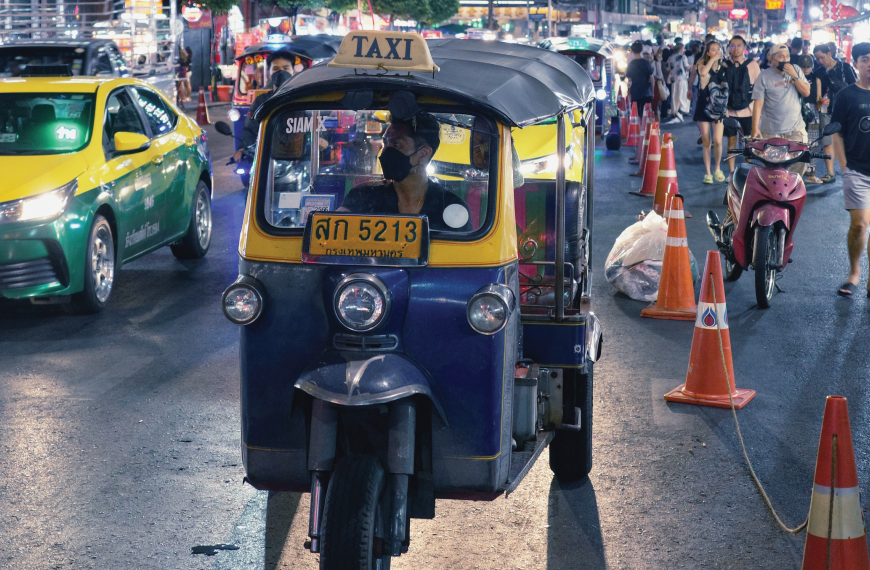
Bangkok charges international prices for a city that has worse traffic than it had in 1996, an incomplete rail network, a public healthcare system that does not serve foreigners well, and a private healthcare system that, while genuinely cheaper than the United States, is priced closer to Europe for what is delivered.
Chiang Mai charges prices that no longer reflect what living in a place that has some of the world’s worst pollution three months a year actually offers.
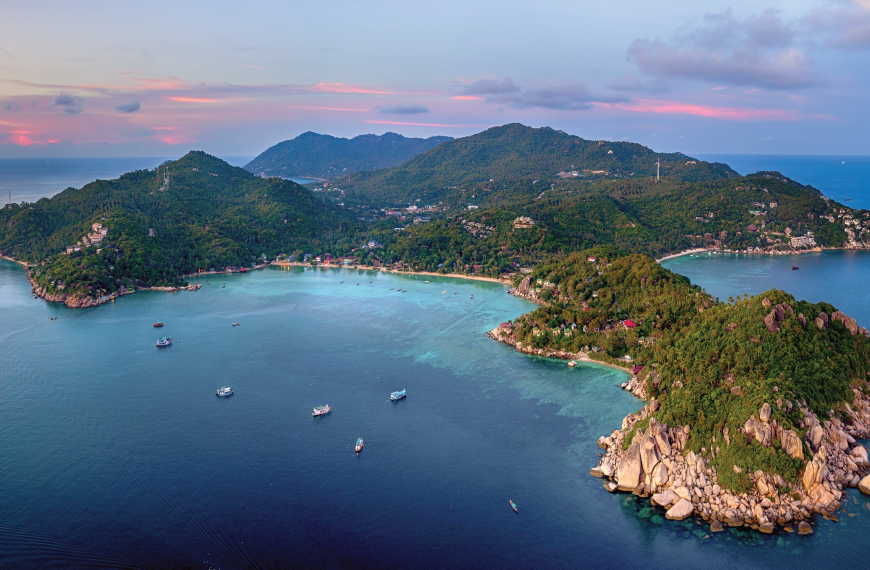
Phuket charges Caribbean prices for a beach that is overrun.
Pattaya charges Mediterranean prices for a town that is, by any honest measure, a worse version of itself than it was in 2005.
The price went up. The product did not.
That is the lie. That is the gap. That is the disparity that has collapsed. And the only correction mechanism the country has ever genuinely experienced was the one imposed on it in 1997.
What A Proper Thai Baht Correction Would Look Like
What the country needs is the same thing it had forced on it then. A real market correction.
The baht falling to a level that reflects what the economy actually produces, somewhere closer to forty-five to the dollar. The property market correcting to actual transaction values, which would be forty to sixty per cent below current asking prices. The elite taking real losses for the first time in three decades. The political capture being broken open by the financial pressure. The country being forced to confront the fact that the price it charges is no longer justified by the value it delivers.
And on the other side of that correction, the country gets the chance to rebuild on honest foundations. Competitive prices that match the actual quality of the product. Real value for the Western foreigner who chose Thailand for what Thailand once was. Sustainable tourism that does not depend on extracting more from each visitor every year. Fair treatment of foreigners that recognises their economic contribution. Genuine improvement in the quality of life for ordinary Thai people, who would benefit more than anyone else from a correction that broke the elite’s grip on the country’s resources.
A 1997-Style Reset Done The Right Way
This is what done the right way means. A reset that does not come with the IMF strings of 1997. A reset that is not blamed on a foreign villain. A reset that is owned by the country, faced honestly, and used as the foundation for a Thailand that delivers what it charges for.
The 1997 crisis was the right correction at the wrong cost, with the wrong narrative attached. A 2026 or 2027 correction could be the right correction at a manageable cost, with the right narrative attached, if the country chose to confront its own imbalances before they confront it externally again.
Why Thailand Will Not Choose Its Own Correction
But it will not. That is the honest truth that lives at the bottom of all of this.
The country will not choose its own correction. The elite has no incentive to choose it. The defences against external trigger have been built. The lie will continue to be told. The prices will continue to climb. The currency will continue to be defended at unsustainable levels. The visa rules will continue to tighten. The Western foreigner will continue to be pushed out.
And the day will eventually come when the imbalances are too large to defend, the defences fail, and the country gets the correction it needed in 2016, then 2020, then 2024, then now, all at once, all delayed, all magnified by the years of deferral.
The Road Thailand Is On
That is the road Thailand is on. The 1997 correction would put it back on the road that actually worked, for both Thai people and the foreigners who chose the country. Done the right way. Cleanly. Without the foreign-villain narrative that lets the elite blame outsiders for problems they produced.
A reset. An honest one. That is what Thailand needs.
And every year the cork stays in my bottle is another year the country has chosen the lie over the truth, and another year the eventual correction, whenever it comes, will be larger and more painful than it would have been if the country had simply done what 1997 forced it to do, voluntarily, while it still had the chance.
Frequently Asked Questions About The Thai Baht And The 1997 Crisis
Is the Thai baht overvalued in 2026?
Yes. The baht sits at around thirty-two and a half to the dollar in mid-2026, well above where the underlying economic fundamentals would put it on a free market. Bank of Thailand interventions have kept the currency artificially strong, even though falling tourism, weakening exports, and slowing growth all point toward a much weaker level closer to forty-five to the dollar.
What caused the 1997 Asian Financial Crisis in Thailand?
The 1997 crisis was caused by a combination of an unsustainable currency peg, the Bangkok International Banking Facility allowing Thai banks to borrow in dollars and lend in baht, a property bubble inflated by domestic crony capitalism, and a current account deficit running at eight per cent of GDP. George Soros and other hedge fund managers identified the imbalance, shorted the baht, and forced the peg to collapse on the second of July, 1997.
Did George Soros cause the 1997 Thai financial crisis?
Soros pulled the trigger. He made hundreds of millions of dollars from the baht’s collapse. But the structural conditions that made the peg indefensible were built entirely by the Thai elite over the decade before the crisis. Soros lit the match. The Thai state built the bomb.
Will Thailand have another financial crisis?
Every structural signal that preceded the 1997 crisis is present again in 2026. Overvalued currency. Property bubble. Captured financial sector. Weakened institutions. The defences Thailand built after 1997 prevent another external-trigger crisis but make an internal slow-motion correction more likely.
How much should the Thai baht be worth?
A baht reflecting Thailand’s actual economic fundamentals would sit closer to forty-five to the dollar. The current level of around thirty-two and a half is being defended by Bank of Thailand interventions and is not consistent with the country’s productivity, tourism numbers, or trade position.
What would a proper reset of the Thai economy look like?
A real correction would see the baht falling to a level reflecting underlying productivity, property prices correcting forty to sixty per cent below current asking values, the elite taking real losses for the first time in three decades, and political capture of financial institutions being broken open. On the other side of that correction, Thailand could rebuild on honest foundations.
Sources
- Bank of Thailand — Bangkok International Banking Facility (BIBF), the 1993 mechanism that allowed Thai banks to borrow in US dollars and lend in Thai baht, the structural device that doubled the damage when the peg broke in July 1997
https://www.bot.or.th/en/our-roles/financial-markets/policies-related-to-the-foreign-exchange.html - International Monetary Fund — Recovery from the Asian Crisis and the Role of the IMF, comprehensive overview of the 1997 Asian Financial Crisis including the 8% current account deficit Thailand was running before the collapse
https://www.imf.org/external/np/exr/ib/2000/062300.htm - Reuters — George Soros and the Quantum Fund shorting of the Thai baht in the first half of 1997, identification of the unsustainable peg by hedge fund managers, the speculation that forced the Bank of Thailand to abandon the peg on July 2, 1997
https://www.reuters.com/article/idUSL3N0LJ2HQ/ - International Monetary Fund — IMF approves stand-by credit for Thailand totaling $17.2 billion in August 1997, the conditions imposed on the Thai government as part of the bailout package
https://www.imf.org/en/News/Articles/2015/09/14/01/49/pr9737 - Trading Economics — Live Thai baht to US dollar exchange rate data, currently sitting around 32.5 to the dollar in mid-2026, the persistent overvaluation against the underlying economic signals
https://tradingeconomics.com/thailand/currency - Bangkok Post — Thai condominium stockpile straining developers, vacancy rates running 30 to 50 per cent in major resort markets including Pattaya and Phuket, the secondary market collapse with 2017-2018 foreign buyers unable to exit
https://www.bangkokpost.com/business/general/2912098/condo-stockpile-strains-developers - Bangkok Post — Constitutional Court finds former Transport Minister Saksayam Chidchob violated the charter by concealing ownership of a construction company receiving more than 1 billion baht in contracts from his own ministry, the elite legal capture documented at the highest level of the Thai state
https://www.bangkokpost.com/thailand/politics/2944571/court-finds-saksayam-violated-charter - Bangkok Post — Chinese tourist arrivals plummet by 34 per cent year-on-year, the foreign tourism crisis affecting Thailand’s largest source market, the gap between marketing and reality on tourism numbers
https://www.bangkokpost.com/business/general/2987342/chinese-tourist-arrivals-plummet - Bumrungrad International Hospital — Medical tourism services, pricing structure that is genuinely cheaper than the United States but priced closer to European levels for what is delivered, the comparison point for the value-side argument on Thai private healthcare
https://www.bumrungrad.com/en/international-patient-services/medical-tourism