The Predictable Disaster Nobody Stops
Every year, hundreds of foreigners die on Thailand’s roads. Many of them are killed on vehicles they may not have been properly licensed to ride, after renting them from shops that did not check, in a country whose road death rate is one of the worst in the world. Their families find out by phone call. They then have to deal with repatriation, paperwork, hospital bills, and the cost of bringing them home. And in a substantial number of cases, the insurance they thought would cover them, both the rental shop’s insurance and their travel insurance, turns out not to have applied at all.
This is one of the most predictable disasters in international travel. It happens in plain sight. It is documented in the data. It is warned about by every honest expat. And yet it continues to claim foreigners at a rate that, in any Western country in any other context, would be a national emergency.
This article is about why it happens. Not the surface story, foreigner crashes scooter, foreigner dies, but the structure underneath. Because once you understand the structure, you understand that the deaths are not random. They are the predictable output of a system that puts foreigners on motorbikes they should not be on, with paperwork that does not protect them, in a road environment that gives them almost no margin for error.
The Numbers On Thailand’s Road Deaths
Thailand has one of the worst road death rates in the world. According to the World Health Organisation, the rate is 25.4 deaths per 100,000 people, placing Thailand ninth worst out of 175 WHO member countries. The annual death toll on Thai roads runs to around seventeen to eighteen thousand. That is roughly fifty deaths every day.
The overwhelming majority of those deaths involve motorcycles. Recent figures put motorbike fatalities at around four-fifths of the annual total, the most lethal category of vehicle in the country, by a long way, and the one foreigners are most likely to be on.
Foreign deaths are documented separately. In 2022, the Thailand Road Safety Centre recorded 551 foreigners killed on Thai roads. Roughly three-quarters of those foreigners were on motorbikes. In just the first six weeks of 2023, 75 more foreigners had already died, and nearly 2,900 had been injured.
That is more than one foreigner dying every day, and in bad periods, close to two.
These are the conditions you arrive into. You probably did not check them before you booked the holiday.
The Thai Rental Shop That Does Not Ask For Your Licence
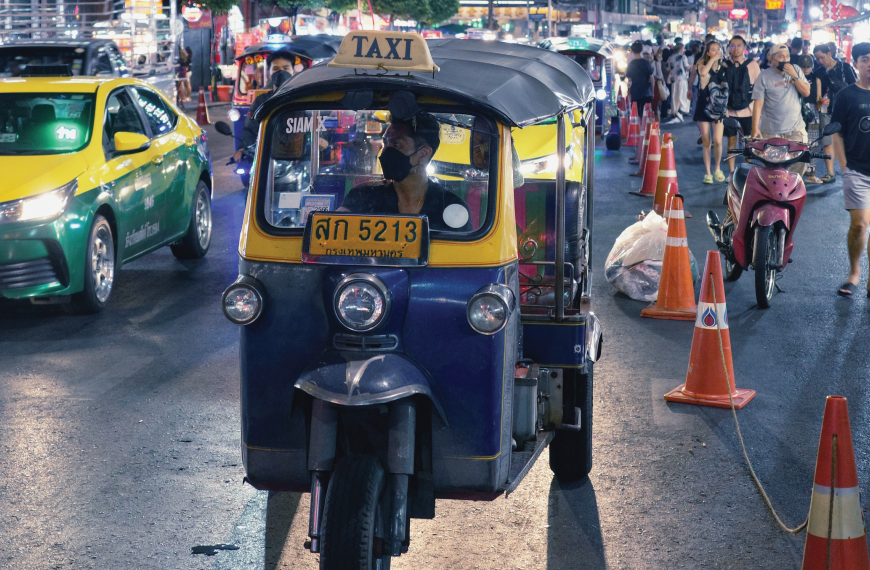
The system starts at the rental shop. You arrive at a Thai beach town, or Chiang Mai, or Phuket, or Pai. Scooters everywhere. Shops on every corner. Three to five hundred baht a day. The owner takes a photocopy of your passport and asks for a deposit, sometimes the passport itself. You sign a contract you do not read. They hand you a key. You drive away.
What did they not ask for?
A licence. A real one. Specifically, an International Driving Permit with a motorcycle endorsement, alongside a valid motorcycle licence from your home country.
Under Thai law, that is what tourists need to legally ride a scooter, even a fifty cc twist-and-go that feels like a toy. Your standard car licence is not enough. An International Driving Permit on its own is not enough. You need the IDP specifically endorsed for motorcycles, and you need it issued in your home country before you arrived. You cannot get one in Thailand. If you did not bring it, you cannot legally ride anything on Thai roads.
Almost no foreigner has this. Tourists arrive with a car licence and the assumption that “an international licence”, whatever that means, will be enough. It is not.
The rental shop knows this. The rental shop does not check, because their business depends on tourists who do not have the right paperwork. If they refused everyone without proper licensing, they would refuse most of their customers. So they take your passport. They take your money. They watch you ride away.
You leave the shop believing you have rented a scooter legally, with insurance the shop has assured you covers any accident. Both beliefs are likely wrong, and the second is the one that will destroy you if anything goes wrong.
The Insurance That Does Not Actually Cover You
Here is the part the rental shops do not explain.
When the rental shop tells you the bike is insured, they are usually telling the technical truth. Thai law requires basic compulsory motor insurance, known as CTPL, on every registered vehicle, including rented scooters. That insurance exists. It will, in some circumstances, pay something out.
But the cover is contingent on the driver being legally licensed. If you are riding without a valid motorcycle licence and a valid IDP with motorcycle endorsement, the insurance company may be able to refuse the claim. The bike is insured. You are not.
The same applies to your travel insurance from home. Most travel insurance policies contain a clause requiring the policyholder to be legally licensed for any vehicle they operate. If you were riding a scooter in Thailand without the correct paperwork, the travel insurer can decline the claim on the grounds that you were not legally entitled to be on the bike. In many policies, the issue is not whether the missing licence caused the accident. The issue is that you were not legally entitled to operate the vehicle, and that can be enough for the insurer to refuse the claim.
So the rental shop has insurance. The rental insurance may not apply to you. You have travel insurance. The travel insurance may not apply either. You are now, at the moment of the crash, an uninsured driver in a foreign country with serious injuries and a Thai private hospital looking at you wondering who is going to pay.
The hospital does not care that you thought you were insured. The hospital cares that you can pay. The bills start at hundreds of thousands of baht. They climb fast. A real case documented in expat forums had a Phuket tourist hit with a 600,000 baht hospital bill, roughly 17,000 US dollars, after his travel insurance refused to pay because he had been riding without the correct licence.
Six hundred thousand baht is the kind of number an ordinary tourist does not have. The family back home is then asked to wire the money. Families can face pressure over unpaid hospital bills, discharge arrangements, morgue fees, release paperwork, and repatriation costs, all at the worst possible moment.
This is the trap inside the trap. The rental shop puts you on a vehicle the law says you cannot ride. The cover the shop sells you may not apply because of the same fact that put you on the bike. The travel insurance you bought in good faith may not apply for the same reason. And the hospital that finds you on the road is the most expensive private hospital in the area, because that is where the ambulance takes foreigners.
The Thai Road Environment You Just Entered
Now consider the road environment you have just entered.
Thailand drives on the left. Most foreigners arriving for the first time do not. Within the first hour, the foreigner is fighting the deepest reflex any driver has, the side of the road they instinctively look to first when pulling out of a junction. That single reversal causes a substantial proportion of foreigner crashes.
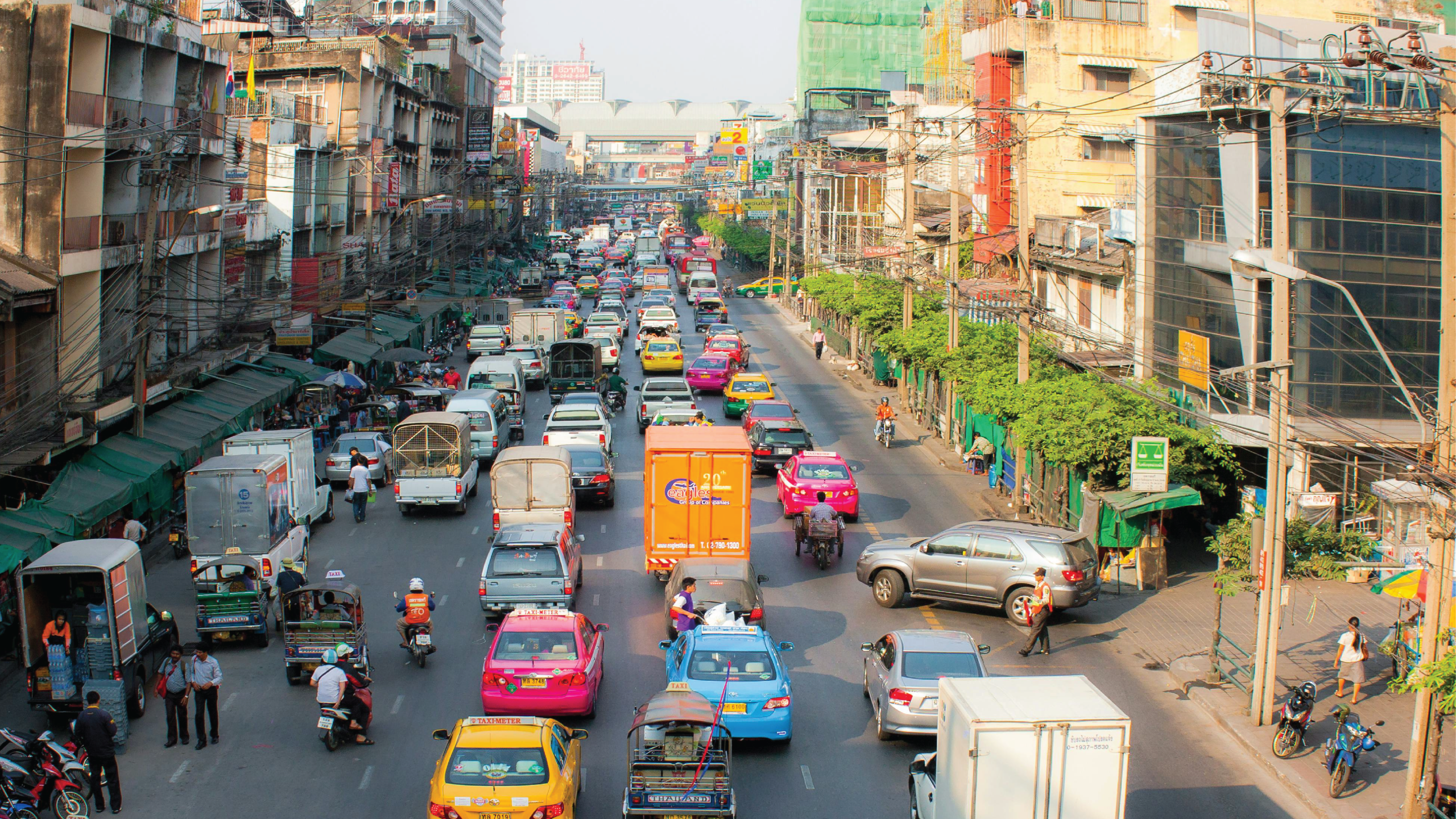
Thai traffic moves differently from Western traffic. Lane discipline is loose. Indicators are advisory rather than declarative. Motorbikes weave through gaps between cars. Pickups appear from side roads without slowing. Buses pull out into traffic. The right of way is decided by who commits first, not by the rules.
Helmets are required by law, and a significant proportion of riders in Thailand do not wear one. Foreigners who rented from a shop that gave them a flimsy half-helmet that does not actually fit are, in any serious crash, riding effectively unhelmeted. Thai motorcycle fatality data consistently shows that the majority of those killed were either not wearing a helmet, or were wearing one that did not protect their head.
Alcohol is everywhere. Thai bars do not check how you are getting home. Tourists drink. They get on the scooter to go back to the hotel. The roads at night, in tourist towns, are saturated with riders who have been drinking. Drunk-driving fatalities spike during holiday periods, Songkran, New Year, Chinese New Year, and foreigners are involved in disproportionate numbers.
The road infrastructure itself is not built to forgive mistakes. Sand on corners. Potholes. Unmarked speed bumps. Stray dogs. Pickup trucks parked without lights. Diesel spills outside petrol stations. Storm drains with broken covers. None of these things kill an experienced rider on home roads. All of them kill a tourist who has been riding for three days.
What Happens When The Family Gets The Phone Call
What happens when a foreigner dies on a Thai road is a process most foreigners have never thought about.
The body is taken to a hospital. The hospital contacts the embassy. The embassy contacts the family. The family is asked, in the worst hour of their lives, to make a series of decisions about repatriation that they have no framework for.
Repatriating a body from Thailand to Europe, North America, or Australia costs between five thousand and fifteen thousand US dollars, sometimes more. That is the airline cargo, the embalming, the documentation, the consular fees, the funeral home in both countries. If the deceased had travel insurance with a repatriation clause that applied, the insurance pays. If the insurance has voided the policy because the deceased was riding without a licence, the family pays.
Some families cannot pay. There are documented cases of foreigner bodies sitting in Thai hospital morgues for extended periods, while families fundraise online or argue with insurance companies. There are cases of cremation in Thailand, with a small box of ashes flown home in carry-on luggage, because the family could not afford repatriation.
The marketing material does not mention any of this. The travel insurance brochure does not mention the licence requirement clearly. The rental shop does not mention that the cover they are selling you may not apply. The hospital does not mention any of it because they are a business and you are a customer.
You only find out when you crash. By then it is your family who is dealing with it.
Why The Thai System Does Not Fix Itself
Thailand has known about this problem for decades. The road death numbers are public. The foreigner death numbers are public. The licence requirements are public. The insurance void issue is public.
Nothing changes.
The reason it doesn’t fix itself is not one single conspiracy. It is a set of incentives that all point the same way. Rental shops make their money from tourists who cannot legally ride. The bars make their money from tourists who drink and ride home. The hospitals make their money from foreigners with injuries. Police checkpoints in tourist areas issue small fines that go into the local economy rather than escalating to enforcement that would shut the rental shops down.
Every actor in the system has a financial reason to keep it running. The only people losing, the tourists, their families, and the dead, are not part of the constituency the system serves.
This is what foreigners do not understand when they rent that scooter on day one of the holiday. They think they are participating in a small commercial transaction in a tourist economy. They are not. They are stepping into a system that has been producing the same outcome for years, and nothing in that system forces it to stop.
What The Warning From Honest Expats Actually Is
So when honest expats tell you not to ride a motorbike in Thailand, this is what they are warning you about. Not the bike. Not the road. The whole architecture.
The shop that did not check your licence. The licence you almost certainly do not have. The insurance that may not apply from the second you turn the key. The hospital that will bankrupt you if you survive. The embassy that will phone your family if you do not.
You are not getting on a vehicle. You are entering a structure designed around foreigners who do not understand it.
If you ride anyway, ride knowing what you are doing. Get the licence. Get the IDP with motorcycle endorsement before you fly. Wear a real helmet that fits. Do not drink. Avoid riding at night. Stay off the highways. Understand that your travel insurance may not cover you, and check the policy specifically before you ride.
Or, and this is the harder choice that almost nobody makes, do not ride at all.
They Were Not Unlucky. They Were Inside The System.
More than one foreigner dies every day on Thai roads. Most of them did not think it would be them. They got on the bike on day one because everyone does. They felt fine. The shop seemed reasonable. The traffic seemed manageable. Right up until the moment it was not.
They were not unlucky.
They were inside a system that produces this outcome on a schedule, and they did not see it until it was too late.
Frequently Asked Questions
How many foreigners die on Thailand’s roads every year?
The Thailand Road Safety Centre recorded 551 foreigners killed on Thai roads in 2022. Roughly three-quarters of those foreigners were on motorbikes. In just the first six weeks of 2023, 75 more foreigners had already died and nearly 2,900 had been injured. That is more than one foreigner dying every day, and in bad periods close to two. The overall Thai road death toll runs to around seventeen to eighteen thousand annually, with motorbikes accounting for around four-fifths of all fatalities.
Why is Thailand’s road death rate so high?
According to the World Health Organisation, Thailand’s road death rate is 25.4 deaths per 100,000 people, placing the country ninth worst out of 175 WHO member countries. The combination of loose lane discipline, advisory-not-declarative indicator use, motorbikes weaving through traffic, alcohol availability, weak helmet enforcement, road infrastructure that does not forgive mistakes (sand on corners, potholes, unmarked speed bumps, stray dogs, parked pickups without lights), and a rental industry that puts unlicensed foreigners on bikes drives the figures.
What licence do I actually need to ride a scooter legally in Thailand?
A valid motorcycle licence from your home country plus an International Driving Permit with a motorcycle endorsement, issued in your home country before you travel. A standard car licence is not enough. An IDP without motorcycle endorsement is not enough. You cannot obtain an IDP in Thailand. Almost no foreigner arriving for a holiday actually has the correct paperwork, and Thai rental shops do not check, because their business depends on tourists who do not have the right documentation.
Will my travel insurance cover me if I crash a scooter in Thailand?
Probably not, if you were riding without the correct licence. Most travel insurance policies contain a clause requiring the policyholder to be legally licensed for any vehicle operated. If you were riding a scooter in Thailand without a valid motorcycle licence and a valid IDP with motorcycle endorsement, the insurer can decline the claim regardless of whether the missing licence caused the accident. The issue is not causation. The issue is that you were not legally entitled to operate the vehicle. The same applies to the rental shop’s compulsory third-party insurance (CTPL).
What happens if I am uninsured and have a hospital bill?
The bills start at hundreds of thousands of baht and climb fast. A real documented case from Phuket had a tourist hit with a 600,000 baht hospital bill, roughly 17,000 US dollars, after his travel insurance refused to pay because he had been riding without the correct licence. The hospital does not care that you thought you were insured. The hospital cares that you can pay. The family back home is typically asked to wire the money, often under pressure relating to unpaid bills, discharge arrangements, morgue fees, release paperwork, and repatriation costs.
What does repatriating a body from Thailand actually cost?
Between five thousand and fifteen thousand US dollars, sometimes more. That covers the airline cargo, the embalming, the documentation, the consular fees, and the funeral home in both countries. If the deceased had travel insurance with a repatriation clause that applied, the insurance pays. If the insurance was voided because the deceased was riding without a licence, the family pays. There are documented cases of foreigner bodies sitting in Thai hospital morgues for extended periods while families argue with insurance companies, and cases of cremation in Thailand with ashes flown home in carry-on luggage because the family could not afford repatriation.
Why doesn’t Thailand fix this problem?
Because every actor in the system has a financial reason to keep it running. Rental shops make their money from tourists who cannot legally ride. Bars make their money from tourists who drink and ride home. Hospitals make their money from foreigners with injuries. Police checkpoints in tourist areas issue small fines that go into the local economy rather than escalating to enforcement that would shut the rental shops down. The only people losing, the tourists, their families, and the dead, are not part of the constituency the system serves.
Sources
- World Health Organisation — Thailand road traffic death rate 25.4 per 100,000, ranked 9th out of 175 WHO member countries, 18,218 deaths in 2021, motorcyclists 83.8% of all traffic deaths
https://www.who.int/thailand/our-work/road-safety - WHO Global Status Report on Road Safety 2023 — country comparison data and Thailand ranking
https://www.who.int/publications/i/item/9789240086517 - Thaiger — 17,447 road deaths in 2024, 14,144 motorbike deaths (over 80%), 50 deaths/day average
https://thethaiger.com/guides/automotive/staying-safe-on-the-road-during-thailands-christmas-and-new-year-holidays - Thaiger via Thailand Road Safety Centre (ThaiRSC) — 551 foreigners killed in 2022, 7,912 foreigners injured, 78.6% on motorbikes, 75 foreigner deaths in first 6 weeks of 2023
https://thethaiger.com/news/national/thailands-perilous-roads-claim-the-lives-of-75-foreigners-so-far-this-year - InterRisk Thailand — road safety profile for foreigners, 89.5% of accidents involve motorcycles, provincial breakdown of foreigner accidents
https://www.interriskthai.co.th/blog/road-safety-in-thailand-for-foreigners/ - Asian Transport Observatory — Thailand 44 fatalities per 100,000 registered vehicles, $36 billion economic cost (7% of GDP) from road crashes in 2021
https://asiantransportobservatory.org/analytical-outputs/roadsafetyprofiles/thailand-road-safety-profile-2025/ - APRIL International — Department of Land Transport data: 22,134 motorbike accidents 2020, 19,226 injuries, 6,142 deaths, 74% of fatalities are motorbike riders/passengers
https://www.april-international.com/en/long-term-international-health-insurance/guide/motorbike-accidents-in-thailand - Statista — Thailand share of road traffic fatalities by vehicle 2025, Road Accident Victims Protection data
https://www.statista.com/statistics/1375269/thailand-share-of-road-traffic-fatalities-by-vehicle/ - Pattaya Car Hire — IDP and motorcycle licence requirements for tourists, insurance void without correct licence
https://pattaya-carhire.com/really-need-a-license-to-rent-a-scooter-in-thailand-in-2025/ - Byklo Rent — IDP must be issued in home country before travel, cannot be obtained in Thailand, insurance voids without correct licensing
https://blog.byklo.rent/international-driving-license-thailand-2025/ - HolyCow Phuket — IDP category A required for motorcycles, fines 500-1,000 baht, impoundment risk, accident process for unlicensed riders
https://holycowphuket.com/life-in-phuket/do-you-need-an-international-driving-licence-to-ride-a-motorbike-in-thailand/ - Big Bike Tours — comprehensive analysis of travel insurance void for unlicensed motorcycle operation, real consequences of insurance failure after crashes
https://www.bigbiketours.com/motorcycle-license-requirements-thailand-your-complete-international-permit-guide/ - Forbes & Partners — Thai compulsory motor insurance (CTPL) and comprehensive insurance both void without correct licence category
https://www.forbesandpartners.com/thai-motorcycle-license-for-foreigners/ - ASEAN Now expat forum — documented Phuket tourist case: 600,000 baht hospital bill after travel insurance refused claim for unlicensed motorcycle operation
https://aseannow.com/topic/567898-travel-insurance-fails-as-phuket-tourist-faces-bt600k-medical-bill - ASEAN Now — Thai tourist visa holders cannot obtain Thai motorcycle licence, requires non-immigrant visa, international driving permit insufficient on own
https://aseannow.com/topic/10248-driving-in-thailand-with-a-tourist-visa - Thaiger — Christmas/New Year 2024-2025: 2,467 accidents, 2,376 injuries, 436 deaths in 10-day period, speeding and drunk driving primary causes
https://thethaiger.com/guides/automotive/staying-safe-on-the-road-during-thailands-christmas-and-new-year-holidays - Thaiger Road Deaths section — ongoing coverage of motorcycle fatalities, foreigner deaths, drunk driving, holiday-period spikes
https://thethaiger.com/hot-news/road-deaths/2025 - UK Foreign Office Thailand travel advice — driving warnings, motorbike risks, helmet requirements, licence requirements for foreign nationals
https://www.gov.uk/foreign-travel-advice/thailand/safety-and-security - US State Department Thailand International Travel Information — road safety warnings, motorcycle accident statistics for US citizens
https://travel.state.gov/content/travel/en/international-travel/International-Travel-Country-Information-Pages/Thailand.html - Australian DFAT Smartraveller Thailand — repatriation costs for deceased Australians, insurance requirements, motorcycle-related deaths
https://www.smartraveller.gov.au/destinations/asia/thailand