Thailand Is A Fraud
Thailand is a fraud. A fraud on every single level. A deliberate, institutionally-protected, state-enabled, nationwide fraud, and my wife is one of the millions of ordinary Thai people holding the bag while the people behind it sneer at the West in public and gorge on its luxuries in private like the hypocrites they are.
This is a ruling class so degenerate, so perverse, that when a twenty-million-euro debt was left unpaid, the Germans seized one of the king’s private jets on a European runway, and the tyrant at the top still let it sit there, because in the world his system built, paying what is owed is for other people.
This is the system that lectures ordinary Thai people about duty, sacrifice, and respect.
That is the conclusion of this article. Before I tell you about my wife, before I give you the numbers, before I name the institutions, you need to understand that is the conclusion. Not the question I am exploring. The conclusion. Because the evidence is so overwhelming, so public, and so deliberately ignored by the people whose job it is to notice, that anything softer than that word, fraud, is itself part of the lie.
My Wife’s Bakery, Her House, And The Lie Underneath The Numbers
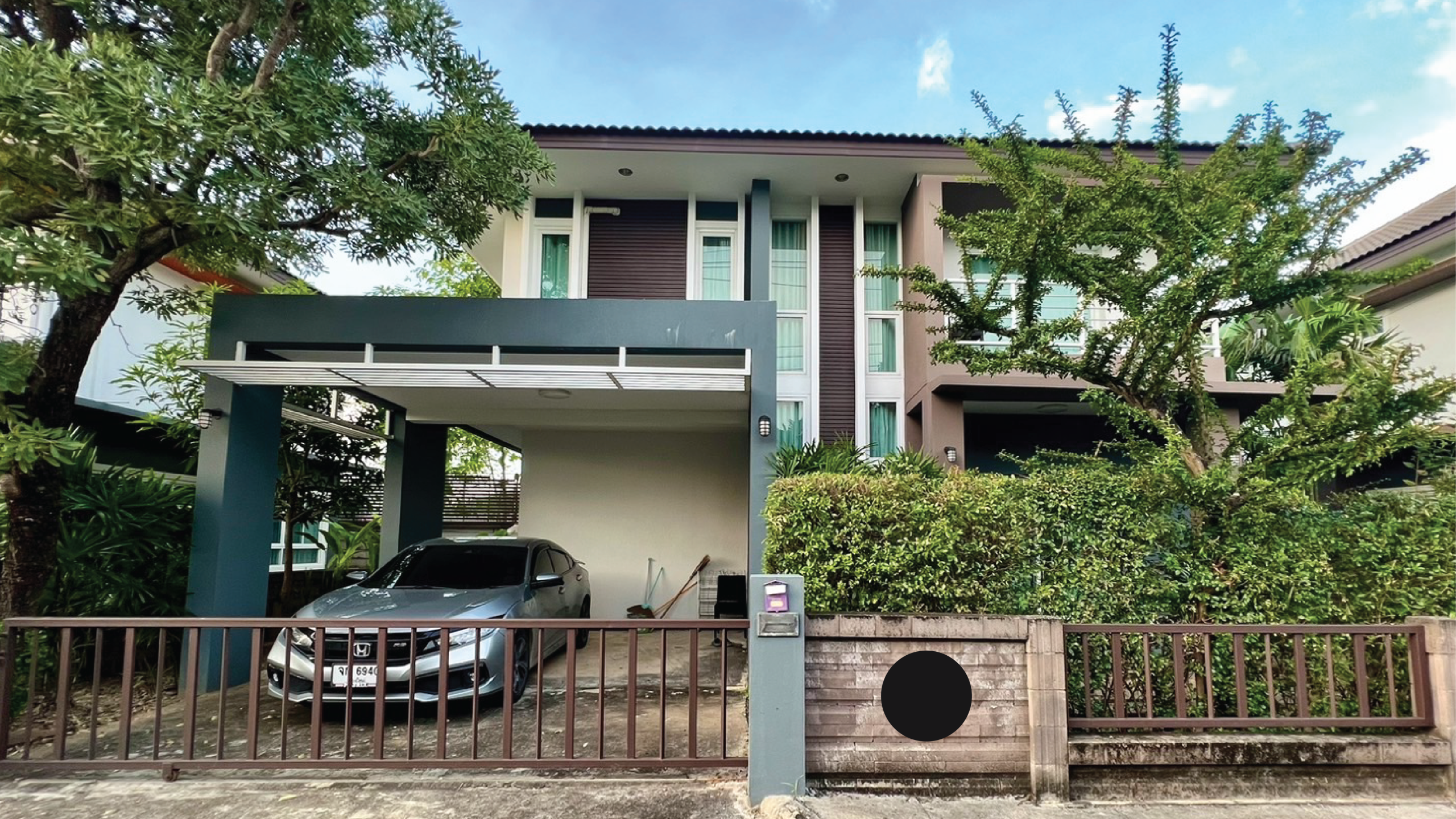
Now. My wife. She built a bakery from nothing. She took orders for cakes, tried her best with every one of them, and worked day after day, one customer at a time, until there were finally enough of them to matter. She did not inherit money. Her family did not spend generations grovelling to the class that bled Thailand dry. She worked. For years. Before sunrise. Every single day. And with the money she earned, real money, out of her own two hands, she bought a house in a moo baan in Chiang Mai. A four million baht house. Security guard at the gate. Communal pool. The whole brochure. She did it the way she was told. She believed the country she grew up in would honour her effort.
Let me tell you what that house is actually worth.
On paper, according to the developer and the bank and the estate agent, all of whom have a reason to lie to her and every reason not to tell the truth, she supposedly has around twenty thousand US dollars of equity in it. Twenty grand. That is the number they quote her. That is the number that keeps the mortgage current. That is the number that props up every other inflated valuation in the neighbourhood. But if that house had to be sold today, in a market where nobody is buying, where her own moo baan has had units listed for three and four and five years with no takers, where the only way anyone actually moves a property is at a fraction of the developer’s pretend price, the real number is probably under one million baht. Under a million. That is what the house is worth when nobody is holding up the lie. Four million baht on the mortgage. Under one million in reality. The rest is paper. The rest is a fantasy number issued by institutions whose entire survival depends on nobody, anywhere, under any circumstance, ever marking down.
And this is before we get to the scale. Because my wife’s house is not an isolated mistake. It is one of 1.64 million empty homes in Thailand. That is the official figure. One point six four million. Empty. Sitting. Unsold. Worth on paper 3.45 trillion baht, which just so happens to be approximately the entire annual budget of the Thai state. An entire national budget’s worth of concrete and tile and pretence, stacked in neat rows across the country, waiting for buyers who are never coming.
And in a single quarter of a single year, Q2 2025 alone, 67,600 Thai homes were seized by banks and put up for auction. Sixty-seven thousand six hundred. In three months. A 210% increase on the year before. That is the real market speaking underneath the fake valuations. That is the sound of ordinary Thai families losing everything while the banks quietly book the seized houses at fictional prices so the balance sheets still look healthy.
This is not a market. This is a crime scene with a sales brochure. And before we are done here, I am going to name every institution that is running it.
The Moo Baan Dream The Thai State Sold Her
If you have ever driven around the edge of any Thai city, you have seen them. Row after row of identical single-storey houses, painted in the same three colours, behind the same walls, with the same gates, the same small front lawn, the same sliding glass doors. Moo baan. Housing estate. The Thai dream, packaged and resold a thousand times over by developers who all use the same sales brochure and the same smiling family on the front.
The pitch is always the same. Buy now, before prices rise. This is a safe investment. Property in Thailand always goes up. You will be able to sell it in ten years for more than you paid. Your children will inherit it. The gated community keeps it safe. The developer will maintain the estate. This is the stable, respectable, grown-up thing to do with your savings. This is what proper people buy.
And my wife believed them. Why wouldn’t she. Everyone around her was saying the same thing. Her family was saying it. The bank offering her the mortgage was saying it. The government, through every housing policy it ever produced, was saying it. The estate agents were saying it. The magazines were saying it. The television adverts with the smiling family were saying it. So she signed the papers. She moved in. She put everything she had into the walls and the floors and the small kitchen. And for a while it felt like she had done it. She had built a business and bought a home, on her own, with her own hands.
Every single one of them knew it was a lie. Every single one of them.
How The Thai Education System Keeps The Fraud Working
And this is the part that the Thai state depends on more than anything else. Because one of the quiet engines of this fraud, maybe the most important engine, is the education system. My wife is the love of my life. I was twenty-three when we met, she was twenty-one. Fifteen years strong and counting. She is one of the kindest, hardest-working, most decent human beings I have ever known. She is also, through absolutely no fault of her own, the product of a school system that was deliberately designed not to produce critical thinkers. She cannot easily see how her own government is taking advantage of her very existence. She cannot easily read a balance sheet, or interrogate a property valuation, or trace the relationship between a political family and a bank board and a developer’s pricing strategy. And that is not an insult. That is the achievement of the Thai state. Because a country whose education system actually worked would have a population that could see this scam from a mile away. Thailand’s does not. And that is not an accident either.
The Scale Of The Thai Property Lie
1.64 million empty housing units across Thailand. Let that land. One in every four new condominiums in the country, empty. 730,000 vacant units in Bangkok alone. In the exact price bracket my wife bought into, townhouses and small detached houses between two and five million baht, there are 115,000 unsold units sitting on the market right now. 57 percent of all unsold stock in the entire country is in the segment where ordinary Thai people were told to park their savings. Analysts say it could take six years to clear the backlog. Six years of supply sitting there with no demand.
Chiang Mai foreign buyer transfers are down 28 percent in 2025. Mortgage rejection rates for homes under 3 million baht have hit 70 percent, seven out of ten applicants turned away. New housing sales in the first half of 2025 collapsed by 49 percent, the steepest decline since the 1997 crisis. Only 35 percent of newly launched condos sell within their first six months. And still, still, the prices do not move. Not meaningfully. Not in any way that reflects the reality that nobody is buying and nobody is going to buy.
Go on any Thai property website right now. Pick a moo baan at random. You will find units listed for sale for three years, four years, five years at prices that have barely shifted. Estate agents who will tell you with a straight face that this is a “firm price” on a house nobody has wanted for half a decade.
A real market does not behave this way. A real market has price discovery. When nobody wants something, the price falls until somebody does. That is not economics. That is arithmetic. That is the basic, observable, unarguable law of trade that every market on earth obeys unless someone is cheating.
Thailand’s property market is cheating. The banks, the developers, and the regulators have all decided, together, that the truth about price will be allowed to emerge only over the dead body of the ordinary Thai person who bought at the top of the lie.
The Absurdity Of The Thai Mortgage Math
Now think about what the sale price of my wife’s house actually means. Four million baht. That is the mortgage. That is what she is paying down every month for the rest of her working life.
The average monthly salary in Thailand is around 15,000 baht. Fifteen thousand. That is the Bank of Thailand’s own figure. In rural provinces, the average is closer to 10,000 baht a month. A university graduate, the top of the educational pyramid, the people Thailand spends public money on educating, starts at around 15,000 to 20,000 baht a month. Graduates from Chulalongkorn, the most elite university in the country, are starting jobs at 20,000 baht and saying out loud, in print, that they cannot afford to live on it.
And these are the people the moo baan housing market is supposedly built for. Do the sums. A four million baht mortgage at Thai interest rates is not something a 20,000 baht graduate can afford. It is not something a 15,000 baht administrator can afford. It is not something a 10,000 baht shop worker can afford. It is not something the average Thai person can afford at any point in their working life without taking on debt that will crush them for thirty years. So who exactly is buying these houses? Nobody. That is the answer. Nobody is buying them. And the banks and developers, in full knowledge that nobody can buy them, continue to produce them, continue to list them, and continue to carry them on their balance sheets as if someone, someday, will. They will not.
This is not a housing market. It is an accounting fiction. A country where the price of a middle-class family home is 200 times the monthly salary of the middle-class family supposedly buying it, and the entire industry is pretending the arithmetic works. It does not work. It has never worked. It was never designed to work. And the only reason it has not collapsed yet is because nobody with power is allowed to say it out loud.
How Thai Banks Hold Zombie Valuations On Their Balance Sheets
Here is where the scam moves from “dishonest industry” into something that ought to be prosecuted.
In the second quarter of 2025 alone, 67,600 Thai homes were repossessed and put up for auction. A 210 percent increase year-on-year. Mortgage non-performing loans hit 232 billion baht, up 16.5 percent in twelve months. 156,644 separate bad-debt mortgage accounts. And a Bank of Thailand study found that even after their assets are auctioned off, one third of borrowers remain trapped in long-term debt, because the auction price does not cover the fake valuation, and the bank chases them for the difference for the rest of their lives. The family loses the house, loses the savings, and still owes money on the lie they were sold.
Read that again. One third of Thai families who lose their homes to foreclosure are still paying the bank after the house is gone. Because the bank has calculated the “shortfall” between its fantasy valuation and the real sale price, and has decided the family owes it. The fraud is so complete that even when the victim is stripped of everything, the fraud continues to bill them.
And when the bank repossesses a house, that house does not just disappear. It becomes what is called a Non-Performing Asset on the bank’s balance sheet. And this is where the fraud lives. Because the bank gets to decide what that house is “worth.” The bank gets to classify it. The bank gets to report its value. The bank gets to hold it on its books at whatever number makes the bank look healthy.
A house the bank repossessed for three million baht of unpaid loan, a house whose real market value is maybe 900,000 baht if it actually had to find a buyer, sits on the bank’s books at 2.8 million. The bank knows it is not worth 2.8 million. Every employee of the bank knows. The bank’s auditors know. The regulators know. And they also know that if they sold it for 900,000, every other house in the same moo baan would have to mark down to match. Which would trigger a cascade. Which would expose the fact that the entire valuation of Thailand’s residential property market is a shared fiction held up by nothing but the collective agreement of banks and developers and regulators not to be the first one to blink.
So they do not blink. They do not mark down. They do not sell. The repossessed houses sit on the books for years. Thai banks are permitted, under Thai accounting and regulatory practice, to hold repossessed properties at fictional valuations almost indefinitely. There are documented Thai properties that have sat abandoned for over twenty years because nobody will list them at their real price. Twenty years. Generations of Thai people who could have bought homes at honest prices, denied, because the banks would rather hold concrete at a lie than let the market speak.
And the cost of that pretence is paid by my wife. Because every inflated valuation the banks carry on their books props up the inflated price of every other house in every other moo baan in the country. The market cannot correct. The market is not allowed to correct. The market is being held hostage by the very institutions whose job is supposed to be making the market work. And the woman who saved her bakery profits to buy a real home is trapped inside a fake asset class, paying a real mortgage, on a property that will never, ever, find a second buyer at anything close to the price she was told it was worth.
The Thai Government Is The Public Relations Department Of The Cartel
And now we come to the part of this article that the Thai elite do not want me to make.
This fraud could not exist without the active participation of the Thai government. A real government would not allow banks to hold zombie valuations on their balance sheets for decades. A real government would demand mark-to-market accounting. A real government would force price discovery. A real government would protect its own citizens from a housing cartel that has turned the middle class into lifetime mortgage slaves on assets that are not worth what they were sold for. The Thai government does none of that. Because the Thai government is not a government in any meaningful sense. It is the public relations department of the cartel.
The Thai government is, itself, a scam. It is a government of vote-buyers, dynasties, and hypocrites, where elections are won by handing out cash and rice sacks in the poorest provinces, where entire political parties are owned by the same families who also own the banks and the developers and the hospitals and the shopping malls and the telecom companies and the television stations. The very institutions that should be investigating the property cartel are the institutions whose members have their own wealth locked up inside it. The regulator is the cousin of the developer. The minister is the brother-in-law of the bank director. The judge owns three condos in the building the case is about. The whole country is run by maybe forty families, and every one of those families has property exposure that would be obliterated if the truth about valuations were ever allowed to surface. So the truth is not allowed to surface. Ever.
And while they run this racket on their own people, they have the gall to lecture the West about being dirty. They hold up the foreigner as morally inferior. They point at Bangkok’s bar areas and pretend the rot comes from outside. Then they get on a plane and spend their extracted wealth in Paris, in London, in Milan, wearing Western luxury head to toe, sending their children to Western schools, drinking Western wine, while publicly sneering at Western values. The Thai elite do not love Thailand. They love what Thailand produces for them. And what Thailand produces for them, more than anything else, is the housing fraud we are talking about right now. Because the same families who fly to Mayfair are the families whose balance sheets depend on my wife continuing to believe her moo baan house is worth four million baht.
That is the link. That is why the hypocrisy matters. Not because foreign luxury is offensive on its own, it is not, but because the money that buys it comes directly from the inflated, rigged, unliquid property market that ordinary Thai people are being crushed inside.
A Fraud Beyond Historical Precedent
Let me put the scale of this somewhere you can feel it.
1.64 million empty homes. 3.45 trillion baht of frozen inventory, equal to an entire national budget. 67,600 seized properties at auction in a single quarter. 232 billion baht in mortgage bad debt. 156,000 non-performing home loans. A third of foreclosure victims still in debt after losing everything. Mortgages priced at 200 times the monthly salary of the people they are supposedly sold to. Repossessed properties held at fantasy valuations for twenty years. And a regulatory apparatus that knows every number of it and does nothing because the same families who own the developers own the banks own the media own the parties.
This is not an ordinary scam. This is a scam conducted at the level of the state. Against a population who were told, generation after generation, that owning a house in a moo baan was the safe, sensible, patriotic, grown-up thing to do with their savings. And almost nobody outside Thailand has heard of it, because the entire domestic press is financially dependent on the same developers, the same banks, and the same political families who are running it.
The official figures are public. They sit on the Bank of Thailand’s website. They sit on the Real Estate Information Centre’s website. They are reported quietly, in small columns, in business sections of newspapers owned by the people running the scam. And every Thai person who has ever bought a moo baan house, every Thai family who has ever signed a mortgage they will be paying for the rest of their working lives, is sitting inside this fraud, unaware of its scale, because the people who would have to admit it are the people who profit from it.
My wife is one of those people. She baked bread at five in the morning for ten years to buy that house. And every single person who touched the transaction, the developer, the salesman, the bank officer who approved the mortgage, the valuer who signed off on the price, the regulator who let the paperwork through, the government minister whose cousin owned the construction company, every single one of them knew the price was a lie. They knew it when she signed. They knew it when she paid her first instalment. They are still at their desks right now, signing off on the next woman like her, who is about to sign the same papers, on the same kind of house, in the same kind of moo baan, for the same kind of lie.
The Whole Scam In One Line: No Exit Price
So let me tell you what this scam actually comes down to, underneath every number I have given you. It comes down to this. My wife’s house has no real exit price. The four million baht on the mortgage is a number. The twenty thousand dollars of supposed equity is a number. The valuation on the developer’s website is a number. None of them are prices. A price is what happens when a real buyer, with real financing, meets a real seller, and they agree. My wife’s house has never been tested against that. Neither has the house next to hers. Neither has any moo baan house in Thailand. Because the banks will not let the market produce a real number, because a real number would expose all the other fake numbers, because the entire residential property sector of this country is held up by a shared refusal to let anyone find out what anything is actually worth.
That is the whole scam in one line. No exit price. Millions of Thai families sitting on mortgages tied to numbers that have never survived contact with a free market. And the moment any one of them is forced to sell, through divorce, through illness, through foreclosure, through the bakery closing, they find out. One at a time. In silence. While the brochure on the next estate still shows the same smiling family, at the same pretend price, waiting for the next woman like my wife.
My Wife Is A Victim. Every Honest Thai Person Is A Victim.
My wife is a victim. Every honest, hard-working, ordinary Thai person who trusted the system is a victim. The perpetrators are named. The figures are public. The fraud is documented. The only thing missing is people willing to stop calling it anything other than what it is.
And if this article is the first step in that, then good.
Frequently Asked Questions
Is the Thai property market really a scam?
By every honest measure, yes. The official figures from the Bank of Thailand, the Real Estate Information Centre, and the National Statistical Office show 1.64 million empty housing units across Thailand, 3.45 trillion baht of frozen inventory equivalent to an entire annual government budget, and a price-to-salary ratio of approximately 200 to 1 in the middle-class housing segment. A four million baht mortgage on a household earning 15,000 to 20,000 baht per month is not a workable market arrangement. It is an accounting fiction held up by collective refusal of banks, developers, and regulators to allow price discovery.
Why are there 1.64 million empty homes in Thailand?
Because the entire residential property valuation structure is held up by inflated developer prices, inflated bank valuations, and a regulatory environment that allows banks to hold repossessed properties at fantasy valuations almost indefinitely. The houses are not selling because the real market price would be a fraction of the listed price, and allowing any single property to sell at its real value would trigger a cascade of mark-downs across the entire segment. So nobody sells. The houses sit empty. The fiction is maintained.
What are Thai bank repossessions doing in 2025?
67,600 Thai homes were seized by banks and put up for auction in Q2 2025 alone, a 210 percent increase year-on-year. Mortgage non-performing loans hit 232 billion baht, up 16.5 percent in twelve months. 156,644 separate bad-debt mortgage accounts. A Bank of Thailand study found that even after their assets are auctioned off, one third of borrowers remain trapped in long-term debt because the auction price does not cover the fake mortgage valuation and the bank chases them for the difference.
How do Thai banks value repossessed properties?
At whatever number makes the bank look healthy. Thai banks are permitted under Thai accounting and regulatory practice to hold repossessed properties as Non-Performing Assets at near-original valuations almost indefinitely. A house repossessed for three million baht of unpaid loan, with a real market value perhaps under one million baht, sits on the bank’s books at close to three million. There are documented Thai properties that have sat abandoned for over twenty years because nobody will list them at their real price.
Who benefits from the Thai property fraud?
The same approximately forty families who own the banks, the developers, the political parties, the media, the hospitals, the malls, and the telecom companies. The entire residential property sector is structurally interlocked with the rest of the Thai elite economy. The regulator is the cousin of the developer. The minister is the brother-in-law of the bank director. The judge owns three condos in the building the case is about. The truth about property valuations cannot be allowed to surface because the families who would lose are the families who run the institutions that would have to expose it.
What does this mean for ordinary Thai families?
It means generational mortgage slavery on assets that are not worth what they were sold for. A four million baht mortgage on a house worth perhaps under one million baht when sold to a real buyer. Thirty years of payments on a fiction. And if anything goes wrong, divorce, illness, business failure, the family loses the house, loses the savings, and in one third of cases still owes the bank money on the shortfall between the fantasy valuation and the real sale price.
What needs to change?
Mark-to-market accounting forced on Thai banks. Mandatory price discovery on properties held as Non-Performing Assets beyond a fixed time period. Independent valuations not produced by the developers or banks with exposure to the unit. Disclosure of beneficial ownership across the developer-bank-political-family network. Public release of the Real Estate Information Centre’s full unsold-inventory data with location, listing date, and price history. None of which will happen, because the people who would have to implement these reforms are the people whose wealth would be obliterated by them.
Sources
- 1.64 million empty housing units across Thailand — Real Estate Information Center (REIC) data on national housing oversupply
https://www.reic.or.th/News/RealEstate/466234 - 3.45 trillion baht frozen inventory — value of unsold housing stock, comparable to entire annual Thai national budget
https://www.bangkokpost.com/business/general/2858923/thailands-residential-glut-deepens - 730,000 vacant housing units in Bangkok alone — REIC condominium and housing vacancy statistics
https://www.nationthailand.com/business/property/40043891 - 115,000 unsold units in 2-5 million baht bracket — 57% of all unsold stock in the price band ordinary Thai people buy into
https://www.bangkokpost.com/business/property/2902451/unsold-housing-stock-crisis - Six-year backlog clearance estimate — Thai property analyst projections on housing oversupply timeline
https://www.nationthailand.com/business/property/40051092 - 67,600 Thai homes repossessed in Q2 2025 — 210% year-on-year increase in foreclosure auctions
https://www.bangkokpost.com/business/general/2917283/property-foreclosures-surge - 232 billion baht mortgage NPLs, up 16.5% year-on-year — Bank of Thailand non-performing loan statistics
https://www.bot.or.th/en/our-roles/financial-institutions/fi-stability.html - 156,644 non-performing mortgage accounts — National Credit Bureau data on household mortgage distress
https://www.bangkokpost.com/business/finance/2895721/household-debt-crisis - One third of foreclosure victims remain in long-term debt after asset auction — Bank of Thailand study on post-foreclosure household debt
https://www.bot.or.th/en/research-and-publications/articles-and-publications/discussion-paper.html - 49% collapse in new housing sales H1 2025 — steepest decline since 1997 Asian Financial Crisis
https://www.bangkokpost.com/business/property/2919847/h1-2025-property-sales-collapse - 70% mortgage rejection rate for homes under 3 million baht — bank lending standards data
https://www.bangkokpost.com/business/finance/2888234/mortgage-rejection-rates-soar - 35% sell-through rate for newly launched condominiums in first six months — REIC market absorption data
https://www.reic.or.th/News/RealEstate/469823 - Chiang Mai foreign buyer transfers down 28% in 2025 — provincial property transfer statistics
https://www.nationthailand.com/business/property/40057823 - Average monthly salary 15,000 baht — Bank of Thailand and National Statistical Office wage data
https://www.bot.or.th/en/statistics/employment-and-wages.html - Chulalongkorn graduates starting at 20,000 baht — Thai PBS reporting on graduate starting salaries and cost of living
https://www.thaipbsworld.com/chula-graduates-cant-afford-bangkok-living-costs/ - Thai banks permitted to hold Non-Performing Assets at fictional valuations — Bank of Thailand accounting standards and forbearance practice
https://www.bot.or.th/en/financial-institutions-supervision/supervision-policy.html - Documented cases of Thai properties abandoned for over 20 years — long-term NPA holdings on bank balance sheets
https://www.bangkokpost.com/business/property/2856712/the-ghost-properties-of-thailand - Thai household debt crisis — 91% household debt to GDP ratio, highest in Asia
https://www.bangkokpost.com/business/general/2891234/household-debt-asia-highest - Thai elite family wealth concentration — approximately 40 families control major sectors of Thai economy
https://www.forbes.com/sites/forbesasia/2024/07/thailand-50-richest/ - 2011 Munich incident — German authorities impounded Thai Crown Prince’s Boeing 737 over unpaid 20 million euro Walter Bau debt owed by Thai state
https://www.theguardian.com/world/2011/jul/13/thai-prince-jet-impounded-germany